

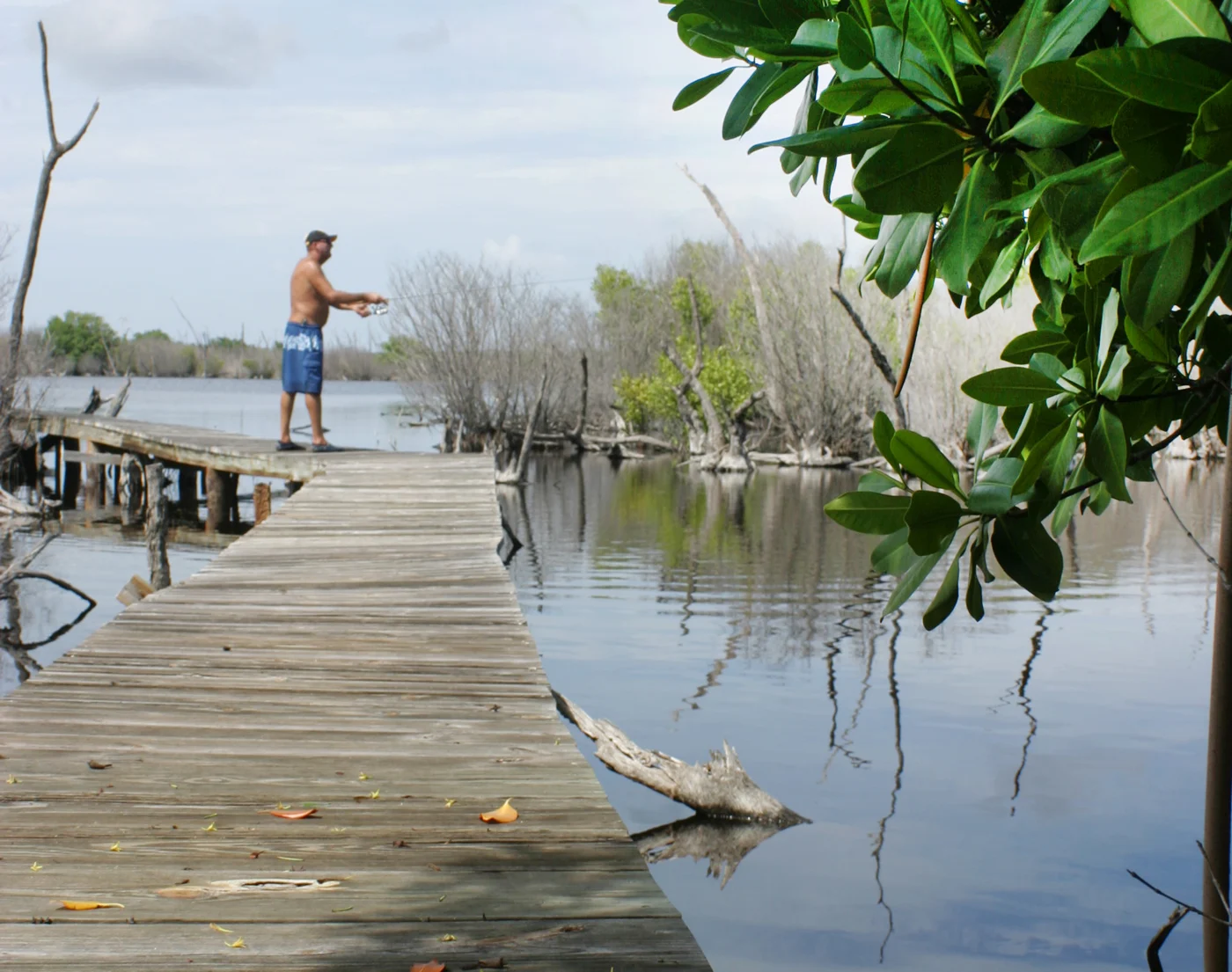
The 11.3% of Cayman’s landmass designated as Terrestrial Protected Areas falls significantly short of an international target of 30% by 2030, but if a recent round of nominations for newly protected land leads to further protections, the islands will move nearer to that goal.
In response to a recent call for nominations from the public, NGOs, landowners and realtors to identify areas that should be considered for protection, the National Conservation Council received 89 suggestions.
According to a report in the Department of Environment’s magazine Flicker, many of the nominations were new proposals, while others added to multiple calls to protect well-known areas, such as the Eastern Lighthouse area of Cayman Brac, the Central Mangrove Wetland and Barkers of Grand Cayman.
One nomination proposed the entire of Little Cayman as a protected area, while on Grand Cayman remnant mangrove areas received a lot of attention, the magazine noted.
“DoE’s Terrestrial Resources Unit is currently engaged in running these new nominations through the NCC’s formal scoring system, and preparing a presentation for the NCC that will enable its members to see all the nominations (new and old) in broad context, with metrics that point to which ones can offer the best conservation returns per unit expense and management effort,” it stated.
The council will decide which of the nominations will go ahead, and determine which land to purchase for conservation using money from the Environmental Protection Fund.
Cabinet recently approved a number of earlier proposals, including Tarpon Lake on Little Cayman, Sand Cay on Grand Cayman, and some newly-mapped small mangrove cays in western North Sound.
Also, purchase negotiations for an extension to the National Trust’s Salina Reserve on Grand Cayman and an extension to the East Interior Protected Area on Little Cayman are “well advanced”, the magazine reported.
The National Trust this week announced that it had purchased a new parcel of primary Mastic forest to add to its protected areas.
Negotiations are also under way with private land owners where National Conservation Act Protected Areas have been approved, subject to purchase.
Currently a total of 11.3% of the Cayman Islands land is protected, either under the National Conservation Act or by the National Trust for the Cayman Islands.
The International Union for Conservation of Nature recommends that 30% of land, including all key habitat types, should be protected by 2030, a position that is expected to be formalised in the 15th Conference of Parties to the Convention on Biological Diversity, known as COP 15, which will be held in Canada in December.
The magazine noted that, for Little Cayman, 30% protection, or even more, “seems in close reach since today almost 22% of that island is already protected by the NCA or the National Trust Act or both. Grand Cayman has much further to go, with 10.9% protected as of 2022.
“Cayman Brac continues to lag far behind the other islands, with only 5.9% protection at this time.”
It noted that the National Conservation Council and the Department of Environment were impressed by, and appreciative of the “remarkable response to the call for nominations this year”.
It added, “The volume of submissions dwarfed all previous responses, and speaks to a growing environmental awareness and concern in the community as our islands continue to urbanise and our irreplaceable ancient forests, mangroves and wild rocky shrublands continue to be bulldozed as if they had no value at all.”
However, it noted, “Ongoing work on Natural Capital Accounting for the Cayman Islands tells rather a different story by producing detailed measurements of the linkage between ecosystems and economic and other human activity.”
Related Videos








what a farce……building and paving going on all over