Government is moving to change the asylum process, so that successful refugees are not automatically granted indefinite leave to stay in the Cayman Islands.
Instead, through proposed changes to the Customs and Border Control Act, government is seeking to, initially, allow refugees to stay in the islands for three years. After this, they will be able to apply for indefinite leave to remain – as long as they can demonstrate they are a genuine refugee.
Under these changes, refugees would still be able to work for any employer or in any occupation during the initial three year period.
Customs and Border Control Chief Officer Wesley Howell, speaking with the Cayman Compass on Wednesday on the proposed changes and the rationale behind them, said they have found “the vast majority of the asylum claims are actually unfounded even through our RPAT (Refugee Protection Appeals Tribunal.)”
“[With] the vast majority being economic migrants, it tends to bog down the system. So these changes are a way to ensure that those persons who may need protection have access to it, but those who are simply looking for an economic advantage don’t use that process to sort of frustrate and delay processing [for genuine asylum seekers],” he said.
Fixing a ‘complex problem’
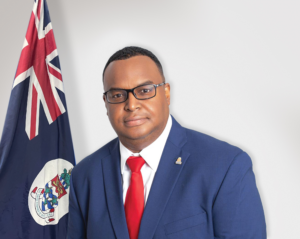
These proposed changes follow recent statements from Deputy Premier Chris Saunders on the influx of refugees and the complexity of the situation.
Saunders said, “[Customs and Border Control] is being inundated with requests from people in Cuba seeking information on their loved ones who embarked on the dangerous journey. As fellow human beings, our hearts go out to both those worried about their loved ones, and those desperate enough to make that voyage.
“However, we also must recognise that as a small country, we cannot absorb all arrivals due to our own limited resources. It is a complex problem, and one that is not easily remedied,” Saunders, who is also the minister for border control, said in that statement.
So far this year, government has shelled out $1 million to house Cuban asylum seekers in secure accommodations amid a mounting refugee crisis.
Saunders said that he expects the situation to worsen. However, he said government will be meeting with their Cuban counterparts before the end of the year to determine a way forward.
As of Wednesday, 23 Nov., there are currently 317 Cubans in various government accommodation – nine of whom are awaiting repatriation to Cuba.
A ‘well-founded fear’ of persecution?
Howell explained that there are a couple of key initiatives within the amendment bill “that seek to streamline the way that we process applications for asylum to make that process more efficient, while still maintaining our international obligations as it relates to the 1951 Convention on the treatment of those persons seeking protection”.
The changes will redefine what constitutes a “well-founded fear of persecution” and will quantify whether the asylum seeker has a “characteristic that could cause the applicant to fear persecution for reasons of race, religion, nationality, membership of a particular social group or political opinion”.
Howell said one of the tenets of the asylum process is that applicants must demonstrate there is a genuine, legitimate risk of persecution.
Defining that, Howell said, would remove economic migrants from the process and “reserve” the path for those with a genuine claim for asylum.
Changes to the asylum process
The new law changes will place greater scrutiny on asylum seekers’ claims and allow the CBC Director to determine their legitimacy.
They will make it a criminal offence to file a false claim or submit altered or forged documents with the risk of two years in prison, if convicted.
In the interim, government says it is trying to expedite the asylum process with increased hearings and more committees to weigh in on appeals.
Howell said this means they will increase the number of people sitting on the Refugee Protection Appeals Tribunal, so that they will have enough members to run concurrent meetings, rather than one at a time.
He said this will work in a similar way to the Immigration Appeals Tribunal – where they have enough members and deputy chairs so they can run multiple meetings.
Howell said that refugees don’t automatically need a “lifetime type of protection” and Cayman had mirrored equivalent provisions under UK law where “folks are granted leave to remain and work for three years at which time their case for asylum is then re-examined,” he said.
The trigger for the changes, he explained, was concerns over the “sheer number of persons who are seeking, in our view, temporary relief, not long term relief.”
He said existing laws did not allow them to grant that “sort of interim protection”.
Howell added that the changes are similar to those being implemented by other governments in response to the “high levels of economic migrants and to ensure that their systems are able to cope with those increases in demand”.
It also mirrors their mechanisms, he said, to quickly “determine those who are purely economic migrants and leave the protection machinery for those who are in definite need of protection from persecution”.
Read the amendments here.
Related Videos