

Government has shelled out more than $1 million to house Cuban asylum seekers in secure accommodation this year alone amid a mounting refugee crisis.
As the tally of Cubans arriving here by boat grows, Deputy Premier Chris Saunders says finding a remedy for the problem will not be easy, especially as costs and housing challenges are increasing along with the influx.
The Ministry of Border Control, in a press release issued Friday, said there are 286 “irregular migrants” currently in the Cayman Islands – 75 on Cayman Brac and 211 on Grand Cayman – with 19 arriving over the last two days.
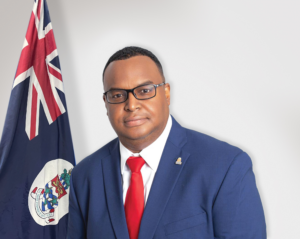
Saunders, who is also the Minister for Border Control, said in the release while he understood the community’s concern over the situation, the Cayman Islands has international obligations “to refugees and asylum seekers”.
Saunders also spoke to the human element of this issue.
“[Customs and Border Control] is being inundated with requests from people in Cuba seeking information on their loved ones who embarked on the dangerous journey. As fellow human beings, our hearts go out to both those worried about their loved ones, and those desperate enough to make that voyage.
“However, we also must recognise that as a small country, we cannot absorb all arrivals due to our own limited resources. It is a complex problem, and one that is not easily remedied,” Saunders said in the release.
Costs, arrivals expected to rise
Between January and September 2022, the security, maintenance and detention of the asylum seekers has cost the government approximately $1.284 million.
Those costs are likely to continue to rise as the problem of fleeing Cubans is expected to continue.
Saunders, in explaining the factors he believes are causing the increased migration from Cuba, said everyone is aware of the economic challenges in that country that often influence people to seek a better life elsewhere.
However, these “factors have been further aggravated by current global forces, including the war in Ukraine, which would result in less aid coming from longstanding ally and trading partner Russia,” he said.
“Combined with the devastation caused by Hurricane Ian, the effects of the COVID-19 pandemic, and ongoing international sanctions against Cuba, all of this has led to a worsening economic crisis in the country and in turn to mass migration,” he added, noting that a “record 220,908 Cubans flocked” to the US via Mexico during fiscal year 2022, according to a US Customs and Border Protection report.
Accommodation challenges
The ministry, in the statement, said the foremost difficulties for the Cayman government are providing suitable accommodation and the ongoing cost of maintaining the asylum seekers.
“Migrants are currently placed in separate accommodations around Grand Cayman and Cayman Brac. The long-term objective is to accommodate all migrants in one facility,” it said, adding that the ministry and Customs and Border Control met with the Public Works Department to discuss repairs and upgrades to the Immigration Detention Centre.
When these repairs and upgrades are completed, the centre will be suitable to provide secure accommodation until the asylum process is completed, the ministry said.
Saunders said government is also tackling the issue from a diplomatic standpoint.
“While we are doing all we can on the ground to expedite matters, we are also maintaining dialogue and cooperation with the Cuban Government. In light of the increase in arrivals to the Cayman Islands, and understanding that the situation may worsen, we will be meeting with Cuban Government representatives before the end of the year to determine the way forward,” he said.
The minister for border control said, though government also has concerns regarding the practicalities and costs involved in dealing with the migration situation, “we have to understand that the repatriation process is not one which Cayman Islands Government authorities have total control over”, pointing to its obligations under the 1951 UN Conventions on Refugees.
“Each migrant has the right to apply for asylum and the right to appeal if the application is denied. It is only once this process is completed that we can begin the repatriation process, and the timeline for their return to Cuba is also dependent on the Cuban Government’s response,” he said.
Repatriations, appeals take time
Additional factors which increase costs to government, according to the ministry, include the timeframe for receiving authorisation for repatriation from the Cuban government and the length of the asylum application and appeals process.
“All of the Cuban migrants currently in the Cayman Islands have applied for asylum. Of these, 14 have either exhausted their asylum application process or withdrawn their applications and are awaiting repatriation back to Cuba,” the ministry said.
So far this year, there have been two repatriation flights to Cuba carrying two passengers each, one on 10 July and the other on 4 Nov.
A dedicated CBC team, tasked with handling asylum and irregular migration matters, is processing those arriving by boat in Cayman and their asylum requests.
“The overall goal is to streamline the assessment process and return unqualified applicants to their home country as quickly as possible,” the ministry said.
Related Videos










While I love ALL people, we need to abide by the law that the Cayman Island Government has in place for entering the country, staying, work permits, and residency. Unfortunately, our hearts cannot always dictate reality.
Maybe that million dollar bill could have been used for some caymanians that need help for housing.
Amen Evelyn…^
I’ve always wondered how most governments come up with solutions and help for immigrants, but not their own legal and law abiding citizens.