 If 2022 needs something to be remembered by it may well be the pack of butter that sold for $20, $8 lettuces or petrol prices so high that many left service stations with their car tanks only half-filled.
Much has been said about how supply-chain bottlenecks and production shortages in the wake of the economic reopening after COVID have caused shipping delays and higher prices.
Many of the issues spilled into 2022 and some are not resolved today. Often, they were exacerbated by an energy crisis that was in part fuelled by Russia’s war in Ukraine and the economic sanctions imposed in return.
Higher fuel prices not only increased the price of petrol and electricity, they also led to higher shipping costs for goods that are imported into the islands – in other words almost everything.
The islands are not alone in their battle with a rising cost of living. The United States and Europe are facing the highest inflation rates in more than four decades.
In Cayman, annual inflation in the second quarter of 12.1% was even higher than during a brief period in the aftermath of Hurricane Ivan.
The biggest monthly expenditures for a household, like housing and utility bills, as well as transport, were also the items that increased the most in cost, up 19.2% and 17% respectively, according to the Economics and Statistics Office.
However, the median two-bedroom home that cost $2,000 in monthly rent just a year earlier, was suddenly priced at $2,700, a Cayman Compass analysis showed in February.
Meanwhile, many homeowners faced steeply rising mortgage payments, after the US Federal Reserve increased interest rates seven times during the year by 4.25 percentage points to fight inflation.
Some food items much more expensive than 8% average
Grocery shoppers did not get any respite either.
While the average food cost increase over the previous 12 months was “only” 7.9%, it must be remembered that this value is based on a basket of goods that the average consumer may or may not buy.
The cost of selected food prices published by the ESO shows that, in the first six months of 2022, a few items barely moved in price.
Sliced brown bread at $2.89 was up by only a single cent, cornflakes prices were unchanged and apples or tea only 2.3% and 1.7% more expensive. Other prices for products like butter (-13.8%) or tomatoes even dropped (-17.2%).
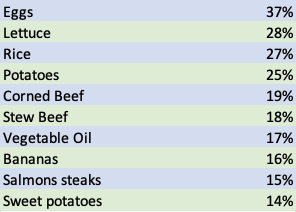
Staples like eggs, on the other hand, went up in price by 36.6%, rice by 27.3%, lettuce by 27.8% and the cost of potatoes was higher by a quarter. All in the span of six months.
Several food products that had not moved in price for years, such as condensed milk or instant coffee, are now more expensive, too.
Overall, the items listed by the ESO were 12.4% more expensive in June – the latest available data – than at the start of the year.
This trend of ever-rising prices is unlikely to have changed in the second half of the year.
US data, which sets a trend for consumer prices for Cayman, listed eggs, butter and margarine, flour and lettuce as the largest price drivers among food items in the first eleven months of the year.
No other sections in the consumer price index basket of goods and services could measure up, however, with the gas price shock.
In the first two quarters of 2022, petrol and diesel were between 35% and 40% more expensive.
Some of the effect on electricity bills has been cushioned by a government programme to cap the per-kilowatt-hour cost to the consumer but some of the effects will just be deferred to 2023. A programme by CUC that saved consumers some money in the latter months of 2022 will be recovered via higher prices for electricity next year.
Related Videos