In a whirlwind 48 hours in the Cayman Islands, Prince Edward launched a new ‘coral fund’, had a small part of the Bloody Bay Wall dedicated in his honour and was given a primer on Cayman’s hurricane readiness by the territory’s army regiment and coast guard.
He also expressed impassioned support for the ‘natural world’ and, in particular, the groundbreaking research being done on Little Cayman into coral reef sustainability.
His wife, Sophie, Countess of Wessex, was just as busy, attending talks with senior female financial leaders, playing dodgeball with youngsters at the YMCA and opening the island’s Agricultural Show.
The couple’s schedules aligned for a final event, presenting Duke of Edinburgh awards to young people at Government House before boarding the plane to sister territory, the Turks and Caicos Islands, Wednesday evening.
Perhaps the most significant feature of the trip was Prince Edward’s overnight stay in Little Cayman, where he participated in talks with government leaders on climate change and sustainability.
“Protection of the natural world is crucial to our long-term sustainability,” he said in remarks at an event at the Central Caribbean Marine Institute.
The prince, the youngest son of the late Queen Elizabeth II and brother to King Charles III, is the long-time patron of the island’s research and education centre and opened its existing facilities 20 years ago.
Scientists at the centre updated him on their groundbreaking work on growing and outplanting coral that could be resilient to the impacts of climate change and other marine threats.
Kate Holden, director of advancement at CCMI, said Prince Edward was extremely engaged in the centre’s work and very knowledgable about the detail of its research.
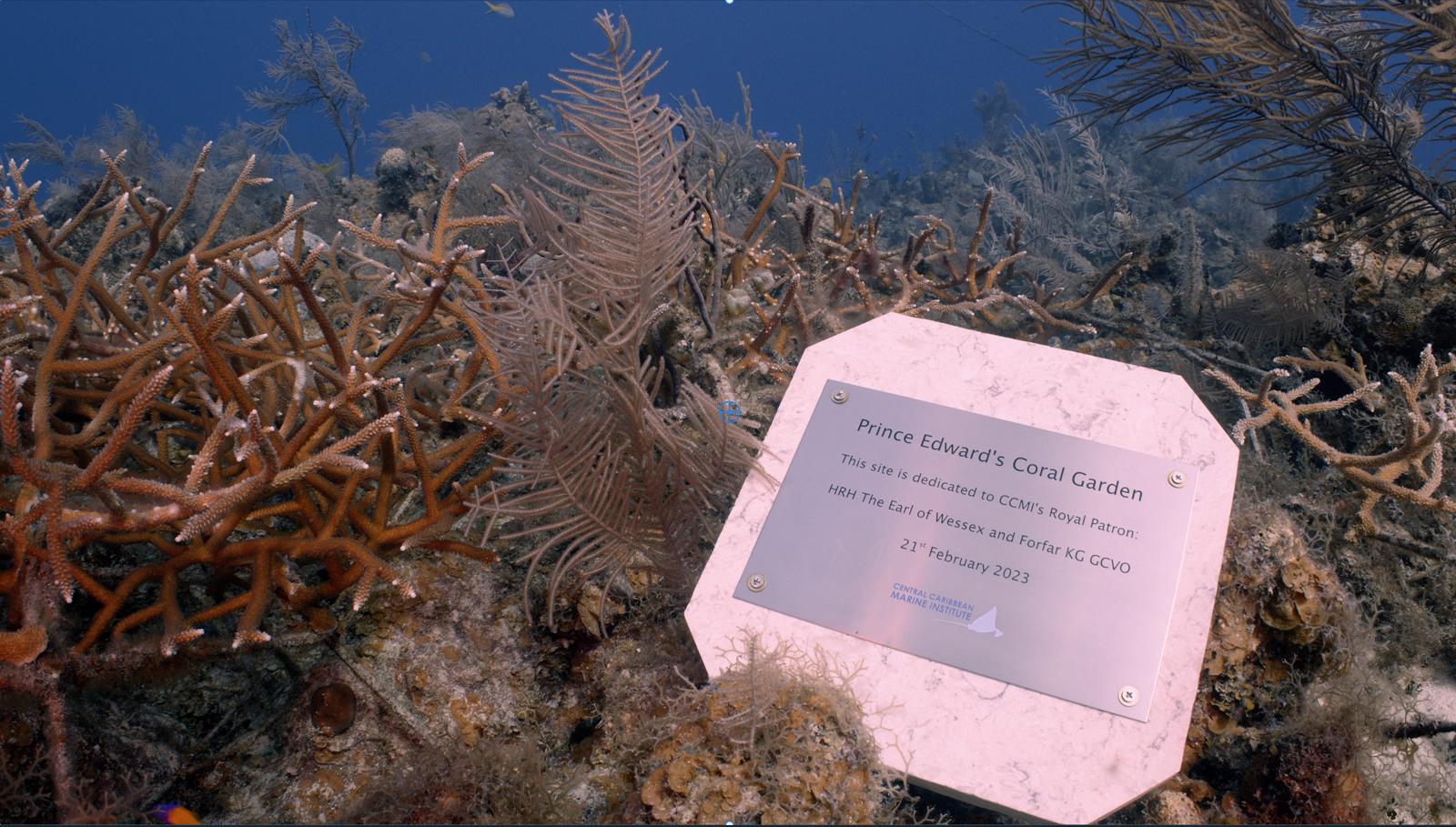
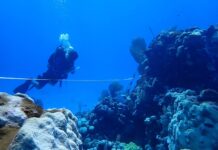
She said the prince had been in attendance as an underwater plaque was unveiled at the centre’s coral nursery, located at a dive site on the Bloody Bay Wall, in his honour. She said the gesture was to thank him for his years of patronage.
The site has special significance for CCMI, as the locus of one of their most influential research projects. Scientists at the Little Cayman centre have achieved unprecedented success rates in growing hard corals and ‘out planting’ them on neighbouring reefs.
The project also uses genetics to help researchers understand which coral species are most resilient to stressors associated with climate change, like rising ocean temperatures, acidification and storms.
Reefs all over the world have been in steady decline for five decades and the CCMI research could hold the key to one method of replenishing these damaged ecosystems and the marine life they support.
Launching the coral fund
As the centre’s work expands and becomes more pivotal to global research, it is looking to expand its premises on Little Cayman.
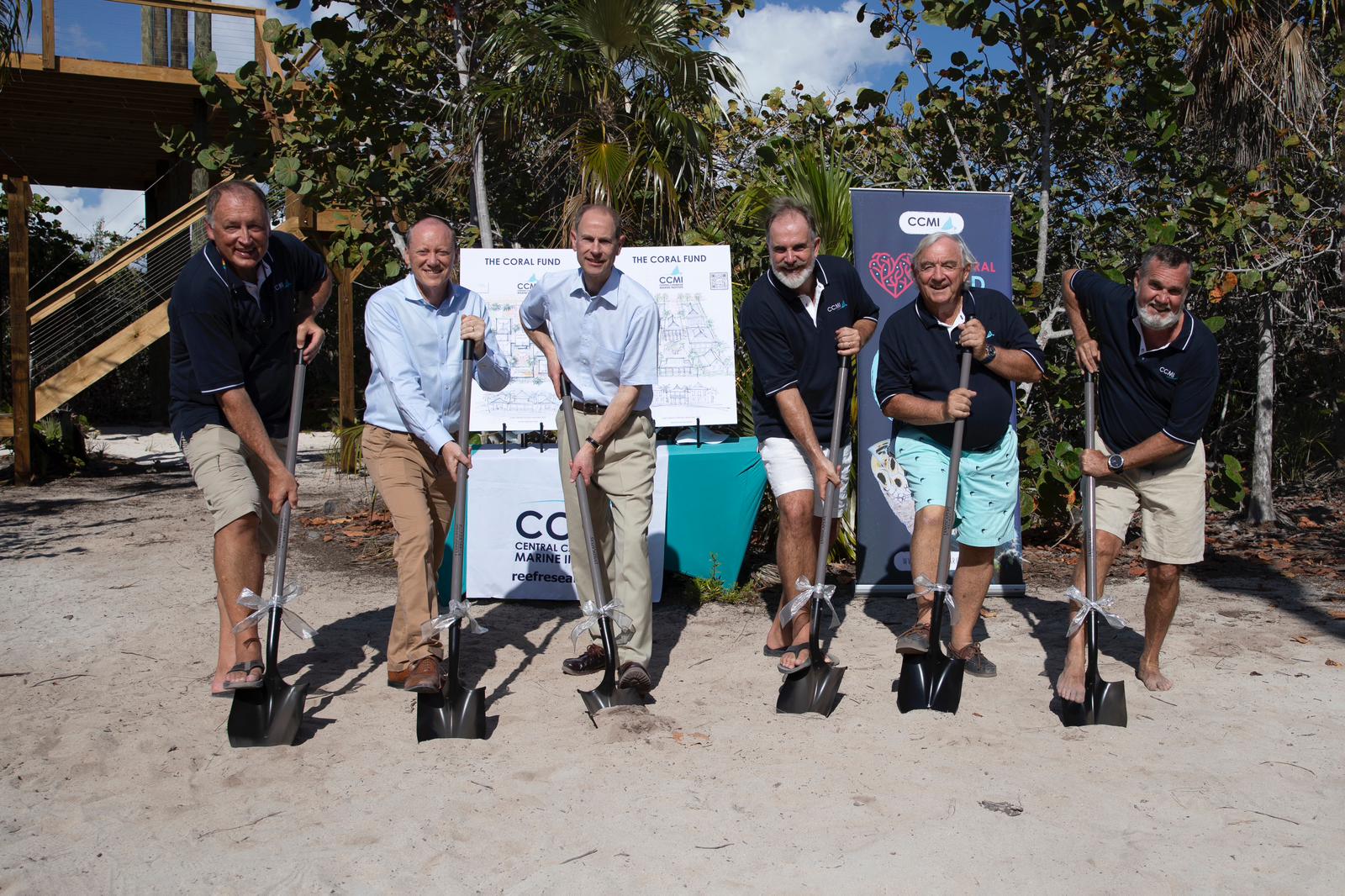
Prince Edward officially launched the ‘coral fund’ – a new fundraising effort which seeks to raise almost US$3 million for new classroom and accommodation space on land close to the current headquarters. The current ocean-side site will then be redeployed entirely as lab and office space.
Holden said the aim is to have the money raised by the end of 2024 and for building work to begin the following year.
She said Prince Edward had been interested in the project and pleased to see how vibrant and abundant the marine life on Little Cayman remained, despite the challenges oceans are facing.
“He was very interested and extremely well-read on the subjects. He is not just a figurehead, he is extremely interested and engaged in the work we do.”
Hurricane readiness
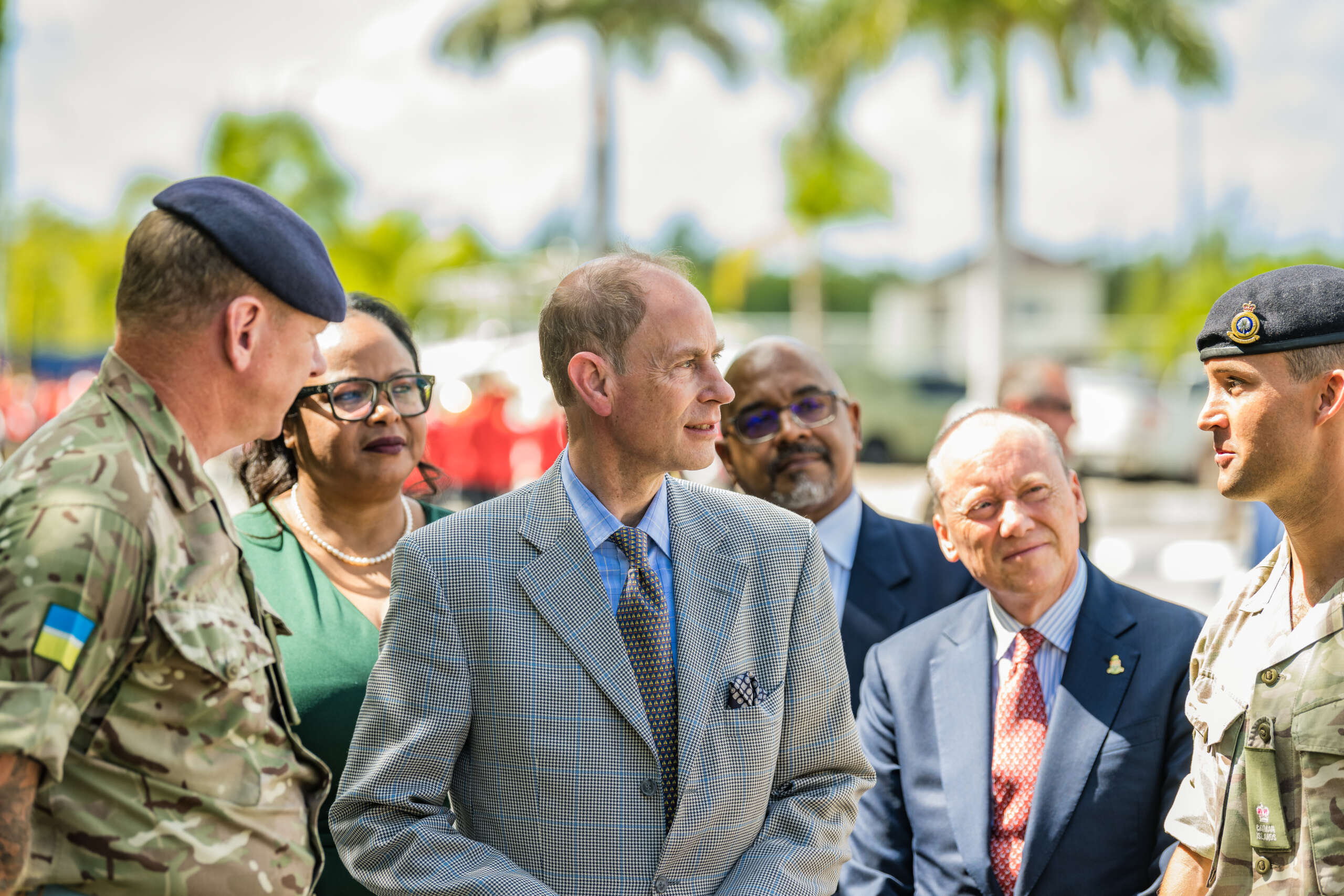
Prince Edward spent the night on Little Cayman before an appointment Wednesday with Cayman’s newest uniformed services.
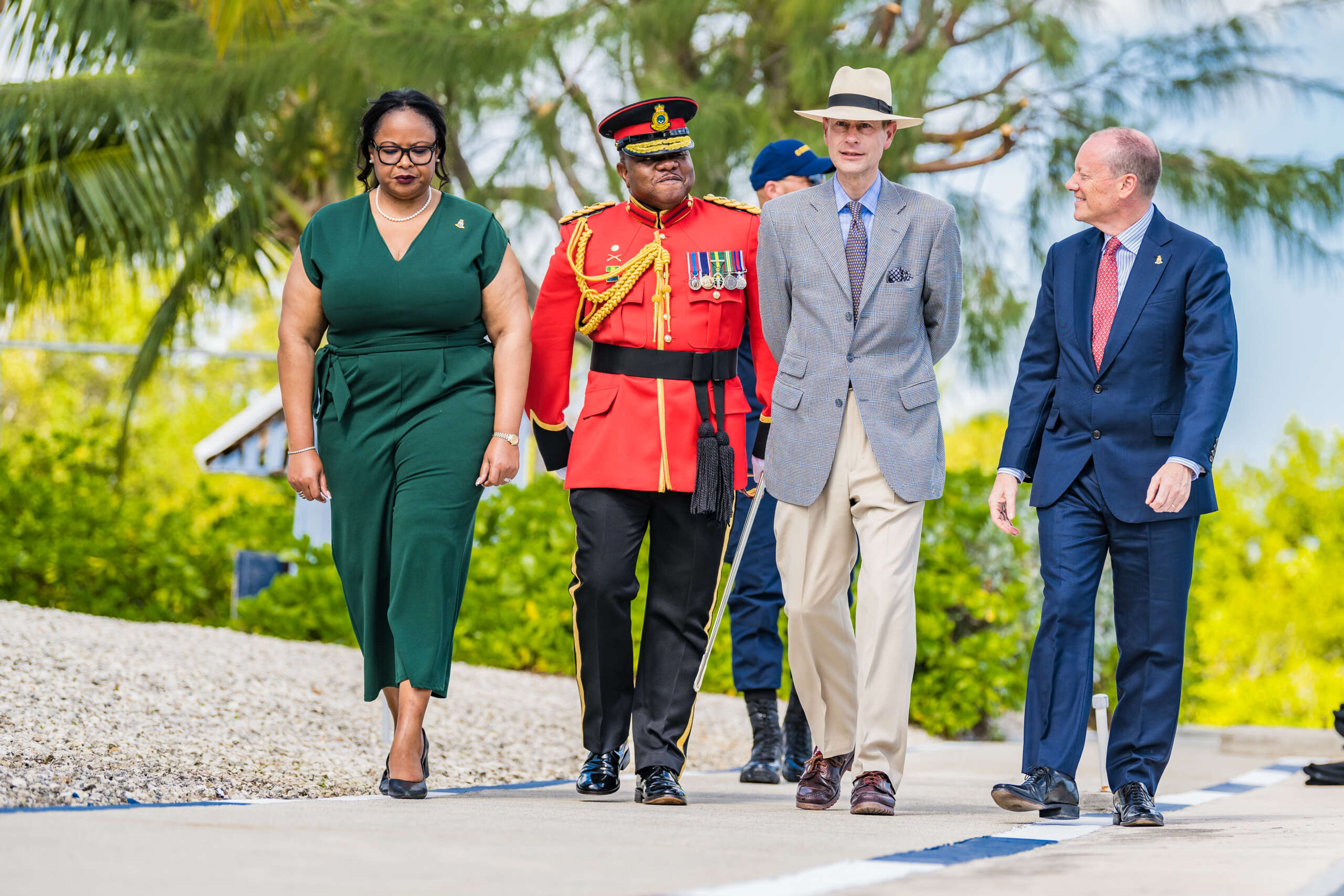
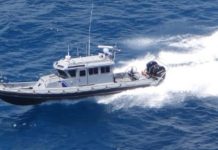
He arrived at the Coast Guard Headquarters on the North Sound in the company of Commander Robert Scotland on board one of the unit’s high-powered vessels.
The prince was given a tour of the base and met key personnel, as well as a new recruit class which was undergoing combat training drills.
Though he missed out on the Agriculture Show, which was opened by his wife Sophie, Countess of Wessex, the prince also got to sample some good Caribbean food, as he inspected the regiment’s demonstration of its post-disaster capabilities.
That included a ‘camp kitchen’ manned by two recruits, who work in their day jobs as chefs at two of Cayman’s top hotels.
Prince Edward seemed impressed with the curried chicken and rice and beans they had prepared in the mobile kitchen.
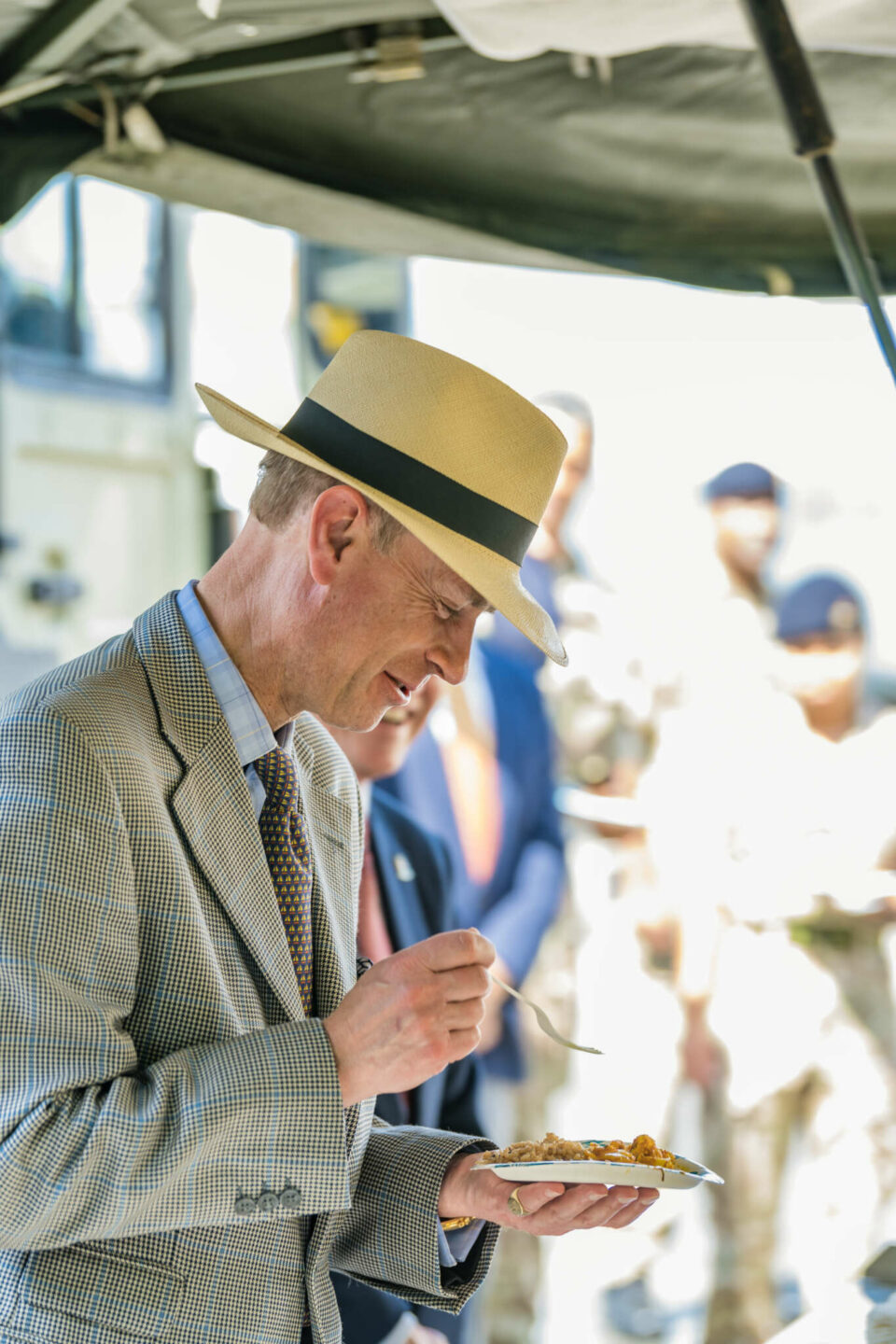
Major Tim Howard, the commanding officer of the regiment on the day, said the kitchen had capacity to feed 400 people a day and had been deployed to help people in East End after Hurricane Grace last year.
Prince Edward was able to wash it down with purified sea-water, converted to clean drinking water by regiment recruits.
Those were two elements of the regiment’s evolving toolkit of equipment and capabilities, which were on display at the Coast Guard HQ.
Hilux operational vehicles equipped with chainsaws for clearing routes, field ambulances and other disaster relief kit were all part of the demonstration.
“We just explained to his Royal Highness that the main role of the regiment is humanitarian aid and disaster relief,” said Howard.
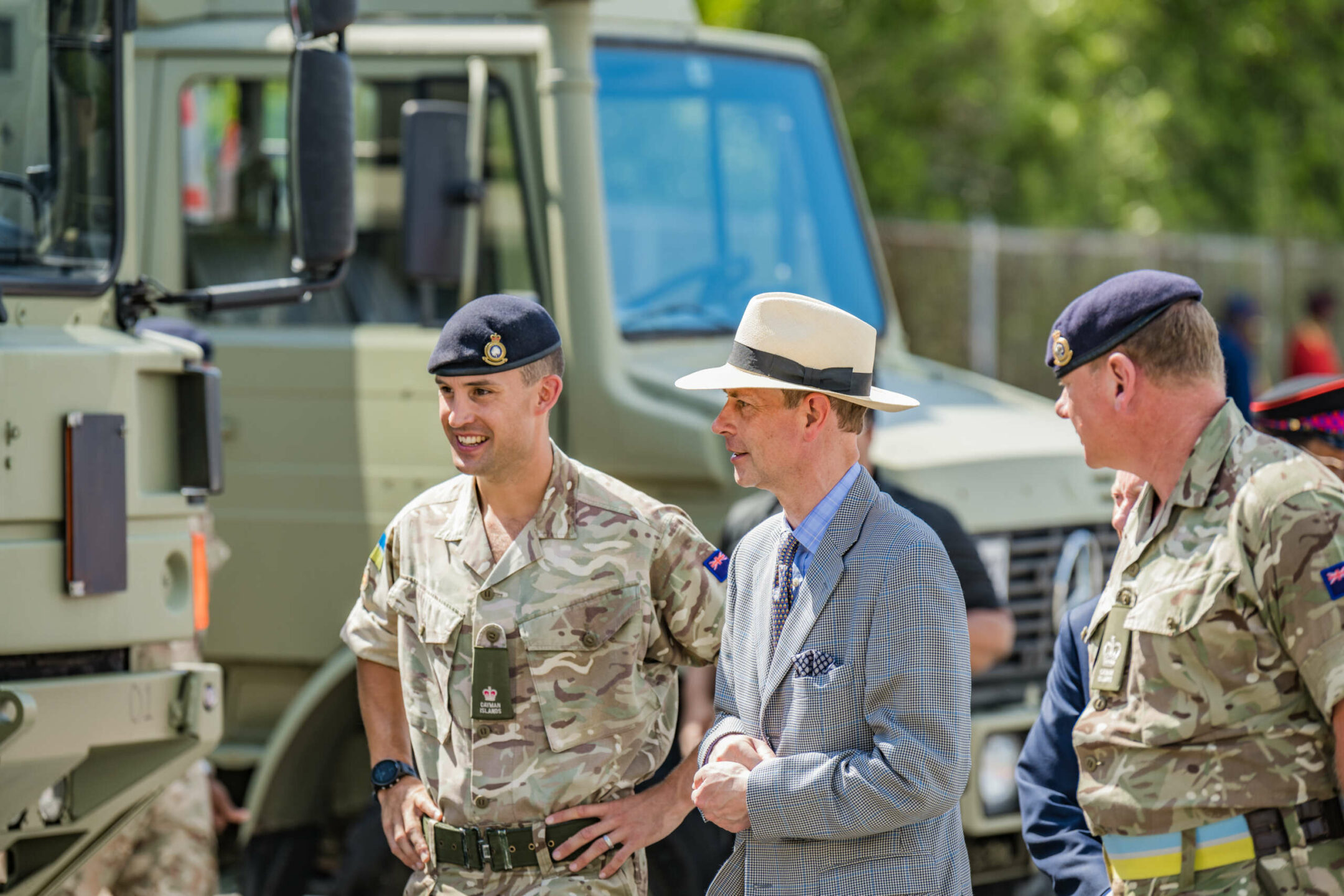
“He had the opportunity to see some of the operational vehicles that would be used to support our activities, and a chance to meet the team and for them to show some of the kit and equipment we use and put that in an operational context for him.”
Following his departure from the marine base, Prince Edward returned to Government House to rejoin his wife, who had an equally busy two days, including the visit to the Field of Dreams with the YMCA and the Agriculture Show.
The couple flew on to Turks and Caicos Wednesday night.
Related Videos