A Honduran fisherman accused of smuggling five kilograms of cocaine into the Cayman Islands on a boat has been found not guilty following a three-week trial in Grand Court.
DNA likely to be from Elroy Edward Warren James was found on a bag holding the drugs – but defence counsel argued that it was transferred there after a search of his belongings.
The court heard an officer of the Cayman Islands Coast Guard was wearing gloves when he searched the Liberty 1 fishing vessel, but did not change them between handling items.
Attorney James Stenning, representing James, told the Compass after the verdict on Friday, 2 June, “I’m really glad for Mr. James who can now get on with his life.
“It’s been a difficult journey for him and I’m glad I could give him the support that I did.”
Meanwhile, the jury was unable to reach a verdict on boat captain David Oniel Bennet Webster, who pleaded not guilty to the same charge. His case is expected to be retried.
Five blocks of cocaine
Justice Cheryll Richards, who presided over the trial, summarised the evidence for the six-member jury to consider throughout Thursday and Friday, 1 and 2 June.
She recounted that 34-year-old James, a fisherman for 18 years, was recruited to work on the Liberty 1 boat and obtained a six-month Cayman Islands work permit in July 2022.
He made four trips to sea with Webster, 34, as captain and another crew member, including the last trip when the men caught lobster and fish.
During that outing they stopped for a few days in a place James described as ‘The Quays’ in Honduran waters to shelter from a storm.
The men only left their vessel once for a short trip on a paddle boat which the captain borrowed from another boat to look for conch, the jury heard.
There were about 60 other boats around, but the men only communicated by radio or shouted from a distance.
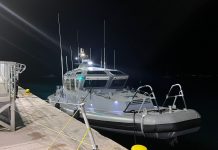
On the return journey, when the boat was near George Town at about 11pm on 10 Nov. 2022, members of the Cayman Islands Coast Guard stopped and boarded the vessel.
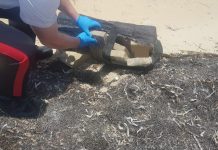
They detained the men, and searched the boat, finding a backpack with a canvas shopping bag inside in a cupboard under stairs to the lower deck. It contained five blocks of cocaine.
Officer Andrew Wells opened the bag and show it to the captain, asking him if he knew what it was, and he responded that he did and it was narcotics.
After the drugs were found, James was angry and asked the captain: “Why did you bring drugs on the boat?” to which he responded, “Shut up, stop making noise,” the court heard.
The backpack was the captain’s, according to James, who said he did not put any cocaine inside it, or see anyone put anything in it.
“He said he respects other people’s property and as a crew member he would not touch other people’s property,” Richards told the court as she recalled his testimony.
The handles of the canvas shopping bag were knotted twice and according to forensic scientist Christan Taylor, the inside knot had DNA on it which is highly likely to be James’.
The inside straps and back of the backpack had DNA highly likely to be from Webster mixed with another person’s DNA.
James said he did not have any idea how his DNA got onto the knot and could not remember if the canvas bag had been in the boat, the court was told.
Other witness testimonies the judge recounted included several members of the Cayman Islands Coast Guards, a police crime scene officer, crime task force officer and shipping registry worker.
Gaps in the evidence
Crown prosecutor Kenneth Ferguson’s case was that Webster and James both participated in and had knowledge of the enterprise to import cocaine into the Cayman Islands.
However, defence attorneys Stenning and Keith Myers, who represented Webster, said there were too many gaps in the evidence, Richards recalled in her summary.
Both said the boat was at sea for several days and the living quarters were hot and sweaty with no way to clean the bed linen or clothes, the judge reminded the jury.
They said crew could have deposited DNA on all surfaces, and when officer Andrew Wells searched the vessel he did not change his gloves when he picked up the bag.
Myers also said it was Webster’s backpack, so his DNA being on it is not surprising, but it could have been used by anyone on board the boat.
He also claimed that James was not being genuine when he made a statement after the drugs were found as he was trying to deflect and his client was wrongly accused.
Meanwhile Stenning said none of James’ DNA was found on the actual packets of cocaine and his client never gave a confession.
Both attorneys said their clients, who had no previous convictions, knew nothing about the drugs being on board and committed no offence.
The jury took just a few hours to make their decision.
Related Videos