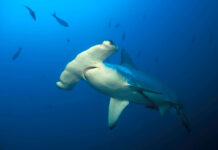
The discovery of a dead nurse shark at a popular dive site has prompted a new warning from environment officials over attacks on the protected species.
The Department of Environment, in a Facebook post Thursday, said a young nurse shark was recently found dead by a group from Don Fosters divers.
It is illegal to kill sharks, which are a protected species under the National Conservation Law.
DoE officials were unable to examine the shark to determine how it died.
The department’s shark research officer Johanna Kohler expressed sadness at the incident.
“The dead shark was estimated to be 2-3ft long. Therefore, it was a very young shark,” Kohler said, in an emailed comment to the Cayman Compass Friday on the incident.
The shark had a large cut on the tail and puncture wounds in the gills and stomach, the DoE said.

“We don’t know the reasons for the injuries. The shark had a deep cut and part missing from the tail, puncture wounds at stomach and gills. It appears that the shark suffocated to death due to those injuries,” Kohler added.
Heartbreaking death
Under the National Conservation Law it is illegal to harm, possess or kill a shark, with stiff penalties if convicted.
Kohler said every shark, regardless of species or age, is important to the Cayman marine ecosystem and plays a vital role in helping to keep the reefs thriving.
“The very young age of the shark is especially heartbreaking because this individual did not have the chance to reproduce yet in order to add towards the next generation of sharks on Caymans’ reefs,” she said.
Kohler said this was the first dead shark from Cayman’s coastal species reported this year, however in March there was another dead shark reported.
It was a Caribbean sharpnose shark which died in an abandoned fishing net offshore of Grand Cayman.
Pupping season underway
The DoE said the discovery of the young shark was a reminder that summer is pupping season “so young sharks are out there and we hope people will be cautious when fishing and take the time to safely release an accidentally hooked shark”.
Kohler said shark pupping season runs from May-September.
“Adult sharks are more mobile during those months in order to find a mate. During summer and in autumn, young sharks are more likely to be encountered in shallow waters such as mangrove forests or lagoons. These areas are spots where females tend to pup because these areas provide shelter from bigger predators and food,” she explained.
Young sharks, she said, tend to spend the first few months or even first few years of their life in these nursery areas in order to grow big enough to be less vulnerable to other predators.
“Then the juvenile sharks will move to other parts of the coastal shelves such as shallow coral reef, the fringing reef, as well as deeper waters where they are also able to find bigger prey,” she added.

The DoE said with shark pupping season in “full swing”, the public should be careful when fishing particularly in the mangrove areas “where young sharks are living their best life cruising in the shallows”.
If a shark is accidentally hooked when fishing, the DoE urged that it please be released safely.
“Circle hooks are easier to remove without hurting the shark or other fish, or you can cut the line as close to the hook as possible. A steel hook will rust out if a shark or fish breaks the line,” it said.
To report a concern about illegal or suspicious activity, call DoE Enforcement on 916-4271 or call 911 for crimes in progress.
Related Videos