Cayman’s ongoing health survey has been extended by a month as two-thirds of those who have participated in the national exercise to date have failed to show up for their finger-prick blood tests.
The survey was expected to close at the end of July. However, the survey has been extended to 31 Aug. to get more people to complete all parts of the process.
Chief Medical Officer Dr. Nick Gent issued a public appeal on Friday for respondents to get their testing done and complete their STEPS survey.
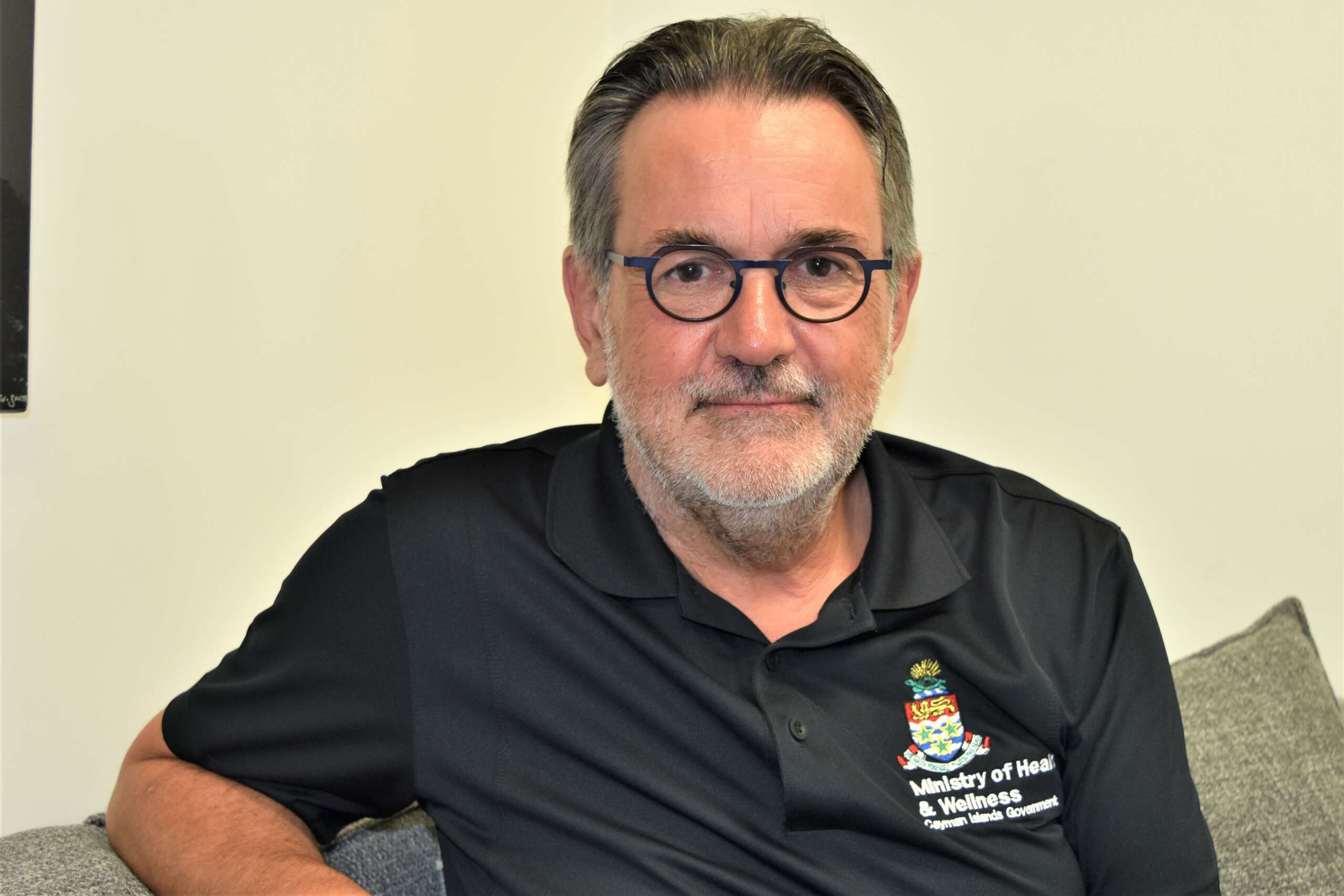
“We’re doing everything we can to make it convenient and if it’s not the right night, we’ll come back,” he said, as he appealed to the public to cooperate to help define “the future health needs for Cayman”.
He said the finger-prick test, which is the last step in the survey, does not require anything more than a drop of blood.
“This isn’t the old-fashioned blood test where you have to sit there and go, ‘How big’s that needle?’ This is a tiny little stylet that [takes] just one drop of blood,” Gent said, during an interview with the Cayman Compass.
He added it was “remarkable” what a simple drop of blood can tell health officials as he urged respondents to get their sample done.
Testing at home
Gent said tests can be done at the home if respondents prefer.
“We can come to you; you just need to call and make an appointment,” he said.
Gent stressed that these tests are beneficial to the respondent as well since they indicate if that individual could require professional care.
“If we find there’s an anomaly in those results, we will actually not just give them the results, but we will guide them that they should get an appointment, routinely or urgently, for healthcare as a result of that,” he added.
He said the hope is that by the end of the new survey period health officials will have “well over 2,000 to 2,500 people completing steps one and two, and we would hope to have got step three up to at least 1,500 people”.
He said home visits are done at the individual’s convenience and enumerators can be flexible.
Intrusive questions?
While Gent acknowledged that there are some who may feel the detailed questionnaire may be intrusive, he said getting the requested information is necessary.
“It’s often important to get information that might not at first sight be important to people – and particularly about lifestyle,” he said, adding that some may question why health officials need to know about eating habits or drugs an individual might be taking.
“[However,] every single item that we ask for is something which has a consequence for people’s health and where we may need to be able to plan to help support people in the future,” he said.
He urged respondents to answer all questions, even the ones that are uncomfortable.
Gent added only himself and national epidemiologist Rachel Corbett will be assessing the information which has been gathered.
“We’ve done an incredible amount of work around data protection and safety of data and making sure that nobody can be identified. We won’t be publishing records of individuals, everything will be done in aggregates. It will be, generally speaking, divided up between men and women who are older and younger into those four groups,” he added.
Gent said the data, when it is collated, will be strictly anonymous and names that were used for identification purposes will be removed.
The chief medical officer said there have been some concerns from enumerators who have been experiencing difficulties approaching people.
This, he said, is understandable since they are going to private homes and “some people are protective of that”.
However, he said the goal is to get the information to make the right decisions to guide policy on what Cayman will need to protect the population’s health.
He also urged respondents to contact the Ministry of Health if they have any concerns or complaints.
Related Videos