

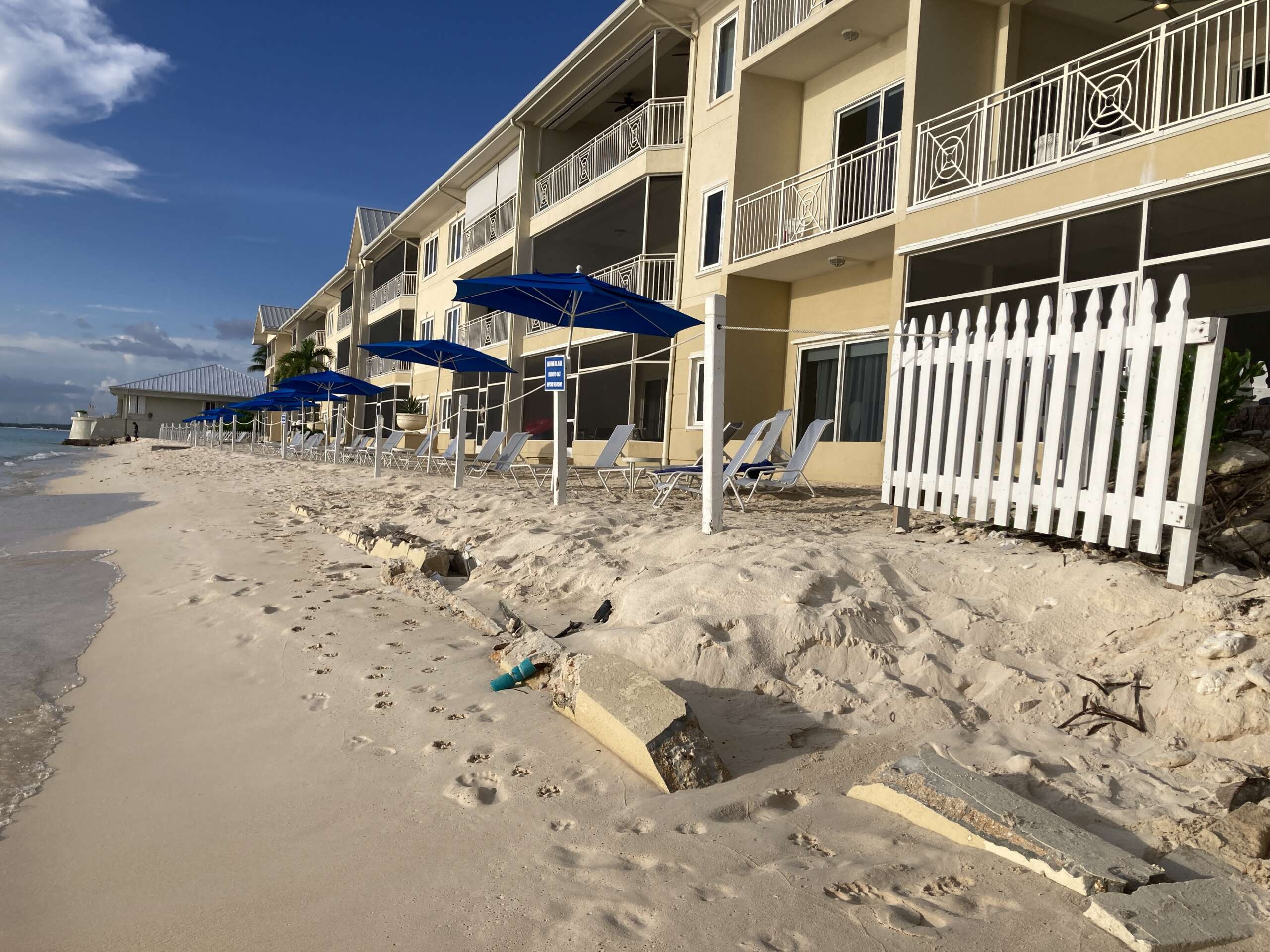
A planning application to replace a storm-damaged 360-foot seawall on Seven Mile Beach has prompted a call for a new government policy to protect Cayman’s coastline and reefs.
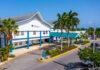
Laguna Del Mar’s proposed $1 million project, which the developer says is “essential” for the resort’s protection, is on the area of shore most heavily impacted by erosion.
The Department of Environment has advised that the project should not be sanctioned.
DOE director Gina Ebanks-Petrie said building seawalls too close to the water can cause permanent erosion of the beach as well as harm to marine life.
She suggested that an already formed technical working group should be entrusted with drafting a seawall policy before any further planning permission is given to developers.
Once approved in Cabinet, it would guide the National Conservation Council’s and the Central Planning Authority’s decisions on construction of the barriers, Ebanks-Petrie said.
Resort seawall risks
Laguna Del Mar, a beachfront condo resort built in 1989, has applied to reconstruct its 360-foot seawall after it was badly damaged during Hurricane Ian in September 2022.
In the agenda for the 30 Aug. meeting of the Central Planning Authority, Ebanks-Petrie said she “very strongly” recommends the application is deferred until a new policy is written.
If it does appear before the authority, the Department of Environment has directed planning permission be refused under powers delegated by the National Conservation Council.
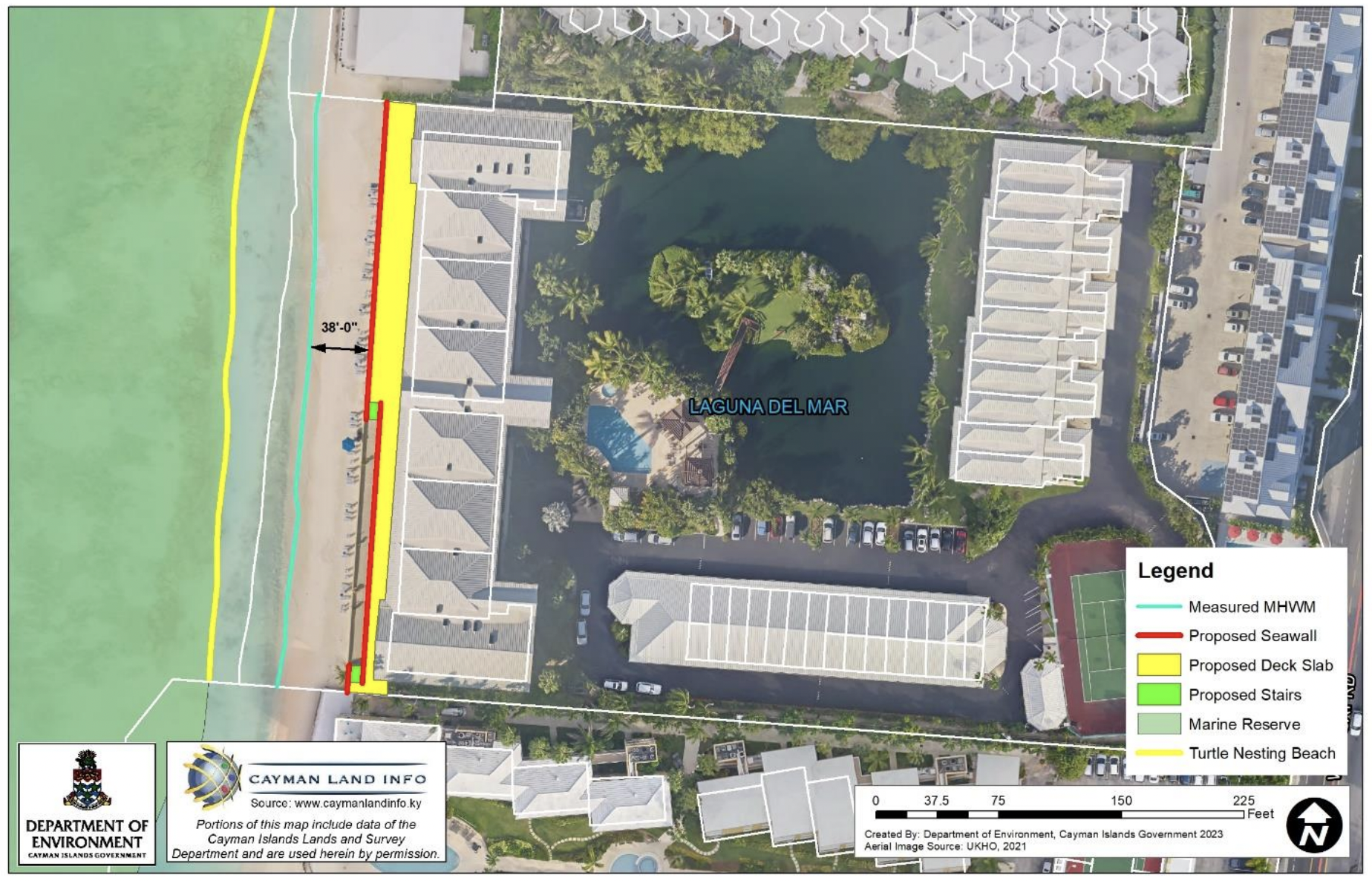
The environment director listed several reasons for this, all of which stem from the proposed seawall being nearly 100 feet too close to the shoreline.
Coastal setbacks
The Development and Planning Regulations (2022) say that in a hotel/tourism zone, seawalls should be a minimum of 130 feet from the high-water mark.
Laguna Del Mar’s current badly damaged seawall is only 38 feet from the high-water mark, falling far short of the required setback.
Ebanks-Petrie explained that the south end of Seven Mile Beach has a well-documented history of erosion, and is particularly vulnerable because of the southwesterly seas.
This chronic long-term erosion is further exacerbated by the effects of climate change, which include global sea-level rise and the increased intensity of storm activity, she added.

Meanwhile, coastal engineering studies have confirmed that hard structures too close to the water amplify the erosion and interrupt natural processes.
Strict adherence to coastal setbacks helps to minimise the impact of erosion, she said, as well as flooding and wave action on buildings and coastal infrastructure.
It will also reduce the financial losses associated with property damage and the costs of rebuilding or repairing structures after coastal events, Ebanks-Petrie added.
An alternative
The Department of Environment suggested the use of ‘rock-gabion baskets’ as an alternative way to protect a building’s foundations rather than building a seawall.
These involve placing limestone rock sill in cages about 30 feet seaward of the existing property, with crest elevation at beach level.
Consultant Kevin R Bodge with Olsen Associates told the department this “appears to be a reasonable and prudent measure for storm protection of the existing oceanfront building”.
This would be “preferable”, Ebanks-Petrie said, due to the relative ease with which the beach could be reverted to its natural state when they were no longer needed.
In response, Laguna Del Mar said the baskets are not durable, do not provide adequate protection to buildings nor meet general building engineering industry best practices.
“There is a risk they will break up during a storm if placed on the active portion of a beach, causing further damage to the environment and surrounding properties,” the developer said.
Regal Beach Club
Regal Beach Club, to the south of Laguna Del Mar, applied for and obtained approval for an “essentially identical” seawall in January 2021 following storm damage to its existing wall.
Hurricane Delta and tropical storm Eta in October and November 2020 had caused significant erosion and damage to coastal infrastructure in the surrounding area.
But the construction of the new seawall caused “unacceptable negative impacts” to the marine protected area despite attempts to mitigate them, the environment director said.
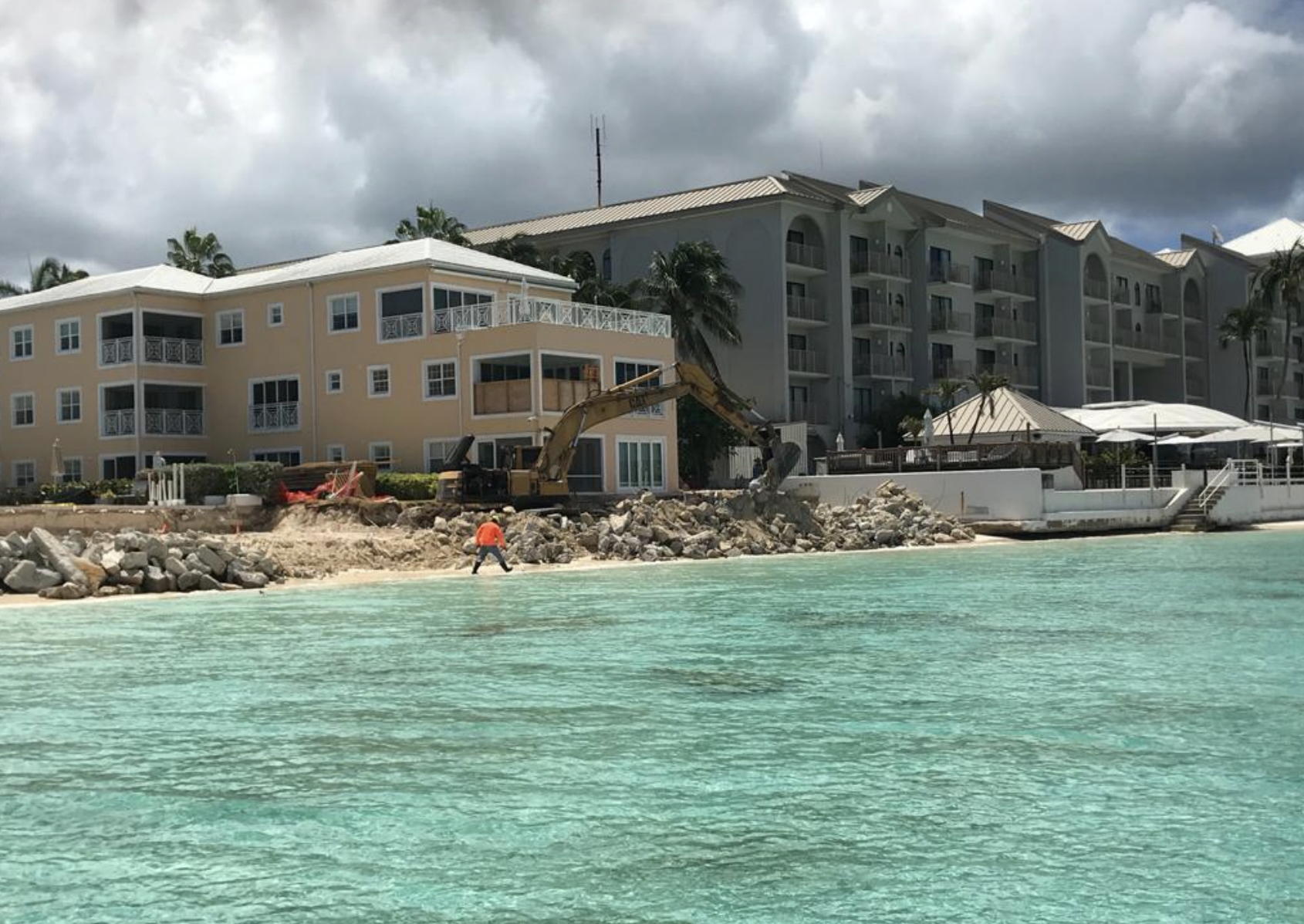
It resulted in the discharge of “dissolved or suspended minerals or solids” at levels likely to be harmful to the ecological or aesthetic value of the area.
And, according to Ebanks-Petrie, the new seawall created alterations that could interfere with the public use and enjoyment of the area.
In May 2021, the Planning Department issued cease and desist notices after construction debris was seen piled on the beach. The build later continued and is now complete.
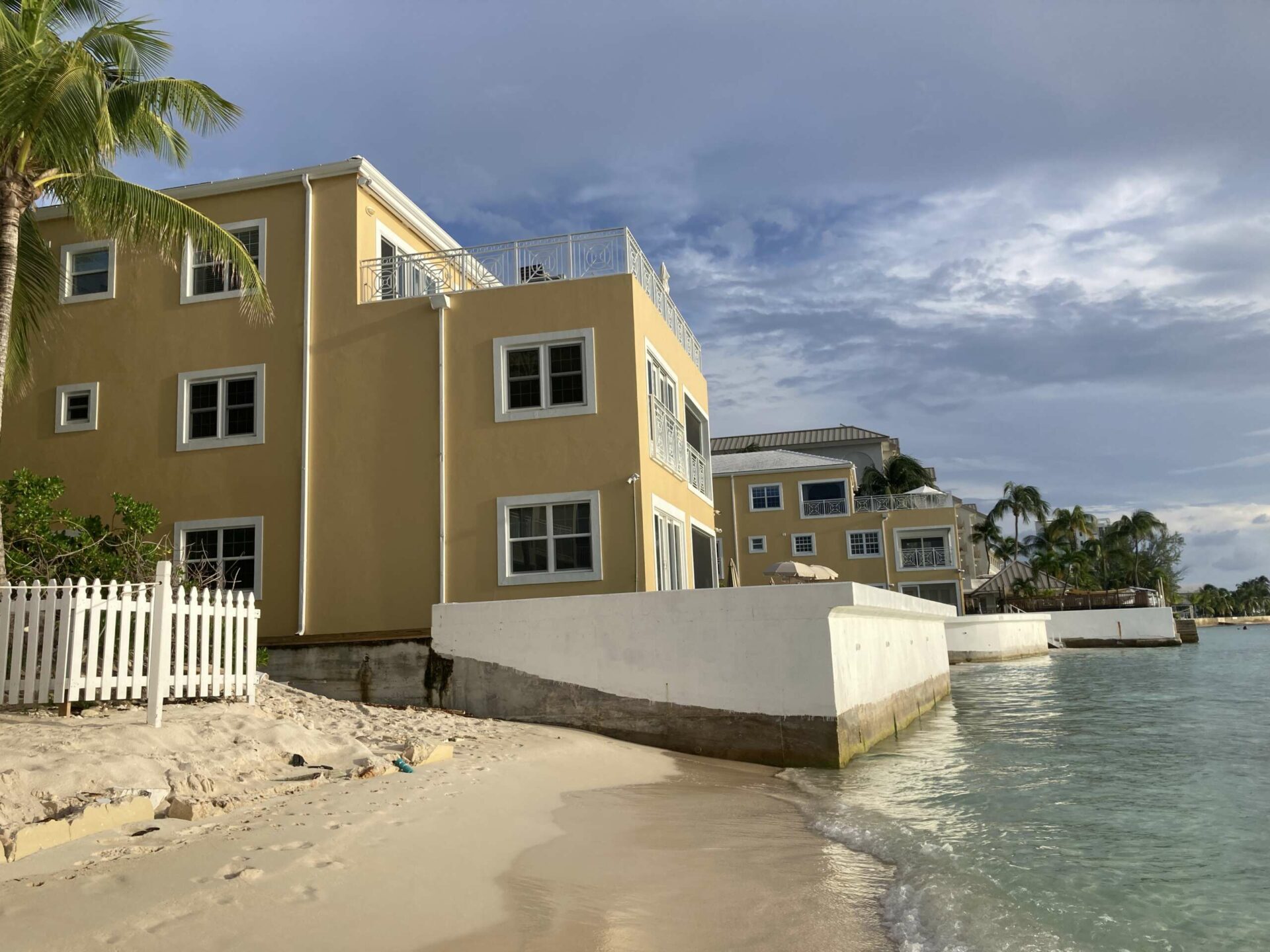
Ebanks-Petrie wrote that Laguna Del Mar’s proposed seawall is almost identical in location, design, and access for equipment as Regal Beach Club.
Laguna Del Mar said the “essential” new wall will have deeper concrete foundations than its previous one, but it will be visibly the same.
“The only exception is the introduction of an integral wave deflector shaping at the top of the wall to dissipate wave energy during a storm,” the developer said.
A new policy
A technical working group was established in 2021 to address beach erosion on the southern end of Seven Mile Beach.
It included members of the Department of Planning, Department of Tourism, Department of Environment, Ministry of Sustainability and Climate Resiliency, Ministry of Tourism and Ministry of District Administration and Lands.
As a result, in the 2021/2022 budget, $21 million was budgeted for a beach re-nourishment exercise – which the Ministry of District Administration and Lands is yet to implement.
The Department of Environment has now requested that the Ministry of Sustainability and Climate Resiliency reconvene the technical working group to create a seawalls policy.
“There must be a Cayman Islands Government joined-up approach to the general issues around permitting any construction on Seven Mile Beach,” Ebanks-Petrie said.
She suggested a permanent option to protect Cayman’s coastlines, which could be considered in the creation of a new policy, of a “managed retreat”.
This is a deliberate and planned strategy involving the controlled relocation of human activities and infrastructure away from vulnerable coastal areas.
Related Videos












Many of us who are residents in this area have tried time and again to engage with government agencies and we are met with deafening silence about beach erosion and replenishment. Phone calls, emails, letters from the various stratas are not returned, just ignored. It’s a shambles. The property market there has ground to a halt, as have vacation rentals. Those resorts and the Marriott are producing far less tax income for government and fewer jobs. This will be like the iguanas. Once the middle part of the beach recedes and the international press pick up on it government will react. At this point we’d even be grateful for a raffle!! Just engage with us for heavens sake.
The Laguna del Mar seawall WAS 130ft from the shoreline when first constructed.
It’s closer now only because the beach has eroded, bringing the shoreline closer to the buildings.
It should be replaced.
One big problem in that area of beach is that the house immediately to the North of Laguna del Mar is built far too close to the sea. This house was built under dubious planning permission AFTER the construction had finished on Laguna del Mar – thus interfering with the natural dynamics of the beach sand AND depriving the residents there of a decent view up the beach ! If this house was removed from the beach then it is possible the sand erosion in this area could be helped, if not solved.
It’s been 2 years now, and that $21 million was budgeted for beach re-nourishment has been spent by another department, so now there is no money!
If seawalls are not allowed, then the government really needs to do beach restoration/nourishment. This happens to all coastal properties in the USA and Mexico. All our sand is sitting 500-3000 yards off SMB. So instead of building seawalls, we need to do beach nourishment which involves pumping sand onto the beach to rebuild an eroding shoreline. Nourishment is the most natural beach restoration solution.
If the government doesn’t do something some there will be NO SMB. I’m just a retired dentist not a structural engineer but the cove at Sunset Cove is working. I have propped before and will again. A wall should be build out of the same stone as Sunset Cove from the edge of that Cove to the tip of the Sovereign where it sticks out into the ocean. I have seen picture of what the beach looked like years ago and it went out 100 or more feet. By building a wall and filling it with sand the area is being returned to what it once was. Sure some fish will be displaced but in the end it will be good for the island and good for the environment Doing nothing is not the answer
I agree; the coastline has drastically changed since the Cove was built at Sunset Cove in 2013. Lands and Survey arial from 2013 clearly shows the problem. The Government approved it, so, now they have to correct the problem for the other 500 residences and Marriott. Again, where is the US$21 million allocated for beach restoration? There is no sense in putting sand on the beach; it just washes away. We need to pump it back on shore, hold it in and build up the shoreline because as soon as the wave hits a solid seawall, it does so much damage.