


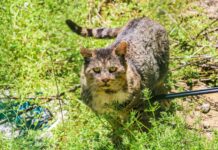
Plans are afoot to open pounds for feral or stray cats at the Department of Agriculture facilities on Grand Cayman and Cayman Brac.
Similar to the existing dog pounds, cats trapped by members of the public and brought to the pounds will be kept for a certain period of time to give potential owners a chance to claim them. If they are not claimed, they will be euthanised.
The plan for the new pounds, which is the latest step in efforts to control stray cats in Cayman, were described at a National Conservation Council meeting on Wednesday, at which members were informed that Cabinet plans to approve an order to establish the pounds at its next meeting.
Fred Burton, manager of the Department of Environment’s Terrestrial Resources Unit, who presented a document titled ‘Procedures for Control of Stray and Feral Cats by the Public’ to the council members, explained that it had been drawn up in response to requests for clarity from the public, animal charities and veterinarians about how the Alien Species Regulations impacted cats.
Cabinet passed those regulations last year to support DoE and other government agencies’ efforts to control the populations of invasive species, including feral cats, on all three islands. The regulations caused an outcry among local animal lovers and charities, who raised numerous concerns about their efficacy and the possibility of abuse.
Burton said that, especially with regard to methods of controlling stray cats in residential areas, “if this isn’t clarified in some way, there are concerns that members of the public may be inclined in some cases to use less-than-humane methods to deal with the problem”. He added, “There is a sense we need some guidance.”
In response to those concerns, the DoE and other agencies drew up the procedures, which align with the Alien Species Regulations and the Animals Act. They state that the only acceptable method of ridding an area of stray or feral cats is by trapping them in cages, before taking them to the new Department of Agriculture pound.
The procedures state that animals cannot remain unattended in cages for more than 12 hours, and they must be kept in a shaded area during daylight hours.
The council, which voted in favour of the draft procedures Wednesday, recommended amending the wording of the document to state specifically that trapped animals must be fed and watered, rather than simply stating that the trapped animals must be treated humanely.
The new procedures would come into effect once Cabinet signs off on the cat pounds, Burton said.
The pound on Grand Cayman would have capacity to hold six to nine cats, he said.
Restricted opening times
Council member Ian Kirkham queried the limited opening hours to the public of the pound on Grand Cayman, which he described as “restrictive”. The pound is open between noon and 1pm and 3:30-4:30pm on week days, and these would be the only times a member of the public could bring a trapped cat there.
He asked if the Department of Agriculture would consider expanding those hours.
A member of the public, who wrote to the council, raised a similar query, stating that someone who traps a cat on a Friday evening would have to keep the cat for 67 hours before the pound reopens on Monday. The writer queried if the regulations obliged that person to feed and water the animal during that time, noting that some unscrupulous individuals who dislike cats may mistreat it during that time.
Burton said he shared the concerns over the restricted opening times, noting that the same times applied to the dog pound. He explained that those hours were in place because it was the only times of the day that the department’s animal welfare officers were available, and that they were attending to other duties throughout the rest of the day.
He added that he expected to meet with Brian Crichlow, the director of the Department of Agriculture to discuss that matter soon.
Asked by council member Steve Broadbelt if the plan relied on the general public to trap the cats and bring them to the pound, Burton said currently there were not enough resources at the Department of Agriculture to have a programme to trap stray cats.
Adoption an unlikely option
In response to Broadbelt’s question on any plans to make the captured cats at the pound available for adoption, Burton said feral cats were difficult to rehome, and the Humane Society has trouble finding homes for the many tame cats and kittens in their shelter.
“To say there is an oversupply would be an understatement,” he said of the number of cats at the Humane Society shelter, adding that the prospect of a feral cat from the new pound being adopted was “very low”.
In the event of a cat with an owner being trapped and brought to the pound, Burton said, efforts would be made to find the owner, perhaps through tracking a microchip. However, he noted that some animals that are microchipped are not actually registered anywhere searchable online, so the shelter staff are often unable to track down the owners.
Controlling cat populations
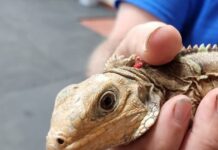
Feral cat-suppression efforts, in the form of trapping and culling, have already been taken on Little Cayman and on an area of the Bluff near brown booby nesting habitat on Cayman Brac. Cats have been blamed for decimating the population of Sister Islands rock iguanas on Little Cayman and juvenile booby birds on the Brac.
So far, no government-mandated cat culls have been undertaken on Grand Cayman.
Over the years, the only efforts to control the stray cat population on Grand Cayman have been by local animal charities, which have been carrying out trap-neuter-release programmes.
Officials have said that releasing spayed or neutered stray animals back into the wild is not a recipe for success and will not succeed in controlling the population, and does not address the issue of cats killing local endangered species, like native iguanas and birds, as felines are natural hunters, regardless of whether they are spayed and neutered.
Burton said the draft procedure for controlling the cat population is “now a matter of what the public can do, and there is no government initiative to go out trapping them”.
Related Videos











cats don’t exist in a vacuum……