


Daniel wakes early on the pull-out cot in the kitchen of the small studio apartment he shares with two other minimum-wage workers.
It’s been another restless night. His housemates must clamber over his sleeping form to reach the shared bathroom, and the noise from the street and the lack of air conditioning in the cramped quarters make it hard to sleep.
At least it’s cheap, he reasons.
“It is uncomfortable because it is really meant for one person, but if you want to survive and save a little money, you have to swallow your pride and figure out some way to get by,” he says.
His situation is fairly typical of low-wage workers in security and landscaping, who told the Compass that they either worked 70-hour weeks or made huge sacrifices over living conditions to survive in Cayman.
Daniel, along with all the other workers interviewed in this series, agreed to share details of his monthly budget, working life, pay and conditions, on the agreement that we use a pseudonym to protect their identities.
He is currently paid around $300 a week as a delivery driver and spends about a third of that on his share of the rent. He is still repaying loans for the cost of his airfare to Cayman last year, and for a vehicle and a medical bill. Eventually, he hopes to be able to send money home, but right now, he is relying on his family in Jamaica to support him.
Daniel came to Cayman to work as a security guard, but moved on after a dispute with his employer over hours.
“I was having to work 60 or 70 hours a week just to have enough to pay rent,” he says.
If he was shifted for anything less, it was a problem.
Benjamin, another security guard with a different firm – also receiving $6 an hour – said the first form he was asked to sign, along with his contract, was a waiver of overtime rights.
Under the Labour Act, employees can agree to waive their entitlement to ‘time-and-a-half’ – which would be $9 an hour – for anything over 45 hours per week.
“If you don’t sign, you don’t get the hours and if you don’t get the hours, how can you survive? If I worked only 45 hours a week, I wouldn’t be able to pay rent,” he said.
Between July 2022 and July of this year, the Department of Labour and Pensions processed 456 overtime waivers. The Compass understands that overtime can also be waived as part of an employment contract.
The owner of a security firm – also speaking on condition of anonymity – told us this is standard practice in the industry. He said it worked in the best interests of the business and the employer.
“All of the guys want more hours,” he said.
Rising rents
Benjamin has his own place – a small bedroom attached to a family house in Bodden Town – that costs him just over $1,000 a month.
“I am going to have to move and share with a friend,” he acknowledged.
“The thing I try to understand is, why are the rooms so expensive, when you look at what you are getting? I just need somewhere to lay down for a couple of hours, watch some TV and then I go to work in the evening – why is that so expensive?”

Asked how he survived on $6 an hour, Benjamin said he needed to work at least 300 hours each month, to earn $1,800.
“If I get that, I can pay rent and have a little bit left,” he said. “I can go buy food and maybe send a little home for my children.
“If you get less than $300, you are working just to pay your bills. Sometimes you end up borrowing money.
“It is hard. Trust me. It’s getting harder every day.”
Most low-wage workers cut costs by sharing their living space.
Mark, a landscaper, earns $9 an hour now, but he only gets a 45-hour week. He used to work longer hours, for $6, as a cleaner.
At one stage, he said, he was just eating a bread bun every day to get by.
Now he shares a two-bedroom place with four others, splitting the rent and food costs five ways.
“If you want to save money, you can’t think of your pride and your privacy,” he said.
“We need to be aware of the price of everything we pick up and we do the ‘pick 5’ specials only for meat.”
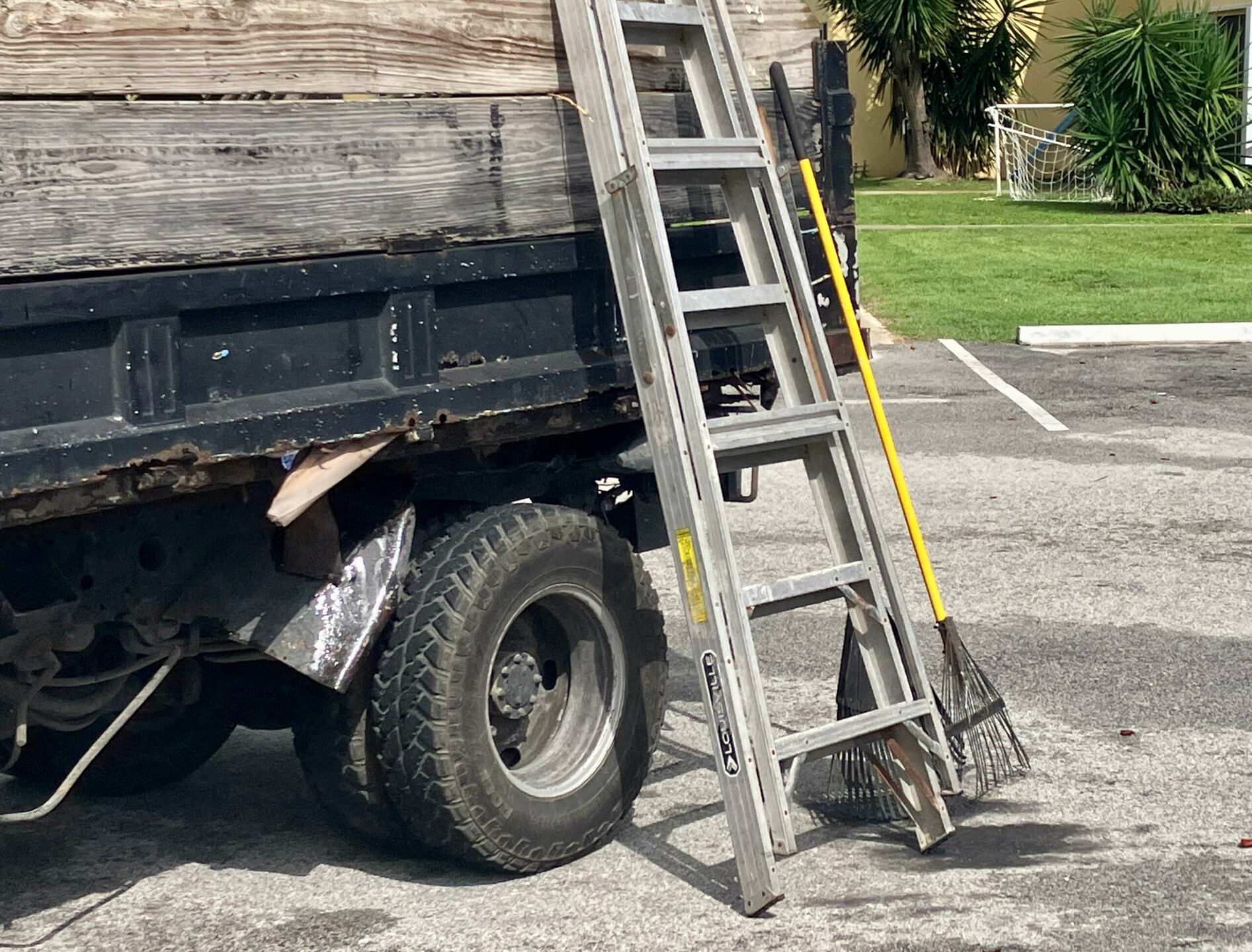
Despite the challenging circumstances, he loves his job and believes his bills would be manageable if it weren’t for the medical expenses he is still repaying.
“During the pandemic, I didn’t have insurance and I wasn’t able to get home, and I got an injury that needed treatment. I am still paying back for that now.”
Making sacrifices
Both Benjamin and Daniel calculate the cost of things in Cayman in hours.
Bus fare from Bodden Town to West Bay Road and back costs what they would earn for one hour and 20 minutes of work. A gallon of milk from the supermarket – one hour’s work. Food from a roadside stand – two hours.
“Sometimes I think to go and get a little breakfast on my way home, but you can’t do it,” said Benjamin, who typically works a 12-hour night shift, six times each week.
He believes the minimum wage has to be increased.
“If it went up to $11 or $12, that would be a big help,” he said. “I can’t do more hours, the rate has to go up.
“I am not talking about a living wage because I don’t think we are going to get that. We have to have somewhere to live and we have to be able to buy food.
“People are happy to work and do what they have to do to survive, but getting $6 an hour, you can’t do it, and every day it is getting harder.”
Strong dollar
Benjamin said many Jamaicans in Cayman have chosen to go home or try their luck in the US. He is considering doing the same but is staying in hopes of getting a better paying job or a raise in salary once the minimum wage review process is complete.
Daniel adds that, even with the cost of living, the strength of the Cayman dollar means many in Jamaica will continue to come here.
“Everybody knows about Cayman and everybody wants to come here – even at $6, that’s good money compared to the Jamaica dollar,” he said.
Right now, he’s losing money. But he hopes to get enough pay or enough hours to eventually start his own business in Jamaica.
“Sometimes you feel like you are getting used,” he said. “I’m just scraping by, but at times you have to tough out certain things.
“We are not living the best life but we are living to go home. What about them that live here? They can’t afford to buy a house or even to pay rent.
“Prices are going up everywhere; it is wicked.”
Strata-nomics
Martin, the owner of a mid-sized security firm, acknowledged that wages in the industry were low.
But he said the prices are dictated by what stratas and business owners are willing to pay. At one point, he said, there were as many as 55 security firms on island.
And while that has reduced, there is still enough competition in the market to ensure that stratas are able to bargain down the cost of services.
Security firms get paid around $9 or $10 an hour, he said, for providing services to condo developments or businesses.
“The executive committees and businesses are aware of the price of security, pool cleaning and gardening, and they compete for the best rate,” he said.
“If we quote $10, someone else will come in at $9 and get the contract.”
He said some developments were already cutting hours, meaning guards had to cover a six-hour shift, which is not ideal for the employee or the business.
“We only accept it because we need to hold on to the locations and give the guys enough hours,” he said.
“We are trying to hold on to our locations. If we lose half our locations, we will have to lose half of our guys.”
The security firm owner said some of the stratas with the most expensive properties argued the most over price.
“If the clients are happy to pay more, we can pay more, but they go for the lowest quote.
“Even if there was not a law, I would like to be able to pay the guys more money, but we can’t do it unless the stratas pay more and maintain the hours. If they do that, we won’t take any extra money – it will go straight to the guys’ wallets.”
He cited fears, however, that a higher minimum wage would actually cause stratas to cut back on security – meaning fewer hours or fewer jobs in the industry. And he warned that some of the bigger firms could maintain low rates – running at a loss for a short period – to push out competition and dominate the market, before setting prices at whatever they wished.
Predatory landlords
Martin also cited concerns that predatory landlords – who he believes are already exploiting low-income workers with overpriced, unfit properties – would be the main beneficiaries of any wage increases.
“How are they going to stop this happening? If the landlord says he is putting the rent up $100 because he knows you got an increase – that is exactly what they will do.”
A similar economic scenario plays out in the landscaping field.

Peter, who runs a small landscaping crew, says he already pays above minimum wage. But he would struggle if the new rate is set above $10 an hour.
“I wish I could pay all my crew more than $10 and they can pay for their bills and send money back home,” he said. “But if I do that, the price goes up and the customer will just find another gardener.”
He said, if he has to pay more, he will need to “tighten my selection” by hiring more-experienced people and offering a wider range of services.
“My crew is already one of the best, but if we charge more, we will need elite workers so the customer can see the crew is at an elevated level,” he added.
Peter, a member of the large Filipino community on island, said people were used to sharing and helping each other get by.
“In general, Filipinos look for a shared place – two, four, eight people – if you can. If a room costs $600 and you find two more people, it is $200,” he said.
He added that lots of people were now seeking help for medical bills, with fellow Filipinos raising funds to cover their costs.
“Insurance doesn’t cover everything, and when they are sick, they have a large bill,” he said.
That’s compounded by the amount of babies and young children in the Filipino community, something that exploded since the COVID-19 lockdown, he said.
The cost of childcare means many parents go without, relying on friends in their community to help look after their children, he said. But if a child gets sick, it can be costly and it is difficult to take time off work.
“Since COVID, I have never seen so many babies,” he said.
“I can see this becoming a bigger problem as these children get older.”
- The Cayman Compass made an editorial decision to allow workers to use pseudonyms for this series on the minimum wage, with the intent of enabling them to speak freely about issues that could otherwise jeopardise their employment.
Related Videos












Not only is the minimum wage impossible to live on, it forces people to take on inclandestine work and live in fear that they’ll get caught and deported. As if that isn’t bad enough, many unscrupulous employers take out work permits for staff are charging them fees for their work permits as well as a monthly “extortion fee” of up to $350 a month. If they report their employer to the authorities, they lose their work permit and have to leave. There should be a reward for reporting employers who do this and a guarantee that the employee will not be kicked off the island, not to mention huge fines to the employer — they are taking advantage of the most vulnerable people on the island.
The Labour Act needs to be changed to prevent greedy employers requiring employees to waive their rights to overtime pay. This is a travesty of justice and serves the rich at the expense of the poor.
I think that emotions aside, it all sounds fair enough. Any changes would start a chain reaction that would reverberate for years to come, but would still settle at about the same level: higher wages would cause higher prices = nobody would be a winner.