


 Christine has seen the best and worst of the service industry.
She started her life in Cayman at a fast food restaurant, earning $4.75 an hour, with no tips, living rent-free in a corner of a friend’s studio apartment. During her time in Cayman she has worked as a dishwasher, a busser and a bartender.
Now as a server in a busy Seven Mile Beach corridor restaurant she actually earns less in wages than she did when she started – just $4.50 an hour.
But the reality is that, after a decade in the service industry, she has graduated from the ‘have-nots’ to the ‘haves’ in a divided sector.
“On an average day I will get $200 in gratuities. If it’s a good day then it is $300,” she said.
Bolstered by an automatic gratuity, of between 15% and 20% added directly to the bill as well as additional tips from customers, some servers in the Cayman Islands’ most popular venues are pulling in as much as $70,000 annually.
The Compass spoke to staff at six different venues who told us they were earning between $20 and $30 per hour, depending on location and with some seasonal variation.
And pool policies – which ensure gratuities are split with ‘back of house’ staff – mean that very few in the hospitality arena are struggling on the kind of poverty-line incomes that the minimum wage commission was established to eradicate.
Those concerns do exist in pockets – in restaurants that skirt the regulations to keep a share of the grats, in fast food outlets where tips are rare and in some kitchens where concerns persist about the division of the tip pool.
But in the mainstream of the hospitality industry, business leaders insist their staff are making good money.
“Our industry is not impacted by those type of issues,” said one major business owner.
The main concern for hospitality bosses in the current minimum wage debate is that their right to use gratuities for up to 25% of the hourly wage is retained, or even expanded, once the hourly base rate goes up.
Pushing up wages for people taking home $6,000 a month is not a priority, the business owner said.
“Our concern is not the servers who are making very good money. If we find room in the budget to increase salaries, we want to do it for the staff that might be making more on paper but are getting less gratuities.”
For servers and bartenders, the Cayman Islands Tourism Association estimates that less than a quarter of their income comes from their wage.
Sharing the spoils
In a well-run restaurant or hotel, all employees will get a share of the gratuities, though it is typically less for a chef or a food runner than for wait staff. One hotelier told us the average renumeration over the course of a year from gratuities varies from another $8 to more than $20-an-hour in some roles. He said wages were higher for those that got less grats.
Businesses that add grats to the bill automatically are required to submit an ‘approved gratuity scheme’ with the Department of Labour and Pensions, which operates an anonymous hotline for workers to report abuse of the system and has the power to collect records and inspect businesses to ensure compliance.
The effectiveness of that regime has been questioned, however, with government leaders acknowledging the department is under resourced.
All of those schemes require 100% of gratuities to be paid to the staff. The split varies but typically the servers get around 60%.
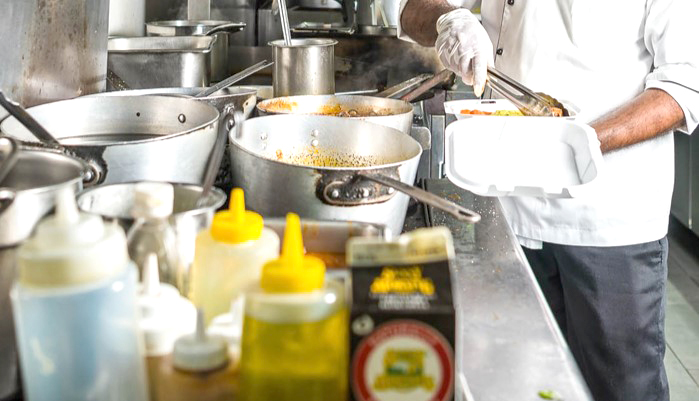
In a hotel, gratuities on the room – usually around 10% – are pooled and split among all staff, from florists and landscapers to front desk staff and housekeepers. Most hotels run a separate grats pool for the in-house restaurants.
For Christine, the split is fair.
In the restaurant where she works, the server gets 10% and the rest goes to the kitchen staff and the food runners.
“They get less grats but the wage is higher,” she added.
Grats versus tips
Though the terms gratuities and tips are often used interchangeably, they are not the same.
Gratuities are set by the business and added to the bill and must be shared among staff according to the approved scheme. Tips are any extras that a customer might leave on top of the 15-20% charged on the check.
“On this island we have some of the best customers in the world. Out of every 50 tables, I would say 45 will leave an extra tip, sometimes $50 or $100 on top,” said Luciano DeRiso, operations manager at Grand Old House and the Wharf.
“That goes straight to the server,” he said.
DeRiso said the server positions were the best paid and most coveted in the industry – particularly in the fine dining sector.
But he said this was also a role that required the greatest professionalism and training.
Kitchen staff don’t earn as much. But, again, in most mainstream restaurants the pay is relatively good, when benchmarked against the $6-an-hour minimum wage.
With grats, unskilled labour in kitchens pays around $15 an hour, though the wage can go far higher for skilled chefs, for example.
A line-cook at a busy restaurant told us he takes home around $30,000 a year – on a par with the median salary in Cayman.
Even on that amount, it is a struggle to get by and she shares a two-bed home with three others. But there are perks, such as free meals, which make the low salary more manageable.
“I am here just to work,” said the cook, from India.
“My family depends on me to earn money. I enjoy cooking, I enjoy making food, but in my current situation I am living for the future, not for the present. I work hard and I send my money home. It is a hard, hard job and I don’t have time for much else.”
Should gratuities be used for wages?
The key question surrounding minimum wage in the hospitality industry is the extent to which grats should be counted towards salaries.
Under the current system, 25% of a person’s wage can be made up through the grat pool, meaning hospitality workers can be paid as little as $4.50 an hour.
But with gratuities raising that income by five or six times, businesses are anxious that the minimum wage does not adversely impact a sector that they say – by one means or another – is paying its people well.
A hotel with 500 employees, for example, would need to spend $3.5 million to fund a $3-per-hour pay rise for all its staff.
While the figures are obviously higher for big hotels, the economic impact is reflected in microcosm across the industry, employers told the Compass.
“For some it might be millions, for others it is $100,000 but the issue is the same,” one leading hospitality business owner said.
“Everybody in this industry supports minimum wage and all of our employees are compensated well above that. The question is what is counted as compensation?”
Despite that outlook, many customers feel queasy about subsidising wages they believe should be paid by the business.
The vast majority of respondents in a Compass poll said they were not comfortable with a restaurant taking any part of the gratuity or extra tip to put towards wages below the minimum.
A typical sentiment was articulated by one respondent, “I do not agree with any tipping culture unless there is very exceptional service. Why should the consumer pay the wages for a restaurant owner?”
Abuse of the system
Deeper concerns exist around rogue employers who keep a share of the tips for themselves.
Several servers told us they had worked in establishments in the past where they believed they were being underpaid from the tip pool.
One restaurant manager told us he had numerous employees who said they had been shortchanged in previous jobs.
“There are so many places that don’t divide up 100% of the grats. By law you have to do it but there are more than 300 restaurants in Cayman, so it is very hard to police and to control.”
Another bar manager reported similar suspicions, saying greater enforcement was needed from the Department of Labour and Pensions.
“It comes down to ethics at the end of the day. You have businesses that are charging people pension and keeping it for themselves. If you will steal from people’s pensions what won’t you do?
“When there is an approved gratuities schedule there is a paper trail for every cent paid out,” they said.
CITA said it was concerned about any practices of that kind that ‘give the industry a bad name’ urging anyone who feels they have been treated unfairly to call the DLP anonymous hotline on 945-3073.
Speaking at a recent public meeting, Lemuel Hurlston, the head of the Minimum Wage Advisory Committee, acknowledged that the department responsible for enforcing the legislation – including abuse of gratuity schemes, pension payments and under payment of wages – was understudied and under resourced.
“We believe that compliance and enforcement going forward is likely to become a major, major challenge,” he said,
Mario Ebanks, a former director of the DLP, said resourcing proper enforcement had been an issue for years.
He said investment was needed in the department to allow it to do more on-the-spot audits and to take a more proactive approach to investigating wrongdoing.
He also advocates for a system of stiff administrative fines – that could be handed out without going through the courts.
“I don’t think the penalties are currently strong enough and prosecutions are so time consuming that they often take several years to come to court.”
By that time, he said, the business owner had often sold up and moved on or the complainant had left the jurisdiction.
“It is tremendously difficult to prosecute through the criminal courts,” said Ebanks.
He believes a separate enforcement unit, with new powers to hand out fines, supported by a professional tribunal panel that can quickly process labour disputes, is the best way forward.
Why aren’t there more Caymanians in hospitality?
Amid the challenges, most of the hospitality workers and business owners that spoke to the Compass, maintained there is good money and rewarding jobs in the sector.
Yet Caymanians remain under represented in many restaurants and hotels.
Business leaders insist this is in spite of their best efforts to recruit locally, citing the irregular hours and the nature of the work as off-putting to many young Caymanians.
Hurlston alluded to this at numerous public meetings saying some types of work simply are not considered attractive to Caymanians – though he faced some pushback from audience members on this point.
The Cayman Islands Tourism Association cites transport and childcare among a list of logistical challenges that make it harder for Caymanians to take jobs outside of the 9-to-5 workday.
Jennifer, a server who left the industry for an office job because she could not get a mortgage for a home, believes that is a key area to fix.
“I think it is important that people coming to the Cayman Islands on vacation should see Caymanians in the restaurants and bars and hotels, but I was told so many times that I was the first and only Caymanian they had seen,” she said.
“I miss the industry; the office is not my world but I have to be able to have a home in my own country.”
Cash rich, and credit poor
For a lot of servers, the key challenge, is not the income, it is credit.
“I had to leave the industry because I was never going to be able to own a home,” said Jennifer.
Though she pulled in around $60,000 a year – more than she currently makes at a blue chip firm – she said the most she had ever qualified for in terms of a mortgage loan was $98,000.
“I was making even more than I am now in the office world. It was great money and it was something I really enjoyed.
“If government really wants Caymanians in this industry they need to have a gateway to own their own home. We need banks to work with people who earn most of their money in tips.”
Another restaurant manager, who has been in the industry in Cayman for 20 years, starting as a server, said getting banks to acknowledge gratuities had been a challenge for some time.
“Banks have not always been helpful, but I think that is starting to change. They have become more flexible.”
He said restaurant staff that provided pay cheques showing consistent income over a reasonable period, including gratuities, were starting to get approved for credit for homes.
A bigger issue right now is the cost of property.
“Not a lot of our staff can afford to invest in Cayman. Even if they earn $60,000 a year you cannot buy a house. Not at these prices.”
CITA indicated similar input from its consultations with several major banks, suggesting they are willing to consider “anywhere from 50 to 100% of gratuities in their income calculations toward home loans, with proof”.
- The Cayman Compass made an editorial decision to allow workers and business owners to use pseudonyms for this series on the minimum wage, with the intent of enabling them to speak freely about controversial issues surrounding their employment.
Related Videos













Really now what is $60,000.00 a year is its can buy a peice of Londres big enough to start a house muchless it cannot pay to dig you fondation footing. $10.00 phr should be minimum wages.
Thanks for writing these very informative investigative articles Mr. James Whittaker. I also believe that the establishments who add Gratuities to their Bills need to do More and a better job of educating their staff and their customers on the purpose of Gratuities. Staff need to understand that they need to give good and extra SERVICE to earn their Gratuity, and customers/patrons should be informed (via signs in the restaurant/bar and on the Bill) that the Gratuity is VOLUNTARY and can be refused or challenged it they did not get good service.