

By Simon Cawdery, Compass Columnist

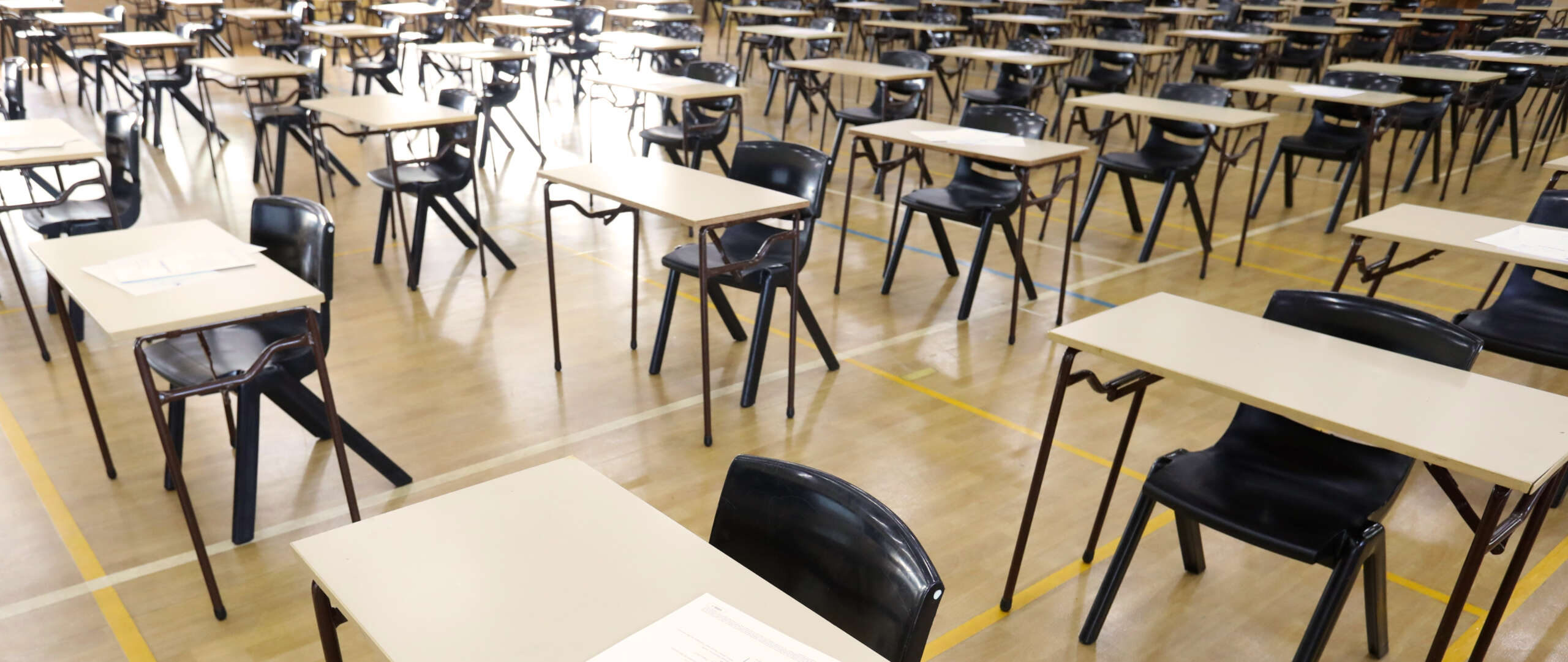
Illiteracy is mostly a word used to describe the lack of education attainment, but apt, in this case, to describe successive Cayman government policies on education. For an education policy to be successful, it needs to deliver outcomes in a cost-effective manner.
Before contemplating Cayman, let’s consider an alternative for context – England. In England, according to the Office for National Statistics and Institute for Fiscal Studies, spending per pupil at government schools is approximately US$8,500 per year. This compares with private schools, which on average charge US$15,000 per student (some charge much more but this deliberately ignores the cost of ‘boarding’). But, for that extra money, better results are generally achieved by private schools.
Thus, although government schools have lower achievement, they do so with far fewer resources. In other words, they provide a decent level of education to the masses but arguably fail at enabling everyone to realise their full potential. Nevertheless, since it costs so much less, the equation isn’t terrible. Less for less, you might say.
In Cayman, however, the maths doesn’t add up. First, let’s look at achievement. Many statistics show that Cayman government schools have lower exam achievement than the private schools. In fairness, this could easily mask implicit selection used by the private schools. But even if government schools had the same success, we need to ask whether they do so cost-effectively. On this point, the evidence is unquestionably no, hence the mathematics problem.
Private high schools in Cayman charge between US$15,000 and US$25,000 per pupil per year (with some discounts for families with multiple children). Government high schools, however, (data is taken from the government’s 2022 budget statement – pages 110, 111 and 115 to be precise) cost a total of US$43 million to operate. The actual schools themselves cost a further US$7.9 million in annual capital costs (using the government figure of US$18 million and splitting it pro-rata, for simplicity, between secondary and primary schools), making a total of US$51 million. Cayman’s government high schools teach approximately 2,150 children. This means that educating a child in the government system costs US$23,706 per year. Doing less with more it seems.
That sum is higher than most of the private schools. One question we might ask is, why? Why does the government spend more per student than the private sector? It is unique amongst countries in this regard, and this uniqueness hints at a solution.
Not just achievement but social integration
Despite having the most funding per student, government schools do worse than private schools. Ironically, they also encourage segregation. With only Caymanian kids (or children with close connections, as well as expats under certain conditions) being entitled to attend, it breeds a culture of ‘them and us’, perpetuating differences between Caymanian families and expat families. Surely, it’s better to bring together the richness of Cayman’s multicultural melting pot of society, so Caymanian kids, both rich and poor, can mix with people from other cultures and other backgrounds.
We have seen how government schools cost more per student to operate than private schools and yet obtain inferior outcomes. Successive governments have identified part of this problem and elected to throw increasing sums of money at the issue, without ever solving it.
When evidence shows a policy isn’t working, one option is to try the same again. Another option would be to think smarter and evaluate alternative approaches.
Why do we have government-funded schools in Cayman?
The most logical answer is that it ensures an education for all Caymanian children. This may have been a fair theory when only government schools existed and Cayman was a nascent economy, but that’s not remotely the case now. Private schools exist, with many being expanded and new ones looking for permits to start. Thus, the landscape is completely different. Against this new backdrop, it is reasonable to ask if there isn’t a better approach.
Why should governments fund schools (that don’t deliver)? Why not fund pupils? The solution would be to give each Caymanian student (whose parents are below a certain income threshold) a bursary to be used at any private school. Simultaneously, mandate that all private schools must accept all students without discrimination (obviously, with limits for capacity) and let the schools operate competitively to deliver the best quality education to their students. Failing schools would see pupils move to performing schools, which would in turn deliver better outcomes for those students. An added benefit would be the rich melting pot of cultures, experience and backgrounds that all students would then in turn be exposed to.
Private schools would not then just be for the children of the rich expat, but accessible to all, and deliver the same high-quality (and cost-effective) education to all of Cayman’s children. Would there be teething problems initially? Of course. It would also take some time for such a policy to work. It would likely be a 5-to-10-year plan. Private schools would also need the freedom (from planning or other restrictions, for instance) to expand. The Department of Education could then focus much more laser-like on inspections and audits (such as whether schools are delivering quality and the curriculum) as well as monitoring competition to ensure schools don’t simply monopolistically raise prices at the expense of educational standards.
There are some private schools in Cayman that have specific religious or other focuses. Any private school can have any focus that it wishes, but for this policy to be effective, schools would need to be prevented from discriminating against students of different views. This will create a more competitive landscape by levelling the playing field and ensuring all students have access to all schools. Otherwise, implicit selection will prevail, to the detriment of Cayman’s children.
Costs, specialist needs
One objection to this approach might be the cost. But, logically, if government schools cost more per pupil than private schools, then actually the net cost will be lower and government budgets improved. A second objection may relate to specialist needs. This is a solution that perhaps isn’t well-provided for by the private sector. Indeed, it may in some instances be optimal for certain specialist needs to be provided by government-funded tutors or intervention teams. Those costs can remain with the education department, which can then be a more proactive team focused on improving the outcomes of the most disadvantaged or delivering specialist training. For clarity, the numbers at the beginning of this article specifically and intentionally stripped out government funding for specialist needs to ensure the comparison was a true apples-to-apples analysis. Indeed, with the savings generated, more resources could be devoted to the underperforming and those with specialist needs. An additional, costless benefit.
A higher education problem
It completely baffles me why Cayman, at a time of concern over its budget and spending path, continues to provide yearly $25,000 subsidies to some of the very richest of Caymanian families. Readers may instinctively say “surely that can’t be true” but, regrettably, it is. One of the obvious challenges with the school system is that insufficient children attain the necessary grades in mathematics, reading, writing and computer literacy. Those are specialist areas where no reasonable citizen could object to taxpayer money being dedicated; spend money in these areas and children will be better prepared for the future ahead of them. And yet, instead, Cayman subsidises the privileged and the rich at the expense of the poor and disadvantaged. An insane situation.
Oddly though, this insanity is hidden in plain sight. Hidden perhaps because the disadvantaged never get to experience it and so don’t know of it. The insanity in question is the subsidy to university students.
Each Caymanian student is subsidised by the government to go to university. No one doubts that leaving Cayman for a foreign country, and paying tuition, rent and expenses is a costly endeavour. No one would also want to discourage students from doing this. Indeed, the more Caymanian kids who can explore the world, learn internationally and then return to Cayman and work, or remain overseas and be ‘national ambassadors for Cayman’, the better for Cayman. But why does a family earning a million dollars a year need a $25,000 subsidy to send their child to Manchester or Arizona or Sydney University? Is it not conceivable that the $25,000 a year could be better used?
The Cayman government is currently paying for 539 students to attend university internationally at an average cost of $25,000 a year (per the government’s own figures). Imagine, entirely plausibly, that of that 539 there are 200 families sending their progeny to university who earn over a million dollars as a family. They can absolutely, unquestionably, afford to send their kids to university without a government handout. But they get one anyway. That’s a US$5 million subsidy to families who are entirely capable of covering the costs without causing any disruption to their boating, skiing or globetrotting lifestyles.
Could Cayman spend US$5 million more efficiently and effectively? Imagine if it were targeted at the poorest, for whom it isn’t just the cost of university education but the cost of clothes, transport and such like. Imagine if it were spent on pre-school needs for the vulnerable so that they had the opportunity to start school at the same standard as those from the most fortunate households. Imagine if it were spent on early-intervention programmes so that students, when in need, could be taken care of and retained in the system rather than lost to other pursuits. Or imagine it were spent on technical vocational study programmes. So many ways the money could be better spent. And yet it isn’t, for reasons I simply cannot fathom.
Of course, there will be angry parents, and many such parents will be voters. But surely, for the benefit of the country, we can take a more nuanced approach to how money is spent. Surely, we can stop the lunacy of the poor subsidising the rich. Surely, we can see the benefit of focusing our spending on ways that are more essential.
After all, there are so many private-sector grants, bursaries and scholarships for university students that it hardly even requires government involvement.
Talking of the private sector
While one can totally understand why private-sector companies sponsor students for their university courses (good brand recognition, public relations, potentially good training of prospective employees, and such like), I really wish they would evaluate whether such sponsorship funds couldn’t be better allocated.
Again, imagine 200 sponsorships are given (often – but in fairness, not always – to those who don’t need them). Imagine, instead, those funds were spent on technical colleges – training mechanics, IT professionals, plumbers, nurses, watchmakers, electricians, and such like. Think of the longer-term benefit to the Cayman community. Yes, by all means offer scholarships, but also perhaps reflect on whether, for the longer-term benefit of the community, there are better forms of human investment. It may not bring quite the same public awareness ego-boost, but it could be a more efficient and effective use of resources.
Perhaps some brave politician will reflect and encourage all the big firms that currently offer multiple scholarships to allocate a small portion of those monies to fund an early intervention programme for disadvantaged students in the STEM subjects or to fund an apprenticeship fund for young Caymanians. This would benefit the wider community far more and ensure funds are spent on those in need rather than those without need.
Education is an emotive subject that often causes friction when discussed and debated. No one should be afraid of debate though, if it challenges the status quo and potentially leads to improved outcomes for children. To be otherwise would demonstrate a lack of learning. Cayman can allocate its educational resources better, improve children’s educational standards and improve its economic finances all in one go. The only hurdle is inertia and the willingness to change.
If Cayman’s schools were delivering excellence at a cost-effective price, there wouldn’t be a need to do this analysis, but they aren’t. The maths is relatively simple… now we just need the politicians to further their education on this subject!
Note: A quick note on the maths: The numbers in this document have taken the published data from the UK and converted into USD at the current exchange rate for comparison ease. The Cayman data has used the 0.82 exchange rate so that all currencies in this article are in USD, thus better enabling like-for-like analysis.
Simon Cawdery, CFA, is an investment manager and governance professional who lives and works in the Cayman Islands. He writes regularly for the Compass.
Related Videos












The case for school choice is overwhelming. The vast majority of credible evidence shows that school choice programs improve academic outcomes for not only the program participants but also the students in public schools; save taxpayers money; and reduce segregation.
Gov. DeSantis signed a bill to expand Florida Voucher Programs…The bill signed by DeSantis in March removes income-eligibility requirements that were part of the previous programs and makes all students eligible for taxpayer-backed vouchers as of the 2023-2024 school year…1.3 million students in the State of Florida are in some type of choice program…
You are on the right track…
Dr. Joseph A Finley Jr