Premier and Minister for Education Juliana O’Connor-Connolly has described teaching as the cornerstone of nation-building.
As a former teacher herself, she has also pledged to make certain that Caymanians have every opportunity to follow the career path of education.
A recent Ministry of Education recruitment campaign – ‘Educate. Inspire, Thrive’ – demonstrated the profound impact teachers have on their students and the broader community.
And the premier said: “Teaching is more than a profession; it is the cornerstone of nation- building and a powerful force for change in our beloved Cayman Islands.
“My commitment, and that of the ministry, is to ensure that every Caymanian with the
desire and capacity to teach, has the opportunity to do so. By empowering our teachers, we are nurturing the potential of our people and securing a brighter, more prosperous future for all.”
Here, four teachers share their experiences of a career in education:
JOVANNA WRIGHT
Principal, Sir John A. Cumber Primary School

When becoming principal of Sir John A. Cumber Primary School in 2019, it was a ‘homecoming’ for Jovanna Wright, who attended as a pupil many years previously.
“I was absolutely ecstatic about returning home,” she says, describing teaching as the most rewarding job that anyone could ever wish for.
“Throughout my career, my passion for education has only deepened. I have learned that education is not just about imparting knowledge; it’s about building relationships, nurturing resilience, and instilling a lifelong love for learning.”
Training
Jovanna trained in the US, obtaining a bachelor of science degree in education, with a concentration in mathematics and language arts, from Georgia State University, and a master of science degree in education leadership, curriculum, instruction, and assessment from the University of Tampa.
She is also currently pursuing a PhD in education policy, leadership, and management from Walden University in the US via online learning, with some residencies in person.
After qualifying, Jovanna began teaching at Prospect Primary in 2006, where she taught for eight years before moving to George Town Primary School (now called Marie Martin Primary School) for a further two years.
Daily routine
Now, as principal of Sir John A. Cumber Primary School, she describes each day as an adventure with no two days the same.
Mornings start at 7:15am, then it’s breakfast club with her students at 7:30am, followed by attending various activities and events at the school throughout the day.
She also checks in with students and teachers, has meeting with parents, undertakes administrative tasks and, finally, ensures all students are boarding their buses home safely. It is only then that she has the chance to complete office work.
Enjoyable moments
“Some of the most enjoyable moments for me as a principal are watching students develop skills, gain confidence, and achieve their goals, (which) is incredibly fulfilling,” says Jovanna. “Knowing I played a role in their journey is deeply satisfying.
“I absolutely love the connections formed with students, colleagues, and the community; it is so meaningful and enduring. These relationships often extend beyond the classroom and create a sense of shared purpose.
“I cherish those ‘aha’ moments when students grasp a concept or overcome a challenge, and knowing that my work contributes to shaping the minds and lives of others gives teaching a greater sense of purpose.
“I enjoy hearing from former students about how my lessons and mentorship influenced their lives. It reinforces the long-term value of my work and impact as a principal.”
Caymanian teachers
Jovanna considers that having Caymanians as primary school teachers is highly important for a variety of cultural, social and educational reasons.
“Native teachers play a critical role in fostering a more inclusive, equitable, and culturally rich educational experience for all students,” she says.
As a teacher, Jovanna is grateful for the opportunity to be principal at the largest government primary school on-island, with the chance to positively impact hundreds of lives and, ultimately, the Cayman community.
She says: “One of my favourite quotes is by John Dewey: ‘Education is not preparation for life; education is life itself.’”
JONELLE EBANKS
Music teacher, John Gray High School
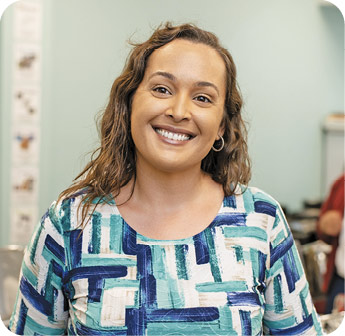
Music has always been a big part of teacher Jonelle Ebanks’ life.
At the age of just 6, she began playing music while at Bodden Town Primary School (now Theoline L. McCoy Primary School).
Then, as a student at John Gray High School, she felt the calling to become a music teacher.
“When I graduated from John Gray at 16, I was awarded the Musician of the Year Award and the Cayman National Cultural Foundation Scholarship, which paved my way to the United Kingdom to study my A levels,” she says.
Launch of career
Upon returning home, she began assisting in the music department at the former George Hicks High School, which launched her teaching career.
“At that time, I had the pleasure of working with Mr. Mike Galvin – head of music at Cayman Prep & High School, and Mrs. Frances McConvey – head of music at John Gray High School; both had previously taught me music in school and had been an integral part of my musical journey,” Jonelle recalls.
She also credits the unwavering support of her parents for guidance and inspiration.
“I feel that ultimately my desire to help others, teach and support them in their growth and development, is what lead me to teaching and will always be close to my heart,” she says. “I enjoy working with children and it is without a doubt the most rewarding career to have.”
Following in footsteps
As a Caymanian, Jonelle considers it vital that others follow her footsteps into the teaching profession.
“It’s imperative that we keep our culture alive,” she says. “If we are not there, it gets lost in translation, naturally. I believe a balance needs to be struck, and I speak from experience as a Caymanian, when
I say that teaching is not a career which is largely encouraged by anyone in our community.
“This is largely due to the lack of values based on being an educator, versus being in a corporate world where you can make a lot of money. This ideology is supported by the high cost of living here, and people want to be able to afford things they like, without worrying about what it costs.
“Still, I am hopeful that Caymanians will start to engage in this profession more, going forward, and that we will be able to strike a better balance in our education system.”
Rich rewards
Jonelle describes teaching as a lifestyle choice with rich rewards through helping others.
“If you are interested in shaping young people’s minds for the greater good of the future, sign up,” she says. “If you are interested in making a positive impact in your society, sign up. If you want to learn and grow at the same time, sign up.
“Teaching is a wonderful journey, but some people never experience it because they never take that first step – don’t be one of those people, take that first step in good faith and sign up now.”
DAVID CONOLLY II
Subject leader (humanities), John Gray High School
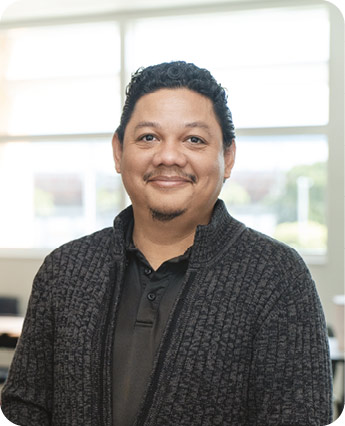
As a teacher, David Connolly considers the role to be one of the most powerful ways to build connections with families and the community.
“The influence a Caymanian teacher has in our classrooms cannot be overstated,” he says. “There is an immediate understanding of culture, and chances are you know the parents, an aunt, uncle or cousin. Those kinds of connections go a long way when supporting a student’s learning.”
Role models
He points out that Caymanian teachers are also role models for students seeing someone like themselves being successful.
“It’s important that Caymanians be involved, as doing so allows us to have a meaningful voice in shaping the direction of our country,” he says.
David is a former pupil of St. Ignatius Catholic School and initially he chose to study modern world history in the UK, where he attained a bachelor’s degree in the subject.
On returning home, he became a teacher’s assistant at PACE High School on the grounds of the former George Hicks campus. It was there that he was introduced to the post-graduate diploma in education programme at the University College of the Cayman Islands.
Enrolling in the programme, he continued to work at PACE, until graduating and securing a position at John Gray as a history teacher.
Responsibilities
Currently teaching students aged 12 to 16, class time is just one of his responsibilities.
“The time between classes is dedicated to preparing lesson plans, updating class materials, ensuring I have all necessary resources,
and grading student work, while providing constructive feedback,” he says.
“Additionally, in my role as subject leader, I offer support to fellow teachers and students throughout the day, alongside managing various administrative tasks.
“While a structured schedule may suggest a sense of predictability, each day brings its own surprises. Whether it’s assisting a sick child or adapting a lesson to seize a teachable moment, unexpected situations arise that ensure that no two days are ever truly alike.”
Other opportunities
For those who may be interested in education, but not in teaching, David suggests they consider other roles such as becoming a counsellor, educational phycologist, occupational therapist, office administrator, or IT systems specialist.
“There are many ways to make a difference through education,” he says.
David finds that teaching offers both joy and fulfilment in many ways, big and small.
“For me, the greatest joy comes from seeing a classroom alive with excitement for learning, particularly about Caymanian heritage,” he says. “The most rewarding aspect, however, is witnessing a student, who once doubted their abilities, begin to believe in themselves and discover their self-worth.
“It’s a career that’s both impactful and personally fulfilling.”
STEPHANIE LOUW
Music teacher, Theoline L. McCoy Primary School and Joanna Clarke Primary School
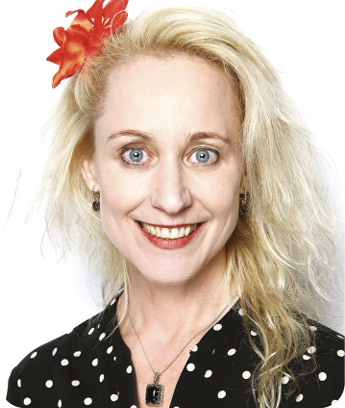
Although not from the Cayman Islands, music teacher Stephanie Louw exemplifies the opportunities that a career in education can offer, including working overseas.
Originally from South Africa, where she studied and taught music, Stephanie decided to broaden her horizons by seeking positions in schools in other countries.
She was delighted to secure a post in Dubai at a top international school as a music specialist and head of music.
Cultural experience
“This was an excellent opportunity abroad, and I grew immensely during my four years there,’ says Stephanie. “However, being an outdoor person, I finally decided to apply for a vacancy in the Cayman Islands. I was ready to explore a new cultural and professional environment.
“I am now in my sixth year on the island, and I am still awed by the natural beauty, and the growth I have seen in our students.”
Stephanie teaches instrumental and vocal music to children aged 4 to 11, as well as vocal ensembles and choirs for students aged between 5 and 11.
“Being a music teacher is one of the most rewarding jobs in the world,” she says.
Career path
Her career path to education grew from being raised in a musical family, with her oldest and youngest sisters also becoming music teachers.
She learnt to play the piano at 5-years-old. By the time she was 13, she had also mastered a variety of other instruments and began giving lessons on piano, keyboard and guitar lessons from home.
“I always found joy in sharing my enthusiasm and passion for music and learning with others,” she says. “At first, I wanted to study law or focus on the music performance pathway. However, I was finally inspired by my family’s love for music and its role in bringing people together, regardless of their culture, nationality, race or background, to focus on music education.”
Stephanie joined the Music Conservatoire at the University of Stellenbosch in South Africa, where she obtained her bachelor of music (education) degree and bachelor of music with honours (education) degree. Thereafter, she also undertook a master of science degree in educational leadership from the University of Leicester, England.
“I thrive when I can help young students discover and develop their unique abilities and talents,” she says.
“I will never forget my students’ reaction after they proudly, confidently and energetically performed an impressive repertoire of choir pieces. With the audience still applauding, they left the stage with big smiles and proud shoulders. I am privileged to share those moments with these young souls.”
Prospective candidates can explore teaching pathways and apply at gov.ky/education/teach.
This article originally appeared in Compass Media’s 2025 Careers Guide.
Related Videos