

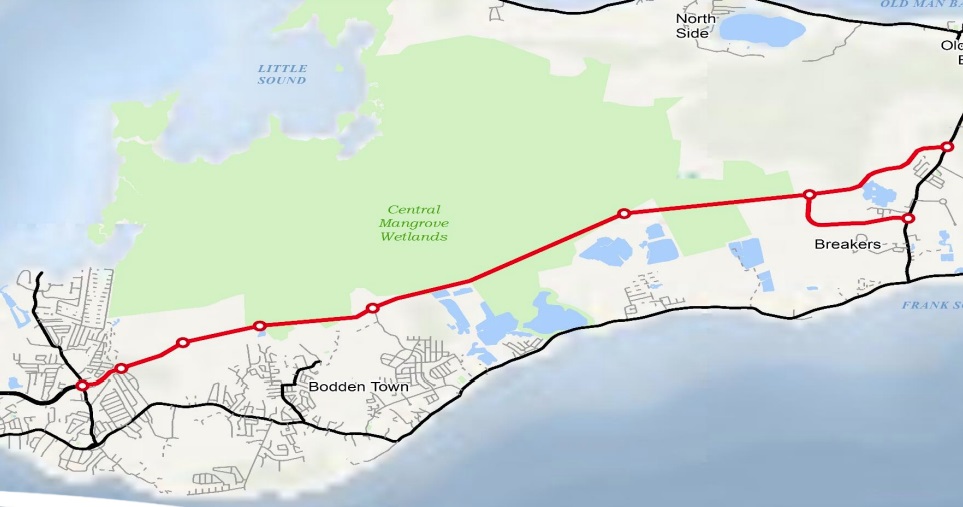
A hydraulics and hydrology report, needed to finalise the exact route of Grand Cayman’s 10-mile East-West Arterial extension, has been close to completion for nearly a year.
“We still haven’t had the final documentation,” Gina Ebanks-Petrie, director of the Department of Environment, told a recent meeting of the National Conservation Council.
She explained to members that the department has been waiting on the National Roads Authority’s commissioned report since early 2023, when she was told it was 90% complete.
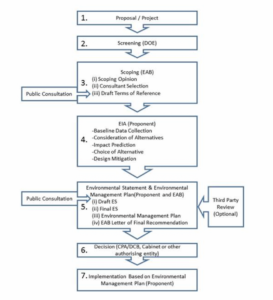
As well as allowing the authority to design a safe and effective route, the report will also be used as part of a lengthy environmental impact assessment process.
Work on this is being held up because of the of the delay, Ebanks-Petrie said on 6 Dec.
“We’ve done everything that we have been required to do and we’re just waiting for that hydrology and hydraulics report.”
She explained that aside from the lack of report, the legally required environmental impact assessment has, however, been moving forward over the past year.
The Environmental Advisory Board meets as part of the steering group every other week with the EIA consultants, the environment director said.
“Those meetings have been going generally very well,” she told members during her progress update.
Ebanks-Petrie said the department had received one ‘chapter’ from the consultants, on cultural and heritage assessments.
The advisory board has reviewed that and has given its feedback to the consultants, “so we’re hoping to get a revised draft of that chapter in due course”, the director said.
A contentious issue
The road, which was first gazetted in 2005, has been designed to improve traffic flow between the east and west of Grand Cayman, particularly at peak times.
While a short western section has been built, further work can proceed only following an environmental impact assessment, as required in the National Conservation Act (2013).
In April 2023, a private member’s motion called for scrapping the assessment on a section of the planned extension from Hirst Road to Lookout Gardens.
A heated debate in Parliament ensued, with former Premier Wayne Panton, who was Minister for Sustainability and Climate Change, arguing against the motion.
However, when it came to the vote, all 17 sitting MPs, including the ex-leader, voted in favour of skipping the assessment and moving forward with the road extension.
Following the meeting, several community and environmental groups expressed their concerns in a letter to the press.
Amplify Cayman, the Cayman Islands Mangrove Rangers, CPR Cayman, Protecting Paradise, Sustainable Cayman and Plastic Free Cayman collaborated on the message.
They said the vote undermined the government’s commitment to rely on scientific integrity and public participation in the evaluation and development of major infrastructure projects.
In September last year, Labour Minister Dwayne Seymour highlighted that no changes to the assessment process had been made following the debate.
“It is quite frustrating,” the Bodden Town East MP said. “The only thing left me to do now is to get a heavy equipment licence and drive the bulldozer myself.”
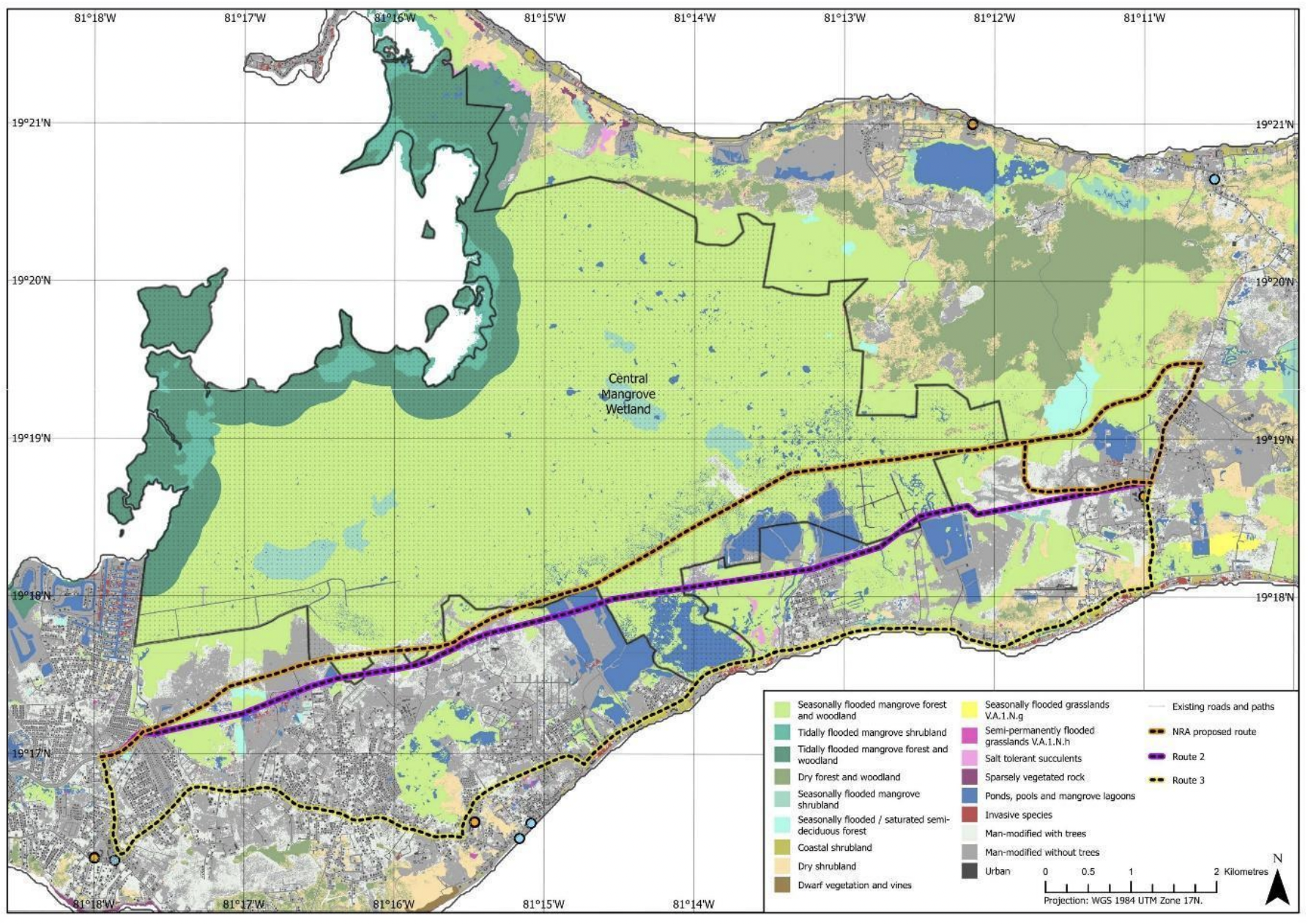
In December, Sustainable Cayman published a report comparing the government’s road extension with two alternatives – one of which it said was a cheaper and greener option.
Related Videos










You forgot to mention that even without the EIA NRA can’t build without the hydrology report. (It would be like building on the bank of a river and not knowing how the river floods.) NRA knows this. Interesting that the public never seems to get told it.