

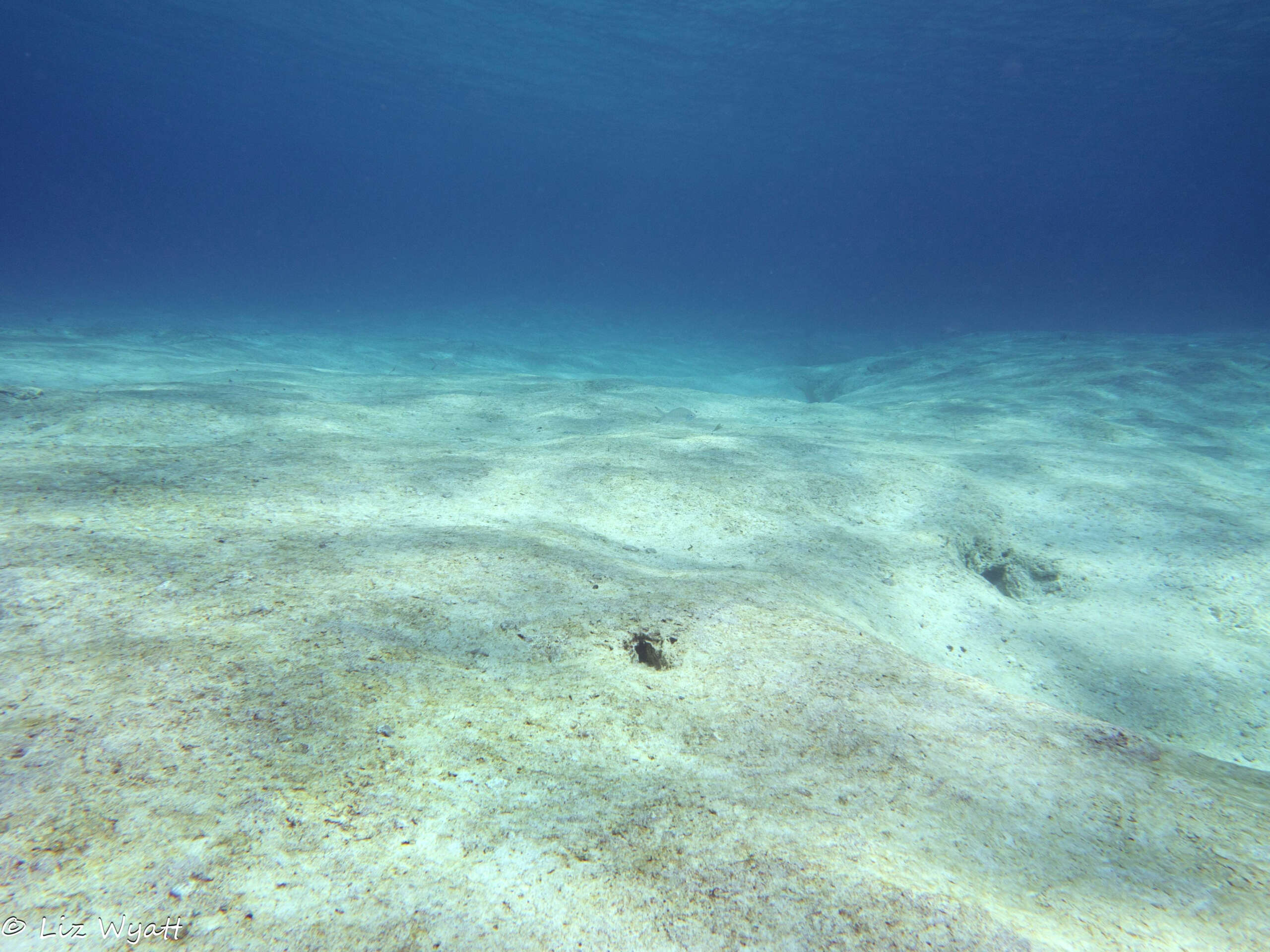
Last week’s nor’wester not only wreaked havoc on land, the thunderous waves stripped the near-shore seabed of sand, sponges and sea fans to such an extent that divers who have visited the sites have described them as resembling the surface of the moon.
The force of the sea surge on the hard pan, between the shore and the mini wall, at sites like Sunset House, Eden Rock and Macabuca, ripped away vegetation, leaving just bare rock behind.
Mel Hart, of Sunset House, described the near-shore area as having been “polished”, as would be expected with such strong waves.
“All the sand has been removed from it too,” she said in a Whatsapp message to the Compass last week once divers got back in the water. “No fans left either… Lots of sponges that broke off and some bigger coral churches that rolled around. But the mermaid is still here standing. Everything from 20-25 feet is good on the reef.”
At the Macabuca site, at which Indepth Watersports reopened its operations from a temporary tent in the car park on Saturday, the scene was also bleak in the shallower water near shore.
Divers found just solid limestone rock from the shoreline almost to the top edge of the mini wall, about 25 feet deep, with vegetation that at some times had been homes to seahorses and lettuce leaf slugs, completely washed away.
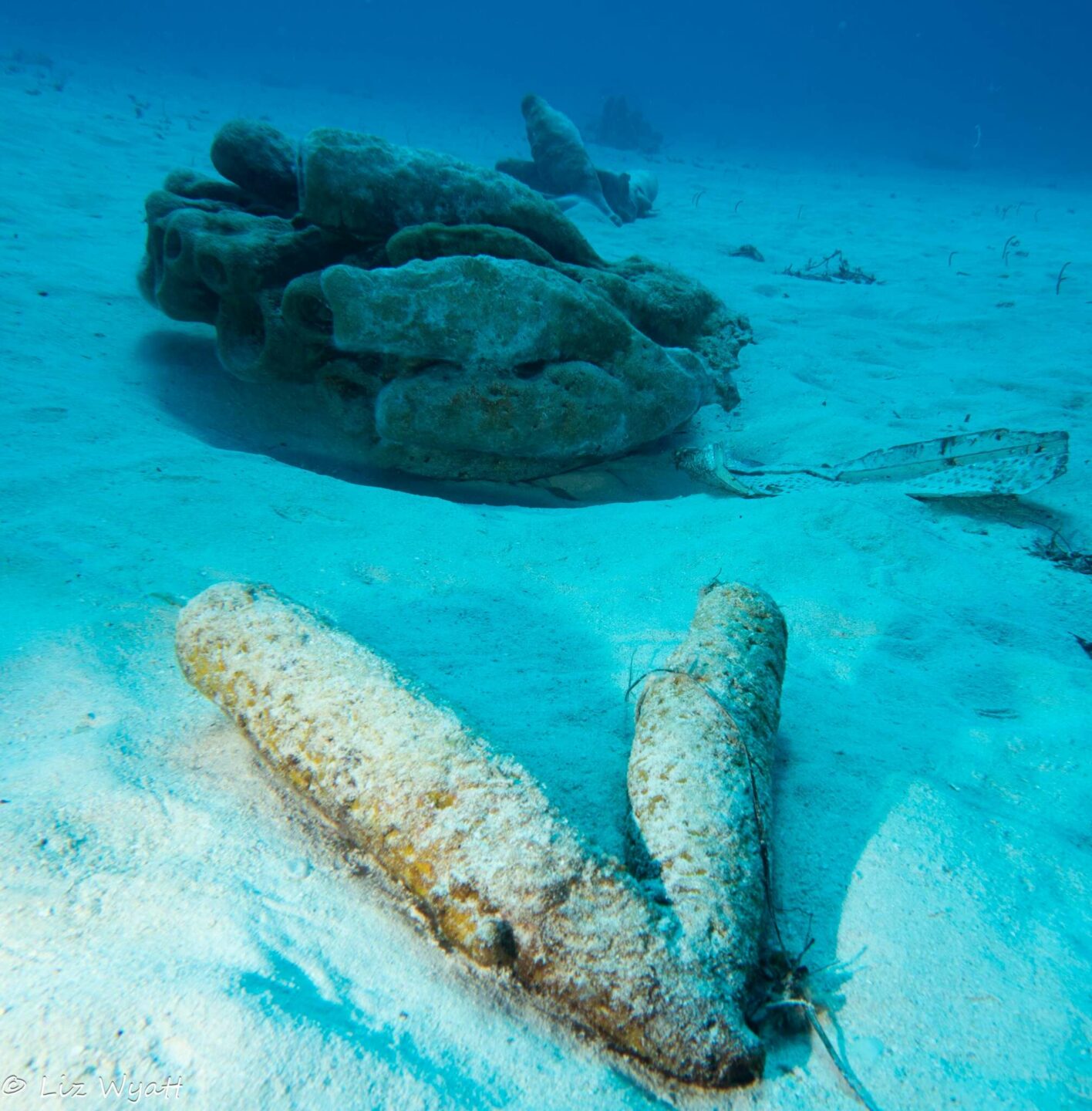
While the deeper areas, from 25 feet and down, appear to have fared much better, out in sandy patches between the mini wall and main wall, sponge graveyards can be found, where dead sea sponges have accumulated.
The waves had ripped the delicate organisms from their bases on the hard pan and along the walls.
One diver, who has visited six sites since last week’s storm and shot footage of the bleak scenes, told the Compass, “These places were full of sea fans and sponges… so much life.”
Another reef defence disappears
Abbie Dosell, of the Central Caribbean Marine Institute, says studies have shown that it takes about 10 weeks for sea fans and sponges to start repopulating seabeds impacted by storms.
“Compared with hard corals, they have much faster growth rates,” she said.
But, she cautioned, sea fans and sponges are at their most vulnerable in their juvenile state, so are susceptible to impacts from sediments, run-offs from shore and other pollutants.
They play an important role in the health of the marine eco-system, Dosell added, because, even though they are not structural components of a reef, they, along with mangroves and turtle grass, act as a first line of defence for the reef against land-based threats.
“It’s just really bad timing; our reefs haven’t had the best year, with coral bleaching and [stony coral tissue loss disease], so this is another barrier and defence gone for the reefs, which is a concern,” she said.
Related Videos






What about the sand levels along West Bay Beach?.
It seems that to add sand back in front of the condos on SMB you need planning permission. From what I read in this newspaper planning is years behind. Does this mean there will be no sand and we can change the name to 2 mile beach