With the 2025 hurricane season behind us, Cayman’s attention shifts to the winter systems that approach from the north, often called nor’westers.
Though less dramatic than a hurricane on satellite imagery, the strongest of these winter fronts can bring strong winds and large waves that have a significant impact on Cayman’s coastline, damaging properties and in some cases causing shipwrecks.
When early-season cold air starts to build across North America in December, the chances for one of these northerly cold fronts increase, and Cayman often experiences what is known as ‘Christmas breezes’.
Cayman’s version of a winter cold front
Nor’westers usually impact Cayman between November and April.
These fronts begin thousands of miles away in the icy Arctic realm, within the polar vortex, a vast circular reservoir of frigid air that normally remains locked around the North Pole.
When the vortex weakens or becomes distorted, pockets of cold air spill south across Canada and the United States. If the outbreak is strong enough, the cold mass can even reach down into the Gulf, forming a frontal boundary that can sweep down as far south as the Cayman Islands.
As this cold air advances, it creates a sharp dividing line between cool, dry northern air and warm, moist tropical air. What matters for Cayman is not only the temperature change but also the wind direction and the length of open water the wind travels across.
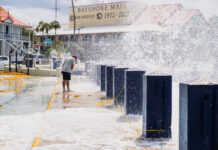
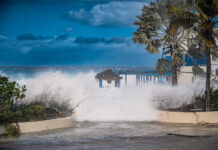
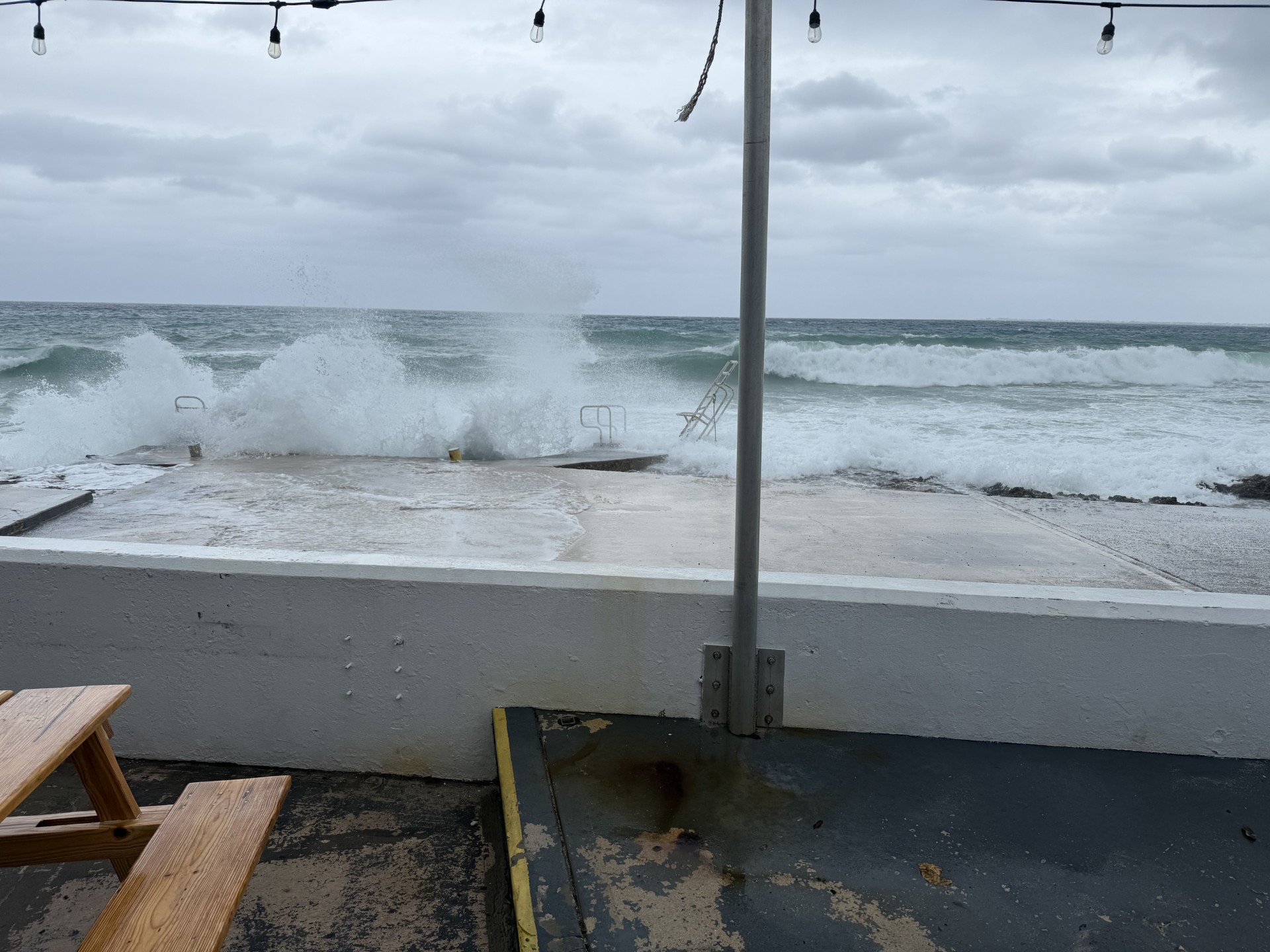
Over hundreds of miles, strong northerly winds can generate large, long period waves that can move straight toward our islands. When conditions align, Cayman’s west and north coasts can face pounding surf, overtopping waves, coastal flooding and hazardous marine conditions.
Nor’westers can be destructive
A typical nor’wester brings cooler temperatures, lower humidity, fresh northerly winds and rough seas. Rain is sometimes associated with the leading edge of the cold front and some nor’westers bring cloudy conditions while others are sunny and clear-skied throughout.
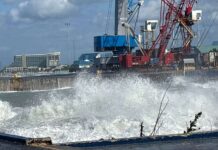
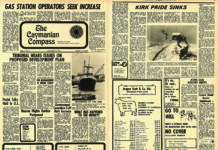
One of the clearest reminders of the potential damage from nor’westers is the loss of the Kirk Pride. On 9 Jan. 1976, during a nor’wester, the 170-foot-long cargo ship owned by the Kirkconnell Shipping Company experienced engine trouble while attempting to move off the George Town dock.
Unable to regain forward power, it drifted onto the ironshore under storm-driven seas. The ship was successfully towed off the shallow water near the shoreline, but it later took on water and sank.
No lives were lost, but the incident remains one of Cayman’s most well-known nor’wester-related maritime events.
At the time, the Kirk Pride was thought to have disappeared into the abyssal depths of the Cayman Trench, but 14 years after the ship went down, the wreck of the Kirk Pride was found by a deep submersible pilot named Stuart Mailer, who at the time worked for Research Submersibles Ltd.
Another landmark storm occurred on 23 Dec. 1989, when a powerful nor’wester impacted the Cayman Islands with very strong winds and enormous waves.
At the time, the Cayman Turtle Centre was known as the Turtle Farm and was located on the seaside of the road, rather than across the road where it now stands.
Huge waves that accompanied the nor’wester seriously damaged the facility, destroying buildings and washing over half of the entire herd of adult green sea turtles out of the farm and back into the sea. With them, one of three crocodiles that were exhibited at the farm also managed to escape into the water.
In early February 2024, a nor’wester demonstrated how impactful a modern winter cold front can be. Waves up to 15–16 feet struck Grand Cayman’s western shore, flooding streets, damaging waterfront businesses and forcing vehicles out of low-lying garages. The event prompted renewed discussion on coastal vulnerability and development setbacks.
No significant storms in the forecast
For now, forecast models do not show a significant nor’wester approaching Cayman, though early season fronts continue to form to the north.
As cold air accumulates over the continent, our attention naturally shifts to these systems. Even a moderate winter front can deliver pleasant ‘sweater weather’ – a brief dip into the low 70s, clearer skies and that refreshing northerly breeze many associate with the holidays.
But history reminds us that winter storms deserve respect. Hurricanes may dominate our attention from June through November, but from now until April, the north winds hold their own season – one Caymanians have watched, studied and prepared for across generations.
Related Videos