

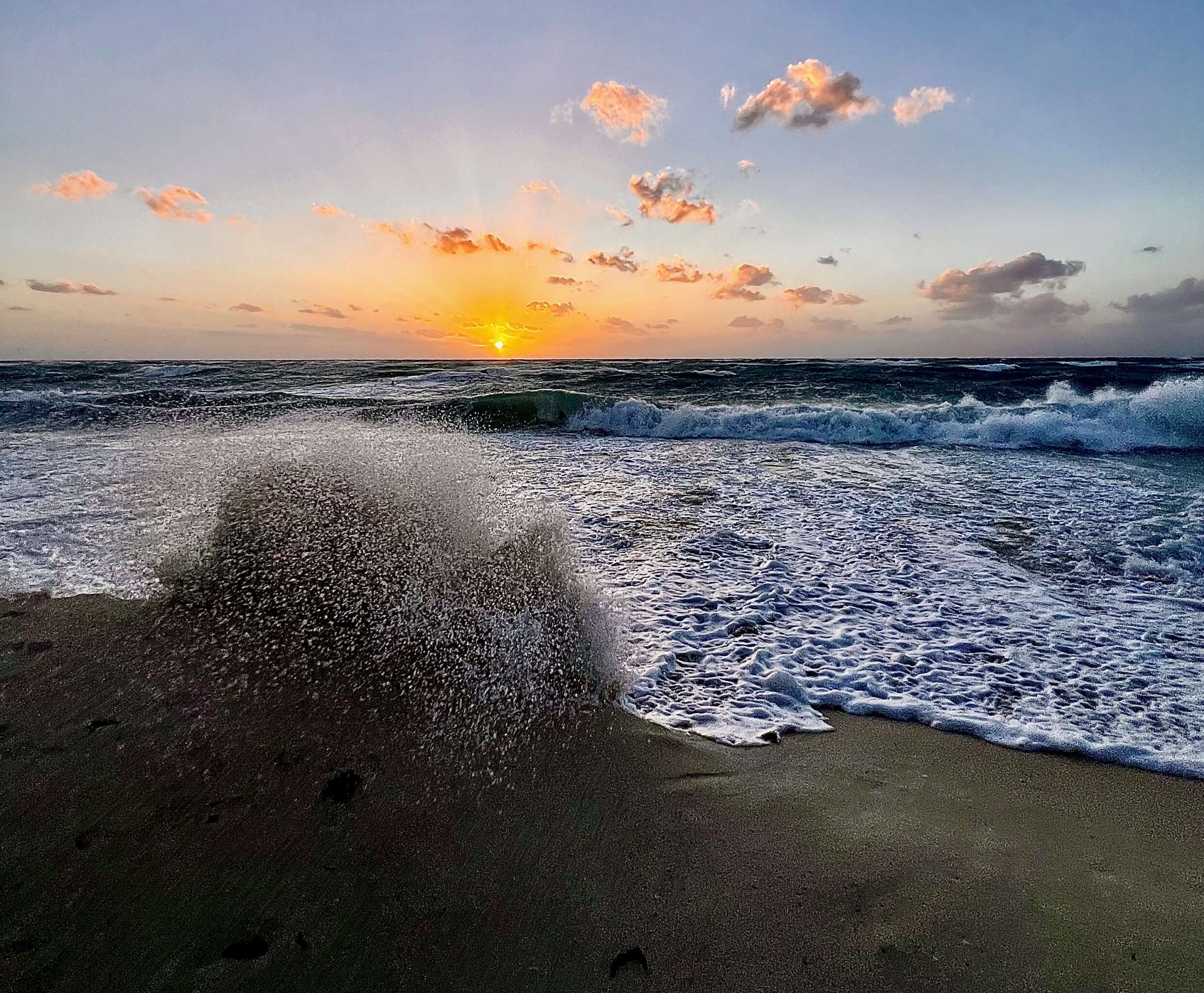
Four Mile Beach? Navigating shifting sands of Cayman’s famous attraction
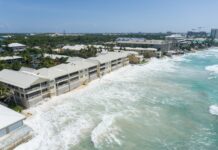
‘Urgent action’ is needed to avoid severe damage to property and the permanent loss of some of Cayman’s most high-value beachfront, according to a detailed scientific report on coastal erosion on Seven Mile Beach.
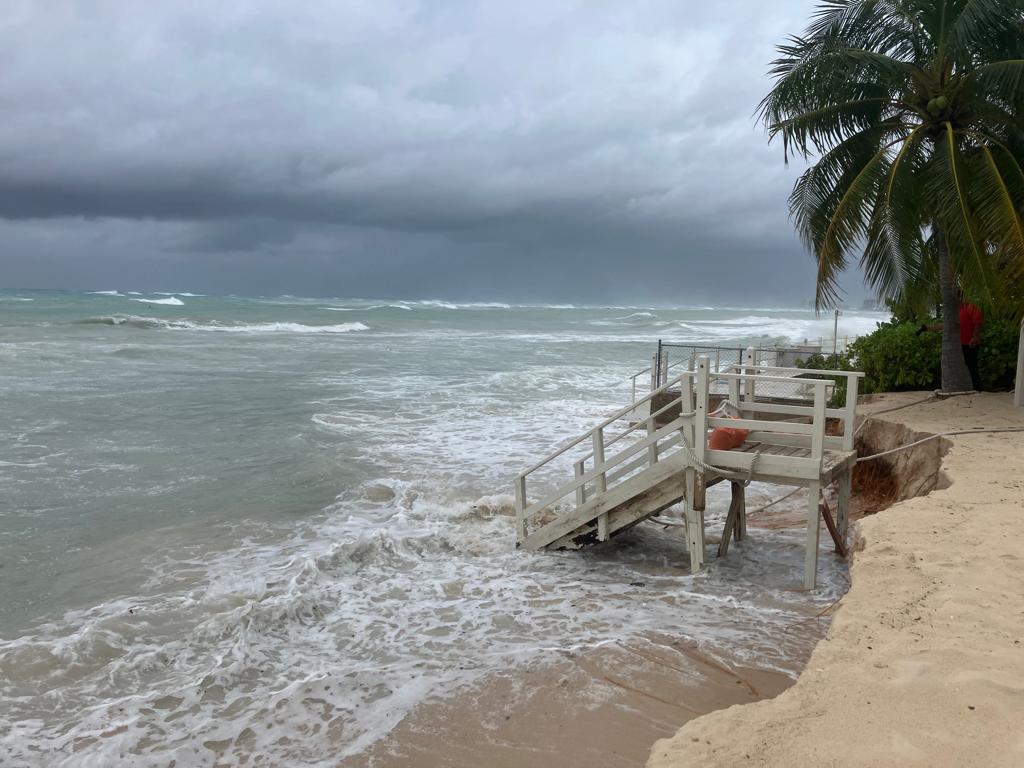
A mix of increased storm intensity, sea level rise and changes in offshore wave conditions has contributed to deteriorating conditions at Cayman’s principal tourist attraction, the report warns.
The extent of the erosion has reached ‘alarming proportions’ over the past few years and, without intervention, threaten coastal properties and infrastructure.
Significant stretches of prime beachfront at the southern end of the beach are likely to be permanently wiped out without action, the report warns.
Compiled by the Danish Hydraulic Institute (DHI), a global coastal engineering company, and commissioned by Dart, the report represents a private-sector effort to inject fresh momentum into the search for solutions to a well-documented problem.
The consultants recommend an extensive ‘artificial beach nourishment’ project, feeding sand to the beach from two designated spots, just off the coastline.
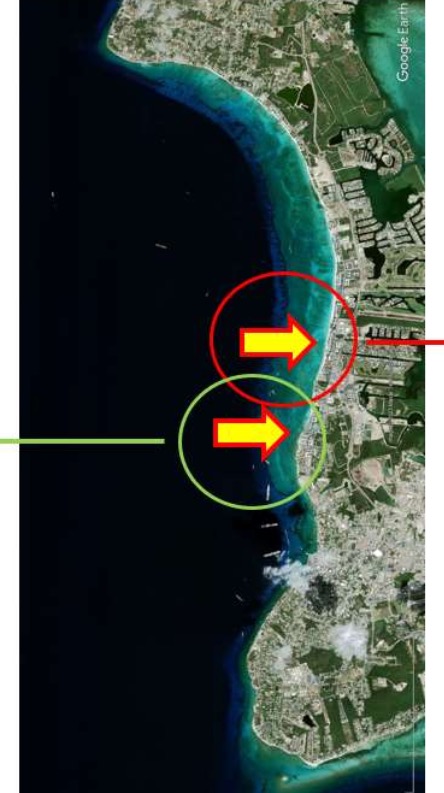
An initial 200,000 cubic metres of sand – equivalent in volume to 54 Olympic-size swimming pools – is recommended to be equally distributed between two offshore ‘sand engines’ at the southern end of the beach.
The proposed methodology would place new sand at the location to create a ‘sand bulge’ that would then be naturally distributed along other sections of the beach by waves and current, the researchers suggest.
If present trends continue without intervention, DHI wrote, “chronic erosion along the entire Seven Mile Beach is likely to occur over the coming years and decades”.
It concludes, “We believe that, by implementing adequate mitigation measures, a healthy, stable, and safe beach can be re-established that provides protection for the coastal infrastructure and is of excellent quality for tourism.”
Private-sector push for solutions
The report was funded by Dart, one of many landowners along the Seven Mile Beach corridor and the owner of several hotels in Cayman. It was peer reviewed by a second firm – Coastal Systems International – which endorsed the findings.
Its principal conclusions – linked here – have been shared with government, which is looking into possible solutions for the erosion problem.
Robert Weekley, Dart’s senior vice president of development and planning, said he believed it was the “first comprehensive technical study” on erosion on Seven Mile Beach.
He said that, as a “major investor in the Cayman Islands”, Dart had a long-term outlook on the success of the destination and has commissioned the research to help Cayman’s leaders get a better understanding of the situation and potential solutions.
The report, which involved research of seabed and weather patterns and analysis of the sand-transport system along 30 kilometres of coastline from Red Bay to Barkers, suggests a substantial amount of sand has been permanently lost from the beach system.
Weekley acknowledged addressing and resolving coastal erosion is an “emotive issue” but said the study provided valuable insights into the causes of erosion as well as solutions that could help address the problem.
Government dropped funding for beach nourishment
Government raised significant concerns of beach erosion in both the Beach Review and Assessment Committee report from 2003 and, more recently, in 2021 where a government task force highlighted the problem as an urgent national priority.
But an initial wave of enthusiasm appeared to stall and no action was taken.
An allocation of $21 million in public funds was dropped in 2022 and the project was not included in the latest budget, which covers government spending through the end of 2025.
Several ministers have expressed belief that a solution can still be found to the erosion problems but no new proposal has been put forward.
Minutes from the Seven Mile Beach Erosion Mitigation Steering Group discussions in 2021 suggest it was contemplating placing around 50,000 cubic metres of sand directly on to the beach and using engineered groynes – similar to those at the old Treasure Island site – along the coast to help hold the sand in place.
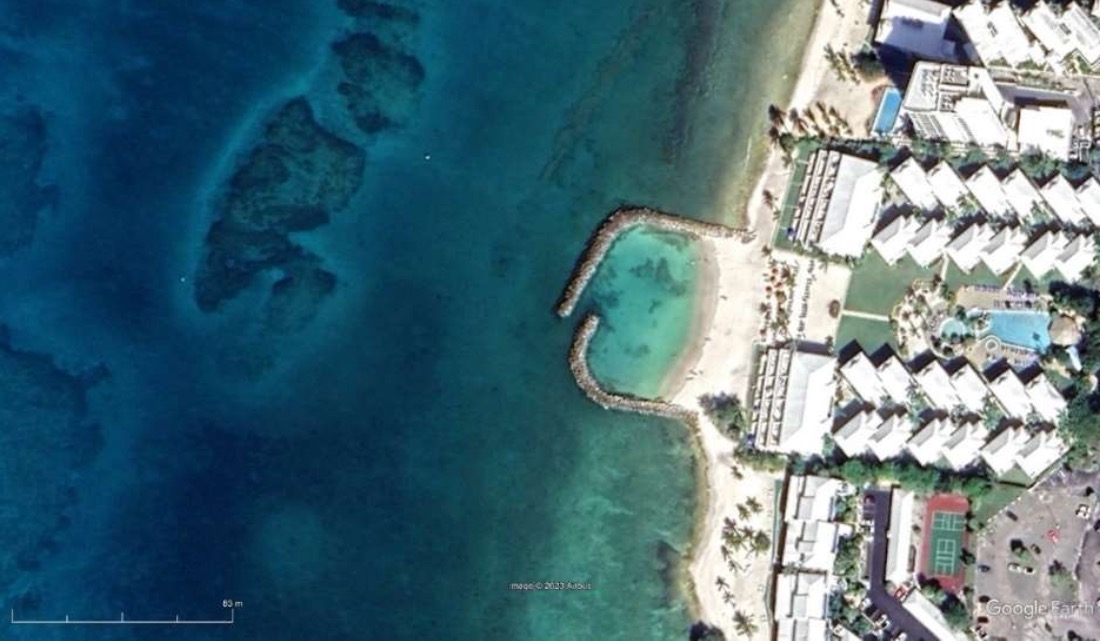
That proposal, which would have been fully investigated through a business case process if the project had continued – involved the use of around a quarter of the volume of sand contemplated in the Danish Hydraulic Institute report.
During those discussions, civil servants and government leaders, including then Premier Wayne Panton and Tourism Minster Kenneth Bryan, agreed that government should fund the project and described it as a priority for Cayman.
Seven Mile Beach, the group concluded, was Cayman’s key natural asset and government needed to invest to preserve and protect it, as a national priority.
Panton was quoted in the minutes from the August 2021 meeting of that group calling for a “speedy, comprehensive solution” to the short-term issues on Seven Mile Beach as well as for policy changes over the longer term.
New legislation was also proposed to restrict property developers encroaching on a newly expanded beach – if and when a replenishment project was successful.
Who should pay?
But those measures remain in draft and more recent statements suggest a reluctance to put public money towards a scheme that would have significant benefits for private land owners.
The report does not include analysis of how it could be funded.
However, several private-sector businesses, including Dart and Marriott resort owners London and Regional Hotels, as well as owners of private residences in the impacted area, have been involved in talks and are understood to be willing to contribute to a solution.
One possible example could be a ‘beach bond’, with participating hoteliers and condominiums in tourism accommodations contributing additional room tax to a ring-fenced fund.
The solution would likely require a coastal works permit.
It may also require the National Conservation Council to review, and may necessitate an environmental impact assessment as the works would impact a marine park.
Storm analysis
The DHI report was based on extensive modelling of wave and current conditions and how they have affected sand movement along Seven Mile Beach over the last four decades.
The engineers also analysed 23 tropical storms and hurricanes since the turn of the century and their separate impacts on the beach.

Their findings endorse previous research that suggests hurricanes and tropical storms have removed sand from the southern end of the beach, while nor’westers – like the one that swept across Cayman last month – typically have the reverse effect.
The pattern and higher frequency of storms in Cayman’s recent history has not provided sufficient time for “natural sand balance” to recover and has caused a “net northward transport” of sand, contributing to significant erosion at the southern end.
The peer review report from Coastal Systems noted that while the initial sand nourishment of 200,000 cubic metres would be an “excellent start”, it represents only half of the estimated volume of beach sand washed away by storms over the past 22 years.
DHI’s report also indicates that further replenishment would likely be needed on an ongoing basis – around every five years, depending on storm activity.
Sand engines
The report states, “It is recommended to feed the sand to the beach in two designated spots in Seven Mile Beach. These so-called sand engines will gradually feed the neighbouring beaches.”
It also recommends separate “spot nourishment” using stone groynes or other engineered structures along the rocky northern and southern sections of the beach where sand replenishment alone is not considered feasible due to coastal conditions.
The ‘sand engine’ technique was developed in Europe and involves transfer of sand from dredgers located offshore via pipelines to key locations close to shore. The sand is redistributed along the coast by the natural action of waves and currents.
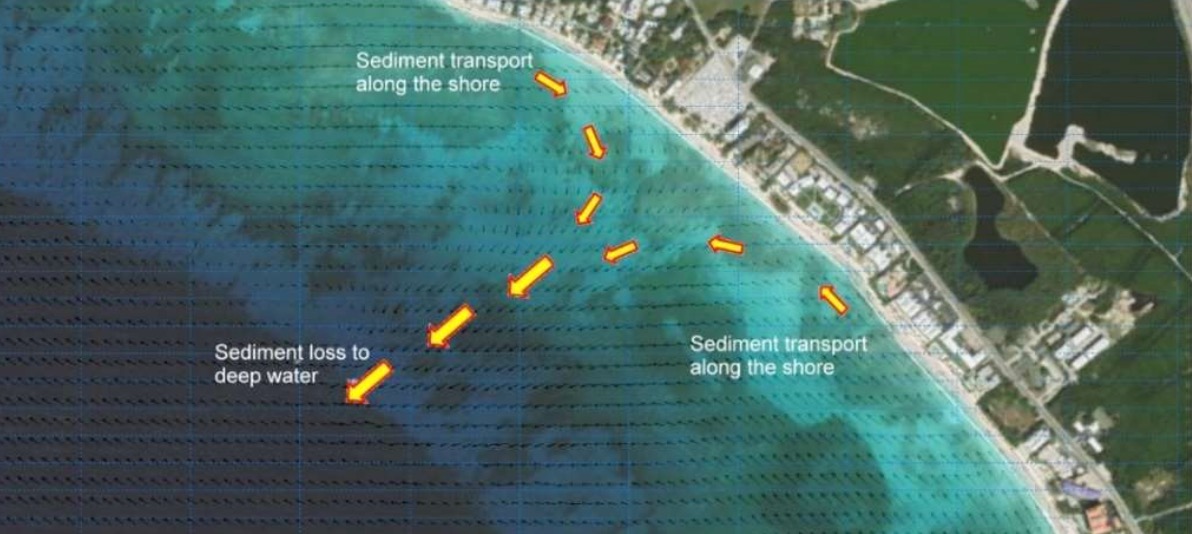
The report suggests this is considered less intrusive than using heavy equipment to place sand directly on the beach.
Would it work?
The multi-million-dollar question that politicians have been puzzling over as they contemplate allocating public funds to any beach replenishment project is, ‘Would it work?’.
Various proposals have faced scepticism in Cayman amid public concern that any sand added to the beach, at the public’s expense, would simply be swept away by the next storm.
Weekley acknowledged the validity of those concerns and said any beach-replenishment project would need to be significant enough to mitigate that risk. He emphasised that further infusions of sand would be necessary over the years as a part of an integrated beach-management and funding strategy.
Under the ‘do nothing’ alternative, he said, Seven Mile Beach would continue to erode.
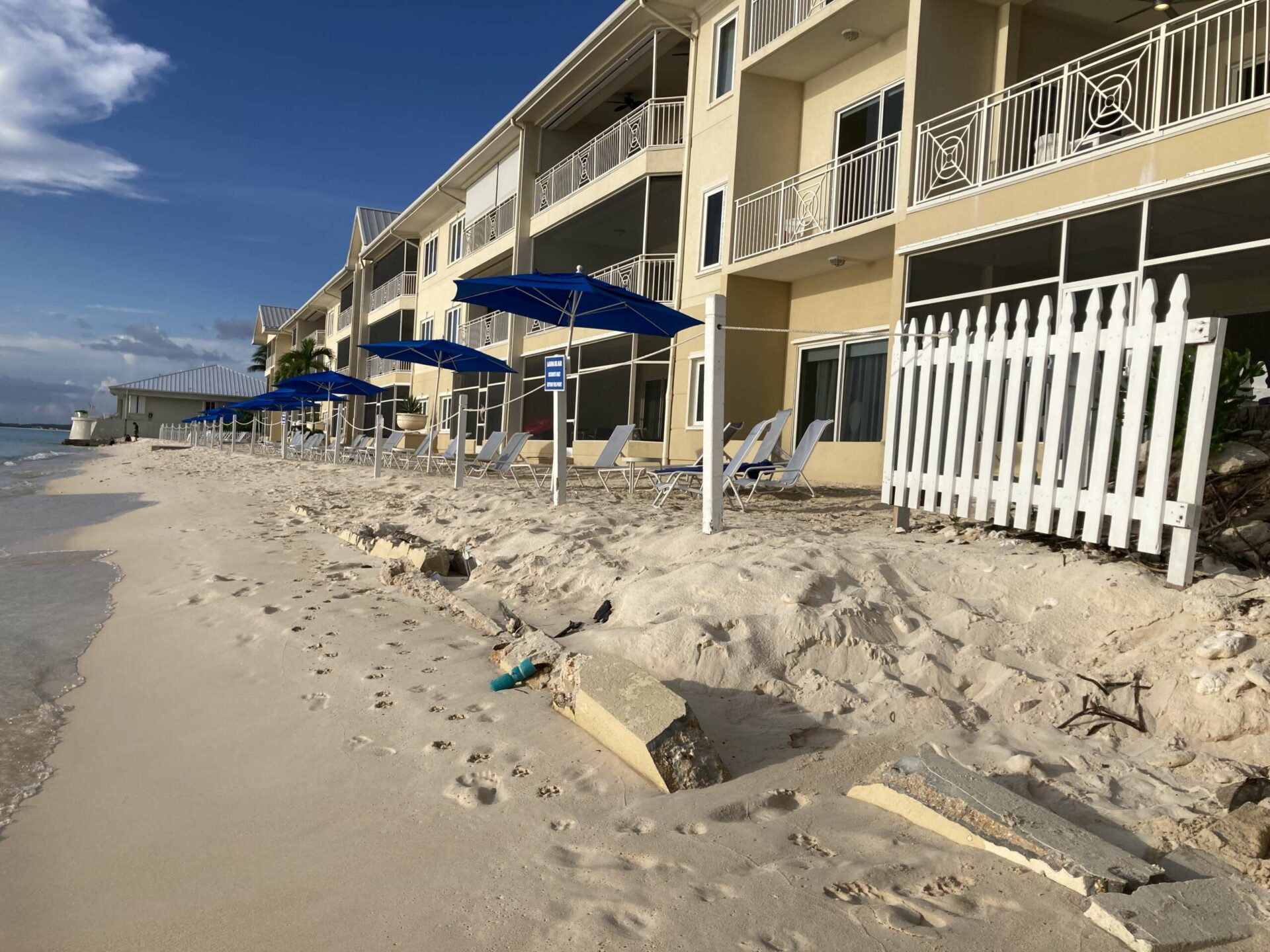
“Weather and wave patterns are predicted to continue to change, driven by global warming and other factors. Cayman is not unique in this circumstance,” he said.
“Sand transport along Seven Mile Beach will continue to be impacted by these changing patterns. However, a wider replenished beach and a holistic beach management programme will mean that Cayman will be in a better position to cope with these changes and maintain its top attraction.
“The development of a proactive Seven Mile Beach management plan that involves periodic maintenance nourishment is something that is urgently needed to address any current and future erosion events.”
Natural solution?
Similar protocols have been used successfully to tackle beach-erosion challenges in other jurisdictions like Netherlands and the UK – often as much for coastal protection as for aesthetics.
The report notes that ‘soft renourishment’ – feeding sand into the beach from the water – is the ‘preferred solution’ worldwide for restoring eroded beaches.
It is preferable not to use hard structures, both for the visual impact and the potential to restore the beach as a whole rather than in pockets.
DHI proposes that proper restoration would lessen the need for seawalls and other structures to protect buildings from storm activity.
“The beach itself provides protection so long as there is sufficient volume of sand present between coastal infrastructure and the sea.”
Managed retreat
The DHI report does not address managed retreat – the concept of rebuilding impacted coastal properties further away from the shoreline – in detail as it was not considered a viable option in the near term.
“This is an excellent strategy for areas that are not yet fully developed for urban use. However, given the economic importance of the established coastal infrastructure this option seems hardly viable,” it states.
Weekley said, while this can be part of the solution over the long term, it is a “multi-generational strategy” that would take decades to have an impact and would not address the ongoing beach erosion that would occur over those years.
Editor’s note: The Cayman Compass is a subsidiary of Dart Media and Entertainment.
Related Videos










Our highly paid Govt officials are doing what they do best – nothing. Even the report had to be commissioned by the private sector.
Lots of talk no action. As stated the beach is disappearing. A wall made of the same rocks as Sunset Coves cove from the edge of the cove to the tip of the Soverien and filled with sand would solve the problem forever. It would cost less than the $20M talked about. This area was once covered in sand so yes it would displace life that has moved there but it would take it back to its original
Stop building so close to the sea. Replacing sand does not work. Mother Nature always wins.
Funding exists for beach grooming and replenishment. There is a 13% tax imposed on all short term rentals on the island—- what better way of spending the tourists money than improving/ grooming the beautiful beaches they come to see! With rising sea levels we need a long term plan implemented now.
Let’s keep in mind the government approved every building along the beach. They collect the stamp tax. The accept room tax as well as duty that tourists who buy things on island pay. As the beach shrinks the tourists will spend else where. It is time the government get on board and support the study and take action. Delayed action only costs more as inflation and further erosion take their toll on what used to be 7-mile Beach.
All divers know of the sand shoots where the sand goes down 2000 ft off the wall and gone for good. This must be stopped or you are doing nothing.
Is the full report by the Danish Hydraulic Institute available to the public? If so, where can it be obtained? I would be grateful if you can let me know. Thanks
A drowning man clutching at straw comes to mind. The report says “The beach itself provides protection so long as there is sufficient volume of sand present between coastal infrastructure and the sea.” Only 40 years ago the beach was so wide that sand loss wasn’t even on our radar… so just how much is a “sufficient volume of sand present between coastal infrastructure and the sea?”… without also removing the wave energy reflectors (sea walls and buildings) that are driving the sand off the beach and eventually over the drop-off. The report alludes to it without a sense of urgency on retreat. I’m reminded of another water related truth: “a boat is just a hole in the water that you keep throwing money into”. I have no idea how much money it would cost Caymanians in the long run for the affected hotels and condos to retreat and build on stilts as they should have done to begin with, but how much will it cost to eternally pump a dwindling supply of sand? With parrotfish so drastically reduced (A U. of Exeter study suggest that they likely made over 80% of the original sand) and even the corals that they made it from are similarly reduced, I assume that relatively very little new sand is being created. It seems unlikely that there’s enough straw for this man to stay afloat for very long (without rebuilding on stilts). I’m not saying we shouldn’t do it. I’m saying it might be foolish not to remove the reflectors in concert with pumping the sand inshore. Ask the Dutch about the effectiveness of stilts for a future Cayman facing rising seas. Ask DOE about parrotfish poop.
I would like to see an opinion about emerged break waters like the one at Sunset Cove on beach erosion.
Please publish the scientific evidence on which this report was based.
Based on my limited knowledge of beach erosion this is an expensive proposal with no guarantee of succes.