

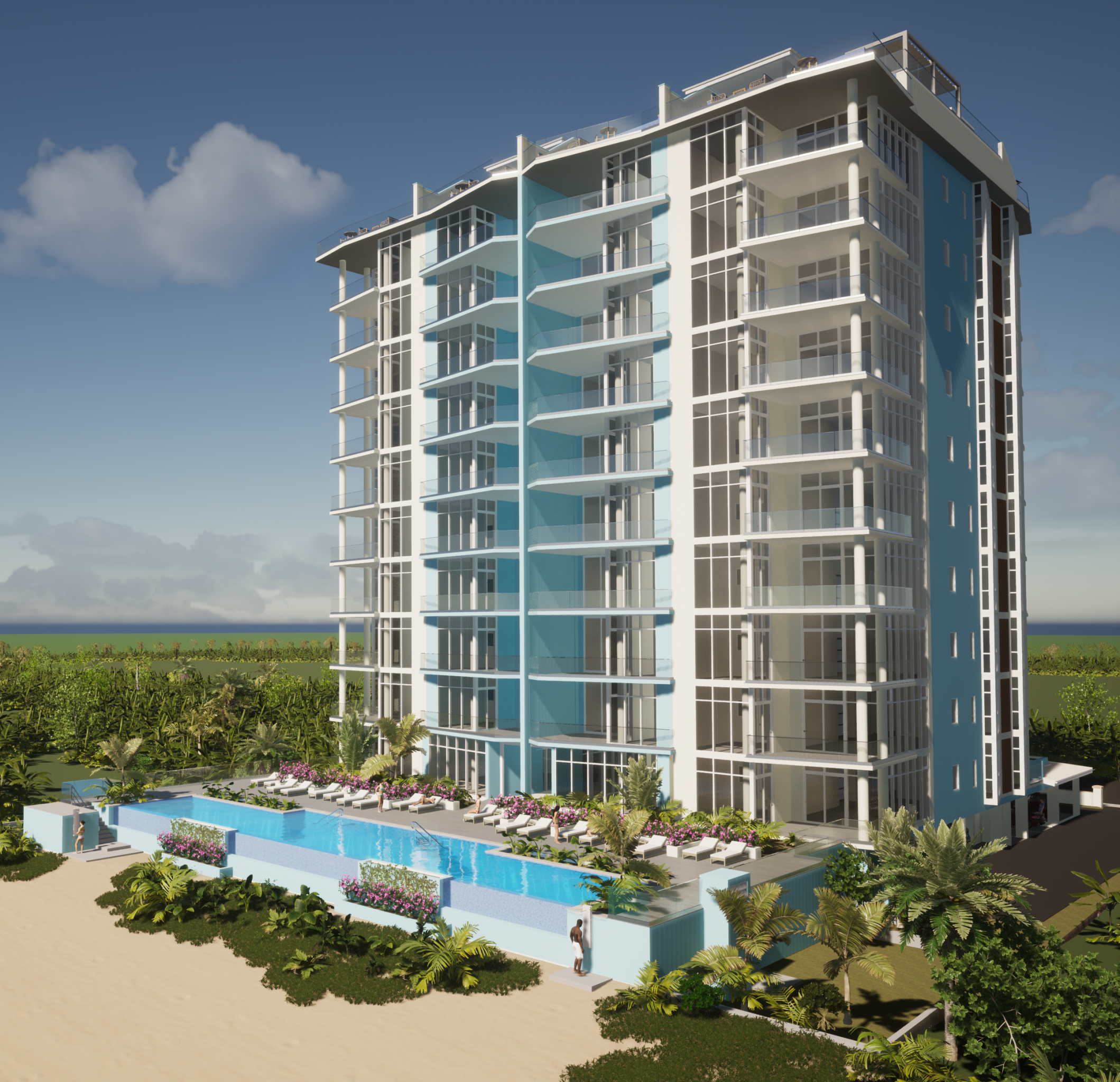
Plans for a controversial 10-storey development at the north end of Seven Mile Beach were debated yesterday, in a crowded meeting room literally overflowing with objectors, some of whom had flown in to hear the case.
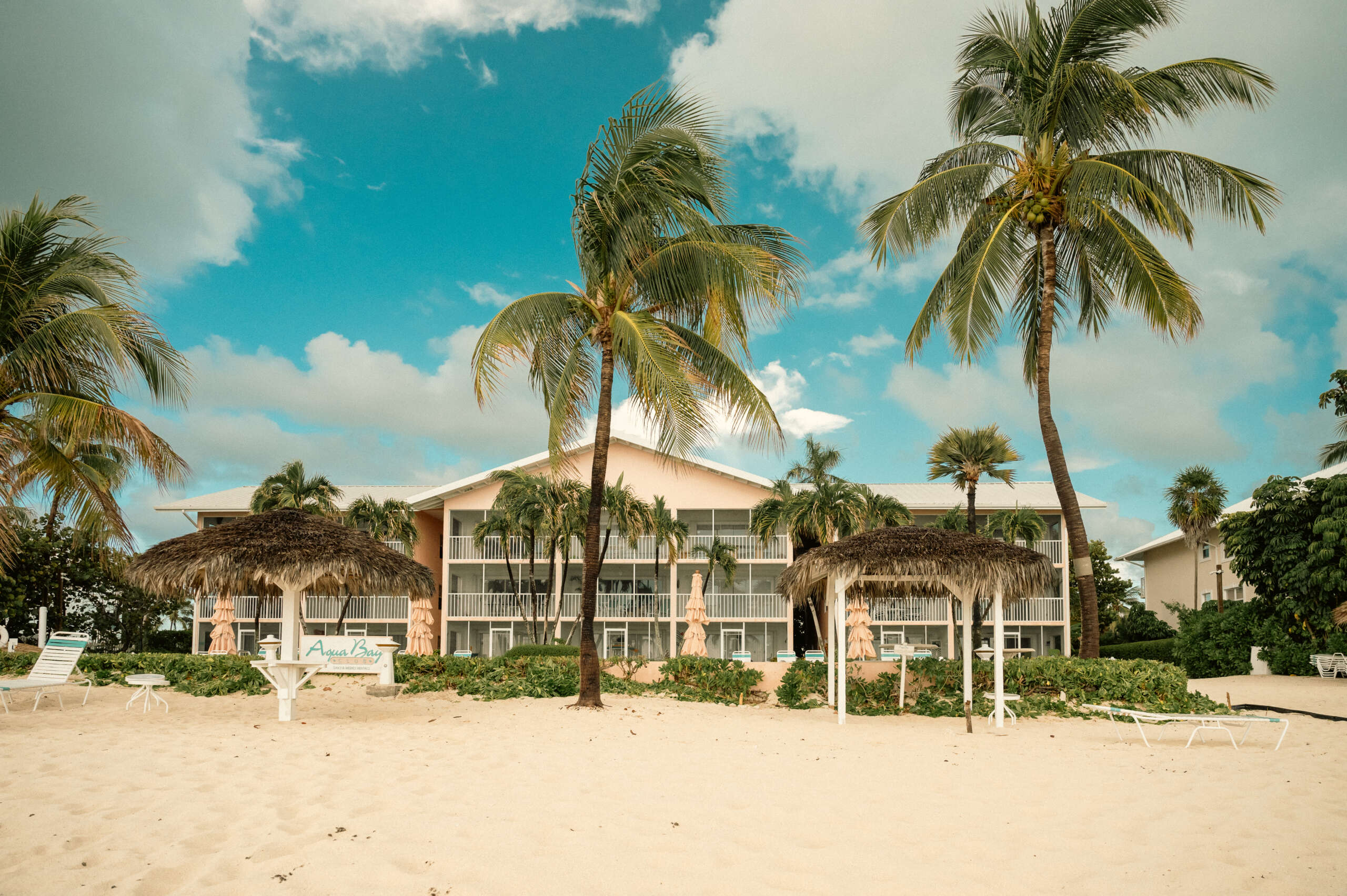
After two hours of public arguments, the planning application, to tear down Aqua Bay Club in West Bay and redevelop the site into a 130-foot-tall glass-and-steel tower of 38 apartments, was ruled upon at lunchtime.
But because the members of the Central Planning Authority hold their discussions behind closed doors, it will be another four weeks before we know whether the plan was given the green light.
The proposal from developer Brian Butler of Butler Developments, who built the current condo complex in the 1980s, has been met with 45 letters of objection from neighbours in the Palms and Silver Sands developments.
More than 40 objectors were in attendance, breaching maximum occupancy rules for the committee room on the ground floor of the Government Administration Building, leaving several to listen outside the door.
The objectors say the building would be inconsistent with the low-rise character of the neighbourhood, would create noise and pollution during construction, would reduce their quality of life and their access to daylight, would create a bottleneck for traffic and increase exhaust fumes near their homes, and would adversely affect sea turtle nesting sites.

But the developer argued the building would indeed be consistent with the area, would “not be materially detrimental” to local residents or workers, and would not breach setback or building height regulations.
Department of Environment experts have said the building would contribute to the general shift of Seven Mile Beach from low-rise to high-rise in nature.
DoE officials advised that since the “visually prominent” plan is another in a string of similar projects along the beach, other low-rise condo blocks would likely seek redevelopment to 10-storey buildings and “this is changing the nature of Seven Mile Beach”.
“With cumulative development, this will change the view of Seven Mile Beach from low-rise to high-rise”, they predicted.
Much of the meeting hinged on whether the building breaches the rules on height and density.
The new Aqua Bay would have 38 apartments.
A strict interpretation of the 25-per-acre rule for apartment density would mean a limit of 34 on this site – four fewer than the developers want and say is financially viable.
But if the associated parcel of land on the east of West Bay Road, planned for use as a car park, is included, it would make the limit 41. CPA members were left to decide whether 38 apartments should therefore be allowed.
Arguing for the developers, Samuel Jackson of Jackson Law said there was “no reason in law or logic” to look “myopically” at one part of the development area while excluding the other.
But opposing counsel Kate McClymont argued that unless the developers proposed to reroute West Bay Road, the two parcels of land could not reasonably be considered as one.
The pair also clashed over the seemingly straightforward question of how tall the tower block will be.
The rules limit the height to “130 feet or 10 storeys, whichever is less”. This building would have 10 storeys, but also an underground car park, and a roof deck – leaving room for debate as to whether it meets the ’10 storeys or less’ condition.
Jackson said the basement car park was not habitable and was therefore not defined as a storey under the regulations, and that the roof deck did not have a ceiling and was therefore also exempted.
McClymont countered that the roof deck, intended for seating and communal use, should be considered a habitable storey and the building should therefore be lowered by one storey, leaving fewer apartments for Butler to sell.
She said developers’ finances were not a sufficient reason for the CPA to authorise such a “drastic change” to the area, arguing that if high-rise blocks become the norm along Seven Mile Beach, “everyone but the wealthy people will be hemmed in, unable to enjoy views of the sea and the sky”.
She reminded CPA members their brief was to “enhance the quality of life for people who live in the Cayman Islands”.
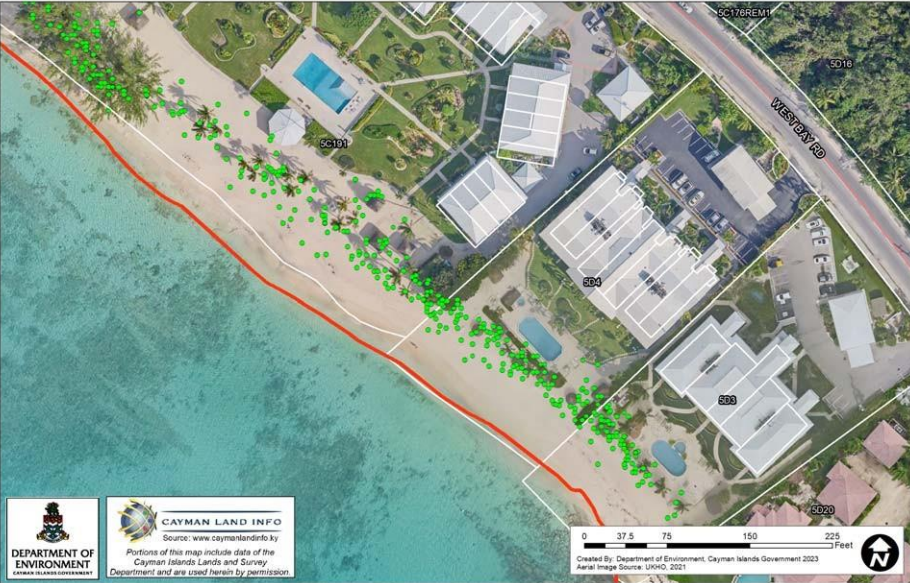
Monitoring Project Data, 2022
The site has also been designated a critical turtle nesting habitat for green, loggerhead, hawksbill and leatherback turtles.
The designation means impacts on the turtles’ habitat must either be avoided or be mitigated with the imposition of conditions on the proposal.
This application was due to be ruled upon in October. But given the potential ecological impact, the CPA referred the decision to the National Conservation Council, asking whether the NCC wanted to direct the authority to reject the application.
The council, working with the Department of Environment, has since decided not to direct the CPA to reject it.
But the NCC and DoE have issued a directive to the authority that if they do choose to approve the plan, it must be subject to a string of conditions designed to protect turtles and their nests.
These include:
- The developer must get the DoE to check for turtle nests before works begin
- The developer must install turtle-friendly lighting, and have it checked before occupancy by the DoE, so that neither lights on the ground nor lights from the windows distracts or disrupts female turtles in choosing a nesting site
- Turtle-proof fencing must be installed during construction and checked by the DoE
- The void left when the existing pool is demolished must be filled with beach-quality sand, and all sand excavated during construction must be retained on-site
The DoE has concluded that, particularly since the new structures will be set back further from the shoreline than the existing development, there are likely to be beneficial effects on ecology, so long as their strict conditions are followed.
It warned that “in the absence of these conditions, the proposed development would severely adversely impact sea turtles … through directly and indirectly increasing their mortality”.
The developer has accepted all these conditions.
Lack of transparency
The Compass will report the outcome of the CPA’s deliberations when the minutes are posted by the board on its website.
The planning department used to make decisions available to the media within 24 hours of the meeting but has ceased this practice.
Even once the minutes are published, they do not include details of which committee members supported or opposed any given application, a lack of transparency which has been repeatedly criticised by the Ombudsman.
We have asked the committee why it takes four weeks to publish their minutes and decisions. We have received no answer.
Related Videos











Protests or not, this will go ahead, no doubt with a few cosmetic but not meaningful adjustments ,
and thereby encourage our inexorable march to a beach crammed with as many beachgoers as we used to have sandflies.
10 Stories seems to be the future of SMB. Since there is no more empty ocean front up is the only way to go. I do not see how this development can be denied when there are a number of others that have been approved. I would not be surprised to see the people objecting now wanted their properties replaced with new larger units
The step most people who are anti-development miss, is that housing ages, becomes obsolete and has to be replaced. Lighting and electrical changes, Home automation and HVAC changes. Mold from years of weather breaks down buildings. Not everything that gets built is fit to be remodeled (in fact only a small portion is). When I came here 22 years ago the young upwardly-mobile accountants and lawyers were occupying the inland townhouses of the moment. Today our helper lives with 5 other girls in one of those townhouses. The apartments the helpers 22 years ago used occupy have long since been demolished, and that cycle repeats. Housing isn’t forever, and a vibrant growing nation in a climate/region such as ours has no choice but to renew its stock. Even without inward migration.
“The objectors say the building would be inconsistent with the low-rise character of the neighbourhood, would create noise and pollution during construction, would reduce their quality of life and their access to daylight, would create a bottleneck for traffic and increase exhaust fumes near their homes, and would adversely affect sea turtle nesting sites.”
The above objections were exactly the same as the ones we gave to the CPA but they went ahead and approved the two monstrosities going up next to Sand Cay in South Church Street. They are “supposed to be 4 storeys high but each storey is double the size of a normal storey at Sand Cay so it feels like it is 8 storeys, plus it has an “underground” car park which is half above the ground plus it has “something” going up on the roof so will look and feel like two 10 storey towers to us when it is completed. The CPA listened to our objections and just went ahead and approved it anyway saying it was “not against the law”. Very sad that the low rise character of South Sound is compromised, a designated sea turtle nesting site in a traditionally dark sky area is at risk and the narrow road on a bend that has had several road fatalities over the years will now have much more cars and traffic due to this development being approved, but money talks sadly.