Imagine receiving an email that directs you to click what you think may be a suspicious URL address. To check it’s legit, you make a call to the email sender, whose voice you know, and you then have a phone conversation with them in which they assure you everything is above board.
And then it turns out that it’s all generated by artificial intelligence – the email and the cloned voice of the email sender.
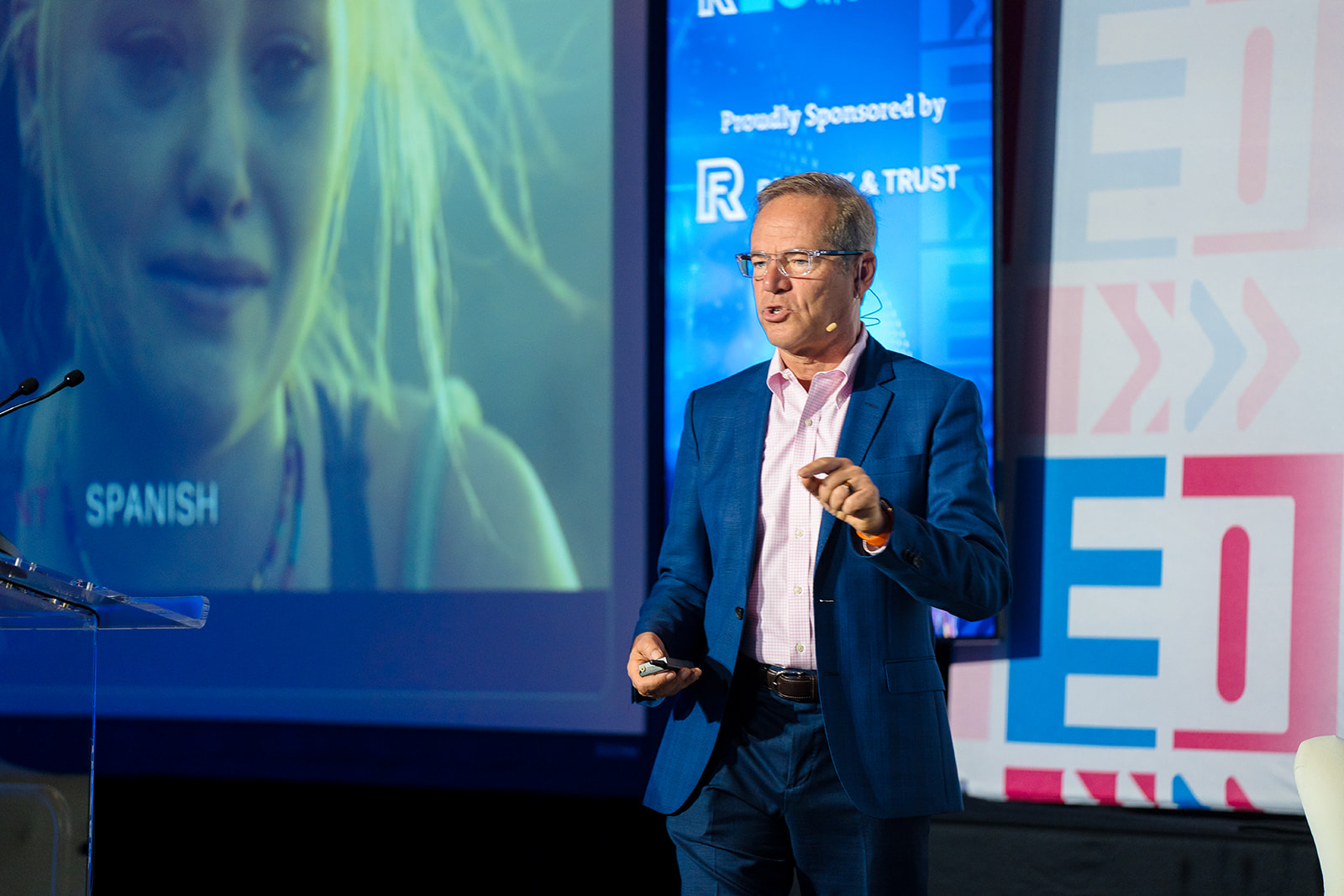
That’s a scenario laid out by Silicon Valley innovator Kevin Surace, at the RF Economic Outlook forum in Grand Cayman last week, which he said he encountered recently.
He says, regardless of what AI regulations are put in place, there will always be ‘bad actors’ – be they scam artists and cyber criminals or certain governments – who will flout them.
Regulating AI
The European Commission earlier this month passed the world’s first regulations for artificial intelligence, with its AI Act, which it describes as the “first ever legal framework on AI”.
“The AI Act aims to provide AI developers and deployers with clear requirements and obligations regarding specific uses of AI. At the same time, the regulation seeks to reduce administrative and financial burdens for business, in particular small and medium-sized enterprises,” according to a European Commission statement.
Surace said, “The only thing I’ll say about that is we’re going to enact a lot of laws around the world about how to control this, but the bad actors aren’t going to pay attention,” adding that China, Russia, North Korea and Iran will go their own way when it comes to the technology.
“The other thing is there are bad actors in the cyber-security space that have already manipulated these learned language models in their own open source version, to create unlimited phishing emails that are indistinguishable from anything. We have laws against creating deep fakes that aren’t labelled, but they create deep fakes and don’t label them,” he said.
He cited a situation that occurred recently when a staff member of a Hong Kong multinational company transferred $25 million to a scammer’s account after he was instructed to transfer the funds in a Zoom call that, it later emerged, featured deep fakes of the firm’s chief financial officer and other colleagues.
He said he realised for certain he was dealing with an AI phishing scam during his phone call with the person purporting to be a secretary for an investor, when he asked her if she had run the matter past a colleague in her office called Matt. “What is Matt’s last name?” the AI bot asked.
“I forwarded this to the actual Matt and said you have a real problem,” Surace told the audience.
He added, “You can enact all the policies that you want but you can’t stop the bad actors, because the bad actors don’t care about your policies.”
Geopolitical challenges
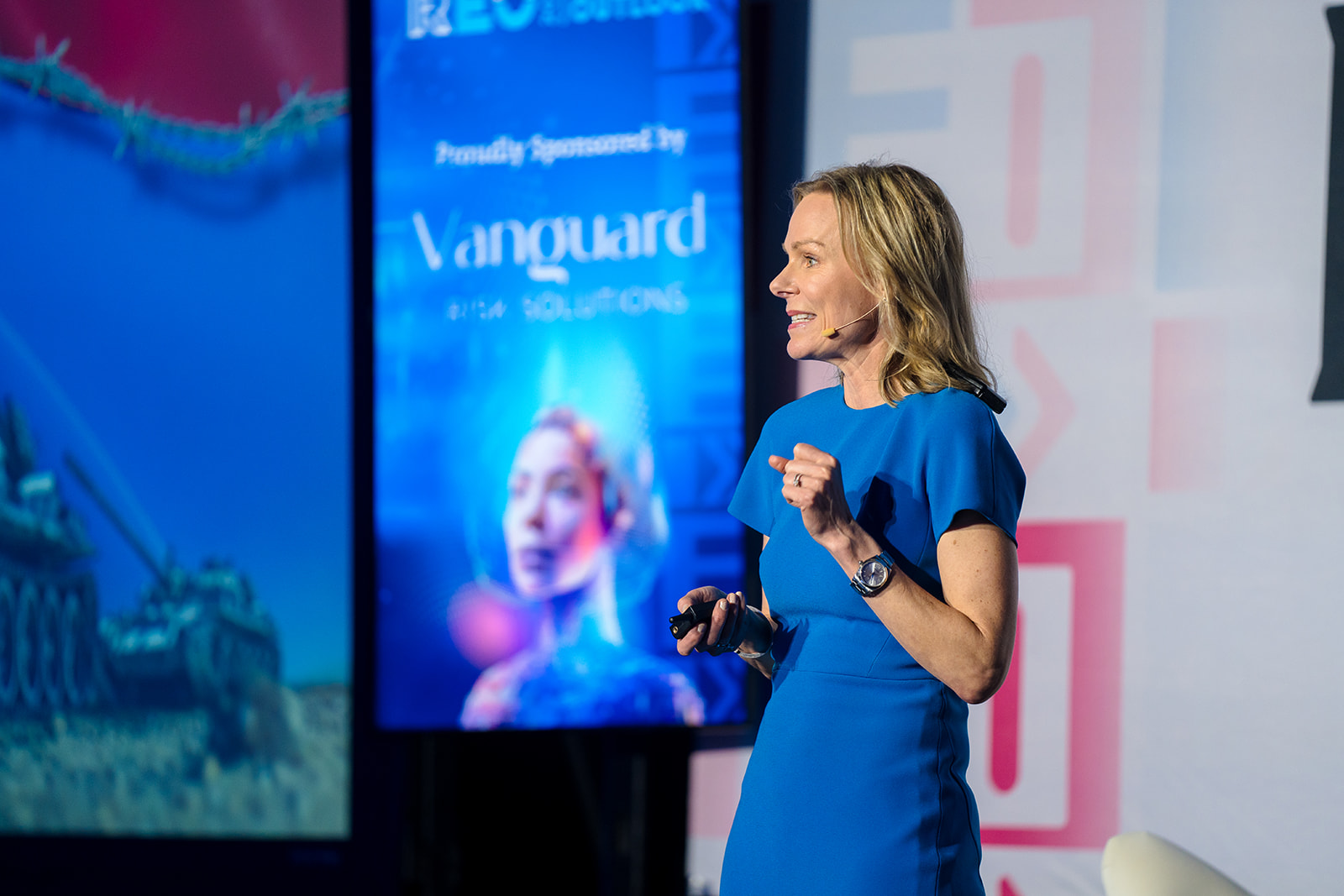
Another speaker at the forum, which focused this year on AI and climate change, was author and law professor Anu Bradford. She took attendees through “a tour around the geopolitical and geo-economic challenges” facing the world, noting that there are real concerns about AI-generated deep fakes being used to influence the outcomes of elections.
With half the world’s population going to the polls for elections in 2024, “AI can alter the outcome of these elections,” she said, through manipulation of information and use of deep fakes “that are altering our sense of reality and our ability to make good electoral choices”.
Bradford, author of the book ‘Digital Empires: The Global Battle to Regulate Technology’, says, increasingly, there is a global consensus that AI governance is needed, “but there is no global consensus on what that governance model would look like”.
She cited three models – the US free-market-driven model, the Chinese state-driven model, and the European rights-driven model.
With the US model, the government plays a minor role, leaving the tech companies to effectively regulate themselves, she noted, while in China, the communist government, focusing on making its country a technological superpower, is using state resources to achieve that goal, while using AI for surveillance and censorship.
The model in Europe is premised on “the notion of a human-centric digital transformation, the protection of fundamental rights of individuals, the preservation of democratic structures of the society, and the notion of a more fair digital transformation”.
The world has followed in the footsteps of European regulations in technology already, with the adoption of the EU’s General Data Protection Regulation, or GDPR, requirements.
Bradford predicts that the US market-driven regulatory model is losing, with public opinion turning against what many see as over-reach by the giant tech companies. And while the European model may be attractive, it does not drive innovation, and enforcement of its regulations is not strong.
Meanwhile, a rights-driven model will never appeal to authoritarian governments, who are not overly concerned about privacy issues, and will be willing to embrace the approach – and technology – used by China.
“China has shown the world that freedom is not necessary for innovation,” Bradford said. “They have managed to create a thriving tech economy without being free.”
She added, “So, unless we can prove to ourselves and to the rest of the world that there is a liberal, democratic way to govern technology, we are forced to concede that AI and other technologies can be governed by authoritarians, whereby democratic governments are destined to fail in the same endeavour, or [AI is] governed by tech companies.
“Which means that the real digital empires are the authoritarians or the tech companies, and that is not a conclusion that anyone who believes in democracy wants to see.”
Increasing productivity
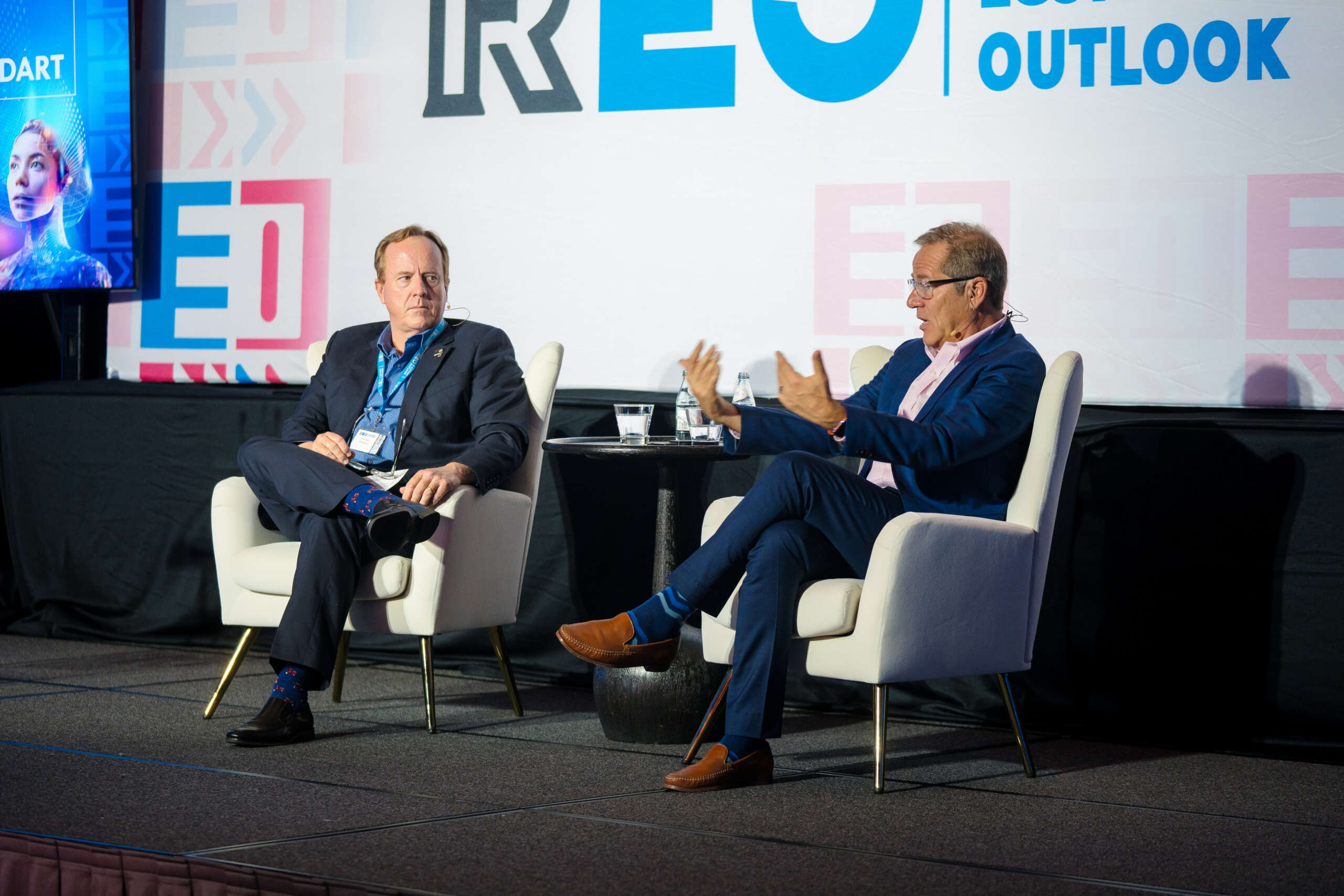
Despite all these challenges, Surace is a major proponent of the use of AI, saying it’s a technology that is already massively changing productivity and one that must be embraced.
AI has put the writing of computer code into the hands of users who have never written a word of code in their lives, by making English (or whatever language the user speaks) the medium through which a person give commands to a computer, he explained.
“It’s the first time that you can talk to a computer in English. It’s not that other people couldn’t have leveraged AI before this, except they’d had to write in Java or Python,” he said.
“I think this is the most amazing time to be alive. You have never had a democratisation of these technologies, so that it empowers everybody to do things that you could never have done in your life,” he added.
He compared AI to the invention of the wheel and its imagined impact on two men whose job it is to carry things on their backs up a hill. One hypothetically responds by saying, “That’s it, my job is over,” and quits, while the other finds a second wheel, builds a cart and now carries much heavier loads more often up the hill.
Or a more recent example – the introduction of Excel in 1985 which revolutionised how balance sheets and a variety of other tasks were done.
“The tipping point is here,” he insisted, “so you either want to embrace the technology or you’re going to end up facing extinction.”
Related Videos