

An assortment of freelancers, opportunists and semi-organised contractors risk their lives and freedom making dangerous sea journeys in ill-equipped boats on the ‘ganja run’ from Jamaica to Cayman. As part of our ongoing series on gun and drug trafficking, the Cayman Compass embedded with the Coast Guard to take an in-depth look at the illegal trade.
The ganja run
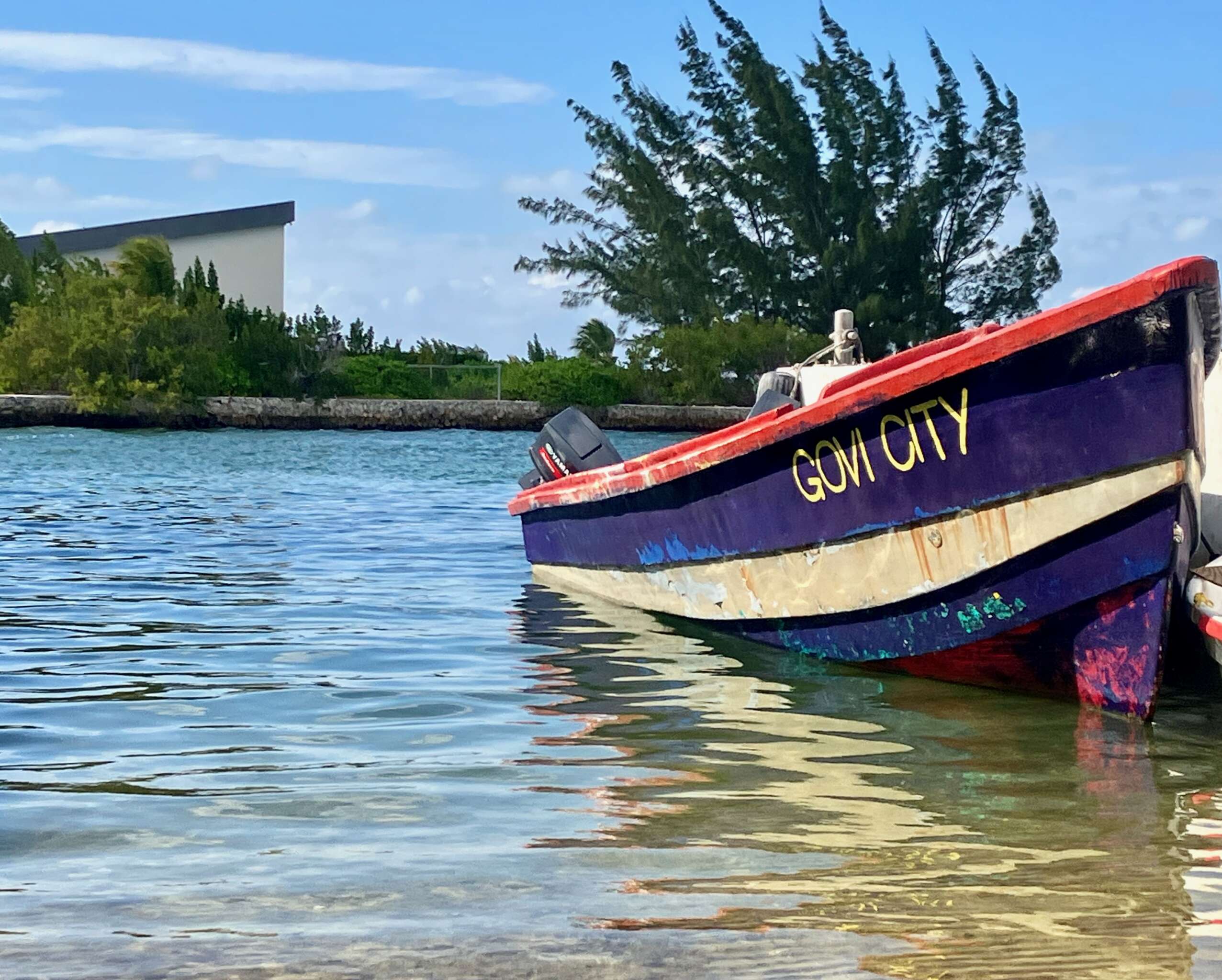
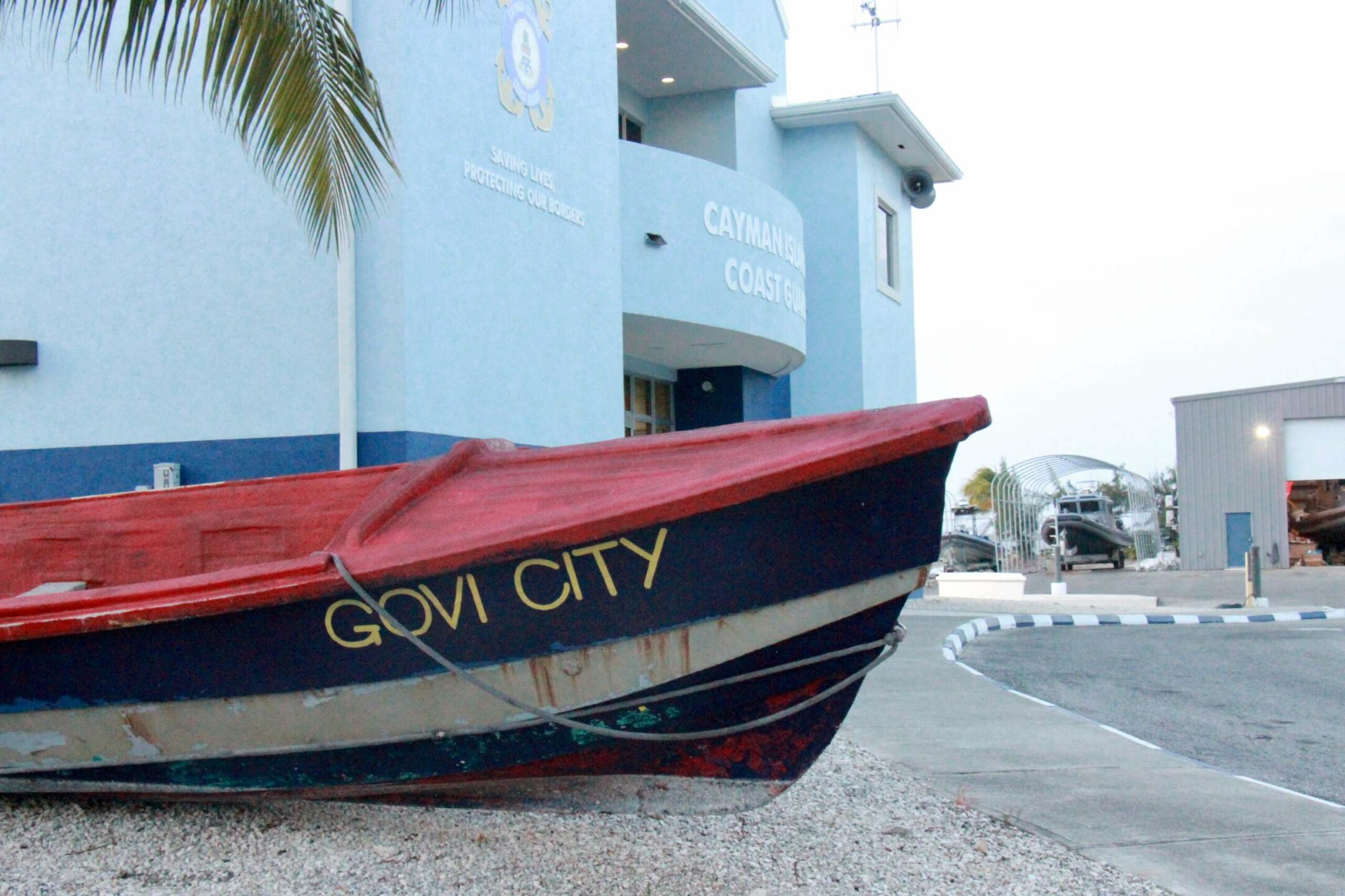
The brightly coloured paintwork of a souped-up canoe slowly flakes away in the midday sun. The name Govi City, painted in careful yellow block capitals on the robust navy hull, catches the light. It looks flimsy for an offshore voyage.
But the powerful twin Yamaha engines would have enabled it to make the 200-mile journey from Jamaica to Cayman in a night.
This is fairly typical of the boats that run the gauntlet of the island’s most infamous smuggling route to bring drugs and firearms into Cayman. The horsepower is out of all proportion with the dimensions of the vessel.
Its presence here, roped up to a concrete dock at the Cayman Islands Coast Guard headquarters, is testament that this was a gamble that didn’t pay off.
But the crew of Govi City was not the first to find the staggering profit margin on Jamaican grown weed worth the risk of a dangerous sea crossing. And they won’t be the last.
Authorities in Cayman intercepted almost 3,000 pounds of ganja with a street value conservatively estimated at close to $3 million in 2022. Last year was significantly less, around a fifth of that total.
Though those stats reflect the joint efforts of police, customs and the Coast Guard, investigators believe that the vast majority of weed arrives in Cayman by boat.
US statistics suggest for every shipment that gets stopped, another five or six get through.
The omnipresent smell of ganja on certain street corners in Cayman suggests that the three-island territory is prone to similar levels of penetration.
Weed, next to alcohol, is the recreational drug of choice in Cayman.
And where there is demand, there is opportunity.
Disorganised crime
Robert Scotland, a former detective superintendent now the commander of the Cayman Islands Coast Guard, believes the islands do not have organised crime syndicates of the type seen in the US and elsewhere.
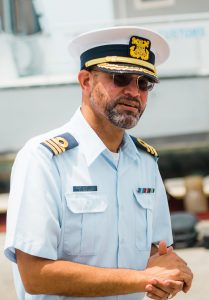
But an assortment of independent freelancers are now beginning to form themselves into semi-organised groups.
They have partnered with long-established and organised drug suppliers in Jamaica, and are now seeking to dominate the local trafficking routes, said Scotland.
“We have strong suspicions of who the different players are and, by and large, what we are coming up against are people who have been at it for a while and who, when convenient, will work together.
“What I believe we have is a group of very lucky people who have been actively exploiting our unprotected coastline, with the support, direct or indirect, of their friends and family members for many, many years,” he said.
The boneyard
At some point, he says, gesturing towards the graveyard of battered boats in the Coast Guard lot, that luck will run out.
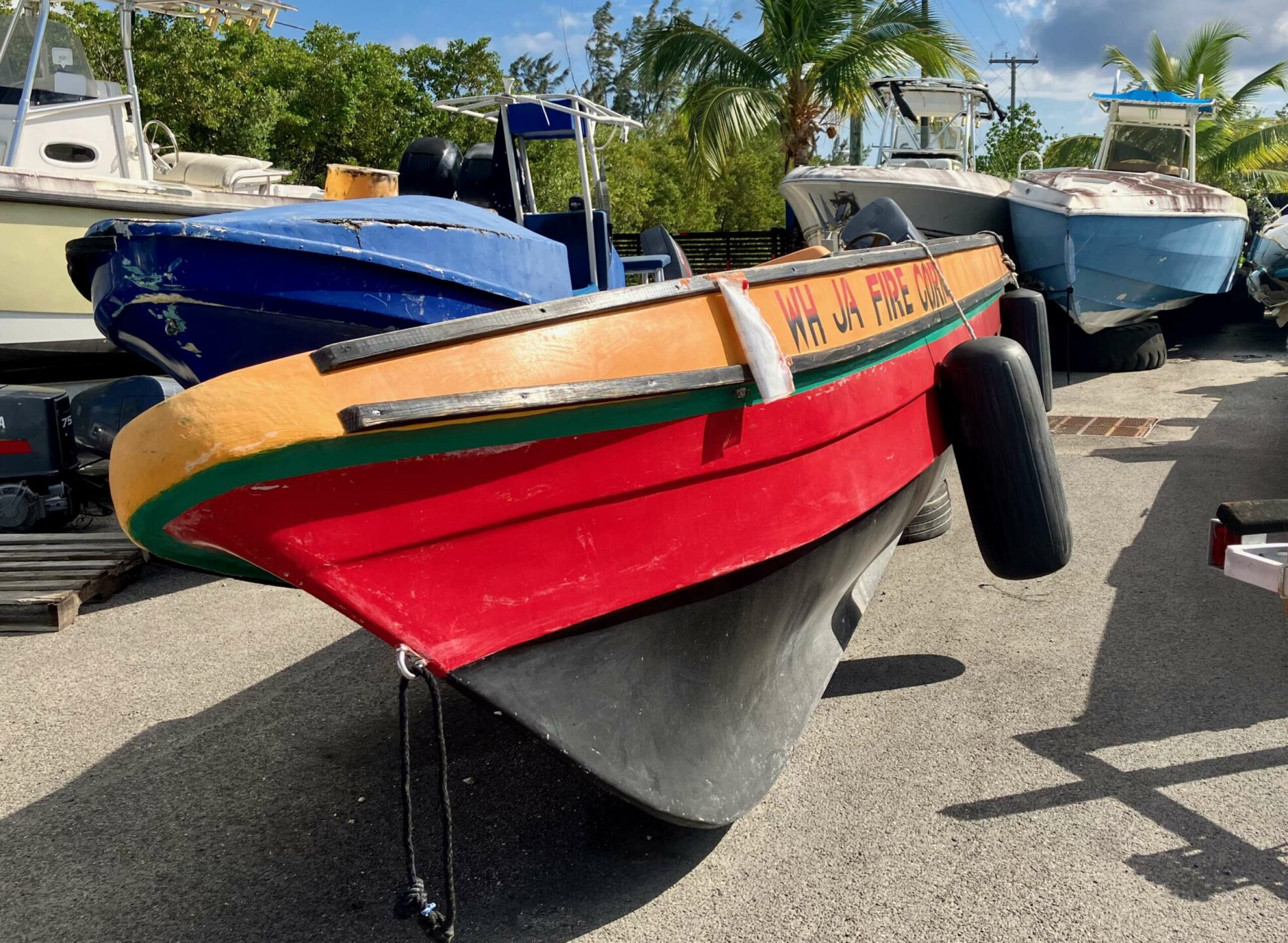
But no matter how many traffickers are lost at sea or locked up, Scotland knows there will always be others willing to take a chance.
A pound of weed sells on the streets in Cayman for at least six times the price it would get in Jamaica.
“People see the reward but not the risks,” he added.
Cayman’s criminal ties with Jamaica are long established.
And it is not uncommon to see the same families involved in drug trafficking, year after year, generation after generation.
They may not be sophisticated criminal networks, but a level of cooperation and organisation is inevitably necessary.
Amateur couriers and contractors
There are a handful of different types of cannabis importers, said Scotland.
There are the stone-cold amateurs – chancers with access to a boat and a connection across the Caribbean Sea, taking a one- or two-time risk in the hope of a big windfall.
Then there are the contractors – boat owners prepared to make the odd run for the money when business is slow. In some instances, they become regular weed couriers operating a delivery service for local dealers.
There are also local dealers who source and bring in the product themselves. But many prefer to pay a ‘transport fee’ to a contact in Jamaica and stay arm’s length from the risk.
Cooperation between rival Cayman dealers on shipping is not uncommon.
“They might be in competition but if there is an opportunity that can be of mutual financial benefit, they will work together,” said Scotland.
Hiding in plain sight
Most of the importers are known in the community, which condones, tolerates or turns a blind eye to their activity, the Coast Guard commander believes.
A handful of these importers are quite blatant about it.
In the past, when a shipment has got through, Scotland said, you might hear a song requested on the radio – ‘Finally the Herbs Come Around’ by Collie Buddz is one example. A brag, a boast or a signal to the market that a dry spell is over. It’s hard to say.
He’s even had captains come up to his team members and tell them with a grin, “I lick a shot last night”, indicating a successful trip.
But knowing and proving are two different things. However, Scotland believes an increasingly intelligence-driven approach is making inroads.
Recent evidence points to an increase in firearms and, sometimes, people – often criminals running from charges in Jamaica – being moved with the weed.
Weapons – either those being trafficked into the island or carried as protection by drug runners – are becoming more common.
“What we are seeing within the region more and more is that people are taking more aggressive steps to protect their product,” said Scotland.
All that makes the life of Cayman’s Coast Guard crews – charged with policing the marine border – more challenging.
Patrolling the border
On a moonless night off the north coast of Grand Cayman, the MV Mark Luke rises and falls on steepling swells. The soft glow of scattered street lights along the Queen’s Highway provides a vague reference point for land.
Inside the cabin, the crackle of the VHF radio and the blips of the radar punctuate the silence. For the four-man crew of the Coast Guard patrol vessel, a sturdy stomach and a deep-sea fisherman’s sense of patience are basic job requirements.
The nights can be still and uneventful, but when the time comes for action, an intense focus is required.
“There is no backup at sea,” one of the crew, clad in a bulletproof vest and shouldering a carbine, tells us.
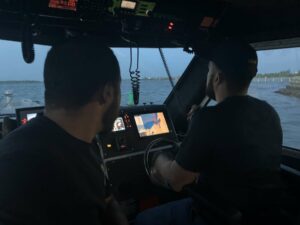
It is hard to imagine firing a weapon with any accuracy in these kind of conditions and hours of specialist training are required.
While confrontation at sea is rare, it does happen.
In 2019, officers of the Joint Marine Unit – the precursor to the Coast Guard – were involved in a shootout with drug smugglers during an extended boat chase around 10 miles off East End. The police marksman successfully disabled the drug boat’s engine, and the crew and vessel, carrying 900 pounds of ganja, were captured.
More recently, smugglers attempted to use their boat to ram and disable a Coast Guard vessel that was pursuing them.
The lulls between those occasional dramatic moments are filled with hours of watching and waiting. The crew of the Mark Luke keep a wary eye on the radar, but there is no sign of activity.
On a calm evening, it is not uncommon for local anglers to drop a swordfish line off the edge of the reef, but with wave heights topping 12 feet, any vessel would be considered suspicious on this night.
But it would not be a surprise to the crew to see someone take the chance.
“For them, it is all about the money and the hype. So they will brave it just to have another story to tell their criminal friends,” says the coxswain.
While there is money to be made, it is often not worth the risk. Two members of the same crew fished a body out of the water last year after a drug boat capsized in rough water. The other occupants of the vessel were never found.
There is risk too for those policing the border. We were asked not to name or photograph the Coast Guard officers, as a precautionary measure.
As they sprayed down the boat after what turned out to be a refreshingly quiet night on the water, the crew reflected on the sometimes dangerous nature of the job.
Much of the local trade into Cayman involves marijuana. But, occasionally larger, better-equipped ships, supplying the cocaine market blip on the radar, bringing higher stakes on all sides.
“A lot of the cocaine is linked to the South American cartels, and those boats tend to be better equipped and better protected,” said Scotland.
While the Coast Guard has made multiple interceptions of cocaine shipments in Cayman’s waters over the years, the majority of the drug supplying the local market may have come by a more circuitous route.
Cocaine tides
On a blustery morning in Bodden Town, a southerly wind brings thick red mats of sargassum onto the beach.
Snared in the seaweed are an assortment of lost shoes, a cafeteria ketchup bottle and a Fuji Film canister that must have drifted for years to wind up here as a home for hermit crabs.
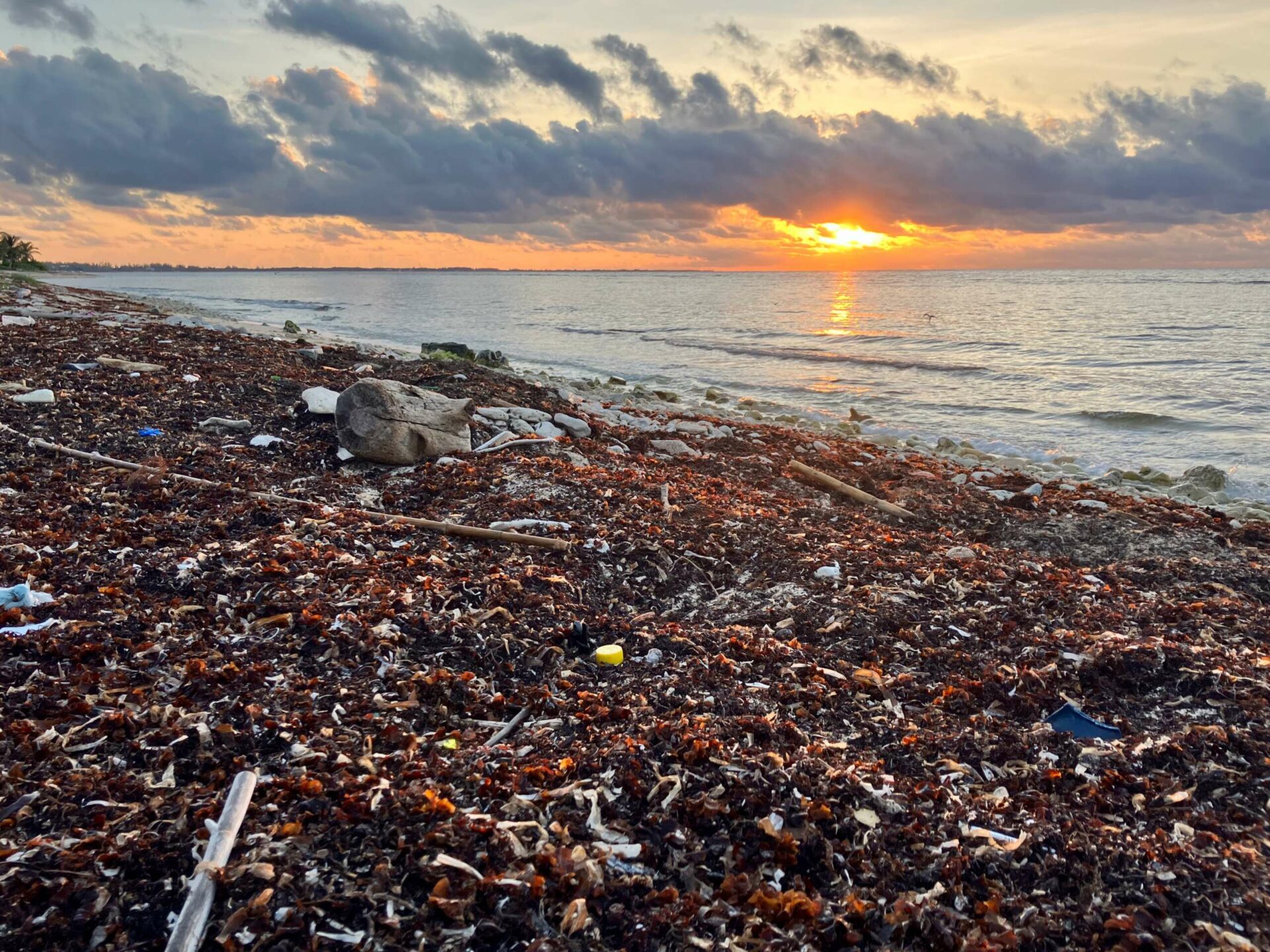
Spanish-language labelling on plastic Pepsi bottles attest that much of the detritus deposited on Cayman’s shores is of foreign origin.
A regular beachcomber lists a tank of gas (still usable) and a whole dead goat among his more unusual discoveries.
Then, of course, there is the cocaine.
Investigators believe much of the powder that washes up here was ditched by South American drug smugglers in the Windward passage between Hispaniola and Cuba.
Sometimes packages being transferred at sea are dropped overboard. Other times, sealed bins of product are dropped with a GPS and never collected. If the US coast guard is in the area, traffickers might ditch their cargo to avoid arrest and seizure.
A reliable carousel of currents, swirling throughout the Caribbean, delivers a tiny percentage of this jettisoned product to Cayman’s shores.
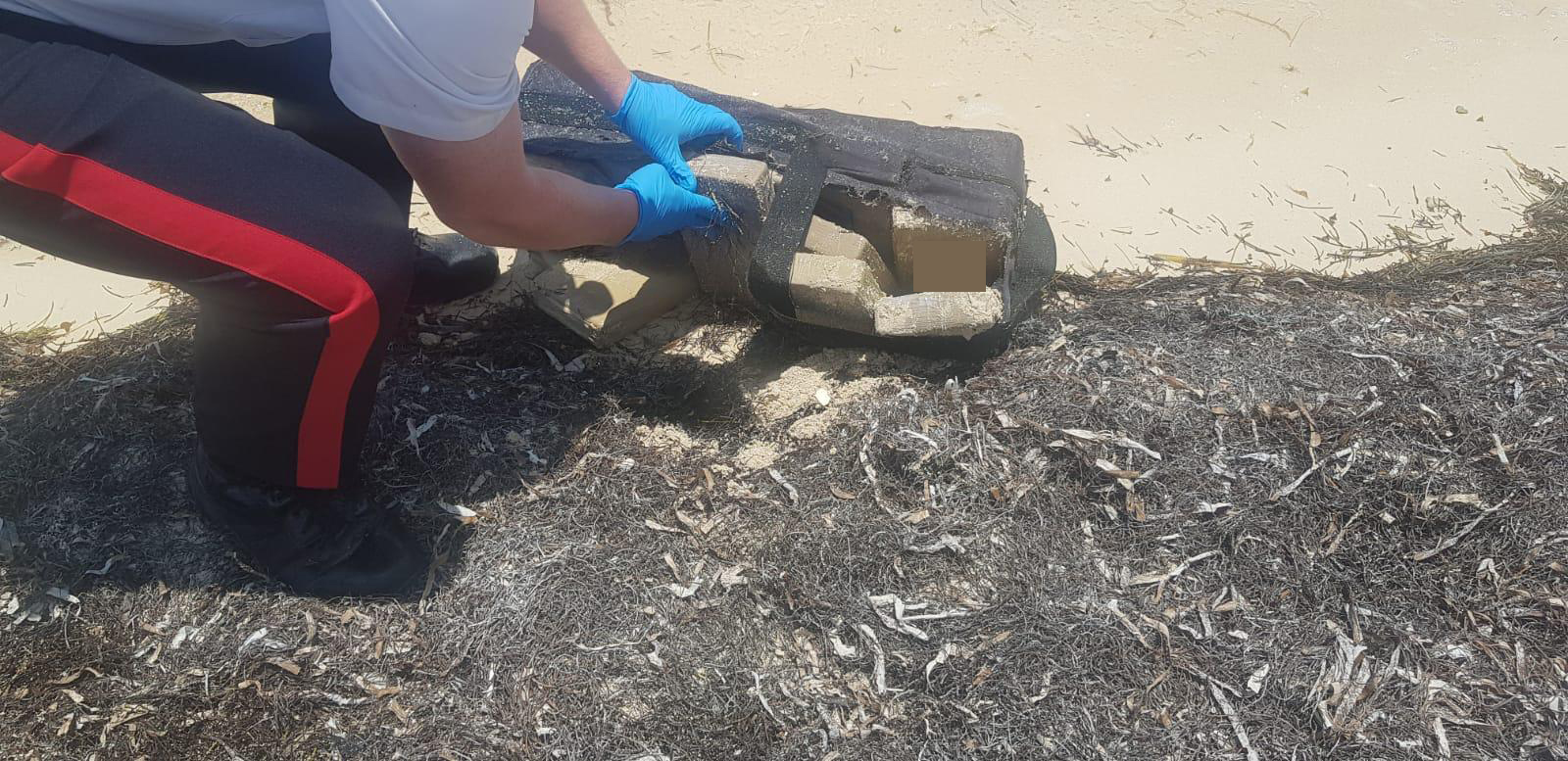
More than 150 pounds of cocaine, with a conservatively estimated street value of $1.15 million washed up on Cayman’s beaches last year – more than three times as much as was seized in police operations.
Occasionally, those groundings make the news. Holidaymakers were relaxing and playing volleyball when several bricks of cocaine washed ashore at Morritt’s Tortuga resort on Christmas Eve in 2017.
In June of last year, there were six separate reports of cocaine washing ashore on all three islands in the space of a few weeks.
On those occasions, well-meaning citizens called the police.
Sometimes they make a different call.
A criminal source told the Compass that there is so much cocaine washing up in Cayman – particularly the Sister Islands – he doesn’t need to risk getting involved in importation.
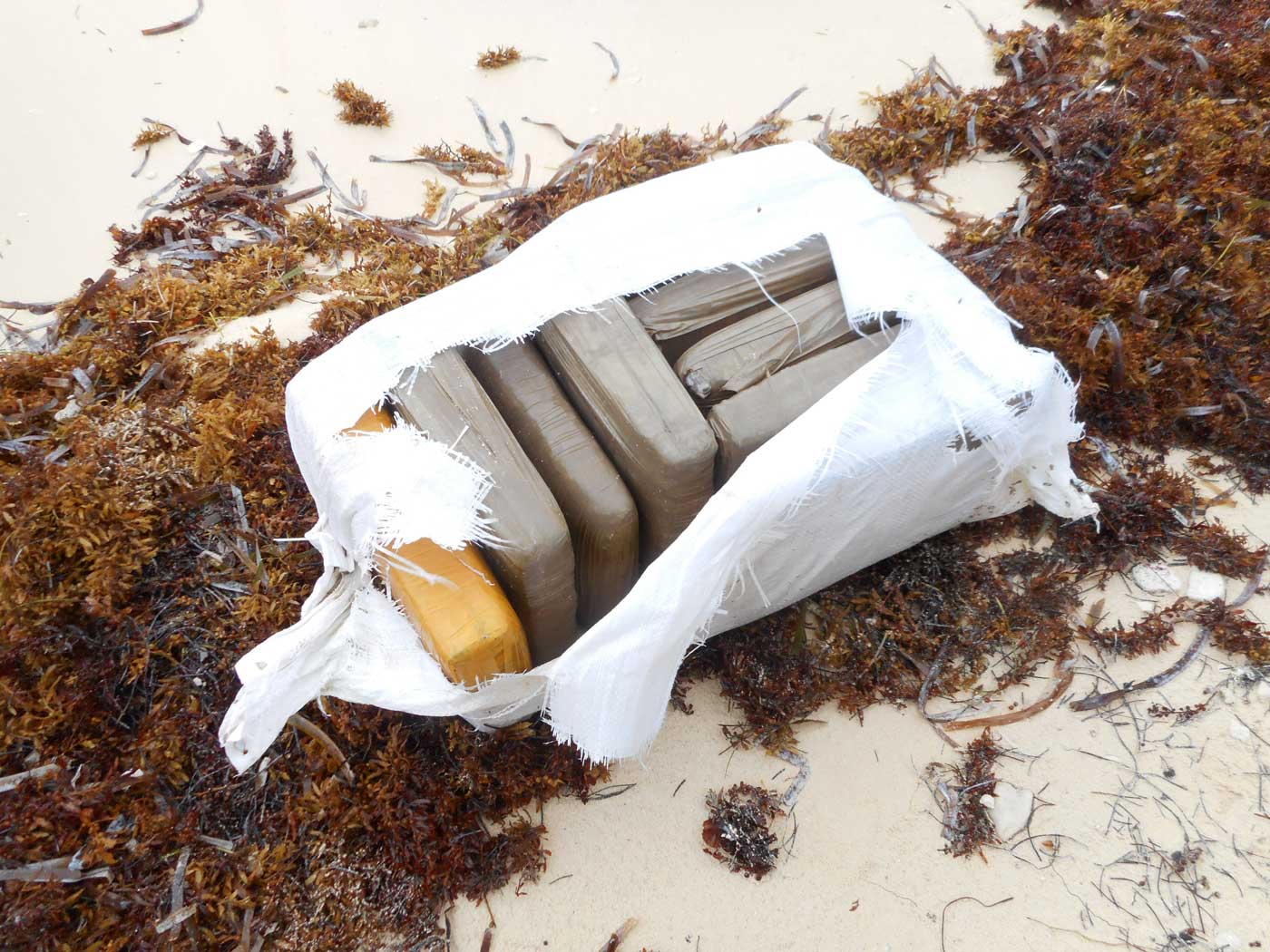
The career drug dealer claimed he is frequently alerted when contraband arrives with the tide.
The supply is reliable enough for him to meet the high demand from mostly white-collar consumers.
“We call it the expat drug,” he said.
Anyone who finds drugs washed up in Cayman should hand it in to authorities, said Scotland.
“If you find drugs or cash on the beach, where you might be tempted to keep it, I would caution not to. The people who own it won’t think twice about killing you, your dog, your family and anybody else if they find out that you have their product.”
The big picture
The Cayman Islands is insignificant compared to the wider trade in narcotics coming through the Caribbean. The three tiny islands are a blip on the radar for international authorities and don’t warrant a mention in the White House counter-narcotics strategy for the region.
But some of the risks, highlighted in that report, provide a window into the wider trade routes.
The methods of traffickers are becoming more sophisticated, and port security and local law enforcement in the region struggle to keep up, the strategy document indicates.
‘Go-fast’ boats, low-profile vessels, semi-submersible vessels, fishing vessels, luxury yachts and sailboats are often built, bought or stolen for the sole purpose of transporting drug shipments throughout the region,” it states.

“With greater frequency, transnational criminal organizations are hiding large quantities of drugs on ferries, cruise ships, aircraft, and in legitimate containerized cargo consignments, making interdiction extremely difficult without advanced intelligence,” the report says.
A risk report from the UK Home Office highlights drug trafficking as a major concern closer to home.
“The majority of the Territories in the Caribbean are often the target of organised criminals, particularly drug traffickers on the cocaine route from South America,” the report warns.
“In recent years, we have seen the emergence of gang-related violent crime in affected Territories, associated with control over street level drug distribution.
“Similarly, when a Territory experiences a short term ‘spike’ in violent crime, it can often exceed the local police force’s capacity to deal effectively with the problem,” the report says.
Those findings date back to 2012 and the issues highlighted have only got worse, in the Turks and Caicos Islands and the British Virgin Islands, as well as in and around Cayman.
Proactive policing
The accidental and deliberate trafficking of cocaine makes the task of the Coast Guard – which is also responsible for maritime safety – an ever-developing challenge.
Much of the successful drug interceptions have been intelligence led. That’s an approach Scotland wants to develop further.
“Your coastline is always susceptible to infiltration.
“Even if you were in a fortunate financial position to be able to put somebody on the beach and space them out every 500 feet, you would still have a gap somewhere in there,” says Scotland.
“The key is intelligence-led, proactive operations, coupled with information from persons within the community who know what is occurring and should by now be tired of the repercussions being experienced within their community.”
Related Videos











The police are intercepting a lot of the drug boats, but how many local dealers have been arrested and jailed?, it seems these people who are the kingpins are off the radar.