

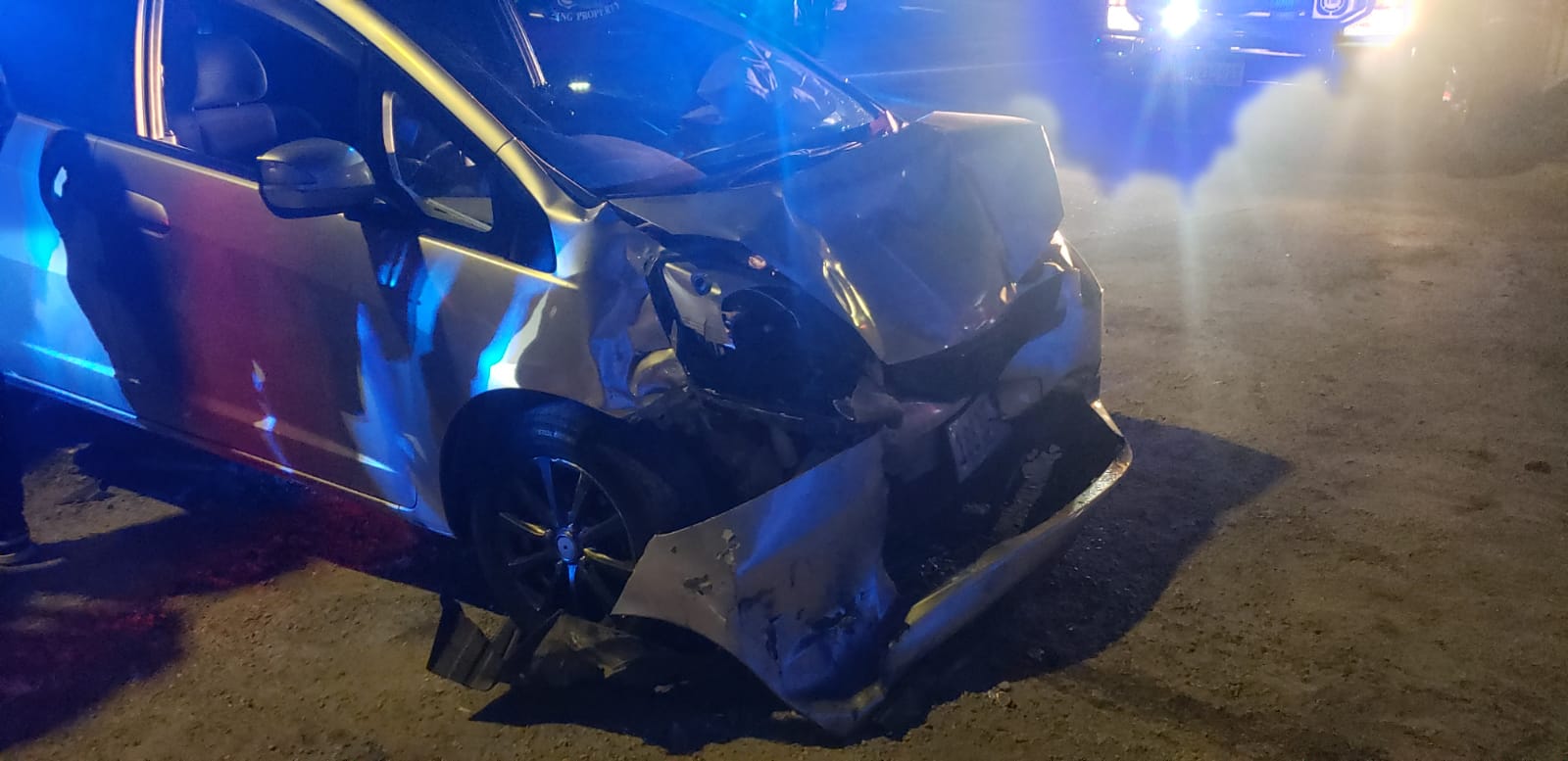
Cayman’s National Road Safety Steering Committee is planning to issue a buyer beware warning about Honda Fits and similar small cars made for the Japanese market that may pose a “clear and present danger” to motorists.
These types of cars – which are affordable, fuel efficient and easy to park – have become ubiquitous in Cayman in recent years, making up a tenth of the vehicles on local roads. They have also become a common sight in serious traffic accidents.
By dint of sheer numbers alone, it may not be surprising that many Fits seem to be involved in collisions, but experts say the seriousness of the damage to the vehicles and the injuries to the occupants comes down to the fact that the cars do not meet acceptable safety standards.
Compounding this issue is that Cayman – which, in vehicle importation terms is part of what is known as the ‘Rest of the World’ market – does not have any specific safety standards for imported vehicles.
Eric Bush, who chairs the National Road Safety Steering Committee and is also the chief officer in the transport ministry, told the Compass in an interview earlier this month that the committee was aware of problems with Honda Fits and other so-called ‘Japanese domestic market’ vehicles.
He noted that a Fit was involved in this year’s deadliest collision, in which three people were killed in East End in May.
Bush said the prevalence of Fits in collisions is “to be expected”, when there are about 6,500 Honda Fits among the 63,000 registered vehicles in the Cayman Islands. But he acknowledged that, in terms of high safety standards, these vehicle are not up to par.
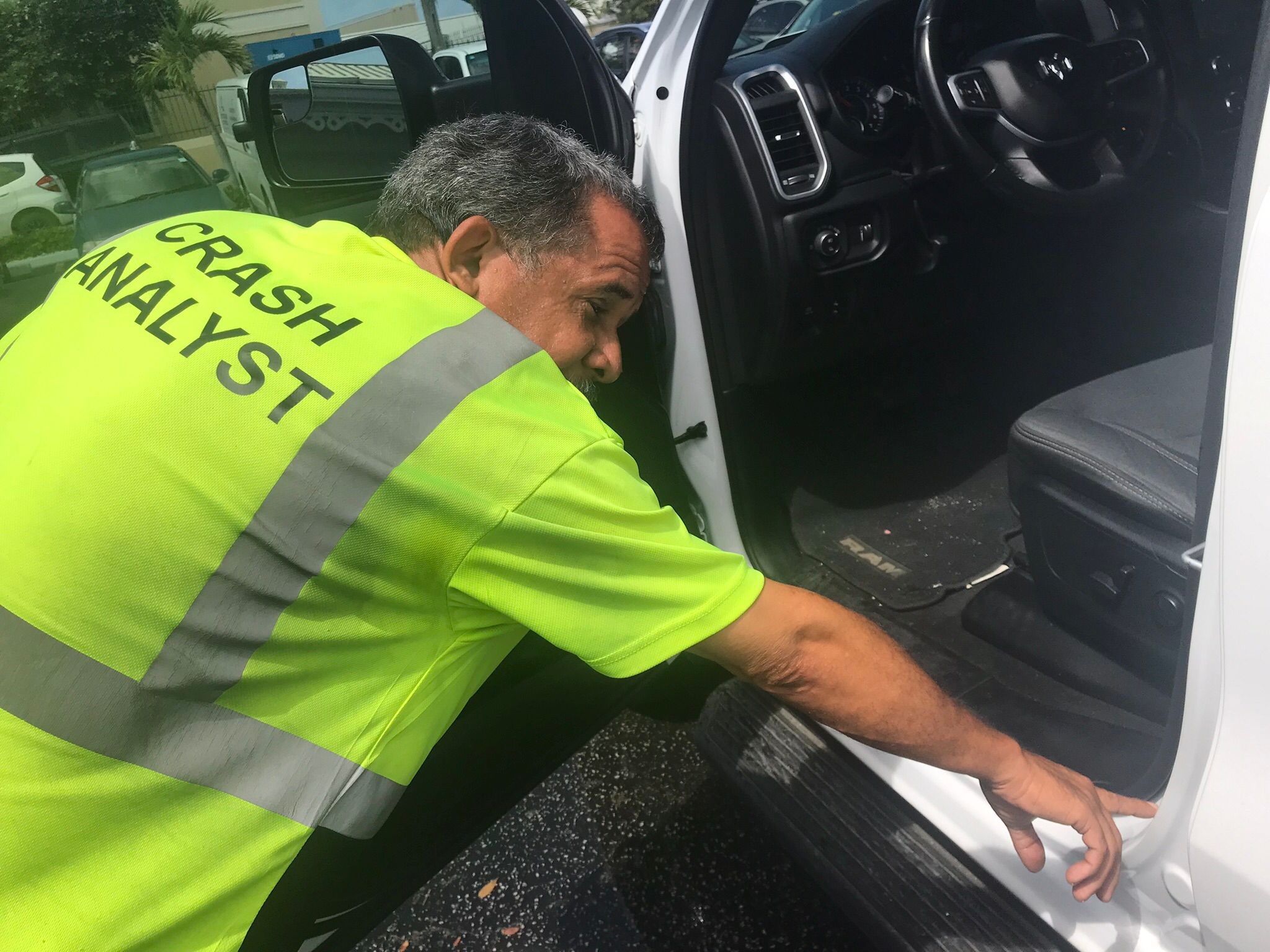
He and other committee members recently were given what he described as an “enlightening” briefing by Collin Redden, a veteran accident investigator, who has given evidence in several inquests and insurance cases involving such cars.
“And from that we are formalising a public awareness campaign,” Bush said.
“There is a clear and present danger,” he added. “We want to make people aware so that they can make a conscious decision for themselves whether they want to buy that vehicle or continue driving it.”
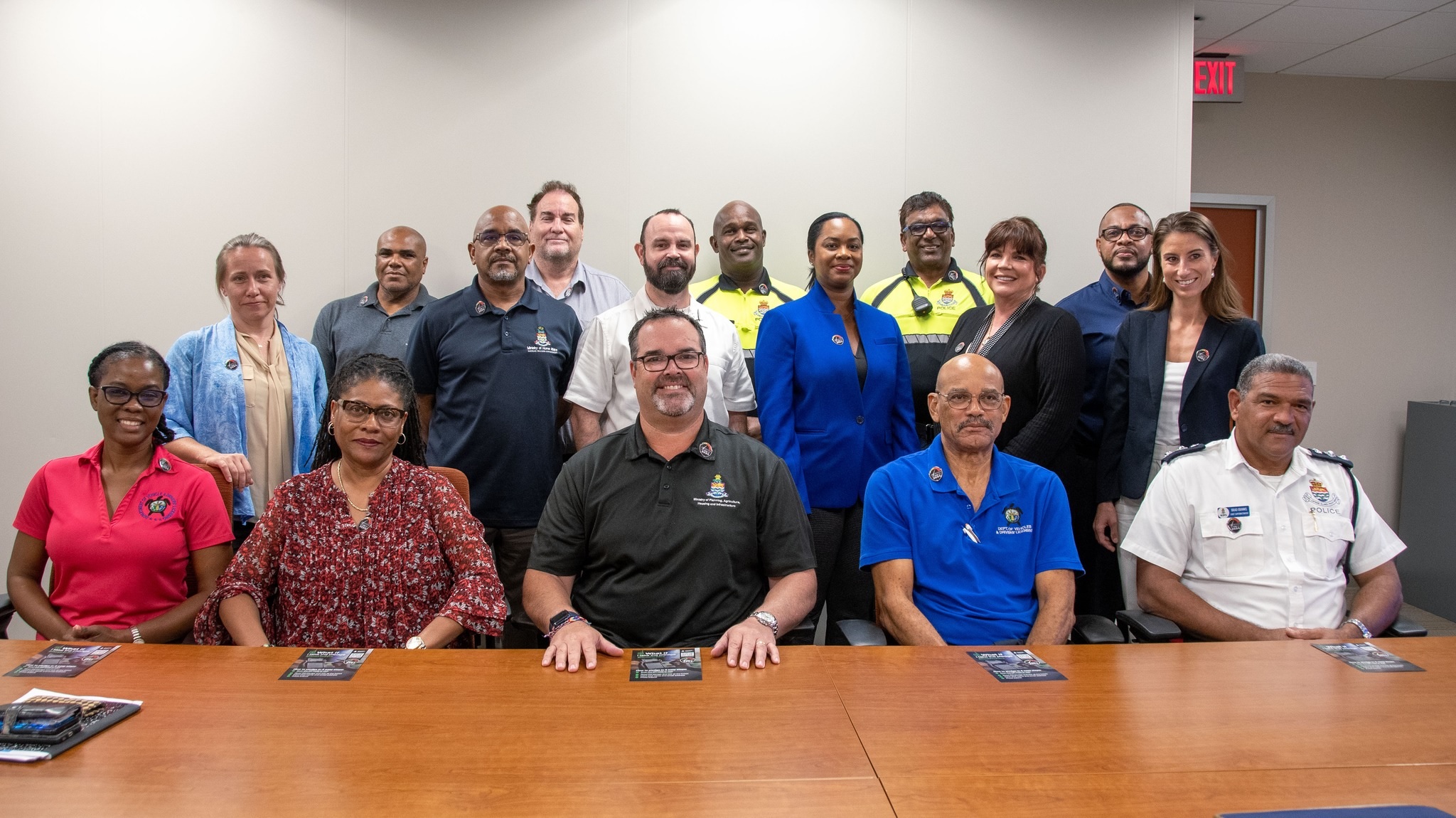
The committee he chairs has been tasked with helping cut down on the alarming number of road accidents that happen in Cayman and has been looking into vehicle safety standards.
“Whilst we are still working on what or how to implement vehicular standards for importation and operational purposes,” Bush said, “we can at least let the public know what we know.”
He added, “That is what we are meeting about next week with the Department of Communications about drivers beware and buyers beware … Know your vehicle. I am a firm believer that we can do something; we have to do something.”
‘Not all Honda Fits are created equal’
One tagline being considered for the awareness campaign is ‘Not all Honda Fits are created equal’.
This is something that Redden, who has been a traffic accident investigator for more than 30 years, pointed out in his presentation to the committee, as well as in a recent interview with the Compass. The message was also part of his evidence at the inquest into the death of Dr. Amber Martinez, who was killed by the defective Takata airbag in her 2008 Honda Fit in October 2022.
At that inquest, he told the Coroner’s Court jury that he had investigated “10 or 12” fatal accidents involving Honda Fits, and had inspected more than 500 of them over the years.
Describing the ex-Japanese domestic market (JDM) Fits as “disposable cars”, he said they were not of the same quality as those created for the US, Canadian, UK or European markets, all of which have certain safety standards that must be met before a vehicle can be imported. As a result, the ex-JDM models are exported to the ‘Rest of the World’ market, under which Cayman falls.
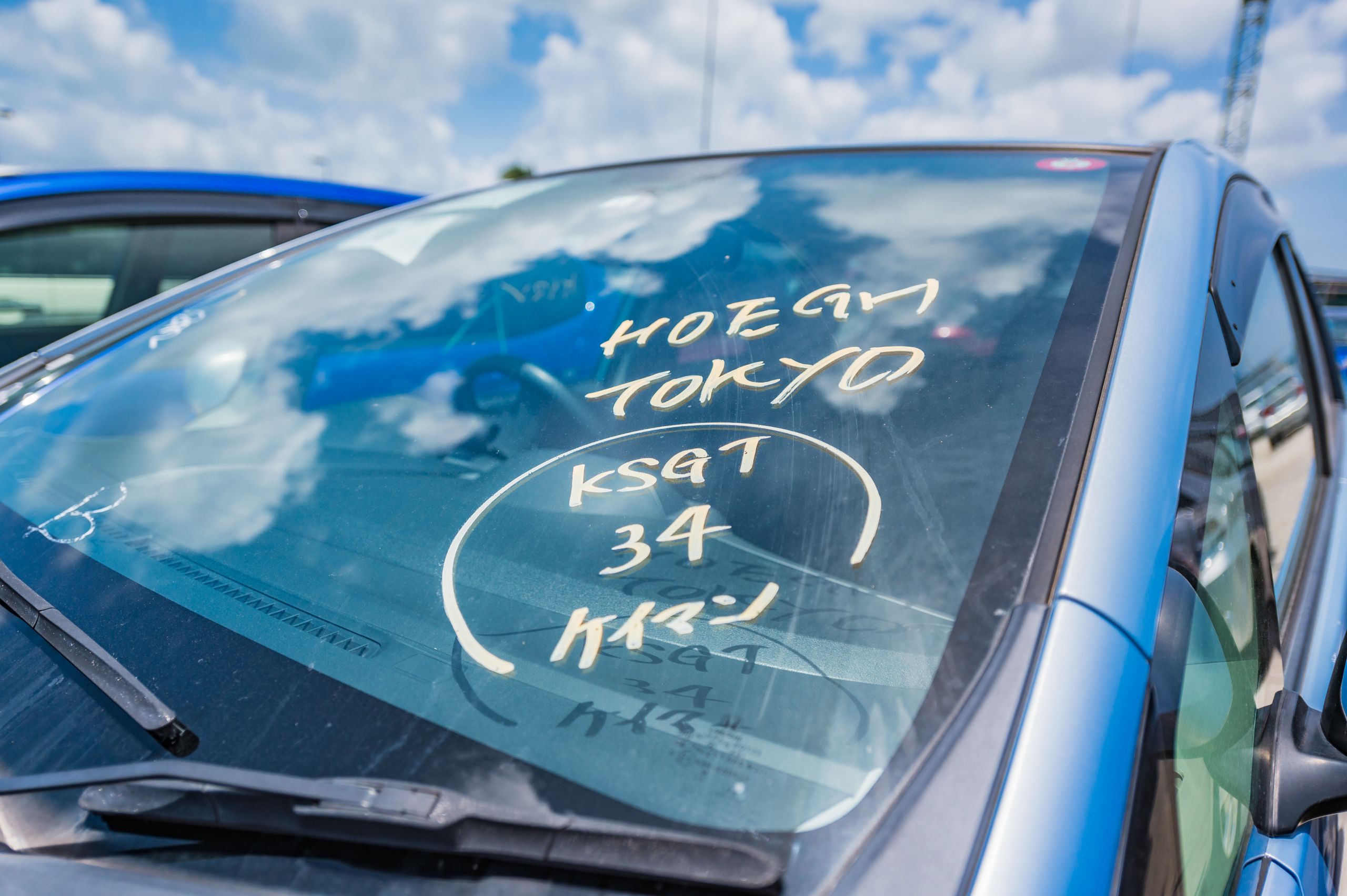
Many of the Honda Fits on Cayman’s roads are secondhand JDM models. In fact, there are so many pf these Fits on the road that Redden told the Coroner’s Court jury they were known as “the Cayman car”.
Redden explained that the Japanese-market Fits are five inches shorter and about 300 pounds lighter than the models made for the US market.
He said those models are not crash tested and do not have the type of crumple zone at the front that the models for the US market have.
He added that the Japanese market model “does not have super high-strength structural steel [and] it doesn’t have the same type of impact bar” as the US market model.
Know what you’re buying
Redden told the Compass in a subsequent interview that Honda Fits are the most common vehicle he encounters in his accident investigations, “and I dare say that 90% of them are Japanese domestic market models”.
He said, “If there’s any message you want to get across to the public, it’s that people need to know what sort of car they are buying. Most people go online and look at what’s a safe car. And they end up with the US specs. But [what] they don’t know is that probably 90% of the cars we get here are not the US spec models and don’t meet the US criteria safety standards.
“So, the first thing you should do when buying a vehicle is ask, what safety standards, if any, does this vehicle meet.”
The ‘Rest of the World’ classification into includes Central and South America and the Caribbean region, and under that heading, many of the vehicles that are imported here are made in Mexico, Thailand, India and Africa. Those same factories also manufacture vehicles for the US and Canadian markets and meet the standards that are in place there.
Redden points out that the vehicles made for the ‘Rest of the World’ market “can never, under any circumstances, be sold or used or registered in the US or Canada”.
He added, “They look almost identical, but they’re not tested to meet the US safety standards.
“The US Honda Fit is a different car altogether – it is longer, it is heavier, it has dual-stage airbags, side curtain airbags and side impact beams, and it has seat airbags, and meets the Federal Motor Safety Standards.”
Describing the differences between what happens when a US model crashes versus a Japanese domestic market model, Redden said, “The American cars have what we call crumple zones. … Those models, if they crash, the crumple stops at the firewall (or bulkhead). There is very minimal protrusion into the passenger compartment.
“With the Japanese one, the crush will continue all the way into the passenger compartment – the engine, the steering wheel, the dashboard, everything comes forward to meet the driver. It’s not the driver coming forward to meet that.
“The steering column and the steering wheel actually turns up into the ceiling, so the driver, whether restrained or not, then meets the steering wheel.”
The JDM cars were not built to be exported from Japan, Redden said, and there is only a limited amount of time they are allowed to remain on the roads there, which has led to a booming export market in these secondhand vehicles.
For those on limited budgets, the attraction of buying a Japanese domestic market at a much cheaper price than many other models is undeniable, but, as Redden states, “Which is more important? Your life or the car?” A funeral costs more than that.”
Coroner’s reports call for vehicle safety standards
Coroner Angelyn Hernandez has sent two reports to the relevant government entities regarding safety issues with small Japanese cars involved in fatal accidents. These reports followed inquests in her court in which the make of car in which the victims were travelling was determined to have played a contributing factor in their deaths.
On 21 and 22 Sept. 2022, a month before Martinez was killed, inquests were held into the deaths of three people who died in two separate accidents involving small Japanese cars.
In the first inquest, the driver had been killed after his Honda Fit collided with an electricity pole on 29 April 2018. The court heard that while several factors had been involved in the fatality, including speed, alcohol and the fact that the driver was not wearing his seat belt, the footwell of the vehicle had been compressed inward in the impact.
Hernandez quoted excerpts from the evidence of RCIPS Constable Kenville Holder, whom she said had stated, “In my experience, these Honda Fits are dangerous. … If it was another made vehicle, it is highly possible that there may have been a different outcome.”
The second inquest looked into the deaths of two people who were killed on 7 Sept. 2019 when the Daihatsu Boon in which they were travelling collided with a Department of Environmental Health dump truck.
In that case, the jury heard that the impact from the front of the car crashing into the garbage truck had pushed the firewall and strut tower of the vehicle “into the passenger compartment onto both occupants”.
In her report on that fatality, Hernandez quoted Redden as saying, “This car is paper-thin. It does not meet crash test standards. As such, the vehicle folded like an accordion.”
She said Redden had also noted that this vehicle offered “no protection”, and in a car with “proper standards”, the impact would have stopped at the firewall.
During both inquests, the jury had asked if the make and type of the car had played a role in the extent of damage sustained in the collisions. In both instances, “The answer was affirmative,” Hernandez said in her reports, which she sent to the Ministry of Planning, Agriculture, Housing, Infrastructure, Transport and Development and to the Royal Cayman Islands Police Service following the inquests.
She added in those reports that the jury had been told “the vehicles being imported from Japan, while economic and affordable for many, did not meet basic safety standards, and are dangerous and unsafe to road users”.
She recommended that the matter be raised “as a safety concern for road users and to encourage constructive discussions with perhaps a view to reconsider the importation, licensing and use of vehicles that do not meet basic safety standards [and] establishing basic standards for vehicles in the Cayman Islands.”
Following the Martinez inquest, Hernandez declared she intended to send another report on car safety issues to the relevant entities.
The Compass reached out to the RCIPS on prevalence of Honda Fits in local accidents, but has received no response.
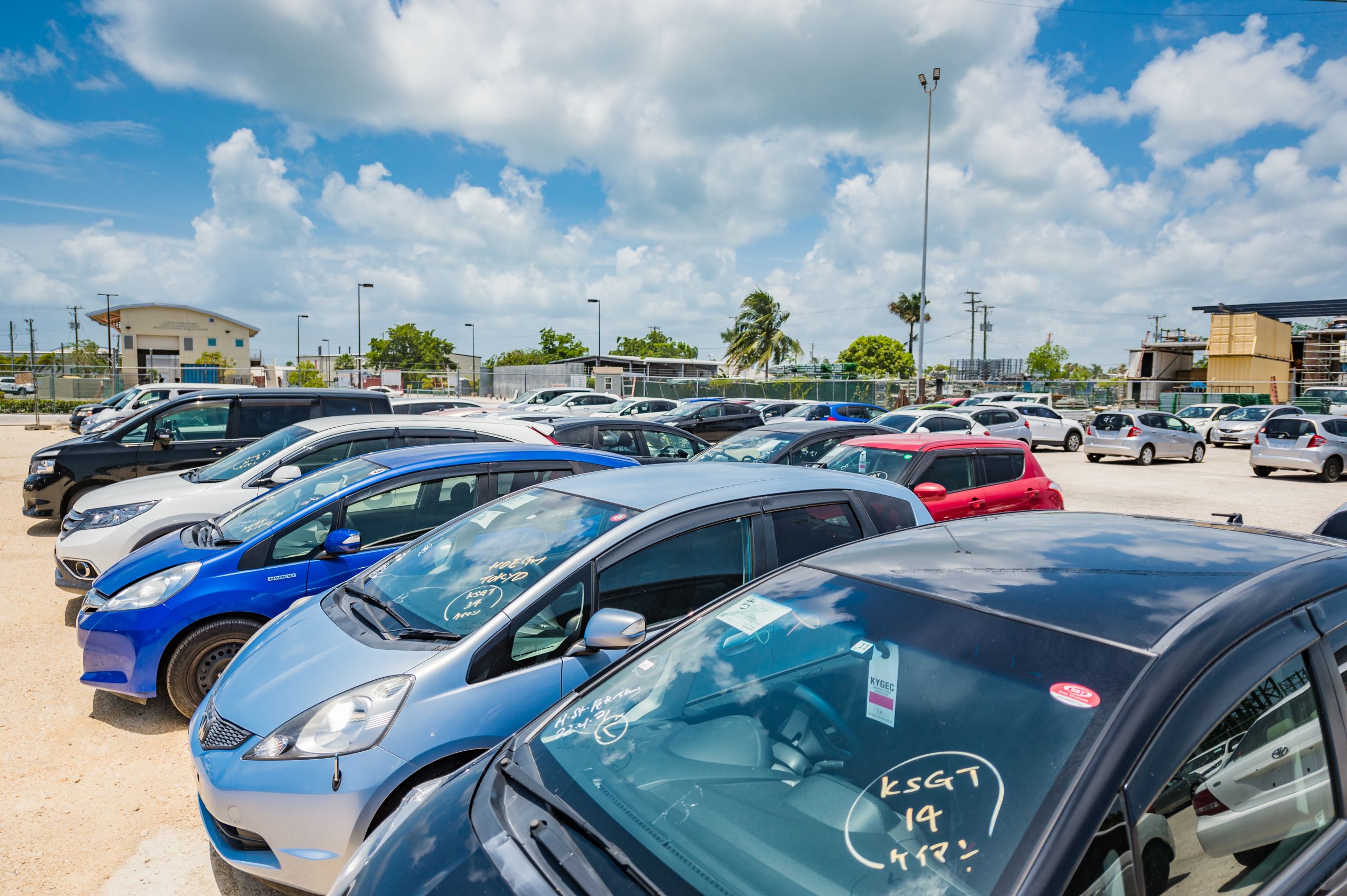
No safety standards
Bush explained that implementing safety standards for the importation of vehicles is not as simple as just saying Cayman will only import vehicles that meet the standards used in, for example, the US or the UK. There are international trade restrictions that make the process less than straightforward, he says.
The ‘Rest of the World’ market designation, which includes Cayman, prevents dealerships from importing models made for the US, UK, Europe and Canada with stricter criteria, not just for safety standards, but also for emissions.
Individuals can buy a car overseas and bring the vehicle to Cayman, but as one local dealer put it, “It’s a different kettle of fish for dealerships.”
The National Road Safety Steering Committee was established last year as part of the government ‘Road to Zero’ strategy, which aims to eliminate serious accidents and motor vehicle fatalities by 2038.
As part of its remit, the committee has been researching vehicle standards in Cayman, Bush explained.
“We have been looking at this for almost a year now,” he said. “The first, sort of, hope we had was that only vehicles that were allowed to be driven in North America and/or Europe would be allowed to be driven in the Cayman Islands, and all others would not.
“The problem we have has to do with our geography and our size … During our initial stakeholders engagement, we met with all the major importers and vehicle dealerships and told them of our initial strategy, and they told us that cannot work.
“The reason is that they are not given access to vehicles that are manufactured for North America and/or Europe. They are given access to what is known as ‘Rest of the World’ vehicles, which in some instances do not meet the safety and construction standards of North America/Europe. We are still working on this.”
Between 300 and 400 vehicles a months are imported into Cayman, Bush said.
The only restriction on the importation of these vehicles is the age of the cars.
In May last year, Cabinet approved legislation that bars importing vehicles that are more than eight years old. Government said at the time that this restriction on the importation of older vehicles was the first in a series of actions being taken “to help improve road safety and manage traffic congestion and its negative effects on the quality of life for motorists during peak commute times”.
One local vehicle dealer in Cayman, who said his company does not deal in Japanese domestic market models, told the Compass that the vehicles imported by authorised dealerships do adhere to certain high standards, and use only certified technicians and mechanics to work on the models.
He says, in most cases, the differences between the ‘Rest of the World’ models, which are not allowed to be sold in the US or Europe, and the vehicles built for those markets are minimal, revolving mostly around emissions and radio frequencies, rather than safety standards.
While aiming for higher standards is commendable, he said, “If you said tomorrow morning that all cars coming into Cayman needed to meet US standards, every dealer on island would have to shut their doors.”
Related Videos








From reading this article, it sounds to me that the problem is the imported Honda Fits. The easiest solution to that problem is….stop importing vehicles from Japan. Period. Yet sadly, there’s several other factors that come into play when it comes to the number of accidents seen…not just the Japanese imported vehicles. 1.) the number of vehicles on the Cayman roads in general, 2.) drivers who don’t know how to drive, 3.) Cayman roads have become more confusing for said drivers who don’t know how to drive. It’s like we are deliberately fixing our roads to make them more confusing for many drivers, which in turn causes the number of accidents seen. One example is the roundabouts….the Camana Bay and the Cayman National roundabouts and 4.) coupled with the fact that MANY drivers on island have their license and still have not a clue of that thing called an indicator.
As an extension, I think the lack of vehicle safety standards for Cayman needs to be reviewed against the car rental business. I often rent cars when I visit Grand Cayman and have never given any thoughts as to how safe the car is. I even question the North American cars that I rent. Are they from a ‘rest-of-the-world’ assembly line as well?
Have you seen the way some people operate these vehicles?
No tax on US-Standard / Imported cars
100% Tax on Rest-Of world market cars
There you go
Demonising the car isn’t the solution here, and that “solution” does not match the data.
Look at the time of day of most of the fatal accidents. Late night. Often involving excessive speed. That is not the fault of the car. It may point to other problems like the lack of public transport, or reasonable cabs, or unsafe social norms – but not the car.
You assert that over 10% of the cars (legally) on the road are Honda Fits. That means that you should not be surprised to see a lot of them in accidents because they are on the roads. Further, the fact that they are fuel efficient probably leads to them doing more miles on the roads than plenty of garaged luxury vehicles that are registered, but not driven nearly as much.
The DVDL has the data on how many miles are driven by each make of car – they write down the odo every year. I’ll wager that Fits do far more than that 10% of the actual miles on the roads.
Finally, glorifying US spec vehicles is crazy, as LHD cars are inherently less safe on our roads as the driver has a poor view to the right. As we install more and more roundabouts and more and more multi-lane roads, this becomes increasingly important. Crucial, even.
There are measures we can take to make the roads safer, but demonising a car isn’t one of them.
Work with the dealers to get US-marketed cars (for Japanese vehicles)
They need to talk about these dealers selling Chinese vehicles: TRAC, Advance EV, and LJMEnergy.
New brands for those dealers in replacement?
Chinese cars are not in the US, therefore we can’t determine if they are safe or not. Trick you with all the tech but safety is bad
As for the luxury or high-end vehicles out of the US market should still have tax on arrival.
Responding to D R: Yes they are LHD, but perhaps they will try to make the roads easier for LHD vehicles if this does become a reality, there is still a lot of work goes into this. (read below)
Even if they are LHD, read the part where it talks about the Crazy safety standard difference. It’s a hit or miss, but what is better (The crash result? Or getting used to driving LHD on the left side of the road)
We have tons of LHD vehicles on the road, therefore people should adapt to it easily and they are barely seen in as many crashes as the RHD fits. And even if a US-marketed LHD car gets in a collision, the result is much calmer and won’t lead to death as easily as these Ex-JDM vehicles.
The safety problems of LHD cars derive from poor vision to the right. This is a real issue for merging and roundabouts.
You can “get used” to driving them, sure. I’ve owned both. But the safety hazard is real. Much better to see clearly and not get in an accident (or cause one) than deal with aftermath.
For many years Cayman didn’t have that many roundabouts for a multi-lane roads. That has changed.
Responding to Driverasdfasdfasdf G: Yes. If Cayman does end up switching to LHD / US-marketed cars and banning the rest of the world’s cars then the way the roads are designed will have to be changed.
Roundabouts would have to be turned into Smart Signal Traffic Intersections in most spots while at the same time, they would need to find new ways to make the roads safer at least a bit more for the LHD cars.
Can’t they allow dealers to temporarily import them, but stop the mass imports of private cars that don’t meet safety standards? Maybe implement it for people first, then dealers when there’s an opportunity