New solar farms are planned on both Cayman Brac and Little Cayman as the Sister Islands take their first steps towards a renewable energy future.
A competitive bid process is hoped to begin next year with Island Energy aiming to generate more than half of the islands’ power needs from solar.
“This is a huge leap forward and it is only a first step,” said Simon Watson, of Island Energy.
“We are not talking about an ambition that is 50 years out. This is something we hope to achieve within a few years.”
The signs of change were everywhere on the Brac when the Compass visited earlier this month.
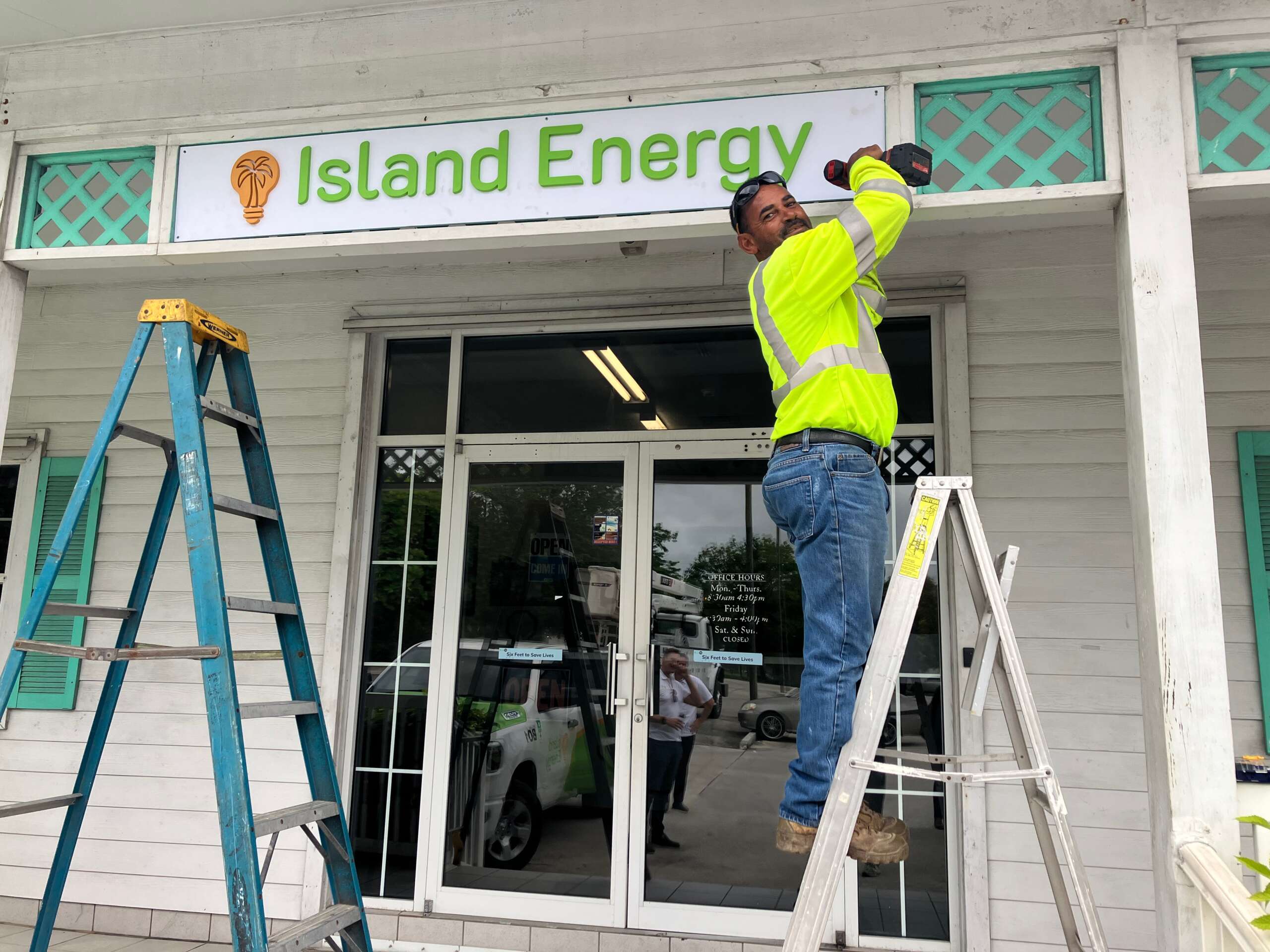
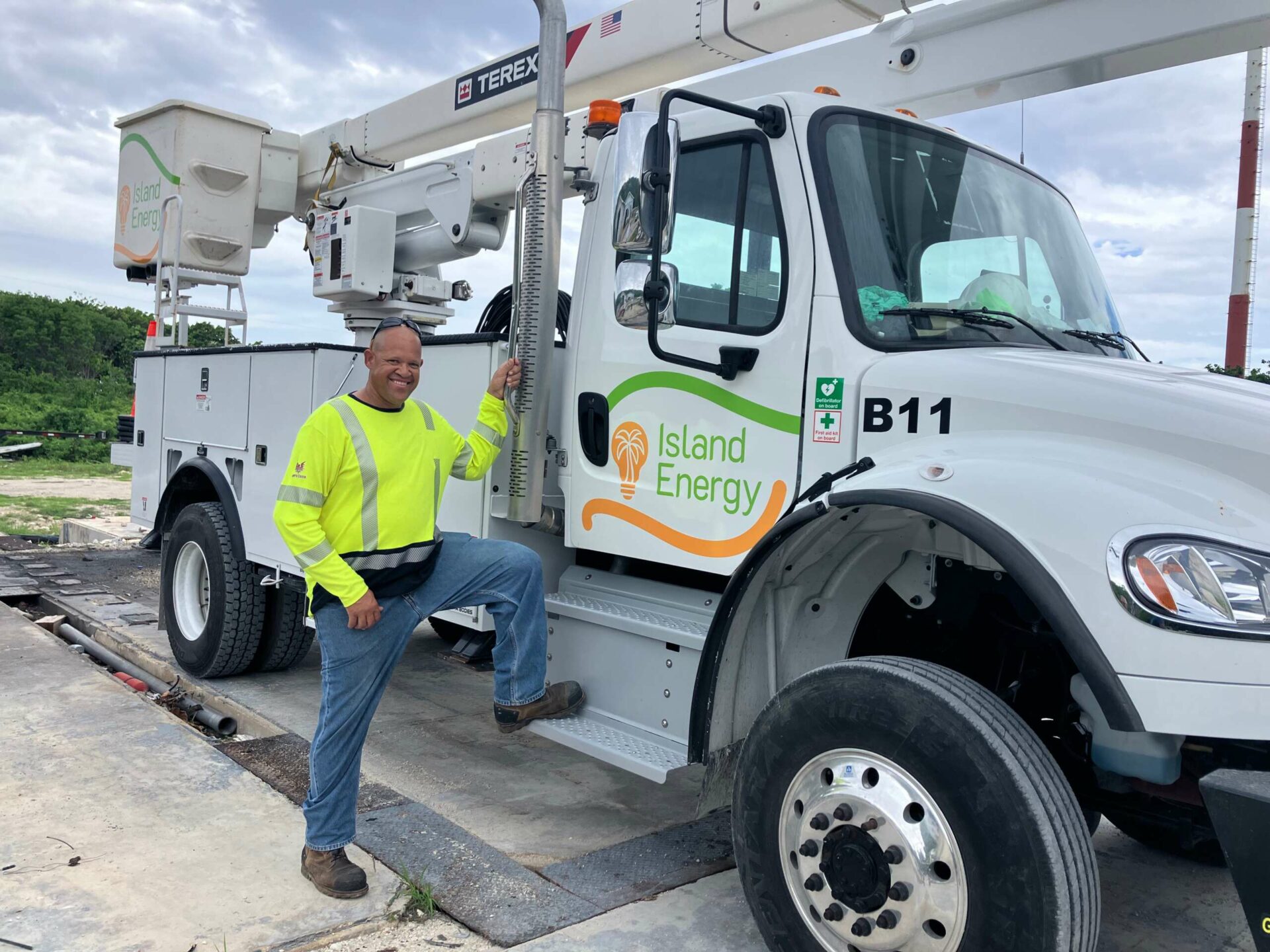
Gleaming new trucks buzzed between power lines to check on new transmission equipment. Refurbished engines were being unloaded at the generation plant on the Bluff. Workers were hammering the final nails on the company’s storefront sign.
Meanwhile, the original Brac Power and Light plant, now a dusty relic used as a depot for vehicles, has been identified as a location for a future headquarters. The site holds historic importance as the place where the switch was first flicked to bring electricity to households across the island in 1960.
Investment in infrastructure
Island Energy, formed when the Dart group bought out Cayman Brac Power and Light in 2022, says it is already investing heavily to modernise infrastructure and reduce power outages.
Since the acquisition, it has spent $4.5 million on generation, transmission and distribution infrastructure and to upgrade its vehicles, equipment and training, Watson says.
That investment will likely come with a cost for consumers. The company is seeking a rate increase from regulators that could add up to $20 on a $400 monthly bill.
While power prices have fluctuated with the price of fuel, there has been no rate increase on the Sister Islands for 20 years, says Jonathan Tibbetts, general manager of Island Energy.
But he said an increase was necessary to help fund what he describes as a “huge leap forward” in reliability.
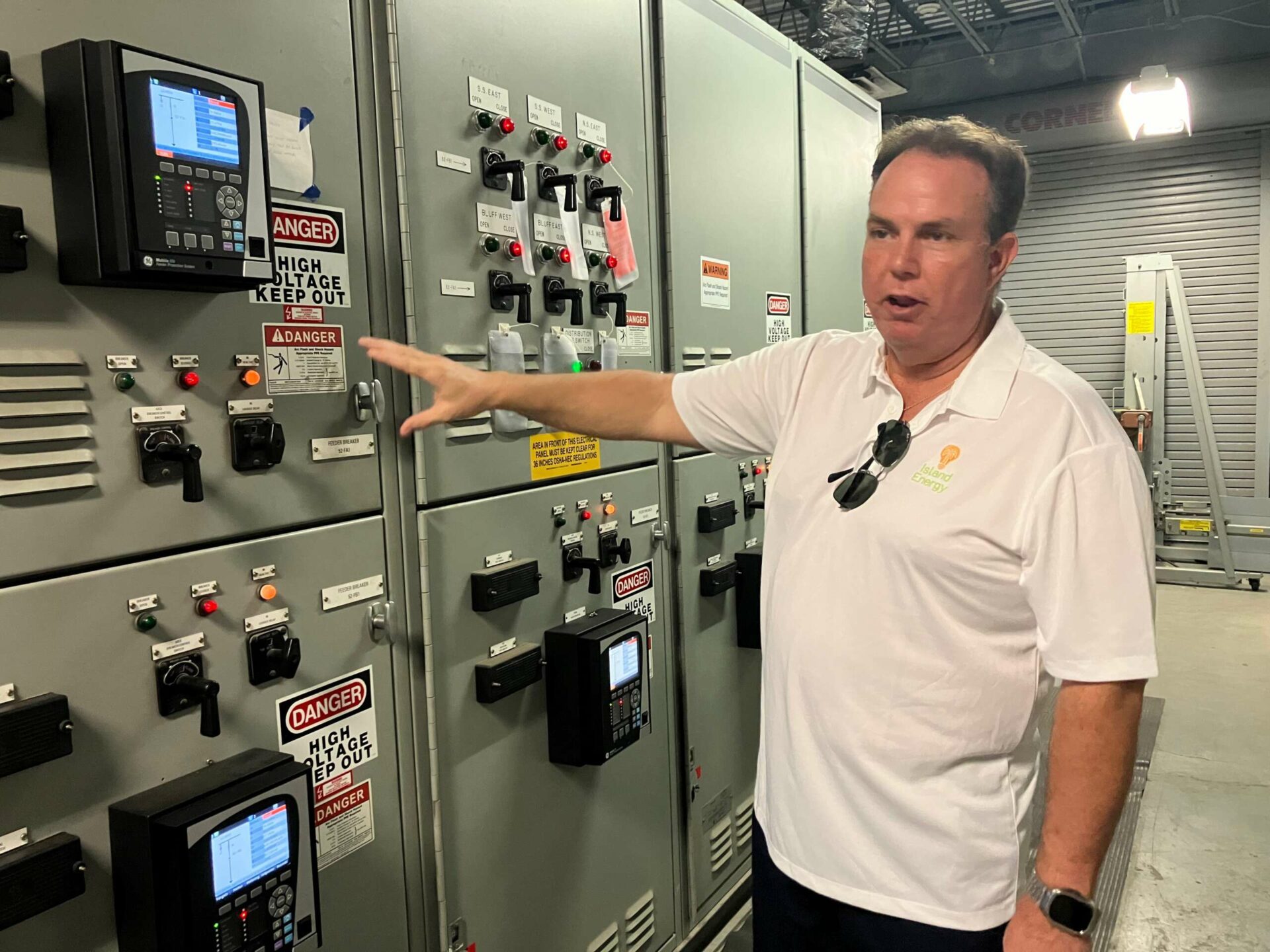
A combination of weather, ageing infrastructure and vehicle accidents contributed to seven power cuts on the Brac so far this year, with an average outage time of 90 minutes, and four on Little Cayman, with an average time of 38 minutes.
New equipment should radically improve that reliability, reducing the amount of outages and the number of people impacted.
“If you’re living on the west side of the island and lightning strikes on the southeast corner, you wouldn’t even notice it,” Tibbetts said.
“The idea is to reduce any kind of outages, reduce customer frustrations, and just provide a world-class service that that is resilient in storms.”
Going green
The upgrades to the diesel generation and transmission system come as the power company embarks on a more fundamental switch to green energy.
The aim, Watson said, in the initial phase of investment was to improve the safety, reliability and efficiency of the current system.
The next phase will be a project to bring solar power generation and battery storage into the mix. The company is working with the Department of Environment to identify the best sites for solar farms on both islands, he said.

The aim is to achieve 75% solar generation on Little Cayman and 55% on Cayman Brac.
Watson said it was not considered economically feasible at this point to go to 100% on either island.
“With the current cost of batteries, the current cost of solar, that is what we can achieve now,” he said.
The cost of switching to renewables, he said, gets exponentially more expensive as you get closer to 100%.
“Let’s be honest. To be able to go from burning diesel every single day to saying the majority of our electricity is now renewable electricity in one move, that’s fantastic,” Watson said.
Tibbetts said the takeover by the Dart group began as a search for investment to fund the renewable energy switch outlined in government’s National Energy Plan.
It has also brought investment in other areas where the Brac has lagged behind, he said.
A new e-billing system is planned.
“The system that we currently have only allows us to send bills in the mail,” Watson said.
A more sophisticated upgrade will come in the form of smart metering through a smart phone app that allows customers to track their electricity usage and pay as they go for top ups. That will replace the old payment card metering systems that were popular with customers but have become obsolete.
It allows consumers to track and modulate their usage and avoid the “sticker shock” of a large bill at the end of the month, he added.
Overall, he insisted that Brackers and residents in Little Cayman would be getting value for their money, despite the increase in rates.
“While there is a huge amount of investment going on, and huge projects going forward, this doesn’t correlate to huge increases in bills,” he said.
Editor’s Note: The Cayman Compass is a subsidiary of Dart Media and Entertainment.
Related Videos