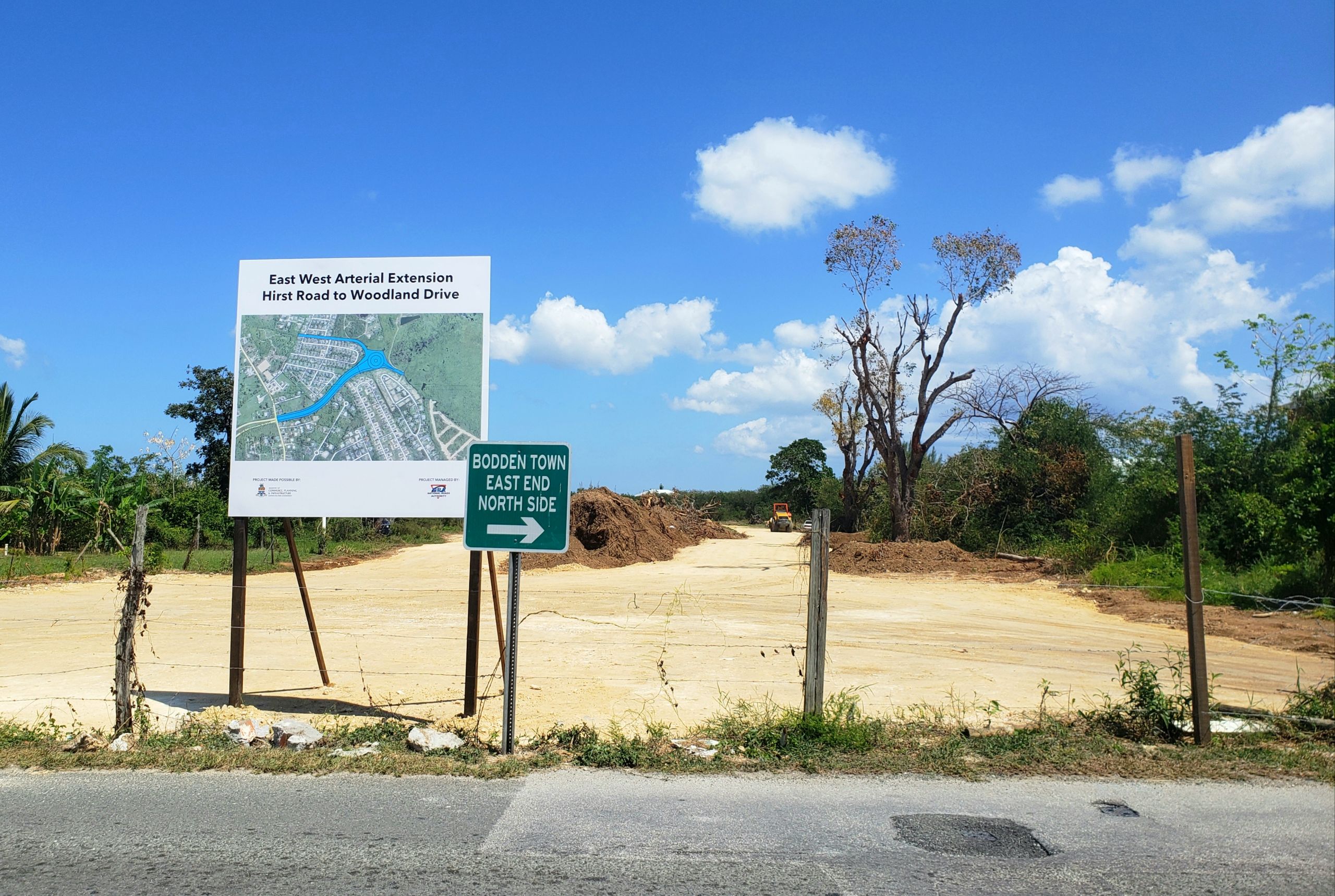
Cabinet’s preferred route for the East-West Arterial extension has been met with opposition from local environmental group Sustainable Cayman which says the choice will likely cause damaging impacts should it go forward.
The selected route, identified as B3, is a new roadway connection to the existing two-lane Bodden Town Road between Woodland Drive and Frank Sound Road.
The Transport Ministry, responding to Cayman Compass queries on the preferred choice, confirmed last Thursday that Cabinet approved the National Roads Authority’s alternative route “after an extensive evaluation that initially considered four routes: B1, B2, B3, and B4”.
That decision was made at the 9 July Cabinet meeting and an official statement from the ministry is expected on the matter.
However, Sustainable Cayman, which has been closely following the developments in the project, has rejected this choice, telling the Compass that it “stands firmly with the fact that Route B2 is better than any other route shortlisted by the proponent”.

It said it “wholeheartedly” rejects the chosen route for the East-West Arterial extension.
“We have repeated our endorsement of the B2 route throughout our various social media campaigns. Heeding the advice of environmental scientists and consultants would benefit the residents who will be using the Arterial, as B2 requires less time to drive and lower overall costs and upkeep,” the group said in a statement responding to Compass queries.
Ministry: B3 minimises impacts
The ministry, in a statement to the Compass, said that routes B2 and B3 scored equally in the cost-benefit analysis for the project, but “Route B3 was ultimately selected as it still aligned more with the original long-term gazette while [minimizing the impact on] lands owned by the National Trust [with] more favourable constructability”.
The ministry said that route B4 was dismissed early on due to its significant environmental, social and historical impacts.
“Following further analysis from September 2023 to April 2024, Route B1 was eliminated due to its high negative environmental impact (including impacting lands owned by the National Trust) and cost,” it added.
Based on the NRA’s evaluation, the B3 route would include a Will T connector option and a bridge and/or culvert structures for hydrologic connectivity. It would also eliminate the northern spur at Frank Sound Road connection.
“This alternative is primarily through undeveloped area with no existing communities or neighbourhoods. Potential isolated community impacts near the Frank Sound terminus and from the Will T Connector Option exist. Impacts for B2 are Possible and scale of impact could be Minor; therefore, it is ranked as Low Impact,” the report suggested.
At the same time, though, the NRA said the B3 option would intersect a large portion of parrot-nesting habitat, which will cause a “very high impact”.
‘Reconsider the decision’
Sustainable Cayman – along with those who advocate for a cheaper, faster and safer route – said it earnestly hopes this decision will be reconsidered and B2 will be chosen.
“We urge them to consider the results from the Environmental Assessment Board and make the right choice for the future of the Cayman Islands,” it said.
Sustainable Cayman said that the environmental and social consequences associated with route B3 fundamentally go against the government’s constitutional responsibility to undertake projects that increase the quality of life for Caymanians.
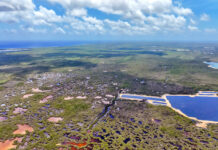
“Not only does route B3 threaten 49.6 hectares of untouched ecological habitat – the majority being the Central Mangrove Wetland – but it also increases the risk of secondary development in an area that is already at high risk of deforestation. Route B3 not only exacts a heavy toll on the environment, but also on its users due to its inconvenient access,” it contended.
B3, being longer than B2, is less fuel efficient to drive, the group added, and it is also out of reach of residential areas, which means it does not increase accessibility for emergency vehicles, nor does it create a connection to the residents of the Midland Acres area.
Sustainable Cayman pointed to comments from Natalie Hall, head of global policy of the Royal Society for the Protection of Birds, who said that the option which “reaches the goals of the project whilst being the least environmentally damaging should be the one chosen”.
Related Videos