


Rogue companies are conspiring with foreign recruitment agencies to con vulnerable workers to part with hard-earned cash in exchange for the promise of work in the Cayman Islands.
Reports of “rampant abuse” by the companies surfaced at a town hall meeting of the Filipino community in George Town last week.
The concerns mirror complaints reaching the Compass of illegal recruitment arrangements that can leave foreign nationals marooned in Cayman with no job, nowhere to live and a debt to pay.
Attorney Gavin Dixon called illegal recruitment a “fruitful business that affects the most destitute of people” and warned of increased cases of people being exploited or conned.
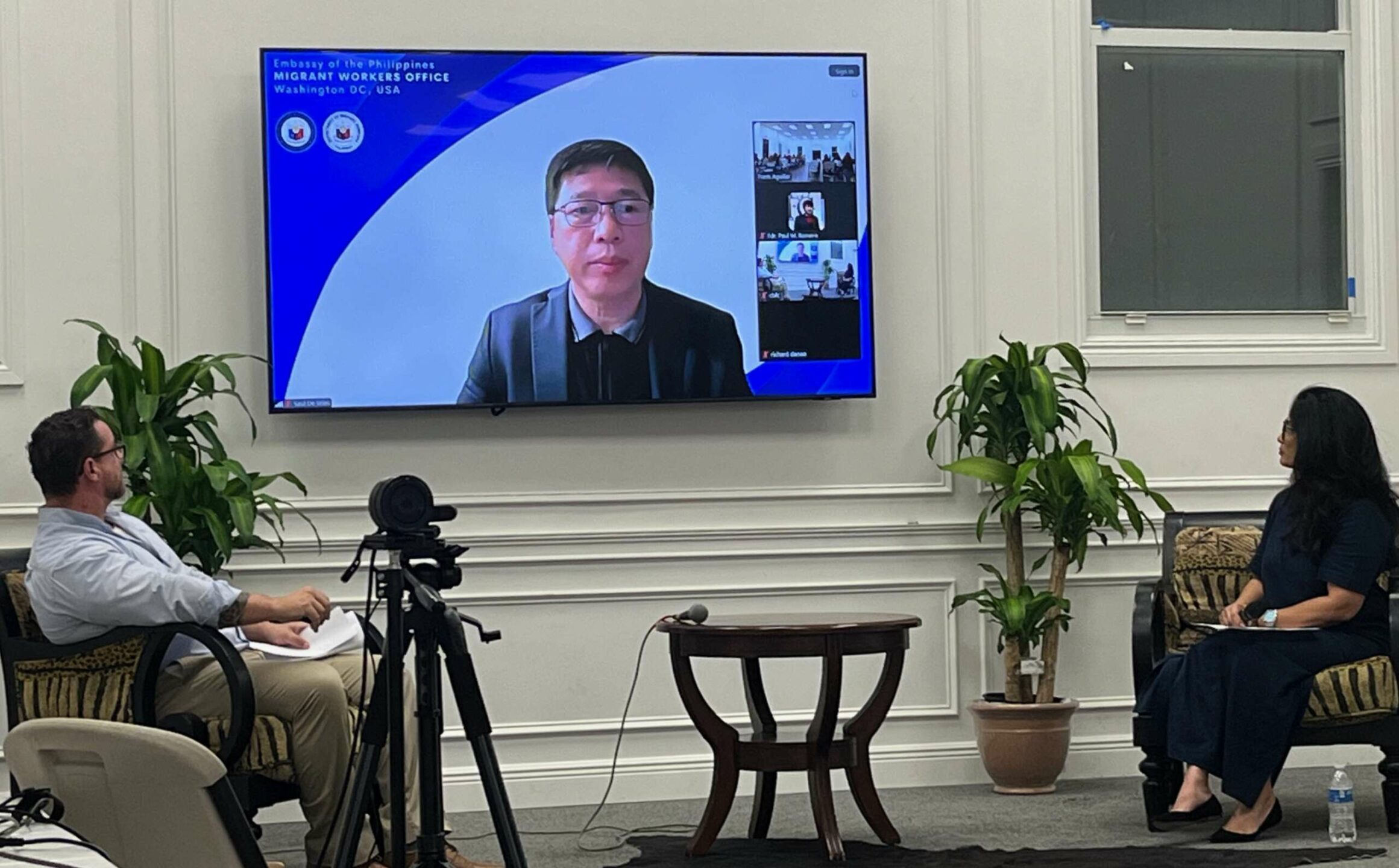
Saul De Vries, labour attaché with the Philippines government’s Department of Migrant Workers, speaking via video link from Washington, DC, confirmed it is investigating complaints of Filipino nationals involved in scams exploiting their own people.
He warned anyone who victimises fellow Filipinos, overseas or at home, could be prosecuted.
“We will not have second thoughts of taking action against you,” he said.
There are also reports of collusion between Cayman companies and foreign recruitment agencies, and the department is assembling a ‘blacklist’ of companies it will advise its citizens to avoid.
False promises
One variation on a basic scam, outlined at the meeting, involves someone from an economically disadvantaged area, like parts of India, Nepal or the Philippines, being offered employment in Cayman through a recruitment agency.
In these cases, the person might take out a loan to pay for airfare, job placement and for their work-permit fee.
But when they arrive in Cayman, there is no job and they end up going door-to-door to look for work.
Dixon, an attorney and former immigration enforcement officer, said any kind of arrangement that requires a worker to pay for their own permit is illegal.
He said the illegitimate side of the recruitment business was an ongoing and growing concern. Sometimes those cases involve people of the same nationality based in Cayman knowingly conning their countrymen. Others appear to involve collusion with Cayman companies involved in illegal recruiting and flying beneath the radar of investigators locally.

Dixon highlighted one recent case where would-be workers paid between US$2,500 and $5,000 on promises of jobs, English-language training and residences as part of a relocation package.
“Unfortunately, when they got here, none of that turned out to be the case,” he said.
Desiree Jacob, a Cayman-based lawyer of Filipino heritage, acts as a legal counsel for the Cayman Bayanihan, a growing social and support network for more than 4,000 Filipinos living in Cayman.
Speaking at the Constitution Hall meeting on illegal recruitment on Friday, she recounted the case of a Filipino woman who had been hooked up with a second job as a cleaner, outside the terms of her work permit.
When she arrived at the job, she was “accosted and asked to do things other than cleaning”.
The woman was able to extricate herself from the situation, but the incident highlighted how vulnerable foreign workers can be in certain situations, Jacob warned.
Side hustle
She acknowledged a growing number of people needed a side hustle amid stagnant wages and rising cost of living. But she warned they needed to do so legitimately through a work-permit variation.
“It will be a red flag if the employer does not want to do that.”
She highlighted challenges with people living in unfit accommodation without air conditioning or running water, and in homes that should be condemned, among some of the ‘macro issues’ facing Filipinos and other nationalities in Cayman.
“There are many horror stories out there, unfortunately,” she said.
But she warned people to stay on the right side of the law in order to avoid the increased risk of being exploited.
Jacob acknowledged the challenge facing people brought here on false promises.
“There are many situations where people have come here under contract with the promise of English tests, a wage, a place to stay, food, and when they get here, that’s not the case,” she said.
She added that in some cases, it was fellow Filipinos who were exploiting their own people.
‘We will not hesitate to prosecute’
The Philippines has such a culture of people travelling overseas to work that there is an entire bureaucracy within that nation’s government dedicated to overseas workers.
Known as OFWs, overseas Filipino workers are perhaps the country’s greatest export. It is estimated that more than 10% of the 100-million-person population of the Philippines works overseas and they provide almost US$3 billion a month in remittances back to their home country.
Those people and their families are supported by the Department of Migrant Workers.
At the meeting, labour attaché De Vries outlined some of the laws and expectations of the Filipino government for their people overseas.
He said the primary purpose of his department was to protect the rights and welfare of overseas Filipino workers.
De Vries outlined a basic expectation that Filipinos will be good ambassadors for their country and “help raise the bar of Filipino identity by being law-abiding residents and trustworthy workers”.
The department also has strict legal requirements for Filipinos in Cayman or elsewhere.
Any foreign employer or agency that recruits a Filipino worker must be accredited with the department and all contracts with Filipino workers are supposed to be verified by the administration. Any ‘placement fee’ higher than a month’s salary is not allowed.
Penalties for illegal recruitment can run as high as 20 years in prison.
While De Vries said there was little the department could do about foreign bad actors, he said it was working with interests in Cayman on a ‘blacklist’ of companies that would not be authorised to hire Filipino workers.
“If it is a Cayman Islands entity, the responsibility lies with the Cayman government but our objective is to engage on these issues bilaterally,” he said, adding that mutual cooperation on illegal recruitment and other employment violations could help clamp down on abuse.
He also highlighted reports of “certain members of the Filipino community in the Cayman Islands” that had been violating rules and regulations in the Philippines around recruitment, and said investigations are under way by his head office.
He added that Filipinos overseas were not outside of the law of their country.
The presentation also highlighted support to Filipino workers from the country’s Overseas Workers Welfare Administration.
Dion Sese of Cayman Bayanihan said the meeting had been put together to help Filipinos in Cayman and the community at large amid “rampant” reports of illegal recruiting, ranging from exploitative scams to more commonplace concerns around people being asked to work outside of their permits.
He urged people to use the Labour Board, Workforce Opportunities and Residency Cayman, and immigration support services, highlighting productive talks with those entities.
“Sometimes with Filipinos, they’re afraid of saying it, because they would think that they will lose their job … You go home and think that it’s just fine that my life is miserable,” he said.
“In fact, there’s a lot of protection here in the Cayman Islands that you can utilise.”
Related Videos













It clearly makes no commercial sense otherwise, let’s be realistic about it. And the obvious solution is to cut down on the allowed numbers, as has been voiced many times before.
This is a disgusting practice of too many “employers and recruiters” in Cayman that has gone on, with little fear of investigation or prosecution, for far too long! This illegality, along with much more police presences on or roads, needs urgent action!