A judge on Thursday reserved judgment in a clash between two government bodies over a threat to a haven for endangered blue iguanas.
Justice Jalil Asif, KC, said “there was a lot to think about” and added he could not give a timeframe for when his ruling would be handed down.
Asif added, “I have said in the past that judicial review proceedings needed to be moved along. I don’t want to be guilty of holding something up.”He was speaking after the National Conservation Council and the Central Planning Authority and the planning department director faced off in court on Wednesday in a long-running row over a road that crossed through habitat for Cayman’s unique blue iguanas.
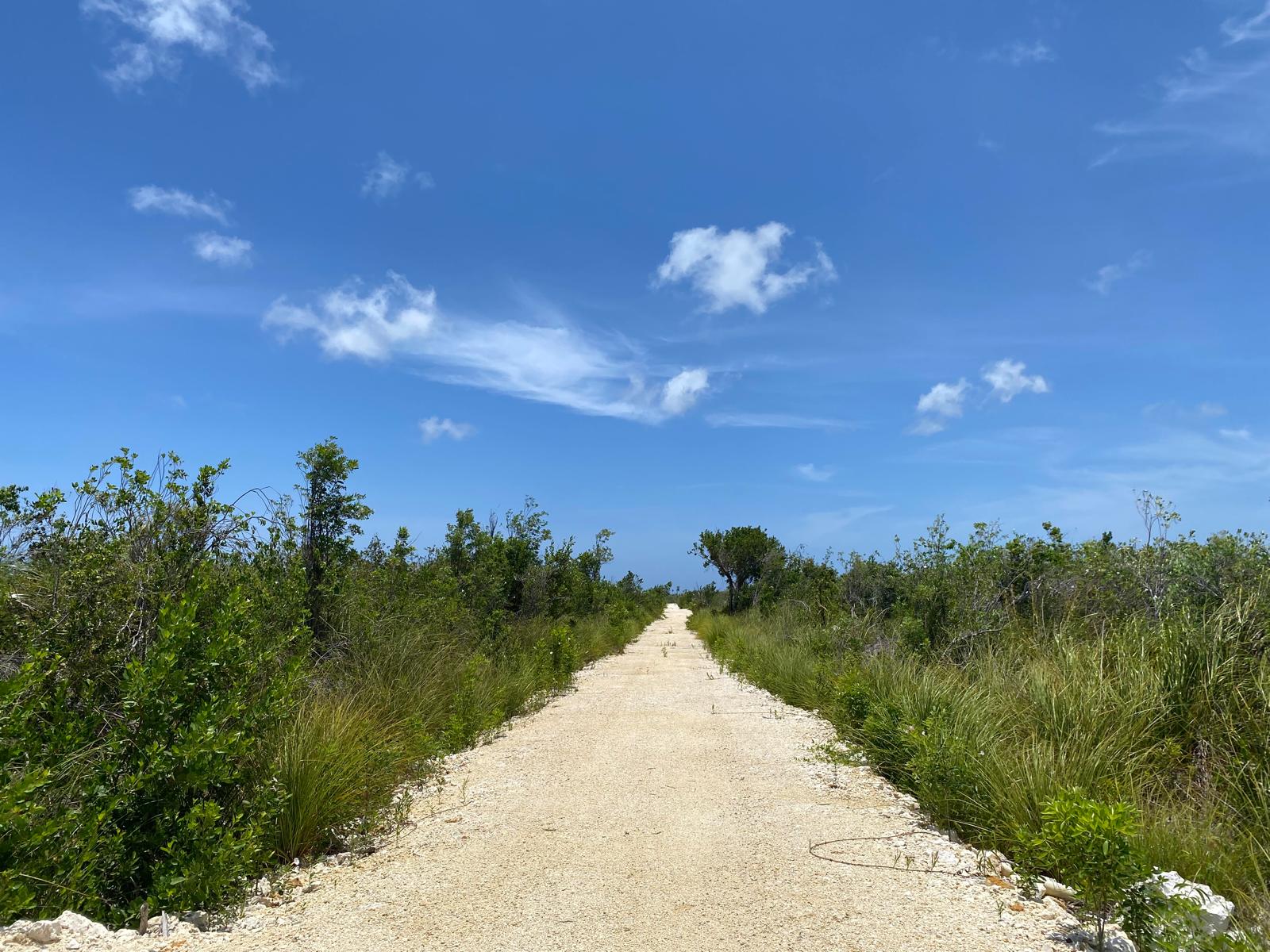
The NCC asked for judicial review over the legality of after-the-fact planning permission for the road through East End land owned by lawyer James Bergstrom.
Chris Buttler, KC, who appeared for the NCC, which brought the action to quash the retrospective approval for the more than two-mile road that cut through the home of the lizards, unique to Grand Cayman, said the grant of planning permission was unlawful.
He told the court, “We say that the CPA’s modification decision isn’t a revocation order because, even on its face, it leaves the planning permission intact.”
Buttler added, “The CPA isn’t empowered to revoke a planning permission where development is complete.”
He said, “The NCC is a responsible public body and it can’t acquiesce in an unlawful process.
“The planning permission has to be got rid of in a lawful way – and that means quashing it.”
Bergstrom’s Bon Crepe company started building that road in 2018-2019, paused and then recommenced in 2022 on land bordering the Salina Reserve and the Colliers Wilderness Reserve. In that process, the NCC claims the company had damaged the habitat of the blue iguanas.
Neither Bergstrom, a former owner of the Cayman Compass, nor Bon Crepe are represented at the hearing.
The NCC imposed an interim directive in February 2023 under the National Conservation Act to protect the land and the two nature reserves.
But the CPA granted retroactive planning permission for the work in March this year.
Tom Hickman, KC, counsel for the CPA and the planning director, argued that the court should dismiss the judicial review because it was academic.
He insisted a modified decision made by the planning authority, taken after the NCC raised concerns over the original planning consent, had the same effect as a court ruling to quash both decisions.
Hickman said that case law suggested there had to be “a pressing requirement” for a court ruling.
He added, “If there is no particular reason to do so, then the court would generally not make a ruling.”
Hickman said the planning matter had been adjourned pending the outcome of the appeal and that “adjourned means there is no decision to approve … the matter, therefore, stands in abeyance”.
He added, “The critical point is there was no need for my client to trouble the court and seek a judicial review.”
Hickman added, if the NCC got its way, “The effect of this would be that the planning authority could never modify or revoke any after-the-fact planning permission. We say that is incorrect.”
Ian Pairaudeau, the chairman of the CPA, said on Thursday said the authority believed it had “acted lawfully and appropriately, balancing the interests of the landowner with the interests of the environment, and seeking to meet the concerns of the National Conservation Council by revisiting its initial decision”.
It is the second time the two bodies have clashed.
The Court of Appeal last November rejected a CPA application to appeal to the UK’s Privy Council over the court’s quashing of planning permission to replace a West Bay seawall and cabana.
The row led to an unprecedented, drawn-out courtroom dispute between the planning board and the NCC.
The dispute arose over a controversial planning application in 2021 from Cayman Property Investments to demolish and rebuild a cabana and seawall on an eroded section of beach along Boggy Sand Road.
The CPA earlier granted permission to the company to demolish and replace the structures, contrary to a directive from the National Conservation Council not to approve the project due to the harm it was likely to cause to the protected marine environment.
Related Videos