


As questions linger around government’s next move regarding changes to the National Conservation Act, those charged with executing the legislation’s mandate said on Wednesday that no amendments to the law are “needed or warranted”.
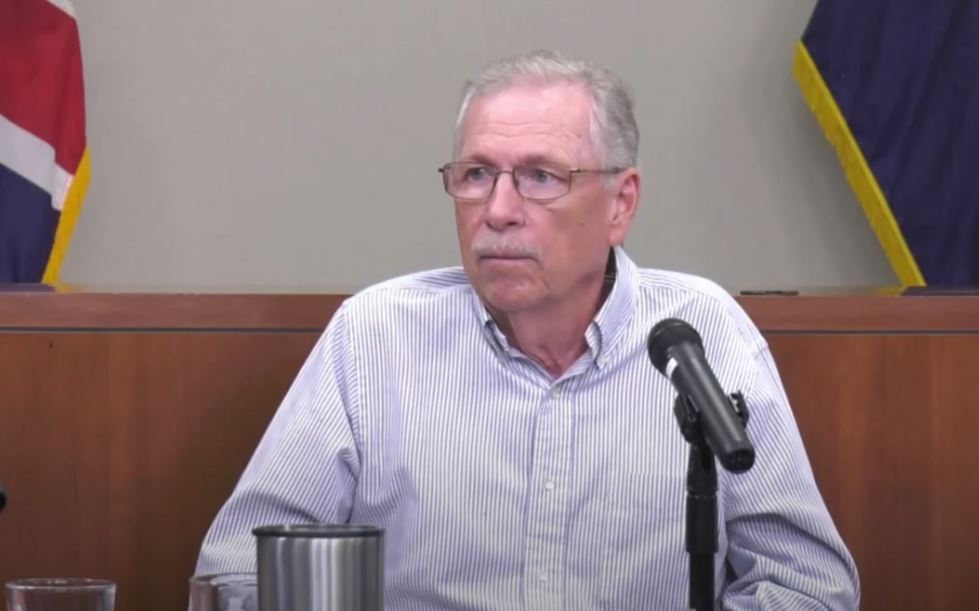
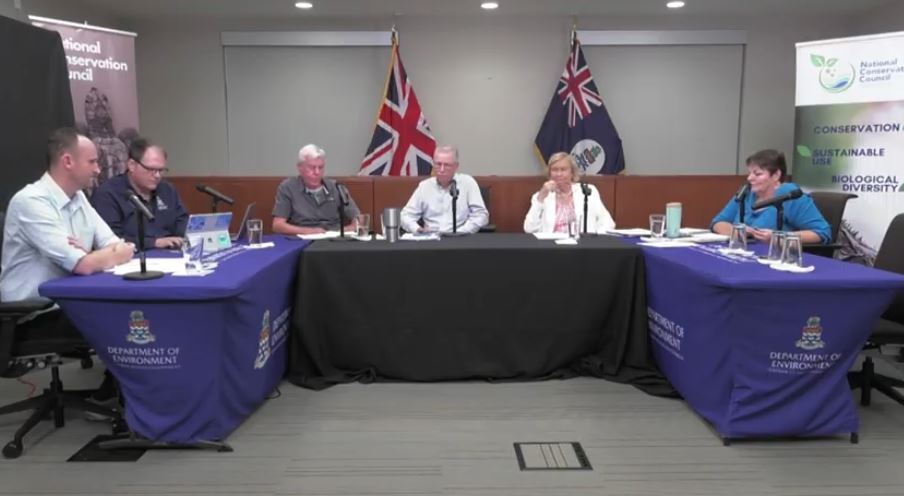
Stuart Mailer, chairman of the National Conservation Council, speaking at the NCC’s final general meeting for 2024, said the council was clear in its position that the law continues to function as intended.
“The relevant provisions of the act simply ensure that all government entities function in a manner which is designed to promote the long-term sustainability of our natural environment and resources while making decisions in relation to national development projects,” he said in his opening remarks.
It is the council’s “strong belief that no amendments to the National Conservation Act are needed or warranted at this time”, he said.
To consult the public or not?
There has been no official word on the status of the changes to the NCA nor whether they will be brought to Parliament when it meets next week.
Mailer, however, said, should any changes to the law move forward, the public must have its say.
“Council strongly recommends that every effort is made to ensure that robust public consultation takes place on the proposed amendments. It is also expected that, at this time, major undertakings and decisions which will shape our country for decades to come will be made with climate change in mind,” he said.
West Bay South MP André Ebanks, in a statement, had alluded to plans by government to push the amendments through without the required 28-day consultation process.
He said, in a statement last week, that neither he nor his colleagues who left the government considered a National Conservation Amendment Bill “to be so urgent as to justify varying the constitutionally mandated due process by waiving the 28-day notice and foregoing the complete 28-day public consultation” to bring the matter before Parliament.
The Cayman Compass has reached out to the Premier’s Office for comment on the changes and whether government intends to waive the consultation period. We are awaiting a response.
Under the Constitution, the Premier has the power to waive the consultation period if it is deemed “too urgent to permit such a delay”.
The NCA changes have been a catalyst for conflict within the United People’s Movement government this year.
Ebanks and team, following their departure from the government, also noted that a dispute over proposed changes to the National Conservation Act had played a major part in their decision to break away from the UPM.
In June, there were multiple reports of a split in Cabinet over the proposed changes.
Though the changes were not made public, the Compass understands amendments were suggested to the National Conservation Council’s function when it comes to directing other government bodies, including by requiring Environmental Impact Assessments for major infrastructure projects like roads.
There were also suggestions that the make-up of the council would be changed to remove technical experts such as the Director of the Department of Environment Gina Ebanks-Petrie.
Mailer said it is also understood the changes could remove four of the eight Cabinet-appointed members of the NCC who have relevant scientific or technical expertise.
“Our view is that such an amendment would place the council in an untenable position with respect [to] being able to carry out its duties and fulfil its legal mandate to promote nature conservation in Cayman,” he said.
Mailer assured that no civil servant has ever functioned as chair, refuting claims that the DoE director had chaired the council.
He suggested that if, for some reason, Cabinet wished to remove the civil servants appointed to the council by virtue of their posts as voting members, an order under Section 3 (8) of the act can be used rather than an amendment.
“It would, however, be very unfortunate if the various technical agencies involved in the council were separated from the council, as it would simply introduce increased consultative delays and bureaucracy, which the council was deliberately crafted to avoid,” he added.
Council not impeding development
Mailer, in his remarks, sought to defend the work of the council and the provisions of the act.
He suggested that there is a narrative being pushed by some that the provisions in the NCA “are slowing economic development” and causing an “imbalance between conservation and development”.
Those who promote this narrative, he said, have concluded “erroneously, from our perspective, that amendments to the NCA, which seek to address this perceived imbalance, are urgently required”.
He said in the month of October alone, the Department of Environment, under the delegated authority of the council, processed 84 planning applications from the Central Planning Authority for review under Section 7 of the Development and Planning Act.
Most of the applications, he said, were reviewed within the agreed timeline and only a few required “consultation with the application applicants to clarify questions”.
One application, he said, was recommended for refusal on the basis that it does not meet coastal setbacks and is adjacent to a marine protected area and turtle nesting beach.
Applications that were recommended for refusal were based on administrative matters, as they were over crown property, and, thus, required a coastal works permit rather than planning permission.
“There were no direct refusals and conditions of approval were directed in four instances,” he added.
He said the council has seen an increasing number of applications being submitted to review “because the CPA has issued a directive to the Planning Department to circulate all planning applications to the DoE under Section 7 of the Development and Planning Act regardless of their significance”.
He said the council encouraged the CPA to utilise the council’s guidance notes to assist in identifying which applications would likely cause adverse environmental effects to require review under Section 41 of the National Conservation Act.
“By following the NCC’s guidance notes, the CPA can reduce the unnecessary delay for their clients and increase the fairness and consistency between applications,” he said.
The act and the council, he said, promote informed decision-making and sustainable development that “requires environmental concerns to be considered by decision-makers, just as they would be expected to consider social and economic issues”.
‘Challenging’ year
Though describing this past year as “challenging”, he said the council still managed to complete a variety of work items.
Under delegated authority from the National Conservation Council, he said, this year the DOE provided recommendations and guidance on the potential environmental impacts associated with approximately 663 proposals and projects.
The Environmental Assessment Board, which is a sub-committee of the NCC, he said, was involved in the management and review of five Environmental Impact Assessments, all of which related to major infrastructure projects being proposed either by private sector, such as Port Zeus, or public sector entities.
These included the East-West Arterial and three airport projects being considered by the Cayman Islands Airports Authority.
Related Videos










The general voting public knows the Current MPs are for the developers and are keen to develop the island due to the revenue generated. It doesn’t matter the destruction or the change to people lives. Its is proven revenue that greed brings destructions. One just has to look at the loss of seven mile beach. The problem the general public have in the current political arena is that unless we get some new candidates to run for the government, we the people and the environment will lose if the same MPs are voted in.
Has the south part of 7 mile beach been destroyed by “greedy” developers?
I remember when Laguna de Mar and the Marriott were built. There was at least 100 ft of beach in front of them. Royal Palms and Tamarind Bay the same.
Yet now waves are battering the buildings themselves.
Clearly the buildings didn’t move closer to the water. It’s the beach that has been removed by mother nature. Hardly the fault of the property owners.