

Property developer and long-time South Sound resident Kel Thompson came face-to-face with objectors to his plans to construct 34 apartments on South Church Street during the Central Planning Authority meeting on Wednesday.
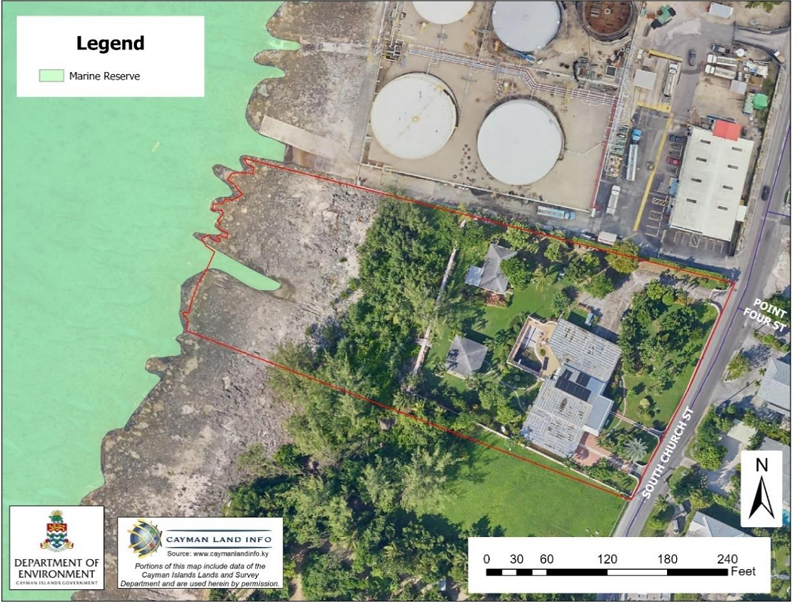
Thompson, a former Cayman Airways captain and managing director, is applying for permission to build the apartment complex, alongside a cabana and a pool in George Town on the seafront in South Sound, next door to the Jackson Point fuel depot.
The application, which was originally filed last year, has been met with objections from some local residents, worried about increased traffic and road accidents as well as protecting the character of the neighbourhood. The site covers 2.36 acres in a Beach Resort/Residential Zone and the project is valued at $12 million.
Thompson, who attended the meeting with his daughter Candice and architect Krizelle Atlas, told the first CPA meeting of 2025 that he had lived in South Sound for many years from the age of 2 and was still a regular visitor. Addressing concerns over a change in character, he said the area had always contained a variety of residential and commercial properties, including the fuel depot, Sunset House, Grand Old House and a nightclub where Dart Park is now located.
“There’s been a lot of stuff going on there for quite some time,” he told the CPA board. “It was anything but a sleepy residential neighbourhood.”
Long-standing links to the area
The first apartments in the area, he said, were built by his father, including the home now occupied by some of the objectors to his development plans.
“If you applied that principle [of character] then that house would not be there today,” he said.
Objectors Carlos and Fiona de Serpa Pimentel, who attended the meeting, had written to the board with their concerns about not only the character of the neighbourhood, but the likelihood of increased traffic, a greater risk of road accidents and the location of the proposed entrance to the development, saying it was very close to a flashpoint for traffic accidents as well as being directly across from their property.
Crash flashpoint
Carlos de Serpa Pimental told the meeting that the couple had lived in the area for nearly 20 years and since airing their concerns, there had already been another two crashes in the area.
“It’s a dangerous road with several accidents a year,” he said, adding that having 70 more cars, based on the number of proposed parking spaces, due to the development “was a red flag and asking for trouble”.
However, members of the committee told the objectors that the CPA has to follow the NRA advice when it comes to the impact on traffic. They suggested that members of the community should take the issue up with the National Roads Authority directly to look at traffic-calming measures, but advised that it wasn’t an issue for the applicant if the NRA itself raised no objections regarding traffic.
Some common ground was reached over the issue of the entrance and exit to the site, which objectors had said was too close to where other properties had their entrances. The NRA has already asked for the entrance to be modified to facilitate a smooth transition onto and off the highway. Thompson said that he had no problem with that, or with moving it a few feet if needed to not clash with other entrances.
“We’re happy to move it so long as the NRA approves it,” he said.
The committee is expected to publish its decision in a few weeks’ time.
Related Videos










Can the Planning Board explain how a piece of land that will allow residential homes to be built within 40 ft of a fuel storage tank containing tens of thousands of highly inflammable gasoline could possibly be zoned RESIDENTIAL?. Traffic concerns are inconsequential compared with this situation. I happen to live in a home built by Norberg Thompson, moving into it in 1972, in the area, but it’s half a mile from the fuel depot.
The Jackson Point Fuel Depot was part of the assets acquired by Sol Petroleum in 2014. The company’s activities are to be expanded under the Esso brand, according to its website.
The fuel depot was originally located here as part of the island’s commercial development. It is now occupying space surrounded by residential waterfront and on the shoreline of a marine park.
This development proposal for homes next to a fuel depot that caught on fire in 2017 and again in 2023 and necessitated area evacuation makes very limited planning sense.
On the other side of the proposed development is the Dart Family Park, one of the larger urban parks refurnished recently and one of just 12 community parks on the Island.
Concerns about the development creating traffic problems and being out of character with the area may well be valid, but surely the greater concern must be for the safety and lives of families proposing to live next to so much highly flammable material?
The owners of the depot acknowledge its waterfront site is subject to erosion threatening the fuel tanks and has asked permission to build a solid concrete barrier as static protection.
Waterfront experience elsewhere has shown it is only a matter of time before such fixed concrete ramparts themselves fall prey to the relentless ocean pressure on shoreline and simple represent future rubble piles. Royal Palms being Exhibit A.
Given concerns about beach erosion, mightn’t some consideration be given to moving the fuel depot to a safer inland site out of reach of tidal and storm erosion and mightn’t the highest and best use of the land be to extend the community park across the waterfront through the proposed development site and to include the present fuel dump site?
If planning decided vacation homes there is a good idea, they could be built well back from the shoreline with the extended park in front on them so as to anticipate future shore erosion without damage to the homes.
The project would require co-operation between the fuel depot and the land developer and, of course, the Community Park itself.