

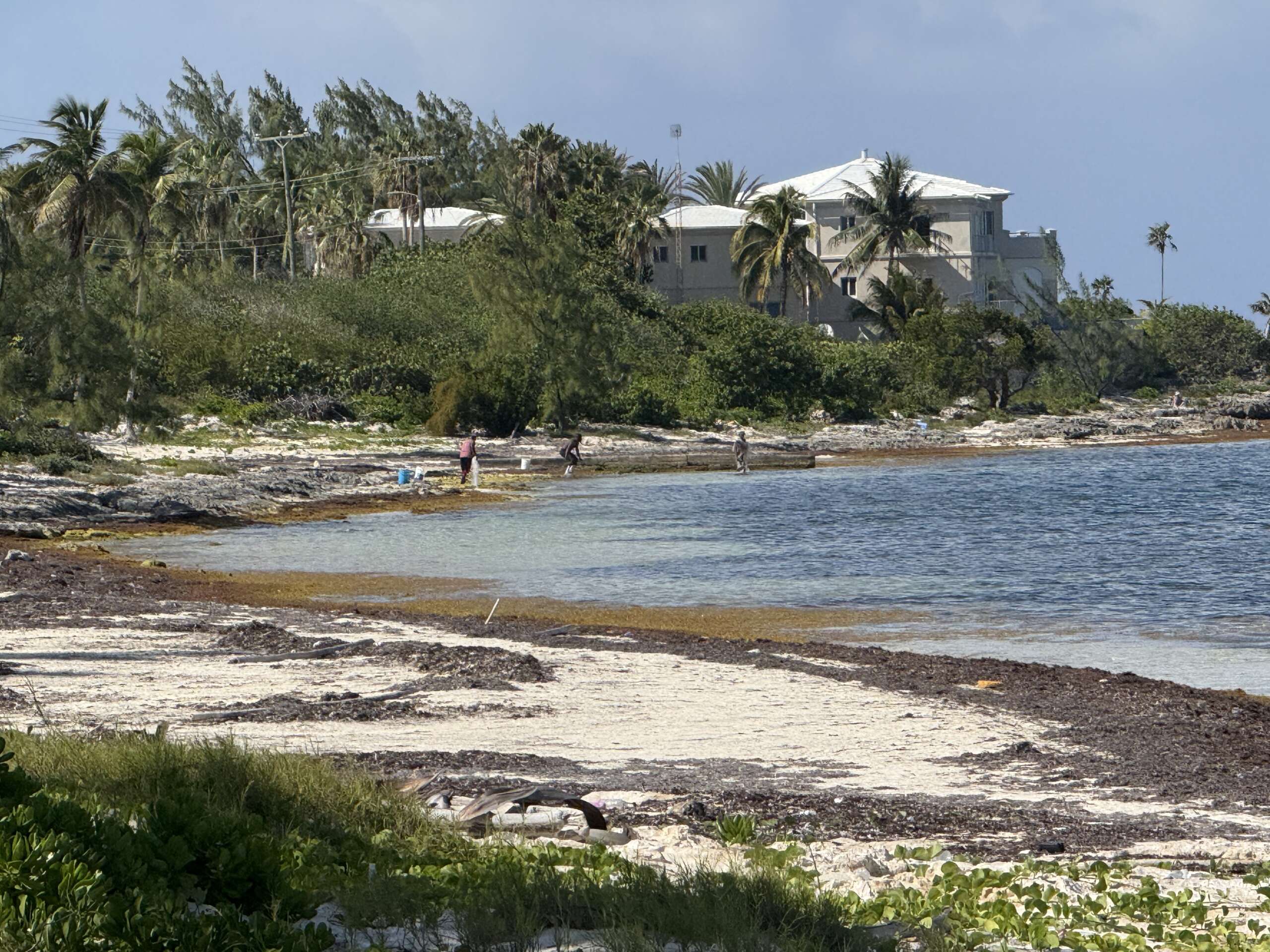
After two years of relatively small amounts of sargassum seaweed washing ashore along Caribbean beaches, scientists say 2025 is on track to be a record-breaking year for the brown algae.
The University of South Florida’s Optical Oceanography Laboratory, which uses satellite imagery to track the sargassum, found “a new record” for total sargassum masses at the end of April. The amount surpassed the all-time high recorded in June 2022, which led to businesses in Cayman’s eastern districts reporting feeling “under siege” by the seaweed.
This year, at Morritt’s resort in East End, maintenance manager Franklin Ebanks said they were already seeing the impact.
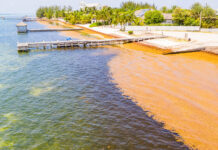
“We started to see the mats of sargassum come ashore in East End on Wednesday, 14 May,” he said, adding that the resort has a seaweed removal programme to keep beaches clean and avoid sand loss.
Over the long weekend, sargassum could be seen moving further down the shoreline. In addition to East End, it was starting to affect the southern coastline of Grand Cayman and some beaches in the Sister Islands.
In an earlier Compass report, Jennifer Ahearn, then chief officer in the Ministry of Sustainability and Climate Resiliency, said, “These influxes of sargassum are driven by external factors such as climate change and increases in nutrients from terrestrial deforestation and represent an emerging, long-term issue that governments, scientists and private sector organisations across the Caribbean region are all working to address.”
The University of South Florida scientists who are tracking the seaweed say the exact reasons for this year’s record amount are currently unknown and “remain to be investigated”.
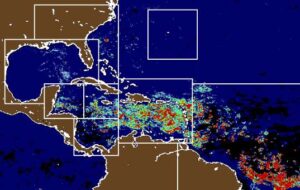
An image from the university’s satellite-based Sargassum Watch System published on 8 May shows large amounts of sargassum building up in the western Atlantic and eastern Caribbean Sea.
The sargassum, when it comes ashore in large amounts, is not only unattractive, but as it decomposes, it releases an unpleasant odor.
“When sargassum mats become stranded on the shoreline they will decompose,” explained Chief Medical Officer Nick Gent. “Like all decomposing biomass, it will produce gasses, such as hydrogen sulfide, which can have an unpleasant smell, even producing feelings of nausea. However, being outdoors, such gasses usually disperse rapidly and do not cause injury or illness.”
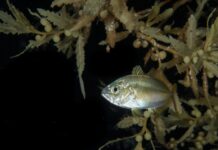
Sargassum is a natural phenomenon and, as organisations such as the Inwater Research Group point out, the seaweed that washes ashore also plays a vital role in the ecosystem, providing food for birds, crabs and other marine life. It is even believed that baby sea turtles use the mats of sargassum to haul out of the water to escape from predators and to take a rest from swimming in the open sea.
The Department of Environment previously developed informational materials and a seaweed removal enquiry form to help landowners determine when action is needed to address influxes of sargassum and when it is best to let nature take its course.
The release noted that special precautions should be taken in removing sargassum during turtle nesting season.
While 2025 may turn out to be a record year for sargassum, it does not necessarily mean that all beaches in the Cayman Islands will be affected. Marine currents and wind patterns have a major role in determining where the seaweed will come ashore. Seven Mile Beach is typically in the lee of the wind, so it generally remains free of seaweed, unless unusual weather patterns occur.
Related Videos







It would be fantastic if our Island’s vendors could somehow find a way to collect and utilize this valuable natural resource such as:
Sustainable Agriculture and Fertilizer
Sargassum seaweed offers a natural and sustainable solution for agriculture. Rich in essential nutrients, such as nitrogen, phosphorus, and potassium, it can be processed into organic fertilizers. These fertilizers promote soil health, improve crop yields, and reduce the need for harmful chemical alternatives. The use of Sargassum-based fertilizers also aids in carbon sequestration and reduces environmental impact.
Aquaculture and Animal Feed
The marine aquaculture industry has discovered the nutritional benefits of Sargassum seaweed. It serves as a nutrient-rich feed source for fish, shrimp, and other farmed species, enhancing their growth, health, and overall quality. By incorporating Sargassum into animal feed, the livestock industry can also provide a sustainable and nutritious diet for animals while reducing dependency on traditional feed sources.
Bioplastics and Sustainable Packaging
In the era of environmental consciousness, the demand for sustainable packaging is growing rapidly. Sargassum seaweed offers an alternative to petroleum-based plastics. Researchers are exploring the extraction of biopolymers from Sargassum to produce bioplastics that are biodegradable, renewable, and non-toxic. Embracing Sargassum-based bioplastics can significantly reduce plastic waste and contribute to a greener future.
Biofuel Production
As the world seeks alternatives to fossil fuels, Sargassum seaweed emerges as a promising feedstock for biofuel production. Its high sugar and lipid content make it suitable for bioethanol and biodiesel production. By utilizing Sargassum as a renewable energy source, we can reduce greenhouse gas emissions and dependence on finite fossil fuel resources.
Cosmetics and Skincare
The beneficial properties of Sargassum extend beyond industry and agriculture. Extracts from this seaweed are now finding their way into the cosmetic and skincare industry. Sargassum-based products offer natural antioxidants, vitamins, and minerals that nourish and revitalize the skin. With its moisturizing and anti-aging properties, Sargassum is becoming a sought-after ingredient in creams, lotions, masks, and other skincare formulations.
Pharmaceutical and Medical Applications
Medical researchers are uncovering the potential therapeutic benefits of Sargassum seaweed. Studies have identified bioactive compounds with anti-inflammatory, antimicrobial, and antioxidant properties. These findings open doors to developing new drugs, wound healing treatments, and supplements derived from Sargassum. The medical industry is increasingly recognizing the value of this seaweed in improving human health.
Environmental Remediation and Water Purification
Sargassum plays a role in environmental remediation and water purification. It can absorb heavy metals, pollutants, and excess nutrients from water bodies, acting as a natural filter. By harnessing Sargassum’s cleansing properties, we can mitigate the harmful effects of pollution and promote cleaner waterways.