

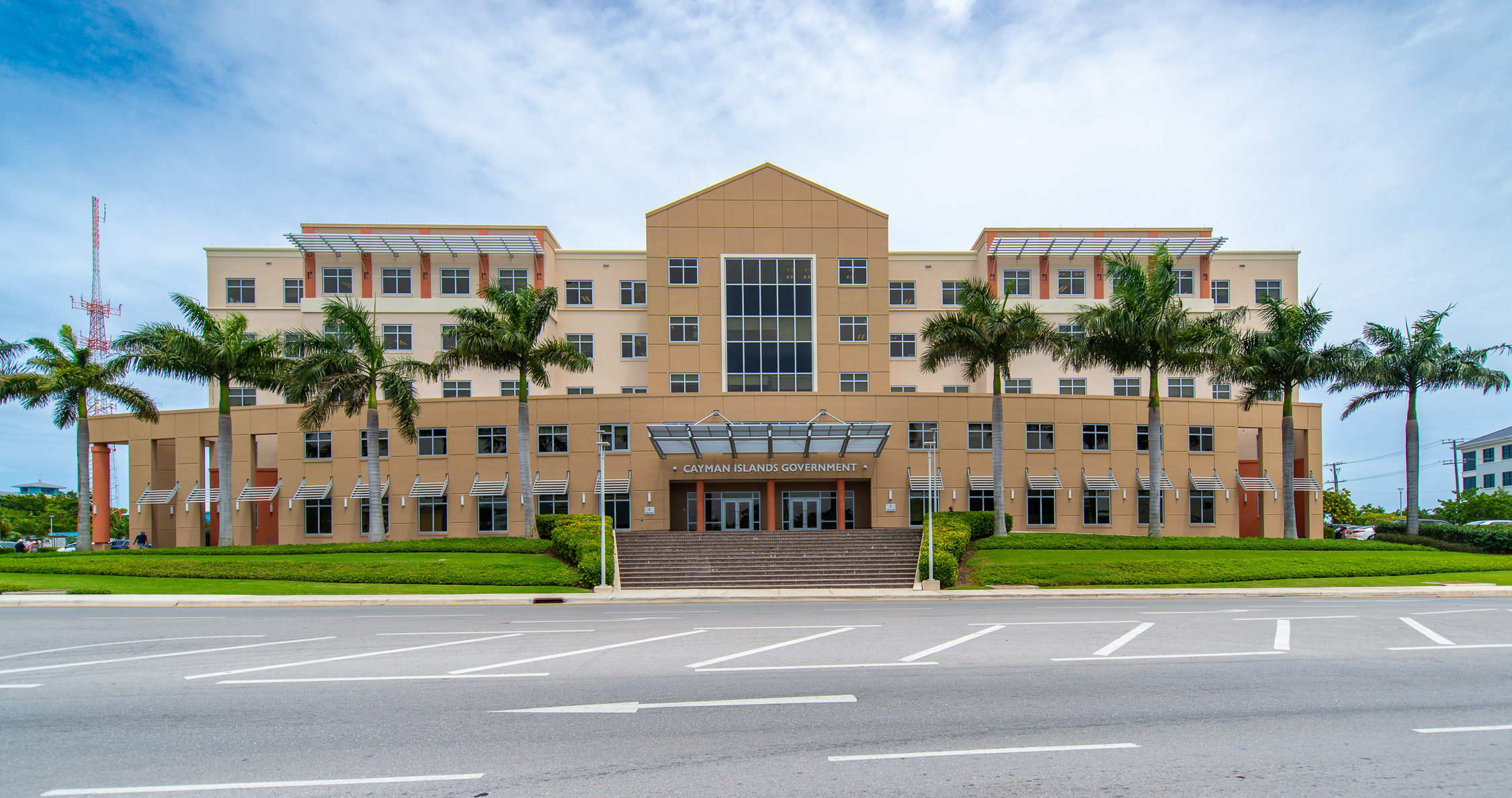
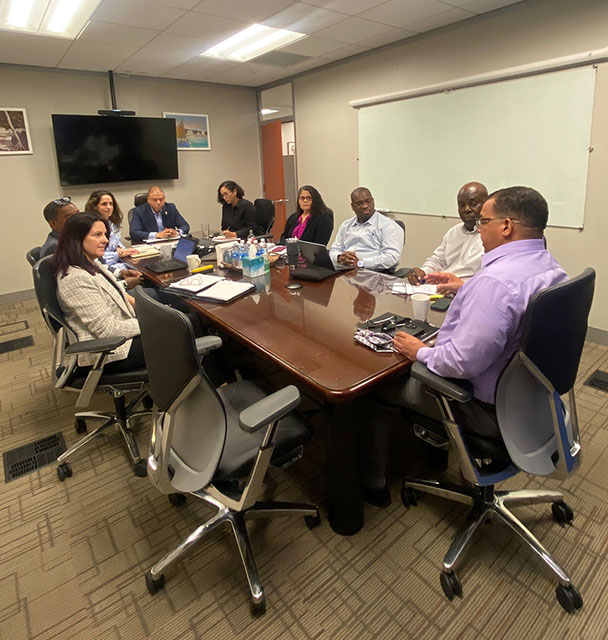
Sweeping changes to Cayman’s immigration law and regulations are in the pipeline, government leaders confirmed Thursday.
On the heels of last week’s announcement of new term limit requirements for foreign civil servants, the coalition government revealed plans for further reforms.
These include changes to the permanent residency points system, used to determine if longtime residents can stay in Cayman indefinitely. Reforms will also make it harder for work permit holders to switch jobs, create new powers to revoke residency and work certificates in ‘marriages of convenience’, and deport foreign workers “who flout the laws of the Cayman Islands”.
Those measures will come alongside the creation of a new national workforce database and a national workforce plan.
The draft legislation is still in the works and precise details of the changes were not provided.
However, government indicated in a press release that the PR points system would ensure a greater focus on the impact a person makes within the community.
People with permanent residence (Residency and Employment Rights Certificates) will also be required to wait longer before being able to apply for naturalisation.
Foreign workers will also have to show a higher income level to be allowed to add dependents to their permit. Currently, the minimum monthly income is $3,500 for one dependent and an additional $500 for further dependents.
The Immigration (Transition) Act (2022 Revision) will be renamed as the Caymanian Protection Act as part of the reforms, according to Michael Myles, the new immigration minister in the National Coalition For Caymanians.
He said modernising the legislation was a “critical step” towards equipping young Caymanians with the tools to move from education and training to employment and “upward mobility”.
Myles added, “The contemplated changes to the immigration legislation represent our Government’s commitment to ensuring that no Caymanian, whether graduating locally or abroad, is left struggling to find employment … we will better align training, education and employment pathways, helping our people secure their rightful place in the workforce and driving the continued progress of our nation.”
Myles, alongside Premier André Ebanks and Education Minister Rolston Anglin, is in talks with the Chamber of Commerce about establishing a working group to develop a comprehensive, enforceable national workforce plan.
The Chamber has long advocated for an approach to training, education and scholarships that is synced with the needs of the economy.
Premier Ebanks said, “By creating the national workforce plan we can establish formal requirements for our people to gain the necessary experience and qualifications to build successful careers within their country. Ultimately, such an initiative will promote economic growth, reduce unemployment and foster a more resilient and skilled national workforce.”
Education Minster Anglin said the coalition was removing “age-old barriers” to information sharing in order to create true collaboration on education, training, employment and immigration.
The current Caymanian unemployment rate is at 4.9%. The most recently available data from the Economics and Statistics Offices Spring 2024 Labour Force Survey Report shows a total of 1,142 Caymanians out of work.
However, many Caymanians have expressed frustration about under-employment or lack of opportunities to progress in their careers. In a recent Compass feature, multiple young Caymanians talked about leaving Cayman to pursue opportunities after finding their path to career success blocked at home, despite obtaining top-tier qualifications.
Related Videos










So in summary:
Presumably one would wonder if there would be some legal ramifications for people who have been here 5,6,7 years on a set of rules, only to be changed in a whim overnight. It would be interesting to see if expats already on island are grandfathered in to the current set of rules. Otherwise it seems pretty unethical to change it on people that were already on island. That’s like saying, “a person is signing an implied contract of rules to follow, only to be flip flopped”. If that’s the case why would anyone coming to the island trust the government or business if they set that precedent…
Foreign workers will also have to show a higher income level to be allowed to add dependents to their permit. —— so employers will increase pay to keep up with housing prices or housing prices and rents will fall as people leave. Expats now can’t have kids is what they are aiming for. Strip expat families from Cayman.
People with permanent residence (Residency and Employment Rights Certificates) will also be required to wait longer before being able to apply for naturalisation. — This will drive Caymanian jobs for sure. Who will come and wait longer than 15 years? That’s already 20% of someone’s life if they live till 75. Effectively they are stripping everything from expats.
So Caymanians have top tier education/qualifcations? From where? Where are these people? What areas of work are they skilled in. It’s transparent to have numbers of 1,142 out of work in 2024 but when they say they are underemployed, does a teacher want to be a principal or a paralegal want to be a law partner? Are these construction workers who don’t want to work, ALT level employees, grocery baggers or they have masters in HR, Teaching, Doctors, Law and Finance. It’s unclear and without more info, how can everyone help them?
It would be great to help these people get the jobs they want but the government doesn’t make that easy. Who are these people?
We never get an answer as to the question: who the are the people unemployed or underemployed? what jobs to they want? what are they qualified for? is their unemployment by choice? are they unemployable. We are focusing a disproportionate amount of time on the 1,142 people without any data. If the powers that be really want to address this, it can be done, but it starts with real information
It is worth reminding ourselves we’re an overseas territory of the United Kingdom.
With no direct taxation, the islands are a thriving offshore financial centre. Over the last two decades, we have experienced rapid growth in almost all sectors, especially in banking, insurance, and offshore management, as well as tourism, financial, and insurance services.
According to the Economics and Statistics Office the financing and insurance services sector, the largest contributor to GDP, grew by an estimated 3.1% per annum.
The Islands’ financial hub remains reliant on its protected territory status. This connection provides stability, a strong legal framework, and access to the UK Privy Council for appeals, fostering trust and confidence in the financial sector.
We need to moderate exactly how many hurdles we want to put in place to prevent those facilitating this growth from working here.
Our High Schools Seniors need to have Vocational Job Skill Classes, so when our graduates come out to our work force they have a job skill. Their Senior Year class selections:
1) Electrical
2) Plumbing
3) Carpentry
4) Computer Website Designing
5) Architectural Building Drafting (CAD)
6) Welding & Metal Shop
7) Marketing Strategies
8) Accounting Principles
Yes!
With respect to all, and to simply make a point. There were/are no indigenous people on these Islands. Everyone came from an Immigrant at some point in their ancestry. Our Cayman Islands were once a Jamaican Colony. The Jamaican influence is undeniable. In 1962 Cayman became a UK Crown Colony/Dependency/Territory. We are self governed, however we are still part of the UK. I am PRO Cayman protection. BUT not at the expense and risk of becoming a nation of Caymanians against Expats. Protect what makes these Islands special and home. Choose wisely who we allow to be here, including people who call themselves Caymanian but contribute nothing. What made this Country great were those men and women who took risks, invested and believed. In every generation there are those that build and contribute and those that are parasites. Judge not by where a person is from because we all were from someplace else.
YES, awesome commentary.
It seems we now have an alternative name to call expatriates, in addition to “paper Caymanian” we now have “parasites”. One wonders how much time under the new requirements an expatriate will be required to devote to community projects, I am not aware of this policy existing elsewhere, but perhaps it is a Caribbean thing.