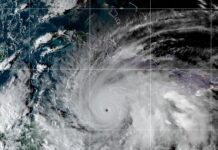
In September 2023, the US National Oceanographic and Atmospheric Administration (NOAA) assessed the Cayman Islands’ risk for a tsunami, using 36 potential earthquake scenarios which are regarded as having the greatest likelihood of producing a significant tsunami impact on the Cayman Islands.
 It was found that of all the scenarios, the most significant threat for the Cayman Islands related to an earthquake occurring directly south of the Cayman Islands along the transform plate boundary line, as opposed to other larger but more distant events such as in the subduction zones in the Eastern Northeastern Caribbean or near the coast of Colombia.
The model used the January 2020 earthquake of 7.7 magnitude rupture parameters but shifted the earthquake location along the transform plate boundary line, so that in each case, the epicentre occurred directly south of Grand Cayman, Little Cayman and Cayman Brac. This is a minor change from what actually occurred in January 2020 and therefore considered a realistic possibility.
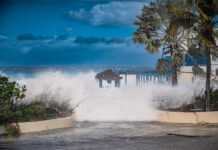
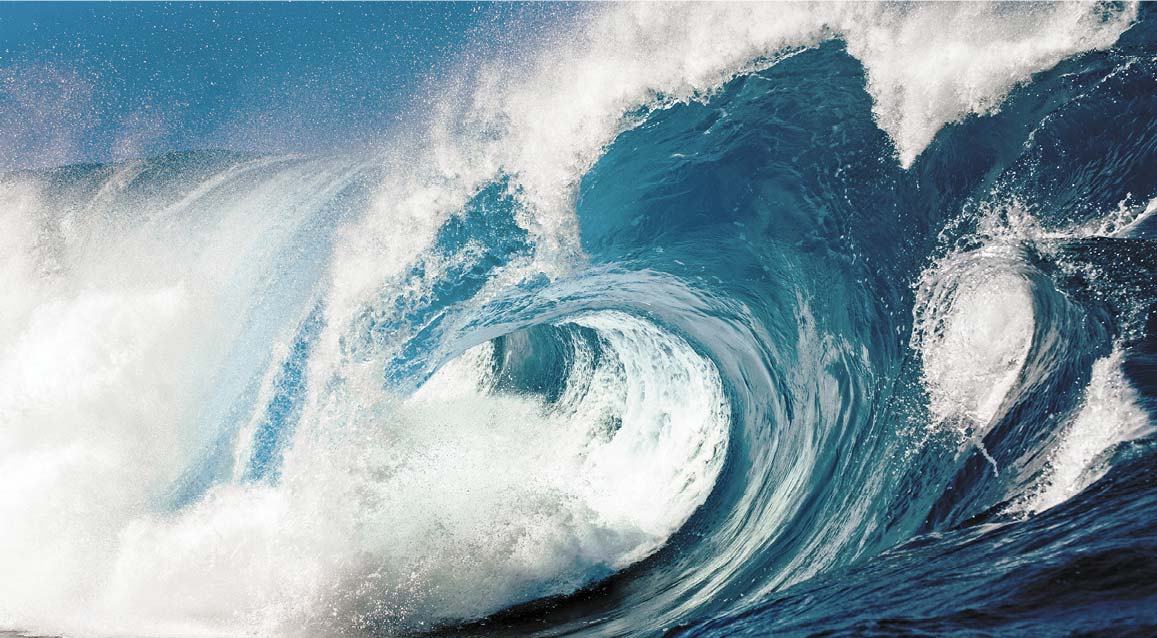
The model showed that tsunami impacts would indeed occur, especially for the southern coasts of the islands. In some areas, the arrival of the tsunamis would be as little as five minutes after earthquake origin time with wave heights of up to 18 feet in isolated areas.
Nevertheless, even along the south coast, the inundation was no more than 0.5 km. Interestingly, the coastal areas abutting the North Sound were found to be at lower risk from a tsunami. Currents of up to 3 m/second, which could cause damage, were also modelled by Diego Arcas, director of NOAA’s Center for Tsunami Research.
These worst-case tsunami risk scenarios will inform Hazard Management’s efforts to increase awareness, preparedness and response planning, including the production of evacuation maps for vulnerable communities along parts of the coastline.
The joint effort of the US and the Cayman Islands contribute to the UN Ocean Decade goal that 100% of communities at risk are prepared for and resilient to tsunamis by 2030.
Information provided by Hazard Management Cayman Islands.
Related Videos