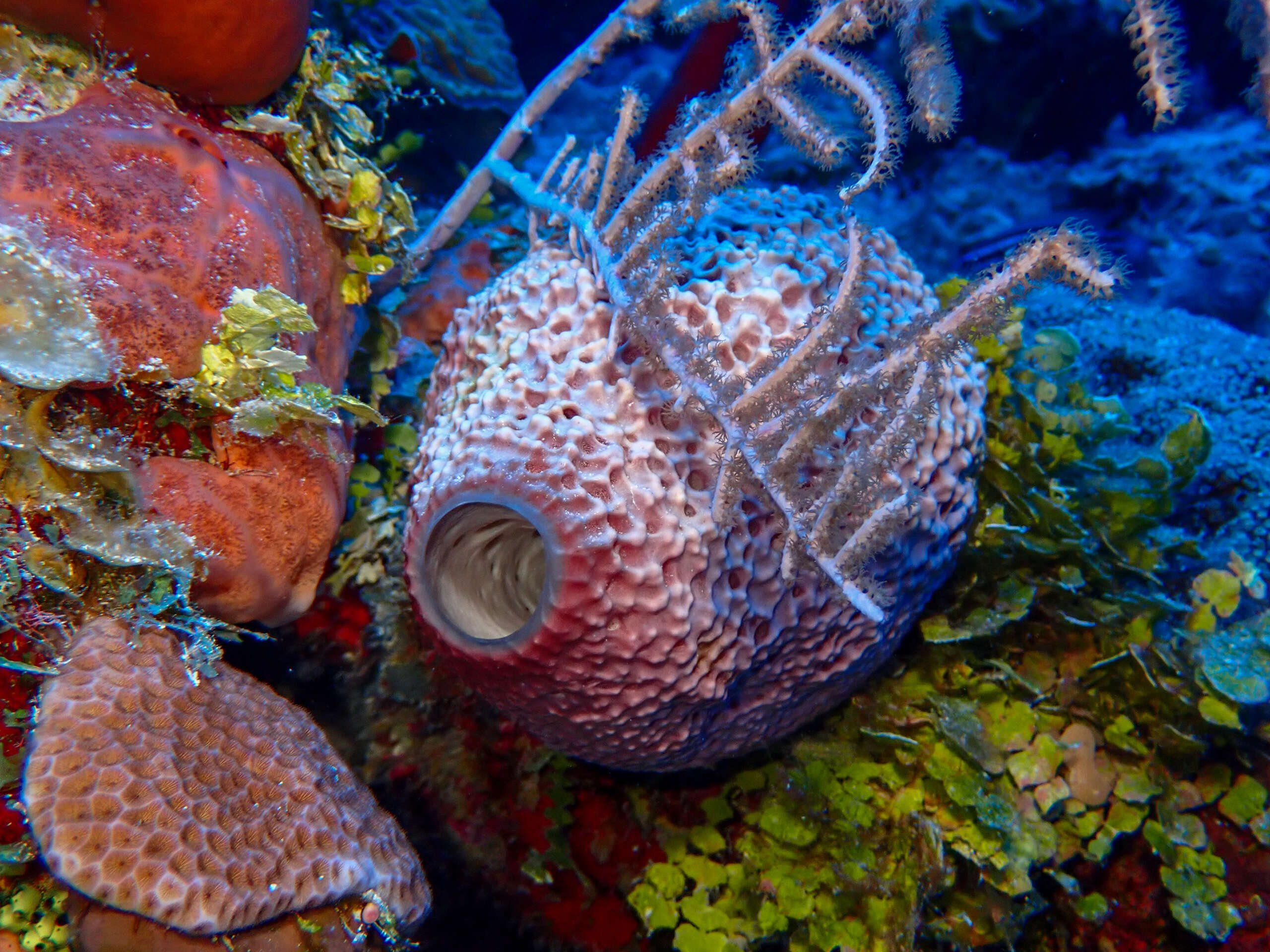
A dive instructor and a student of marine biology are currently waiting to find out if a sponge they’ve photographed on Cayman reefs is a previously undocumented species.
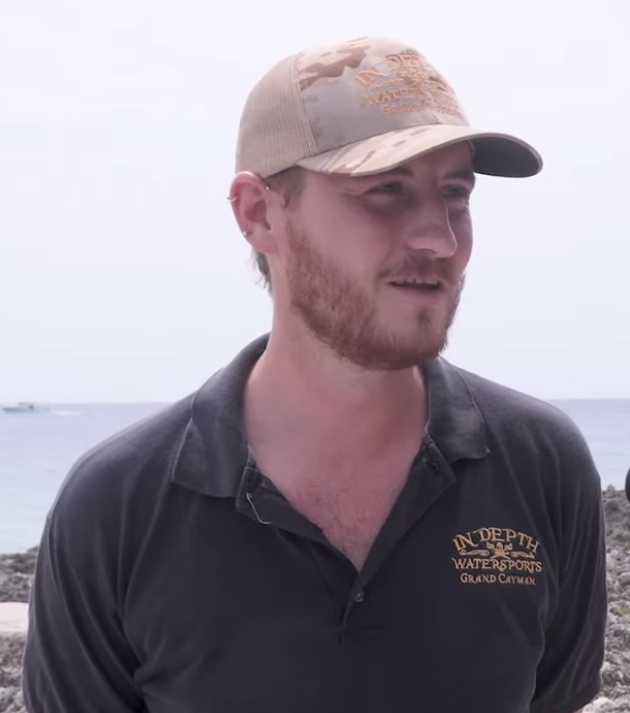
Indepth Watersports dive instructor Dan Schofield and recently graduated Madeleine Cronier had separately captured photos of the sponge, and uploaded them to a citizen scientist website, inaturalist.org. The sponge is now being studied by a US-based researcher to determine if, as thought, it’s a never-before-documented species.
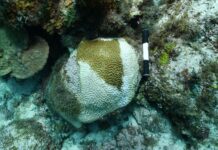
Both Schofield and Cronier had been seeing the pale pinkish-grey sponge, with its rugged exterior and small siphon, at a variety of depths at reefs in Grand Cayman for some time.
Last year, Cronier uploaded photos of the sponge to the inaturalist website – an online resource that has hundreds of millions of photos of flora and fauna, on land and underwater, from people around the world. Her photos caught the attention of a researcher who specialises in marine sponges.
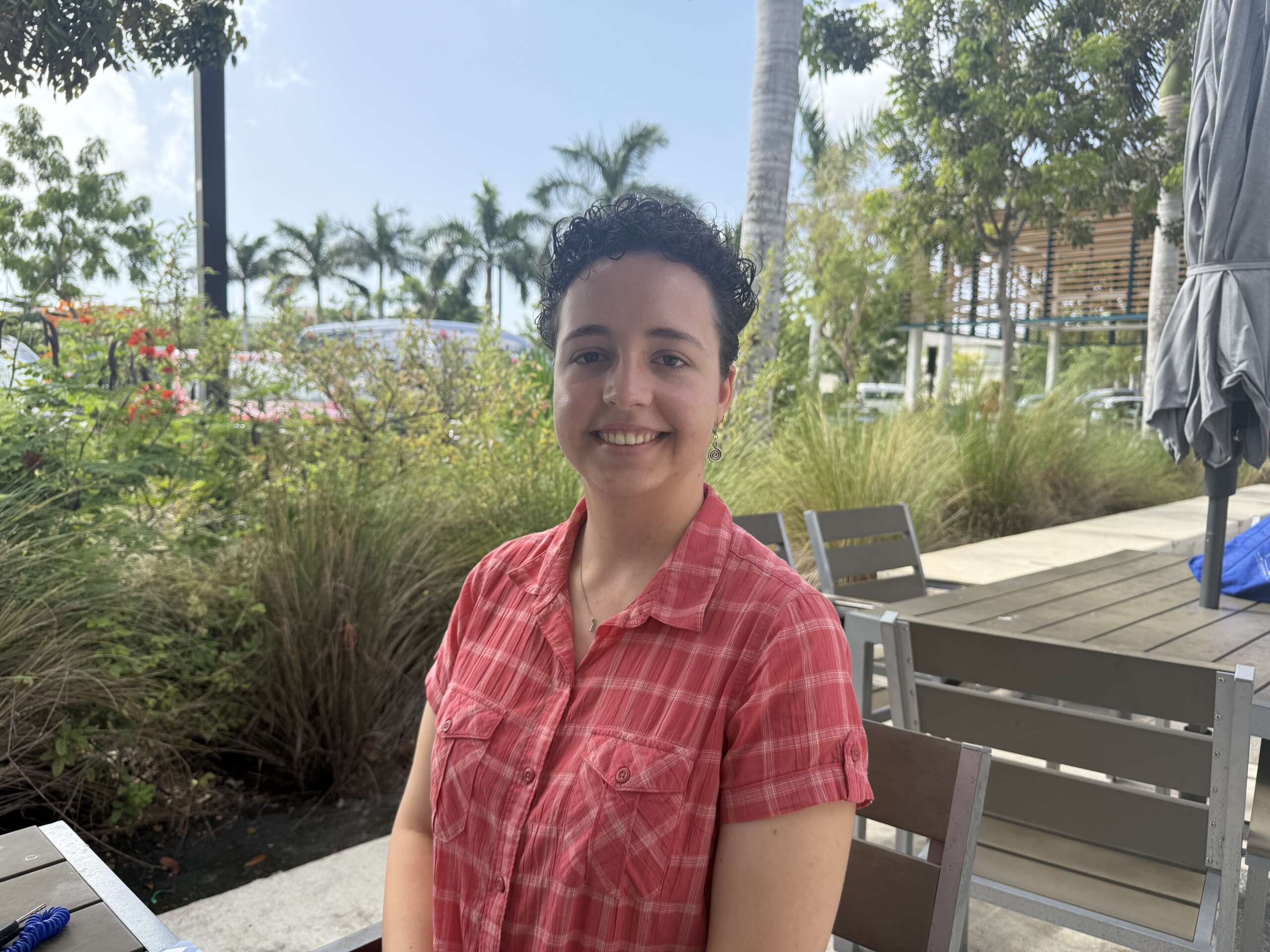
Cronier, who recently graduated from the University of Guelph in Canada and is currently interning at the Central Caribbean Marine Institute on Little Cayman, told the Compass, “He reached out to me at Christmas last year to ask if I could collect samples of the sponge, but I was in Canada at the time. Then, Dan posted pictures of the sponge in February.”
She contacted Schofield, and also reached out to the Department of Environment to get permission to take samples and send to the US researcher.
“With photographic evidence of the species in Cayman, Madeleine spoke to me about collecting samples in Cayman to send off for genetic analysis and formal identification,” Schofield said.
Cronier continued, “I got permission and Dan dived for the samples.”
Samples taken between 150 and 180 feet underwater
“Fortunately, my boss at Indepth Watersports was happy for my colleague and I to dive during work time to collect the samples since the sponges are below recreational dive limits,” Schofield said.
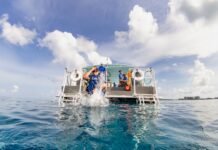
Using a closed circuit rebreather that allows divers to go to deeper depths than regular dive tanks, Schofield and his colleague, having been briefed by Cronier on how to collect the samples, dived down to between 150 and 180 feet on the main wall, and retrieved samples.
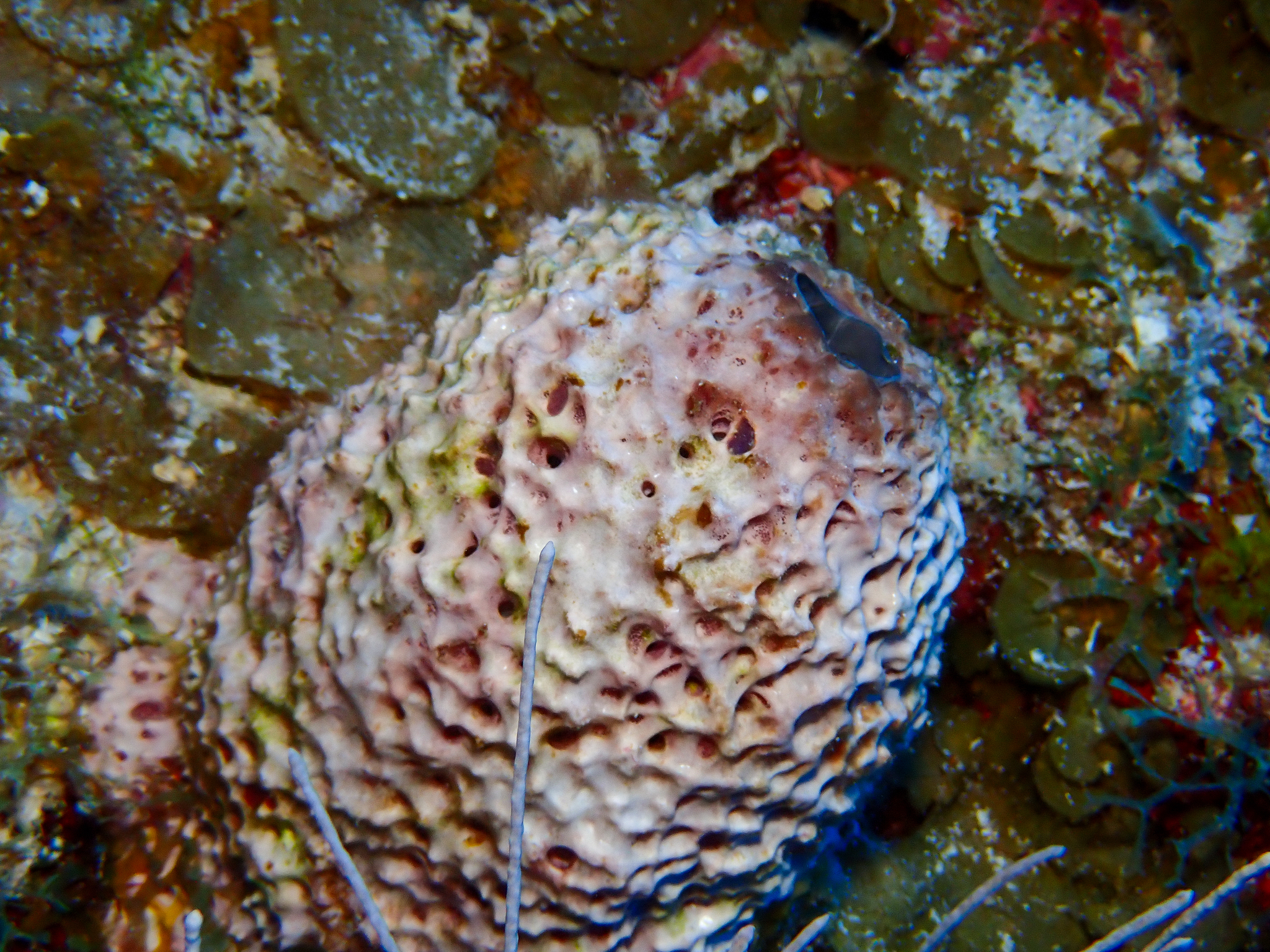
They collected three separate samples from three different locations along Turtle Reef.
“These have now been sent to the USA and, once the analysis is complete, will be published in an upcoming paper,” Schofield said, adding that this process is “quite lengthy and it will take a long time for the samples to be analysed, described and published”.
While the genus, or family, of the sponge, has been seen before, this particular species is thought to be heretofore unidentified or named anywhere in the world.
“The species belongs in the genus Ircinia and is currently undescribed,” Schofield said. “My understanding is the species is known from photographs and there was an [unsuccessful] attempt to collect samples from sponges in Cuba.”
50,000 observations from Cayman on citizen scientist site
Both Cronier and Schofield are fans of the inaturalist site, and hope other observers of nature in Cayman will become aware of it and begin uploading their finds.
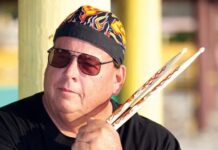
Schofield is a long-time regular contributor to the website, submitting photos from whatever country he was living in or visiting. He’s previously discovered a new species of jumping spider in Indonesia that got published in a research paper, and recorded the first living photograph of a species of butterfly in the Dutch Caribbean.
Many of the photos he submits come from the ocean, where he often spends his days as a dive professional based in West Bay.
“Underwater observations are naturally more valuable since fewer people are able to dive, have access to the underwater world and have underwater photography equipment,” he said.
“To date, the Cayman Islands has over 50,000 observations, accounting for almost 3,000 unique species. I have uploaded 3,665 observations in Cayman of 810 unique species so far,” he added.
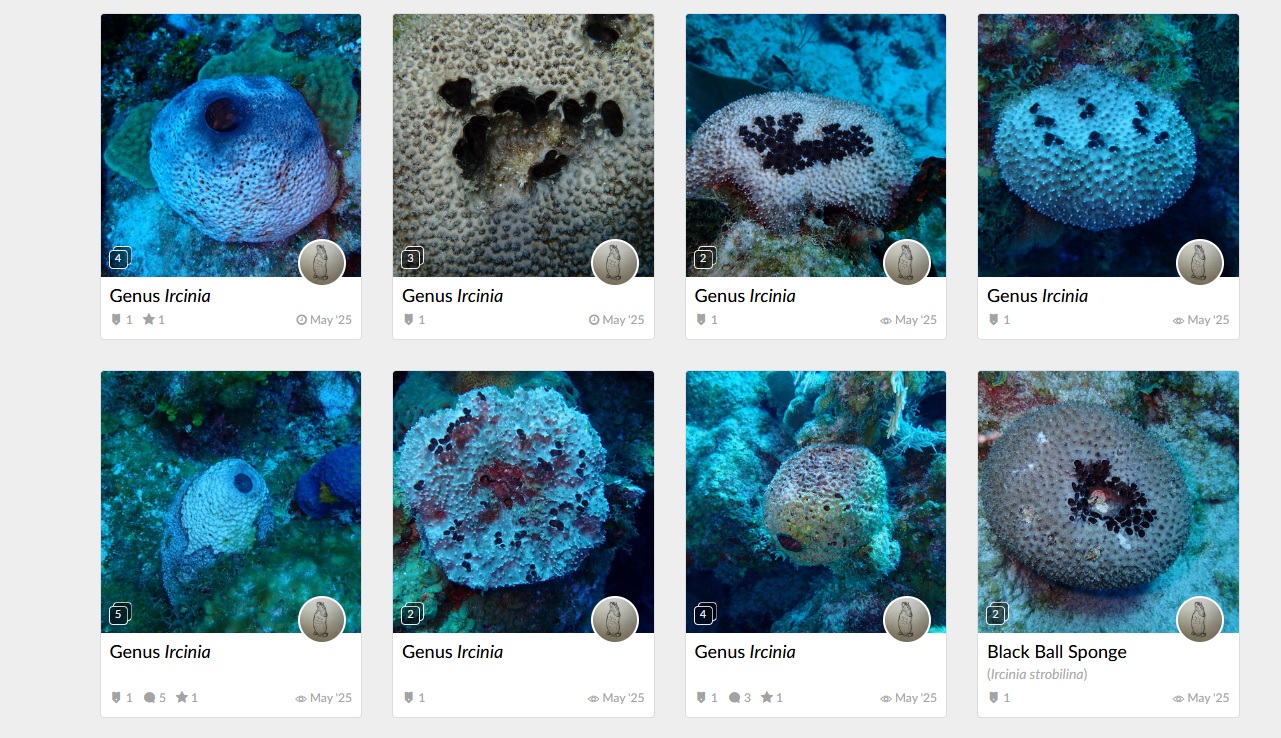
Cronier, who now has a degree in marine and freshwater biology, has made 5,120 observations of more than 1,000 species on the site. On the site she describes herself as “sponge enthusiast”, adding “I am not an expert.”
She says she believes Cayman is a fairly popular location from which photos and observations are posted because it’s a tourist destination, and many visitors who are interested in nature upload their photographs of what they’ve spotted here.
Observing nature and sharing information
The site was set up in 2008 by Berkeley University students, as a Master’s final project of Ken-ichi Uedda, Nate Agrin and Jessica Kline, and has since become a non-profit organisation, with a vision of a “world where everyone can understand and sustain biodiversity through the practice of observing wild organisms and sharing information about them”.
According to statistics on the site’s home page, it has more than 250 million observations of 518,331 species, submitted by 3.7 million observers.
Describing his interaction with the site over the years, Schofield says, “It’s my favourite hobby; a huge citizen science platform that anyone can upload to. Once an observation is uploaded, other users (all volunteers) can add identifications.
“If enough people agree on a species level identification it becomes a ‘research grade’ grade observation. Data is exported to the Global Biodiversity Information Facility that scientists and researchers around the world can access.
“A lot of the data is used as for studies as part of large datasets but sometimes specific observations catch an expert’s attention and they contact me directly through the site.”
He’s hoping that more people will use the inaturalist website to share their sightings and photographs.
“Even in popular dive destinations like the Cayman Islands, there’s still a lot to be discovered,” he said.
Related Videos