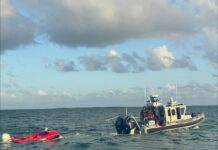
The head of the Cayman Islands Coast Guard is calling for boaters to take better care in the water and says he would welcome moves to have penalties for people who are caught driving while under the influence.
Coast Guard Commandant Robert Scotland said that since 2020 there had been a steady rise in the number of people purchasing watercraft, such as boats or jet skis, and as a result, the number of people in distress on the water had increased.
“I would say it’s a case where people aren’t taking the time to ensure that their vessels are seaworthy,” he said. “Something as simple as not checking your fuel level before you go out can result in you ending up having to call for assistance.”
No requirement for maritime training
He also added that, unlike when driving a vehicle on the road, there isn’t a mandatory requirement for vessel operator proficiency, which is something he and his team are trying to tackle.
“There are a number of things from the maritime safety perspective that we’re trying to push through this year and in the coming year to address those scenarios,” he said. “One of the big things on the agenda is boating whilst impaired. At the moment, if you drive [an automobile] while intoxicated, there is a penalty. At the moment in the maritime domain, there’s nothing that allows us to be proactive and address that.”
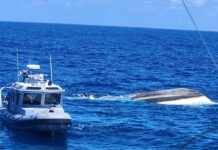
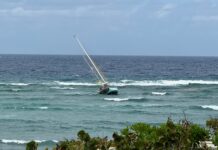
Data just released in the Office of the Commissioner of Police’s annual report 2024 shows that the number of incidents involving a person in distress increased from 48 to 51 between 2023 and 2024, while the number of incidents involving vessels in distress rose from 45 to 68, a 51% increase. It also dealt with two incidents of an aircraft in distress.
In the year to date, there have so far been 25 incidents of a person in distress and 35 with a vessel in distress.
For people looking to get out on the water or considering purchasing their own craft, Scotland recommends taking a course in sailing, such as that offered by International Yacht Training or the Royal Yachting Association.
“I would suggest that anybody who is contemplating purchasing a boat do those courses, so that it’ll give you the basics, learning what’s commonly referred to in the boating world as the rules of the road, which is basically, you take the road code and you introduce it into the maritime domain. There are do’s and don’ts, and basics that people should know.”
Yachting fundamentals
Before going out on a boat, make sure that there is a working VHF radio and that everybody on the vessel is wearing a life vest.
“Make sure that there’s a kill switch attached to your wrist,” said Scotland. “In the event that you go overboard, it’ll automatically stop the vessel instead of it basically going in circles and potentially hitting and killing you.”
He added: “Think safety first and don’t go boating by yourself.”
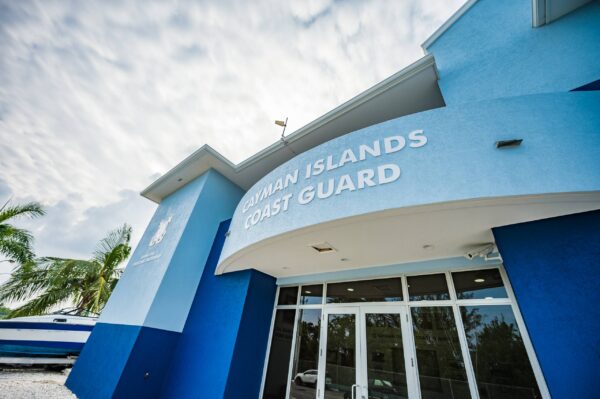
With the Coast Guard only officially created in 2021, Scotland said, the agency “is still in its infancy. We haven’t even started to roll over yet, much less crawl. But having said that, seeing the successes that we have been having, especially from the maritime search and rescue, maritime safety perspective, I am quite happy with where the team is at the moment. We have a long way to go, but the drive and the incentive to get there is still high and strong.”
Holidaymaker sadness
The rise in motorised crafts on the water has not gone unnoticed by regular holidaymaker Scott Wallace. From Kansas, in the US, he has been visiting the Cayman Islands with his family for the past 23 years and says that things have definitely changed.
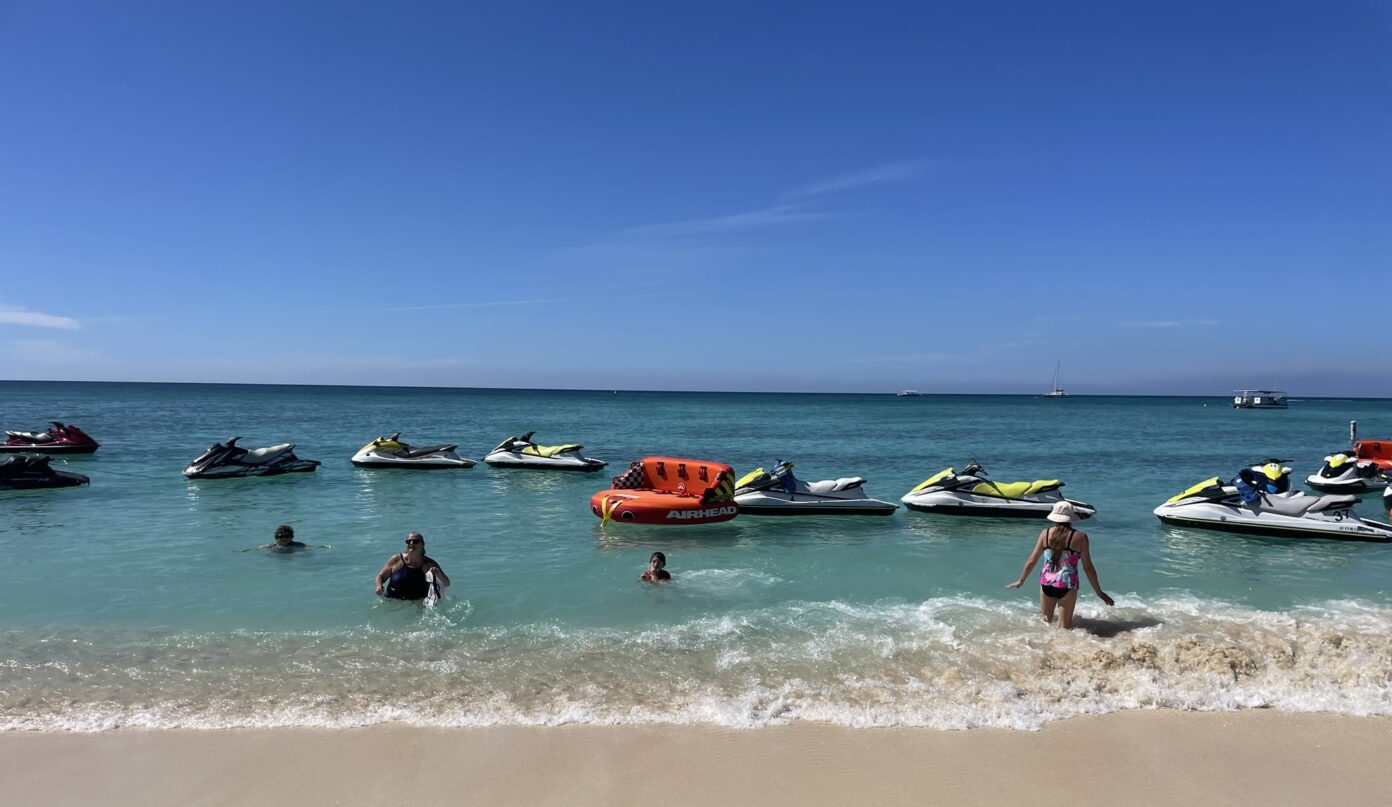
In a letter to the Compass, which he had signed, ‘Saddened Visitor’, Wallace wrote: “What used to be a quaint and quiet island has become an island full of motorboats, jet skis and churned-up water.”
He recalled teaching his children to swim here, but noted, “As my wife and I sit on the warm white sands now and hear nothing but motors instead of waves, it breaks my heart to know that not many people will be able to do what I was able to do with my children.”
He also pointed to the numerous jet skis coming close to shore with “unqualified operators” renting the craft, adding, “I have seen so many close calls of water vehicle-person encounters I have lost track. I have never seen any type of waterway authority making sure people follow any guidelines or regulations that may be applicable and that to me is very saddening.”
Earlier this year, vendors on Public Beach warned that the Port Authority’s decision to relocate water-sports operators from the southern end of the beach had led to congestion and made the area unsafe.
Related Videos