

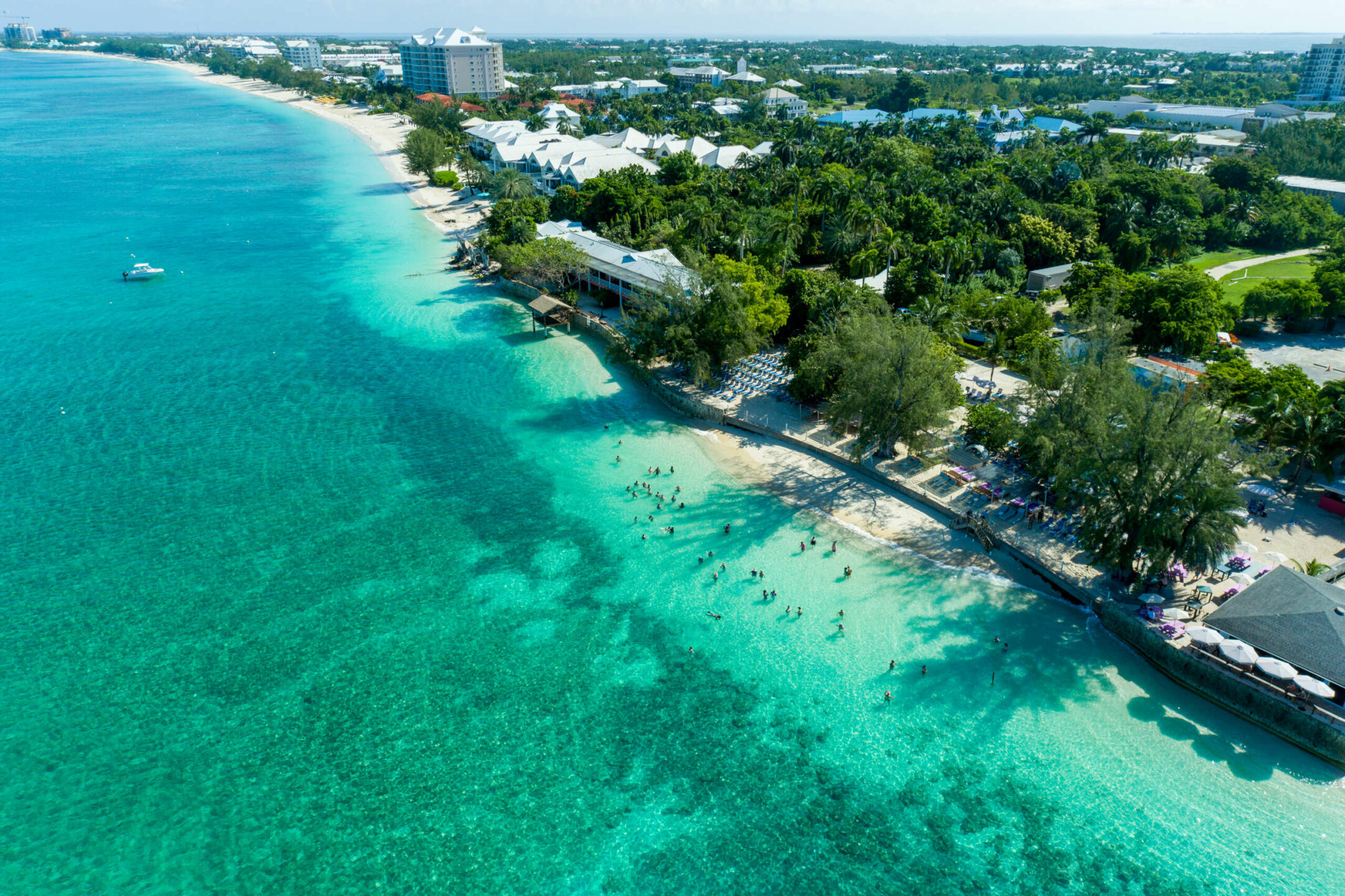
Behind a mesh fence in an industrial yard off a Grand Cayman highway, soft hills of powdery sand, salvaged from a construction project, sit waiting for a purpose.
Hundreds of miles away on the Great Bahama Bank, dredges mine shallow shoals in a massive offshore operation.
In Indonesia, a marine biologist experiments with electrified reefs designed to grow new limestone and ‘farm sand’ naturally.
When it comes to replenishing its beaches, Cayman has a handful of options. But taking sand to the beach may not be quite as simple as it sounds.
Across the globe, rising seas, damaged reefs and changing storm patterns are eating away at beaches. More and more communities are turning to replenishment projects, depositing fresh sand on shorelines for coastal defence and to protect tourism-based economies.
The popularity of the methodology means there are good and bad examples for Cayman to learn from. It also means the island is competing in a growing global market to find the right sand at the right price.
For Seven Mile Beach, the question no longer appears to be whether to replenish sand on the islands’ key tourist attraction but how, from where and at what cost.
First steps to addressing erosion
The coastal works permission for the Grand Cayman Marriott Resort to restore its beach, granted earlier this month, is the first sign of action to address an escalating issue.
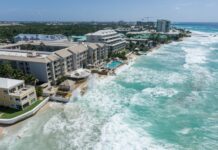
But the hotel is just one of multiple properties on a mile-long stretch that has been drastically impacted by the loss of beachfront. And consensus is emerging among environmental officials, policymakers, and business and property owners that a much-larger restoration project will eventually be required.
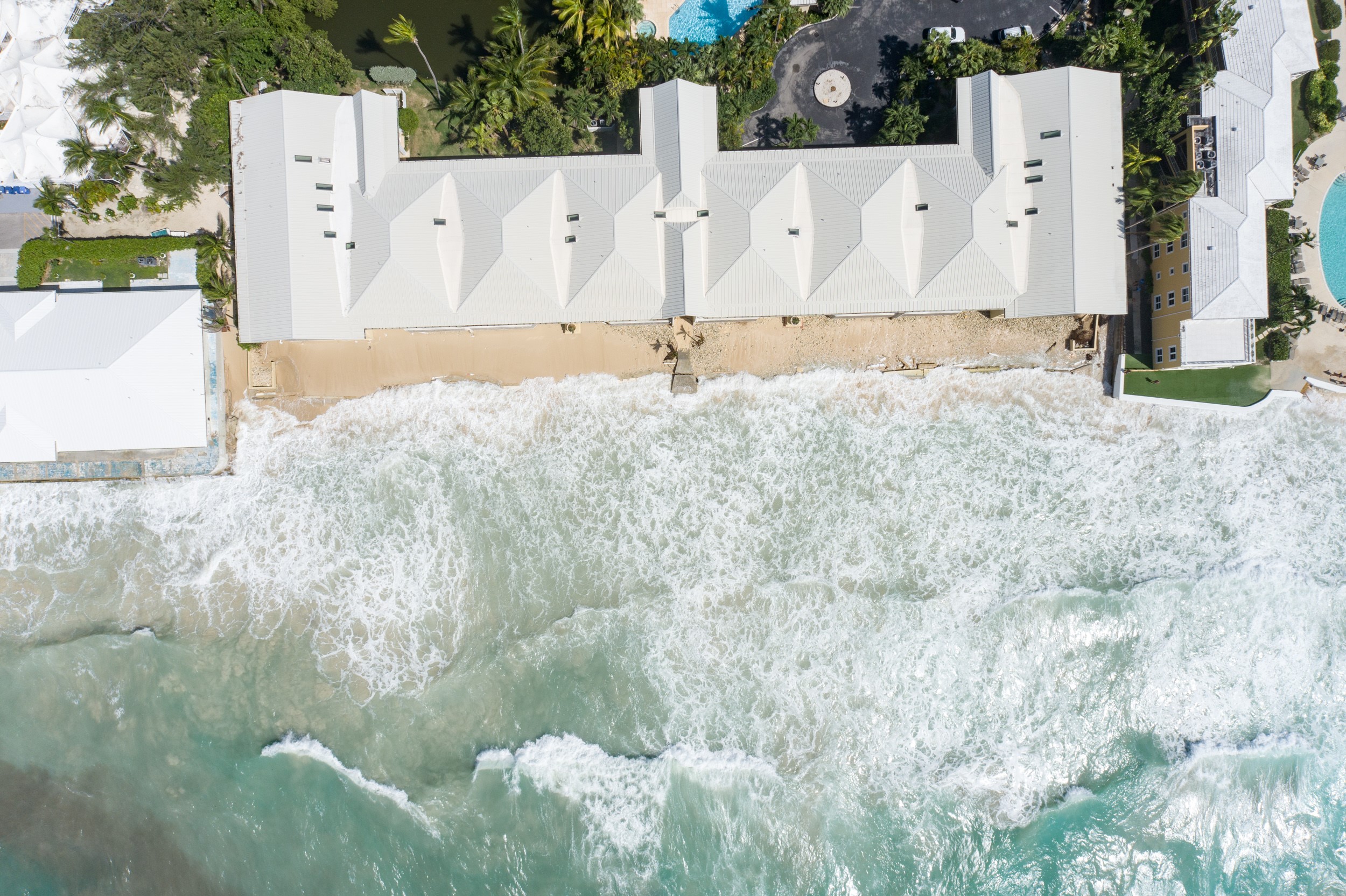
The hotel has been highlighted as a test case that could go one of two ways.
Other landowners could look to what the hotel is doing and seek approvals for their own beach projects, or government could lead a national strategy that takes in the whole southern portion of Seven Mile Beach.
A request for proposals went out last year to find a consultant to design the methodology and process for the wider project.
But the bids came in over budget and the project is on hold pending the new government’s announcement of its policy agenda, expected in September.
The loss of sand on Seven Mile Beach has been a problem for at least the past five years and is an issue that former minister for tourism Kenneth Bryan called a “national environmental and economic emergency” in 2024.
With economic studies showing the billion-dollar annual impact on the islands’ economy and coastal data suggesting the problem is only getting worse, the issue is becoming more pressing.
Taking sand to the beach
Beach replenishment as a concept is nothing new.
As Cayman contemplates the challenge, it has hundreds of examples worldwide – from Australia to Senegal to the eastern coast of the US – that it could look at.
But while the islands’ concerns are not unique, it will at least require a bespoke solution.
One fundamental concern is the availability of sand of similar type and quality.
Seven Mile’s sand is fine, soft, aragonite-rich sediment formed from the skeletal remains of marine organisms, vastly different from the quartz-based sands common on continental shores.
Sourcing appropriate sand locally is a challenge.
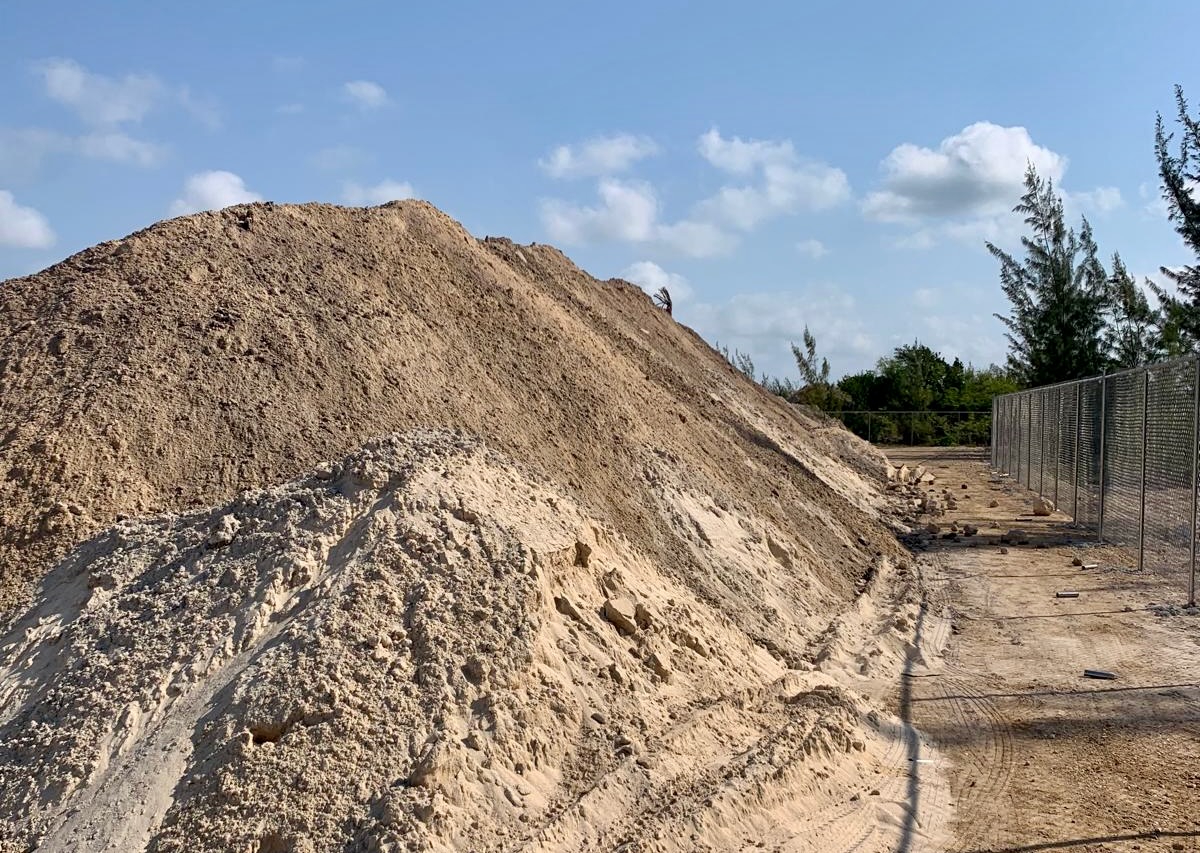
The Marriott initially looked to find sand from construction projects on Seven Mile Beach but it was not available in sufficient quantities. General Manager Hermes Cuello says they are now seeking permits to bring in sand from the Bahamas. It is not a simple process and government will send officials to examine the grain samples to ensure it is an environmental and aesthetic fit for Cayman’s beach.
Regionally, there are a handful of countries, including Cuba, Guyana and Colombia, that mine and supply sand for beaches.
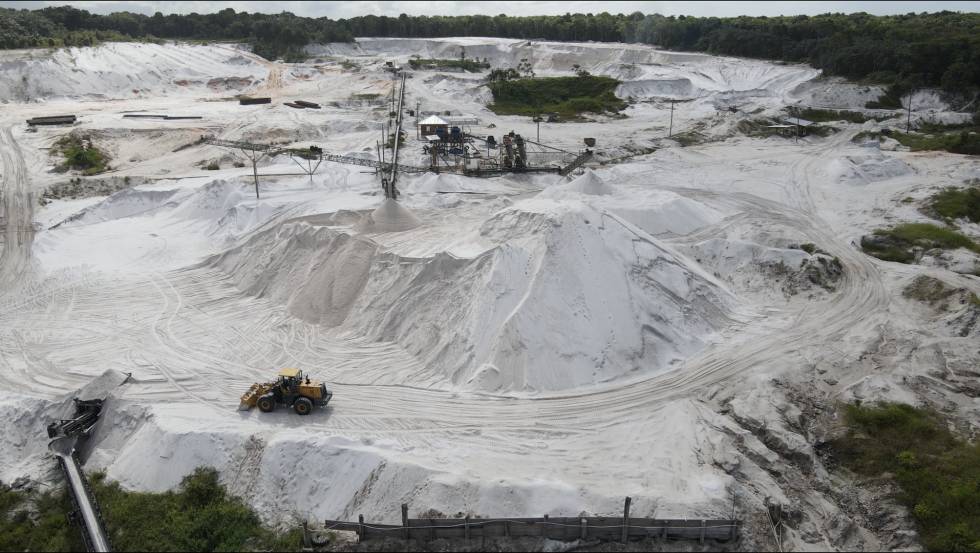
The Grand Bahama Bank appears to be the closest fit and the source with which government is most comfortable. It is a “vast, replenishing resource” that produces sand similar enough to what we see in Grand Cayman, says Tim Austin of the Department of Environment.
The price of sand
Minutes from a beach task force meeting in 2021 show that at that time government believed it would need roughly 52,000 cubic yards of sand, and that it could source it from the Bahamas or Cuba.
A later study by Danish engineering firm DHI – commissioned by the Dart group, which is Cayman’s largest developer and owns multiple hotels along Seven Mile Beach – suggested using almost four times that amount of sand as part of an initial large-scale renourishment. In that process, the sand would be placed just offshore and distributed along the coastline by tides, currents and wave action.
According to Smith Warner International, a coastal and civil engineering company headquartered in Jamaica, sand mined from the Bahama banks currently trades at around US$100 per cubic metre. That’s around US$5 million for the amounts referenced in the beach task force study and up to US$20 million for the larger amount indicated in the DHI study.
Sand is just the base cost, notes Jamel Banton, CEO of Smith Warner. Shipping it to Cayman, trucking it from the port, spreading it on the beach and a profit margin for the contractor would likely double that price.
Both aiding and complicating Cayman’s case is that it is not alone in facing up to worsening erosion. The US has used renourishment strategies for more than a century and it is now common practice on thousands of beaches.
There is increasing demand both for sand and environmental engineering services to restore and protect beaches both from a coastal security perspective and for tourism.
Joe Vietri oversees coastal storm risk management at the US Army Corps of Engineers, which has oversight of US publicly funded beach-restoration projects. He said demand for sand is growing.
As demand increases, not just from the US but on coastlines around the world, so does the price.
“If you don’t have enough sand locally, you are in the same position as Florida – you have to bring it in,” Vietri said.
Each step from mining to shipping to placing it on the beach adds to the cost.
Even after depositing new sand, the coastal processes that caused the erosion in the first place remain.
“It is a depleting resource, so it constantly requires renourishment,” he added.
The Financial Times reported last month that the world could be facing a sand shortage.
As more coastal areas turn to replenishment projects, the supply of beach-quality sand in certain areas is dwindling, the paper reported.
That is not as big an issue in the Caribbean, says Banton.
“There are miles and miles of banks in the Bahamas and a handful of companies that have licences to mine it. We use it all the time in Jamaica,” he said.
However, the Bahamian government has limited supply, at times for political reasons.
“My understanding is they won’t sell it to Florida because they want people to come to the Bahamas and sit on their beaches,” Banton added.
Austin cited similar concerns as well as potential for price escalation, given the growing need of Cayman and other destinations as erosion continues to bite into the coastline.
“I do think there’s a sense of urgency to get this done as quickly as possible, in terms of an ever threat of an increased budget,” Austin said.
Can property owners do it themselves?
While the Marriott project points to the possibility of a private sector-led solution with different landowners funding their own micro-replenishment projects, the strong preference for environmental officials is for a more coordinated approach. The resort spent several years refining its proposals until it hit on an approach that gained approval from the Department of Environment.
Even then, a key condition of that approval is that it can be incorporated into a wider project if and when that happens.
With oversight over hundreds of different replenishment projects, Vietri has seen some succeed and some fail and he argues the best policy is a government-led strategy that focuses on the entire beach system.
“I do not like, nor do I advocate for, coastal engineering by ad hoc committee, where everyone does their own thing and it’s not centralised or part of a management strategy,” he said.
“At that point, you get chaos.”
The Department of Environment expressed similar opinions in its qualified support for the Marriott restoration, stating a “strong preference that a government-led project is taken forward involving renourishment of a wider area”.
That doesn’t preclude a joint initiative over funding, however, or a public-private partnership on a national renourishment strategy.
Keeping the sand in place
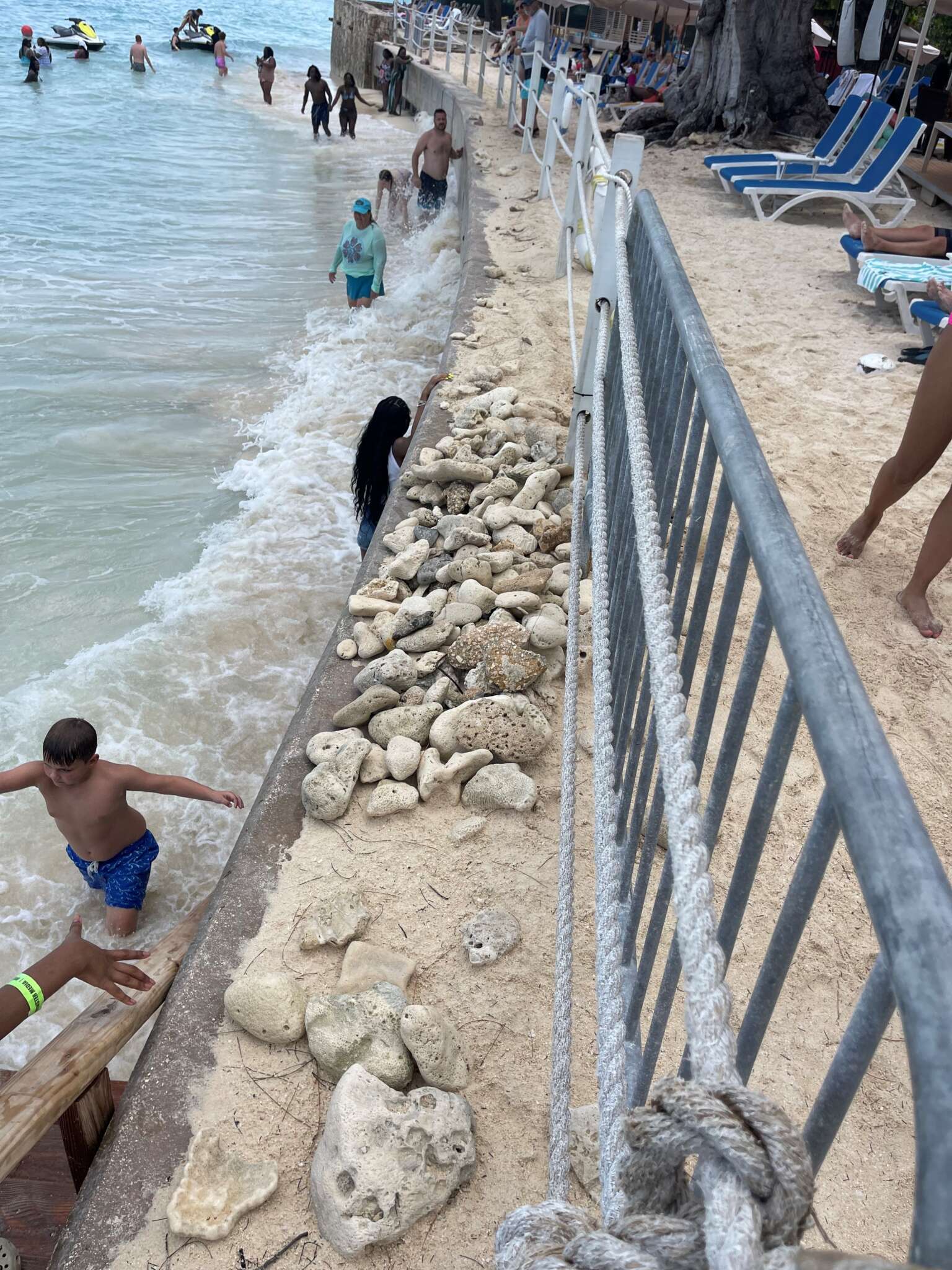
One additional challenge highlighted in the Marriott application is the threat that sand from renourishment is lost to future storms.
Vietri says that is to be expected.
“When you think about renourishment, you have got to think about the initial placement plus periodic nourishment to hold it. Your renourishment cycle will depend on the erosion rate.”
The Marriott project envisages the use of rock groynes to slow that erosion rate, but its use over a wider stretch of Seven Mile Beach could be controversial.
Another option is to try to retrieve lost sand. It’s also theoretically possible for Cayman to excavate its own shoals and sand banks.
Neither is something that environment officials are especially comfortable with.
“Most of our Seven Mile Beach corridor is in a marine protected area and perilously close to living coral,” Austin said.
“You can’t be dredging and extracting sand.”
Banton says Seven Mile Beach would likely require some kind of structural report. His company favours submerged breakwaters, which can fulfil the function of lost reefs, as opposed to rock structures like groynes along the shoreline.
He said it would be a fairly simple mathematical equation to work out if the benefits of building those type of structures would slow the erosion rate enough to justify the cost. The other option, he said, is simply to keep topping up the sand.
“None of this is rocket science. It has been done across the Caribbean and it has been very effective in a number of areas. I know financial services brings more money for Cayman than tourism, but it still contributes something. People come to our islands for the beaches and it is a shame this has not been dealt with.”
Rebuilding the ‘sand factory’
There is another way to restore beaches, argues Tom Goreau, a marine biologist from Jamaica who has worked all over the world on coral-reef and beach restoration.
He points to the loss of reef as the principal cause of sand erosion all over the world. Where branching corals have died off, shore protection has been lost, contributing to greater wave action and less protection.

Goreau, president of the Global Coral Reef Alliance, pioneered the method of using electric current to ‘grow’ limestone around metal structures on the sea floor to create new reefs.
Some corals – like the staghorn and elkhorn corals that have been decimated in the Caribbean over the past 50 years – can be fragmented and will grow quickly on those new limestone crusts.
Regrowing reefs in this way has been shown, on a small scale in the Pacific, to help regenerate beaches.
“If you restore the reef system, you restore the sand factory,” he said.
“Thats what a healthy reef does – it breaks down coral skeletons and algae into the fine sand your beaches need. It is not instant, but over time you would be farming your own sand instead of buying it.”
Climate change and other pressures on coral reefs are only increasing, with many once-magnificent coral reefs now largely dead frameworks “eroding in front of our eyes”, he said.
“They’re going to disappear sooner or later. So that means that the erosional forces are constantly increasing.”
The same is happening in coastal communities everywhere, meaning many of those areas are looking further afield to find sand for seasonal renourishment.
“The sand crisis is actually global. Every place in the world I know has run into the same problem,” Goreau said.
He believes Cayman could be a pioneer of sand farming. But he acknowledges that it would be a globally novel approach.
“I would like to see Cayman grow your beaches back. It is the ideal place and you would be the first to do it. No one has ever tried it on the scale that you would need.”
For Department of Environment officials, it is something that is worth trying but would need to be proven on a small scale before being incorporated into a wider project.
Policy changes needed?
Department of Environment Director Gina Ebanks-Petrie argues that any replenishment project must go hand in hand with new planning and resource-management legislation.
The department wants to see revision of planning laws to ensure beach sand is treated as a valuable national resource.
Cayman’s laws still allow every resident to take a bucket a day from the beach – a relic from a time when people used to beautify their yards with sand. And there is still nothing to compel developers involved in construction along the beach to retain the sand that is excavated – although in the past few years it has become standard practice to do so.
The department is also pushing for a standardised reference line for coastal setbacks to ensure development does not encroach further on a replenished coast.
“We’re hoping that whatever version of the beach nourishment project eventually goes forward, it will include the approval for the establishment of the setback line, and then the revision of coastal setbacks to go along with that,” said Ebanks-Petrie.
Where does Cayman’s sand come from?
Cayman’s sand is largely made up of the skeletal remains of marine organisms. Everything from coral fragments to shells and urchins get ground down by the ocean and, eventually, some of it is swept ashore and becomes a beach.
It is true that parrotfish, which crunch up algae from reefs and excrete it as sand, are an important part of the process. But the key ingredient of sand on Seven Mile Beach is calcifying algae called Halimeda, which grows in abundance in tropical waters, particularly around coral reefs. When the algae dies, it is broken down by chemical processes into beach sand.
“Those are your sand factories,” said marine biologist Tom Goreau.
Related Videos









The quickest way to get rid of expat workers is to let the beaches disappear. Aside from the beaches, there is no public land on island. Maybe it is all a massive scheme to reduce expat workers and reduce tourism since the gov doesn’t repair the beach.
Isn’t dredging an option?
The Lacovia property was filled by dredging in the early 60s.
Stephen F, your comment is confusing and perhaps incorrect.
Lacovia was built in the 1980s, twenty years after you claim its property was dredged. Not unusual though, to allow for proper settling. However, as I recall as a pre-teen at the time, the property on which it sits was sandy beach property. Next door was the Beach Club Colony, of which my dad was member and as kids we had the privilege to enjoy the BCC’s facilities. I distinctly recall white sand stretching north and south of the BCC. I recall a lot of dredging on the east side of SMB corridor, Governors Harbour, Snug Harbour, as examples. But I don’t recall any dredging on the beach side.
In fact, this article mentions sand from the current Lacovia re-build project being stockpiled as we speak. Are you claiming that sand come from dredging?
Do you have any more info on dredging on the beach side? Why would that have been necessary in the early 60s when that strip was entirely sand?
Well researched and presented article Mr. Whittaker. We’ll now just have to wait and see what sourcing options the Marriott chooses and, more importantly, how stable the replenishment will be in the long term.
However, there is no question that some of the erosion is caused by the dynamic interaction of waves and ill-designed and poorly placed concrete structures. Until our CPA takes more diligence in assessing and/or approving beach construction projects , AND abiding by DoE recommendations, all replenishment might be for nought.
Just as the loss of our beaches has multiple causes, both natural and human in origin; the solution or restoration will need a multifacited approach. Romoval of man-made sea walls, and absolute refusal to allow new ones to be installed is a must, as those of us who have been observing the decimation on the southern end of our beach recalls that the first blow to that section of beach was when the developer of the property immediately south of the Radisson was allowed to put in a seawall to “save their beach”. The evidence is clear, whether it is in South Sound, Boggy Sand Road or the southern end of the Seven Mile Beach, whereever seawalls were installed, beach erosion was guaranteed. Prevention is still better than cure. It will be a very costly, but senseless move to replenish the beach and allow seaswalls to remain anywhere near the normal highwater mark.
Other causes of beach erosion include the unnatural, non-rhythmical wave action created by jet skis and motor boats along sandy coasts. Evidence of this was observed in how the beach along stretches of the Seven Mile Beach “grew” during the initial Covid-related lock down. Yes, beach erosion is not due only to global warming; human-caused erosion is a reality. How do we mitigate against that?
One final observation that points to how we have destroyed our own beaches can be seen along stretches of the north coast of Grand Cayman. There are sections of the shoreline that used to have beaches (that grew and shrunk seasonally) but are only bare ironshore now. One example is directly opposite the Boatswain Bay Cemetery. There was once a beach there. Gone: the sand now part of structures in our Capital. Uncontrolled development and greed still needs quantifying here in our three little islands.
Why isn’t MORE being said about this? Why doesn’t Government tell the public more about this important issue? Is Government planning to charge duty on sand when they bring it from somewhere else? Are they going to charge people fees for putting some sand back on their own beach?
Why can’t we harvest or own sand that drops off the wall in South Sound? Has the feasibility of this been looked at by the DOE ? That sand that goes over the drop off doesn’t get taken up to Seven Mile beach in any case. Can someone PLEASE address these questions because people want to know the answers and even much more!
The University of Exeter’s 2015 study of sand production by parrotfish on an island geologically similar to the Cayman Islands in the Maldives showed that the pristine population of parrotfish there were producing close to 85% of all new sand on that island. We cannot do that study here now because we ate the majority of our 3 largest species of parrotfish by the late 1970’s, leaving our reefs depleted for over 50 years. Whatever we do now for beach replenishment, we MUST give parrotfish total protection if we hope to ever achieve long term stabilization of our beaches. It is no longer legal to spear parrotfish or Nassau Grouper in the Cayman Islands. Please put the DoE’s marine parks app on your phone to learn the regulations and to report any infractions you might see happening. We can all be part of the solution to enforcement now. If you habitually catch or eat anything from our reef shelf, please CHOOSE not to IF you can afford to eat anything else. If you care about future Caymanians, choose to leave it for desperately needed replenishment and for those who truly need it for survival. Most of us can afford to do this.
Where did all the sand go to?- it was washed out to sea by storm waves, but was it washed out over the drop off?. Has anyone investigated the sea bottom off West Bay Beach to see if significant amounts of sand are still down there before the drop off?. If so could it be dredged and redeposited where it came from?. We want replacement sand to be as similar to the original as possible.
We have one certainty in all this discussion, – something needs to be done URGENTLY!. So far there is no sign of this, just a lot of dithering form highly paid Ministers. Hurricane season is upon us and we are likely to lose even more beach in the next two months. Might I suggest a new slogan for Rosa- “The Islands that sand forgot!”.