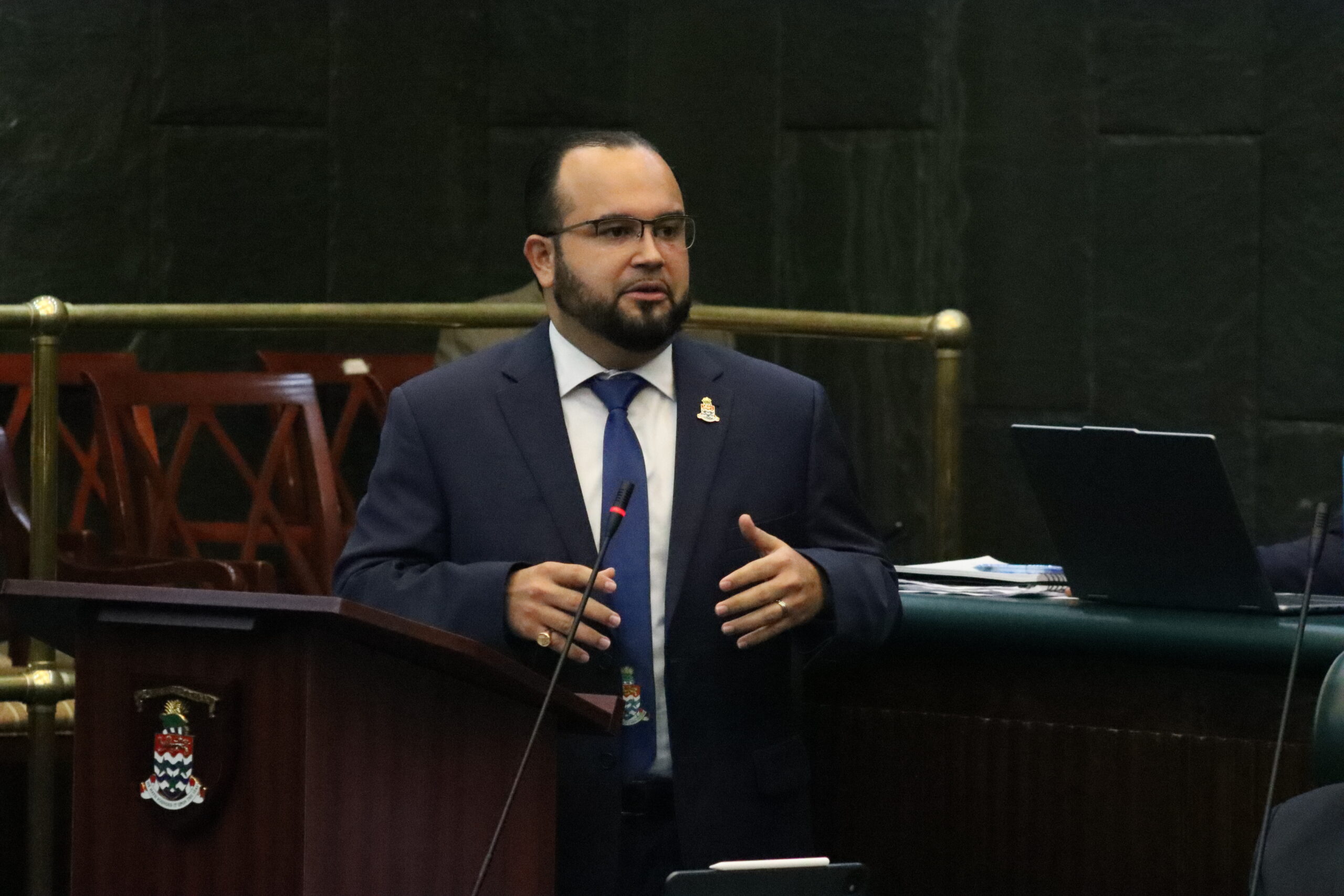
An expanded CCTV network, high-tech border control and computer-assisted emergency dispatch across all three islands will be funded in the new budget, Home Affairs Minister Nickolas DaCosta has told MPs.
Speaking in Parliament during a short budget debate on 11 Nov., DaCosta who is also minister for district administration for Little Cayman and Cayman Brac, said the budget for his ministry totals $133 million in 2026 and $137 million for 2027.
“The growth reflects carefully targeted investment in public safety, [offender] rehabilitation, Sister Islands’ infrastructure and essential services,” he said.
He explained that emergency response and public safety took up about 29% of the ministerial budget, with 27% going on community wellbeing, rehabilitation and offender management and social programmes.
DaCosta said another 18% would be spent on development in the Sister Islands and community readiness, with border control and customs taking another 17%.
Government administration would account for 9%.
He said the fire service across all three islands would get new fire engines and protective equipment, as well as enhanced training.
Border control measures
DaCosta added Customs and Border Control had processed 2.3 million people at the airport last year and was a crucial line of defence for the country.
He described Customs and Border Control as the “guardian and gateway” for Cayman, and said more cash would be spent on biometrics at the border and integrated border management and intelligence systems.
A “border intelligence directorate” will also be created to “enhance analytical and enforcement capabilities”.
Increasing calls to 9-1-1
DaCosta said the public safety communications dispatchers and operators were the “unseen first responders” and had handled 19,000 calls so far in 2025, a 77% increase on five years ago.
He added, “When it comes to saving lives, seconds are the currency of survival and these investments save these seconds.”
Offender rehabilitation
DaCosta said rehabilitation was a crucial part of the criminal justice process and had to “move from the margins to the centre”.
He added partnerships would also be forged with the private sector to provide “second chance” opportunities for offenders.
DaCosta said, “Safety is not secured by enforcement alone, it’s sustained by restoration.”
He added that higher professional standards for prison staff were being introduced and the prison system would be modernised with classrooms, vocational workshops, counselling rooms and reintegration units.
“When a person leaves prison with skills, stability and purpose and does not return, that is not leniency. That is success. That is value for money and value for society,” he said.
He added that more “community-based sentencing options” would also be examined, along with a beefed-up probation service.
But DaCosta said victims of crime would be protected with a new Victim Rights Bill, setting out rights to information and participation and promote “dignity and fairness” through the justice process.
Related Videos