Efforts to protect Little Cayman’s night sky are moving from community awareness to concrete policy action, as government and the Little Cayman District Committee of the National Trust step up work toward international recognition under the DarkSky International’s International Dark Sky Places Programme.
The initiative was presented to residents at a community meeting on Earth Day, 22 April, as part of a wider package of environmental and long-term planning measures.
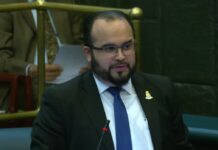
District Administration Minister Nickolas DaCosta said Little Cayman’s night sky is one of its defining features and should be actively protected.
“If you spend a night in Little Cayman, you’ll see that the stars here are clearly visible across the island,” he said. “The goal is to protect that environment while supporting sustainable tourism.”
The programme is a voluntary certification system that recognises communities, parks and protected areas that meet strict standards for limiting light pollution through lighting design, policy and public education.
Certification would place Little Cayman among a global network of sites recognised for preserving natural darkness.
However, the path to designation remains in progress. Dave Boccuti of the Little Cayman District Committee of the National Trust said discussions are ongoing to determine how the island could qualify.
“At the present moment, Dark Sky International does not have a category that Little Cayman would fit within, but we are working with them to either create a new category or find a category, such as ‘parks’ that a part of Little Cayman could fit into,” he explained.
“There are a number of relatively small changes that would be necessary for Little Cayman to achieve this certification once an appropriate category is identified.”
Parallel efforts are also underway by the National Trust to initiate designation under the ‘parks’ category for three properties, with one site identified on each of Grand Cayman, Cayman Brac and Little Cayman, Boccuti explained.
The importance of the initiative
In Little Cayman, where darkness remains largely intact, the focus is on preservation rather than restoration.
Community engagement has been central to the approach. The Sister Islands Tourism Association issued formal proclamations recognising International Dark Sky Week in both 2025 and 2026, framing the islands’ night sky as a shared environmental and cultural resource.
A 2025 proclamation described the experience of viewing the Milky Way from Little Cayman and Cayman Brac as a source of “wonder and awe” that encourages interest in science and nature, while also highlighting the global loss of natural darkness.
“The island of Little Cayman is participating in the International Dark Sky Communities project to share, encourage and protect the dark night sky with the aims of building local astro-tourism, protecting the health of our residents, visitors and indigenous animals, and increasing community awareness about the value of reducing light pollution,” read the 2025 proclamation.
Public events have reinforced that message. A well-attended stargazing gathering last year, held in a low-light area of the island, is expected to be repeated alongside additional education campaigns in 2026.
Light pollution
Locally, proposed measures include reducing unnecessary outdoor lighting, installing shielded fixtures that direct light downward, and expanding public awareness about the environmental effects of artificial light.
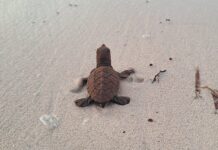
Artificial lighting can disrupt nocturnal ecosystems, particularly for species such as sea turtles and seabirds. Hatchling turtles rely on natural light cues to reach the ocean and can become disoriented by artificial lights, while nesting behaviour may also be affected. Migratory birds and nocturnal pollinators are similarly vulnerable.
Globally, light pollution is increasing by an estimated 5% to 8% each year, and most of the world’s population now lives under skies affected by artificial light. In many urban areas, the Milky Way is no longer visible.
Related Videos