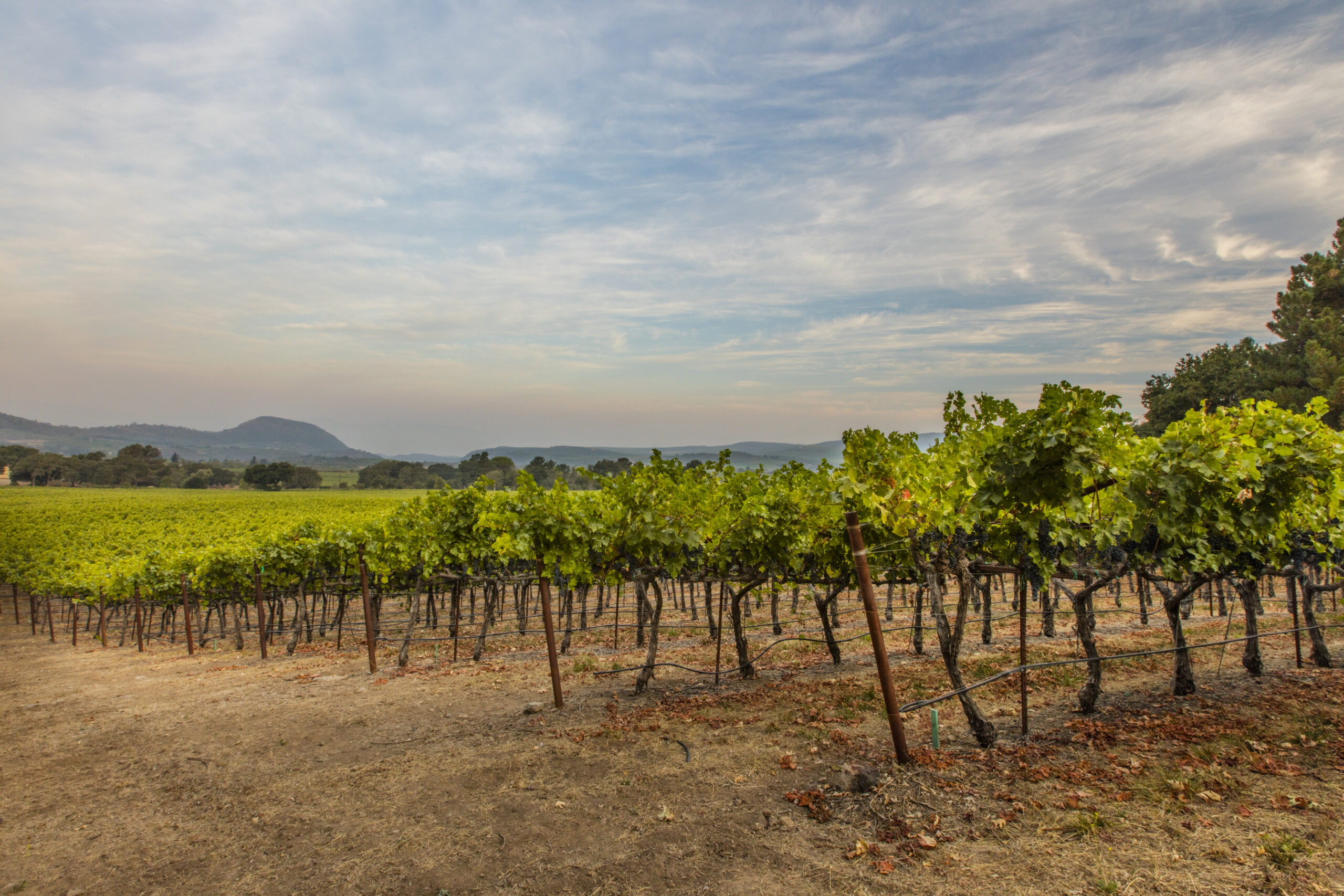
When Koerner and Joan Rombauer moved to the hilly town of St. Helena in the northern part of Napa Valley, their original intention wasn’t to make wine.
“They just wanted to buy a house in the country,” said Eduardo Lleras, Rombauer Vineyard’s fine wine specialist for Latin America and the Caribbean.

It was in 1972, four years before the famous ‘Judgment of Paris’ blind wine tasting that proved that Napa Valley Chardonnays and Cabernet Sauvignons could rival – and surpass – their French counterparts, changing the world wine market forever.
With California wines suddenly on the world map, the Rombauers became partners in the Conn Creek winery in 1976 and four years later, they started Rombauer Vineyards on their own.
From the beginning, Koerner had a clear vision of what he wanted out of his wines, Lleras said. Although other winemakers in the area spoke about how the Napa Valley wines would improve with five or 10 years of ageing, Koerner was having none of that.
“He said he wanted to make no BS wines,” Lleras said. “He wanted the wines to be enjoyable on release, with good fruit flavours and acidity.”
In 1984, Rombauer released its first wines – a 1980 vintage Cabernet Sauvignon and a 1982 Chardonnay. The winery has been a Napa Valley success story ever since.
Wine dinner
To highlight Rombauer’s wines, Jacques Scott – which has carried the label for more than 20 years – organised a wine dinner at Luca restaurant with Lleras on hand to tell a bit of the winery’s story, and to talk about the wine served with each course.

Guests arrived to a glass of Rombauer’s most recent key addition to its portfolio, Sauvignon Blanc. It took some coaxing by Rombauer’s current winemaker – Richie Allen, a native New Zealander – to get Koerner to agree to make a Sauvignon Blanc, but he eventually did. The result, Lleras said, is a varietal with a unique taste profile that is in between New Zealand Sauvignon Blanc and others from California.
Made from grapes sourced mostly from the cooler Sonoma Valley and then partially aged in neutral French oak barrels and concrete tanks, the refreshing Rombauer Sauvignon Blanc displays enticing – but not overbearing – aromas and an elegance not typical of New World versions of the varietal.
Even though Koerner had doubts that the Sauvignon Blanc would sell well, it turns out Allen was correct in his insistence it would – Lleras said it was the fastest growing wine in terms of sales in the Rombauer portfolio.
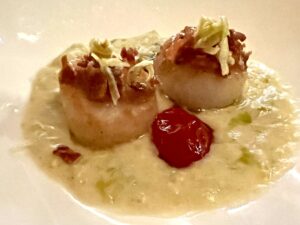
The first course of the meal – seared jumbo scallops with a thermidor/leeks/bacon sauce – was served with the star wine of the night: Rombauer’s Proprietor Selection Chardonnay.
“Rombauer is best known for its Chardonnay,” Lleras said, adding that the proprietor selection comes from the best barrels of wine from any given harvest.
The grapes for this wine are sourced from Carneros, an area of southern Napa Valley that is cooled by winds coming off the Pacific Ocean. Once vinified, the wines are aged in a blend of American and French oak barrels. The result is a wine with fresh acidity that is also creamy in the mouth. With unmistakable minerality in its aromas, this Chardonnay stands out from most other Napa Valley Chardonnays for its complexity. This is a wine that is rare to find outside of California, but Jacques Scott receives an allocation every year now.
The Rombauer Zinfandel was served with short rib tortellini in a mushroom and grape tomato ragu.
“The Zinfandel is one of the most fun wines of the portfolio,” said Lleras, noting its lush fruit flavours were balanced by good acidity.
The final wine of the evening was the Rombauer Cabernet Sauvignon, which was served with duck leg confit and a port-wine reduction, creamy potatoes and sauteed green beans.
All of the grapes for Cabernet Sauvignon are sourced from Napa Valley, with 90% of them coming from Rombauer estate vineyards. The grapes are picked by hand and then optically sorted so that only the best grapes are used. The wines are then aged for 18 months in French oak barrels, producing an elegant Cabernet Sauvignon with black fruit flavours and a “hint of pleasant herbaceousness,” said Lleras.
Even though Rombauer only produces about 7,000 cases of the Cabernet Sauvignon – out of its total 400,000-case production – Jacques Scott get an allotment of cases annually.

A special guest at the dinner was Caymanian multi-media artist Yonier Powery, who presented Lleras with ceramic plate that depicted a Caribbean spiny lobster.
The Gallo connection
In 2023, Rombauer Vineyards was purchased by the American wine company, Gallo, the world’s largest wine producer by volume.
Historically known for producing ‘democratically priced’ wines that are accessible to a wide market, Gallo’s attempts to produce luxury wines under the Gallo label proved problematic because of the perception that it mainly produced good – but not great – value-driven wines. To successfully add luxury wines to its portfolio, Gallo took a different approach by buying existing luxury brands such as Orin Swift, Pahlmeyer and Rombauer Vineyards.
With both Gallo and Rombauer being family-owned wine companies that emphasised quality, integrity and land stewardship, the acquisition offered a good cultural fit, one which the Rombauer family said it was “thrilled” to do.
Related Videos