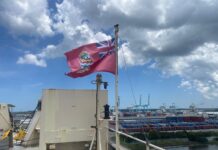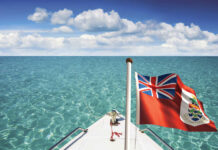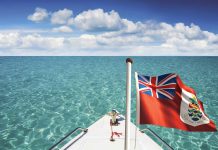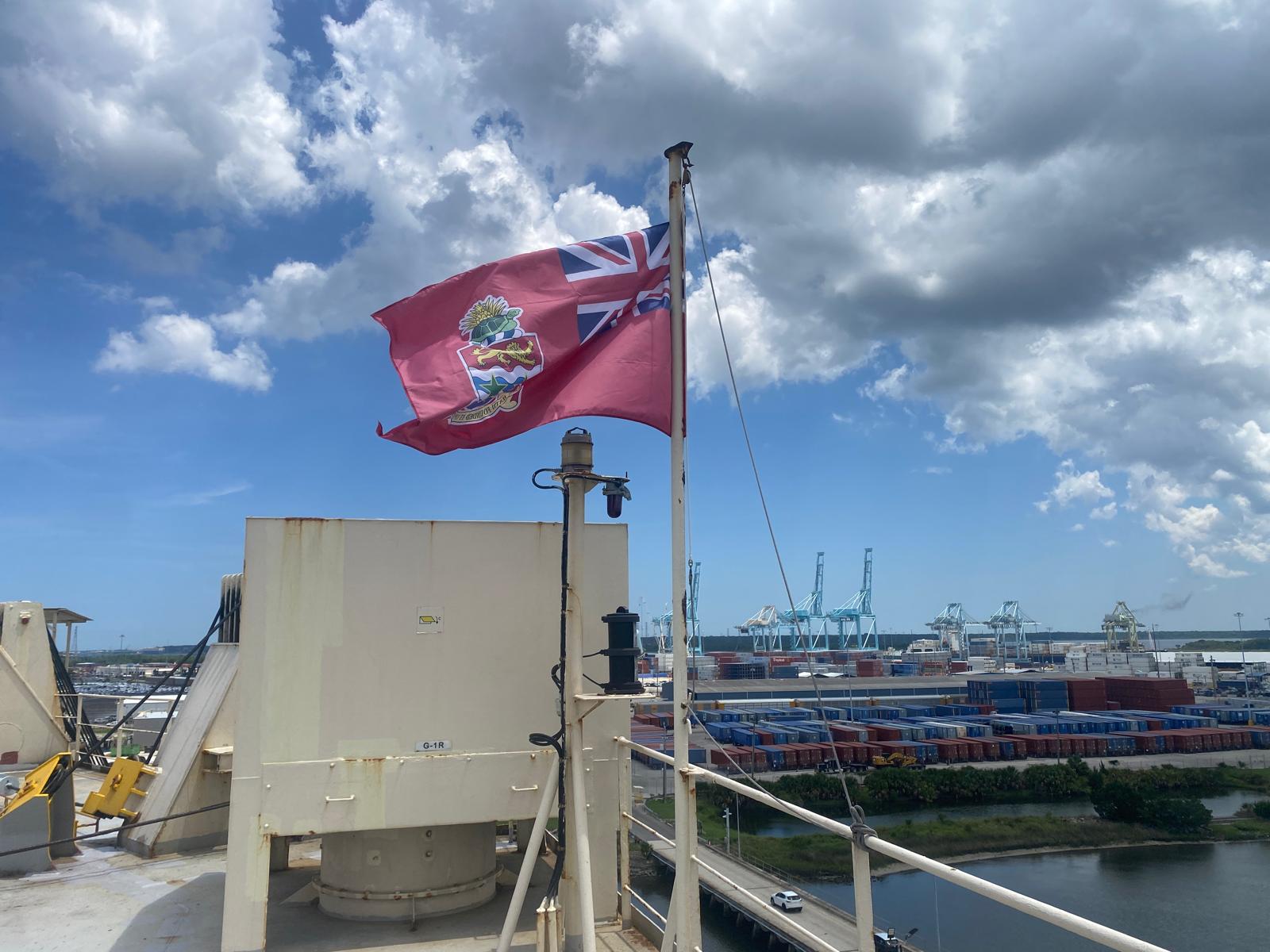
At sunrise in Monaco, a 300-foot superyacht slides past Port Hercule’s breakwater. On her stern, a red ensign flutters on the flagstaff and the crisp letters George Town, Cayman Islands are clearly marked.
In a harbour lined with sterns displaying Malta, the Isle of Man and the Marshall Islands, that small Caribbean Island name catches the light.
Few realise how deeply the Cayman Islands is woven into this scene.
The Cayman Islands Shipping Registry, part of the UK Red Ensign Group (REG), is one of only a handful of REG Category 1 flags authorised to register ships of any size.
That single distinction places the Cayman Islands alongside the world’s premier maritime nations.
From Antibes to Monaco, the heart of the Mediterranean yachting circuit, the Cayman Islands flag has become a quiet, steady presence.
At the Monaco Yacht Show, the industry’s annual summit of yachting excellence, the Cayman Registry’s team is a familiar presence, advising owners, brokers and industry advisers on everything from new construction to refits to compliance.
This is not by chance. With offices in George Town and Southampton and representation in the US, Greece, Singapore, Japan, Panama, France, Turkey and Italy, Cayman Registry offers round-the-clock service and a reputation for speed and expertise.
Vessel and mortgage registrations can often be completed within a day – a rarity in an industry where delays cost fortunes.
That efficiency, paired with responsive service, a British legal framework and tax-neutral environment, has helped the Cayman Islands claim an impressive share of the world’s luxury yachting fleet.
Industry estimates suggest roughly 40% of all classed yachts over 30 metres (100 feet) carry the Cayman flag; a remarkable statistic for a nation of almost 88,000 people.
The people behind the flag
At the helm sits A. Joel Walton, CEO of the Maritime Authority of the Cayman Islands since 2005.
“For a registry that now ranks among the top five in the world for large yachts over 30 metres, maintaining quality is a daily commitment,” said Walton.
He added, “MACI’s oversight is recognized by international regulatory community for its high compliance and low detention rates. The Cayman flag has consistently maintained its position on the US Coast Guard’s Qualship 21 list, an achievement shared by only a handful of international registries.”
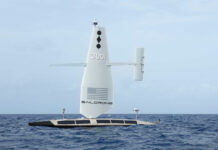
Among his team is Chris Balls, principal surveyor based in the George Town office in Cayman. Often seen inspecting visiting vessels in George Town as well as Cayman ships elsewhere in the world, he is a familiar figure on international panels where he speaks about autonomous and remotely operated vessels, safety at sea and the future of ship inspection.
Beyond luxury
Cayman’s stake in yachting focuses on purpose, not prestige.
Each registration fuels local expertise in financial services, law, surveying and compliance; exporting Cayman’s maritime skillset to the world.
And at a time when the industry faces pressure to decarbonise, Cayman’s seat at the table means there is an opportunity to help shape the standards that will define tomorrow’s oceans.
When Balls speaks on sustainable design or ship inspection, he’s doing more than representing a registry; he’s asserting that the Cayman Islands, a seafaring nation, still has something to contribute to the world about ships and safety.
Why it matters
For the casual observer, a Cayman Islands flag on a superyacht in Monaco might seem an odd pairing, but it’s a reminder of how far Cayman’s influence travels.
Cayman’s registry lists some of the world’s largest private and commercial vessels as well as many conventional merchant vessels. Its surveyors help write the rules for the next generation of ships.
When the industry gathers in various forums across the globe to decide what comes next, the Cayman Islands are in the room.
For a nation built on seafaring, that’s not coincidence.
A living connection to Cayman’s seafarers
Here in Cayman, the link between the modern registry and the old seafaring families remains strong. Many of the authority’s staff have maritime roots; descendants of captains and shipwrights who once sailed on Caymanian-made vessels like the schooners Goldfield, Jemsons and the Armstice.
For centuries, Caymanians built these schooners from the native hardwoods like cedar and mahogany and sailed them throughout the Caribbean and Central America.
In the 20th century, Cayman men manned ships around the globe, their seamanship earning admiration wherever they went.
By the 1970s, as Cayman’s financial and tourism sectors began to rise, so too did its maritime ambitions. The government saw an opportunity to leverage that nautical heritage and reputation for integrity into a modern shipping registry.
Established in 1903, the Cayman Islands Shipping Registry formally became a division of the Maritime Authority, which was formed in 2005, but its roots stretch much further; back to the same values that sent Caymanians to sea generations ago: self-reliance, skill and trust.
From locally made schooners to superyachts, the Cayman flag’s journey mirrors that of the islands themselves: small in physical size, but global in reach and guided by the same principle that once steered every Caymanian sea captain; to keep the course steady and the reputation strong.
Related Videos