

Members of the community are calling for clearer communication and practical support to farmers as the government works to contain an outbreak of H5N1 avian influenza confirmed at a West Bay poultry farm on 28 Nov.
The opposition People’s Progressive Movement says the episode has highlighted the need for a more visible, coordinated national strategy focused on farmers’ needs, as authorities enforce a temporary 21-day halt on the movement of live birds across the islands as a precautionary measure to contain the virus.
Speaking on Radio Cayman on 3 Dec., Opposition Leader Joey Hew urged government to adopt regular public briefings to counter rumours and give farmers confidence that problems are being dealt with promptly and openly.
A virtual question-and-answer session held by the Department of Agriculture on 2 Dec. came together with little notice. Emails inviting media were sent just over an hour before the meeting and at least one large producer said he did not receive information until after the call had begun. Fewer than half of the island’s egg farmers are understood to have joined the session. Hew said he learned about the meeting only after it had taken place.
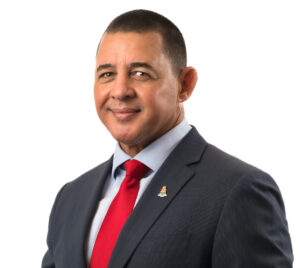
Hew, himself a backyard farmer, said uncertainty is spreading quickly in close-knit farming networks. “I was in A. L. Thompson yesterday and heard people saying, ‘This farm has it, and this farm has it…’ but then the news I read this morning says it’s still confined to one farm,” he told listeners, calling for frequent updates so that “people can know what’s happening” and misinformation does not take root.
According to data provided to the Compass by the Department of Agriculture, Grand Cayman has 40 registered poultry farmers.
Seventeen farmers are enrolled in the government’s National Egg Strategy, or NEST, a programme designed to enhance domestic egg production and secure 40% of the local market through training, certification and upgraded equipment.
The pilot includes some of the country’s most productive operations, among them Old Man Bay Farms, managed by Olson Anderson, which produces up to 1,000 dozen eggs a week in the cooler months.
What worries farmers is not only the disease itself but the economic shock that can follow from quarantine orders, compulsory culling and loss of sales driven by public uncertainty.
Anderson said on-farm realities can make reporting emotionally and financially difficult for producer families who may have invested life savings in a flock. “There may be farmers who find wild fowl dead on their property and keep it to themselves because they don’t want their flock euthanised,” he warned.
He also said that there needs to be public reassurance that local eggs remain safe. “It would be nice for the Department of Agriculture to say publicly that local eggs are fine, so this doesn’t hurt those of us who are in this business,” he said, adding that assumptions can damage sales even when a farm is unaffected.
Under a government advisory issued on 3 Dec., farmers across Grand Cayman have been instructed to tighten biosecurity practices as part of efforts to prevent further spread of H5N1 avian influenza.
The notice, published by the Department of Agriculture and Public Health, sets out a list of precautions ranging from daily health monitoring of birds to strict control of farm access, protective equipment, disinfecting tools and limiting contact between poultry and wild animals.
The guidance becomes significantly more restrictive and financially impactful if a designated biosecurity zone is activated. Within such areas, only NEST-certified farmers are allowed to continue selling eggs, while non-NEST farmers are temporarily barred from supplying eggs or poultry meat.
All movement or sale of livestock is prohibited within the zone, including goats, cattle, pigs and poultry, and cross-farm visits must stop entirely.
“I think it’s important that, and I would believe that the government would say to those farmers, ‘Listen, if we have to cull all of your birds, then we would offer compensation for that culling,'” said Hew. “And they also possibly need to start looking at offering a stipend to them if there are, in fact, say, three farms that are under quarantine at the moment. That means that there’s no revenue for those farms. So under quarantine means nothing comes in, nothing goes out, and so these folks are going to find it very difficult.”
Farmers used the Department of Agriculture question-and-answer session on 2 Dec. to press for clarity on what financial support would be available, including whether compensation would be paid for culled birds and if stipends would be offered to farms placed under quarantine with no income.
Senior veterinary officer in the Department of Agriculture, Dr. Tiffany Chisholm, told producers that compensation for those affected by avian flu “is something that the ministry and Cabinet are discussing actively.”
In a statement the PPM advocated for a clear national response plan, expanded testing and surveillance, a structured feral chicken management strategy and targeted support for farmers.
Government has maintained the response is being treated with urgency. On the day the virus was confirmed, Acting minister in the Ministry of Planning, Lands, Agriculture, Housing and Infrastructure, Nickolas DaCosta, said all necessary resources had been mobilised to contain and manage the situation swiftly, with the health of Caymanians and the agricultural sector as top priority and agencies working together on a coordinated response.
“Our government is treating this matter with the utmost seriousness,” he said.
Related Videos








Why this article is not a front page article of the day?