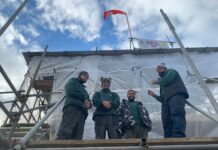
A team of shipwrights from the UK is scouting possible locations in Cayman where work on restoring the historic Fair Weather wooden schooner can be completed.
Much of the work on the ship has already been done at a UK shipyard, and the team behind a plan to bring home the ship, the last still-sailable vessel built by Cayman Boats Limited, now hopes the finishing touches can be done here.
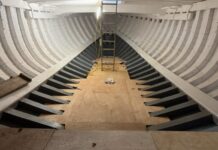
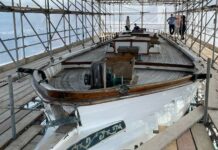
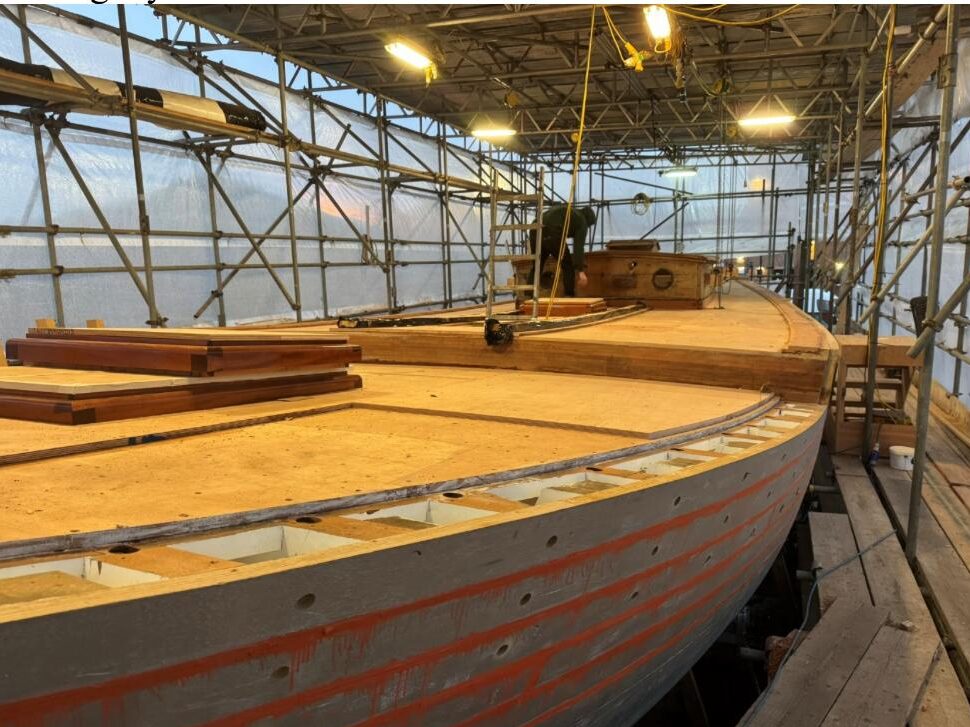
What still remains to be completed are exterior rails, the laying of the final part of the deck, fitting out the interior with the engine and accommodation, and making the mast and rigging, shipwrights at the T. Nielsen and Company shipyard in Gloucestershire said during a recent visit to Cayman.
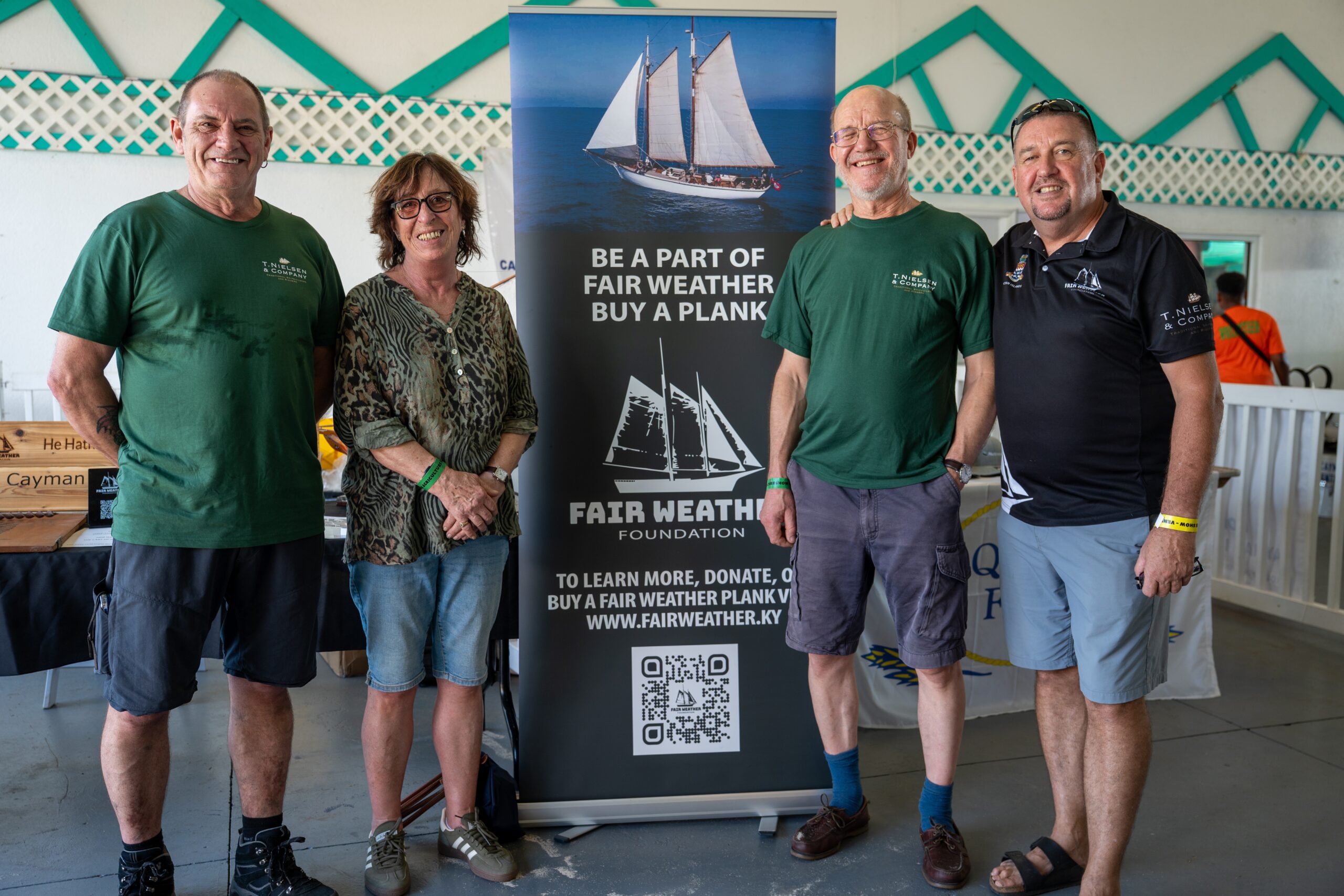
The trio – Tommi Nielsen, Sarah White and Nigel Patrick – having scouted out possible locations on island to finish the work on the vessel, are preparing a report to send to Cayman Islands government ministers on a proposal to complete the schooner renovations on island.
They said their visit to Cayman, over a week late last month, as well as being a scouting mission for shipyard sites, also helped them determine that a lot of the materials and equipment that would be needed to finish the work are available on the island.
The plan is to find and train people in Cayman to work on the completion of the vessel, so that, when necessary, there will be individuals on island who would be able carry out maintenance work on the boat in the future.
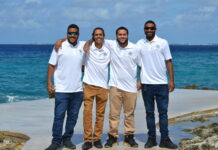
Four young Caymanians, all with links to Cayman’s maritime heritage, had worked on the Fair Weather restoration, having apprenticed on the ship in the Gloucester shipyard last year.
White said working on the ship will be a “great opportunity to help bring the skills back, and train young people, because there’s so many aspects involved – you’ve got plumbing, you’ve got wiring, you’ve got the electronics, navigation, mechanical installation, … and then you’ve got the sailing”.
Rebuilding history
The team admitted there was a lot more work to be done on the boat than they’d originally thought.
“There were no major problems,” Patrick said, “but it was a lot worse than we thought”.
He added, “When the boat first turned up, it looked quite good,” but on closer inspection, it became apparent that it needed major work. Some of the frames and the deck house remain, but much of the rest of the vessel has been replaced.
After removing the bottom planks, for example, they found that the frames they were attached to were rotten, so the entire bottom of the boat had to be replaced.
They have added a copper sheathe to the exterior of the vessel to prevent teredo worms, also known as ship worms, from eating the wooden planks.
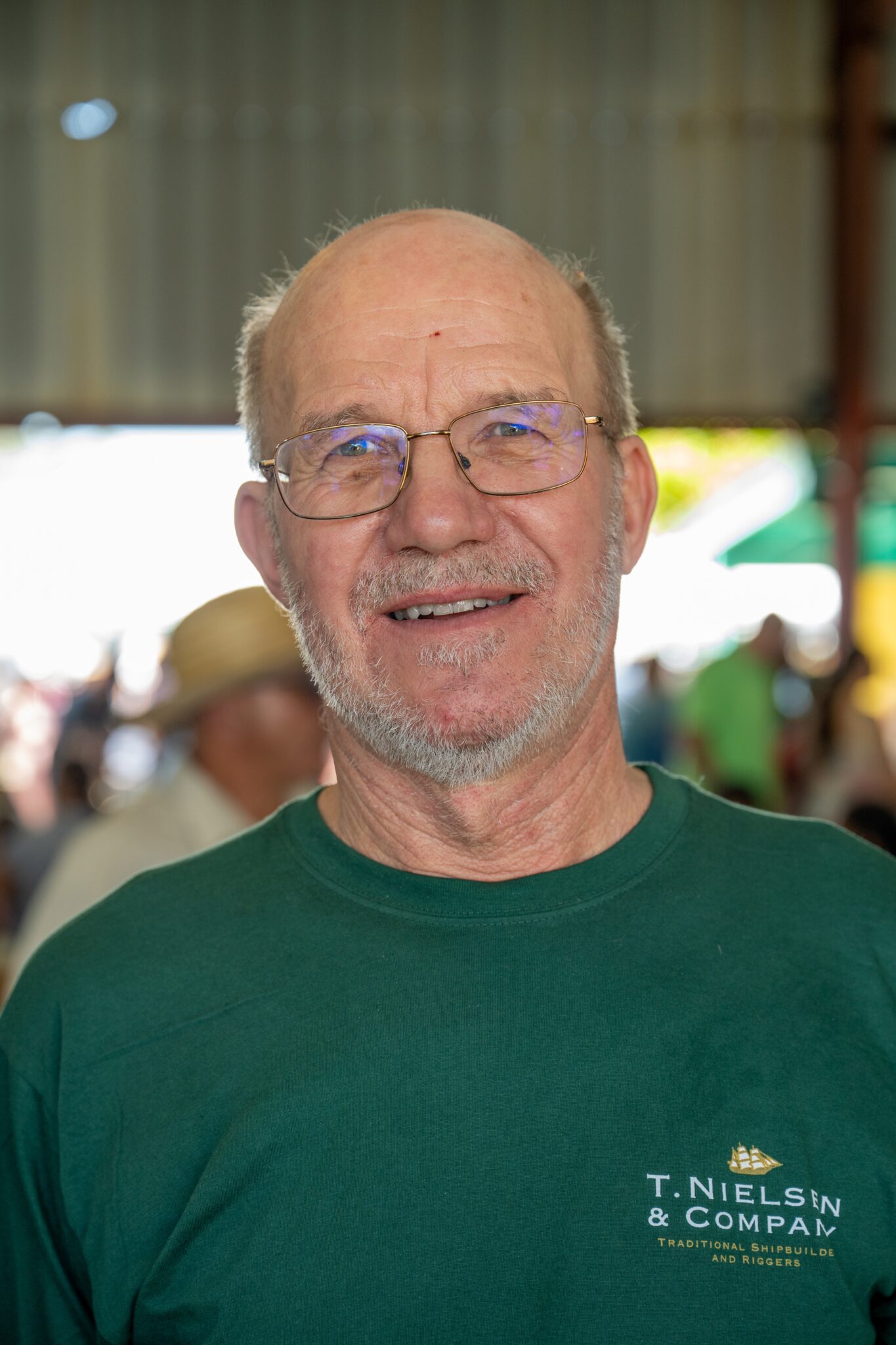
“The nasty teredo worms eat the timber; they love wooden ships,” said Nielsen.
Some of the interior planks on the ship will be particularly special. The Fair Weather Foundation, the charitable group that bought the vessel and developed the plan to bring it to Cayman, is offering sponsored planks for sale to help pay for the work. Companies and individuals can buy a plank with their name on it, which will be installed in the boat.
As well as meeting government officials during their visit to Cayman, the team from Gloucester also met Sir John Jenkinson, the son of Sir Anthony Jenkinson, the original owner of the Fair Weather, and viewed some of the many early photos of the boat that Sir Anthony, a photojournalist, took of the schooner.
A legacy of repairing historic ships
The shipwrights in England who have been rebuilding the Fair Weather have worked on boats more than 100 years older than the Cayman-built wooden schooner.
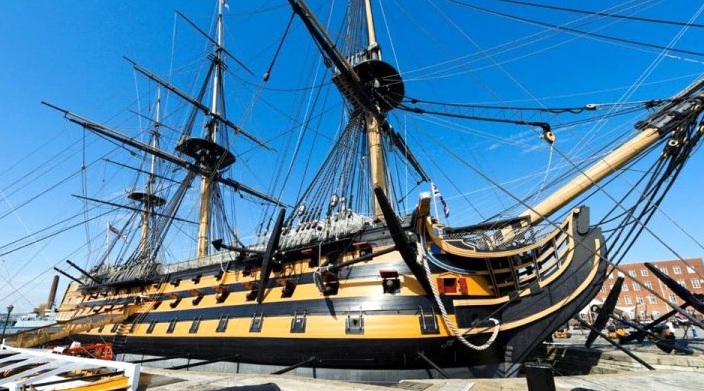
These include the HMS Victory, the flagship of the British fleet commanded by Admiral Horatio Nelson in the Battle of Trafalgar in 1805. The 104-gun wooden ship was ordered by the Royal Navy in 1758 during the Seven Years War and launched in 1765.
The 261-year-old vessel is the world’s oldest navy ship still in commission and is currently located at the National Museum of the Royal Navy at Portsmouth Historic Dockyards.
The T. Nielsen team has also worked on the refurbishment of the masts and rigging of the RSS Discovery, and the replacement of its figurehead.
RRS Discovery, which was designed for Antarctic research, was the last traditional wooden three-masted ship to be built in Britain. It was launched as a Royal Research Ship in 1901, and its first mission was the British National Antarctic Expedition, carrying Robert Falcon Scott and Ernest Shackleton on their first, successful journey to the Antarctic, known as the Discovery Expedition.
Related Videos