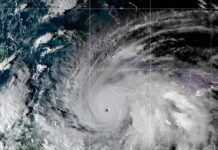
Colorado State University researchers issued their 2026 Atlantic hurricane season forecast on 9 April, predicting a slightly below average hurricane season.
The prediction calls for 13 named storms, with six becoming hurricanes and two strengthening into major hurricanes (Category 3 or above on the Saffir-Simpson hurricane wind scale).
Historically an ‘average’ hurricane season is 14 named storms and seven hurricanes.
The early 2026 seasonal outlook from Colorado State University is generally in agreement with the earlier forecast issued by AccuWeather on 25 March, which calls for 11 to 16 named storms.
They both broadly agree on one central theme: The Atlantic hurricane season may be somewhat quieter than average, largely because of a developing El Niño.
However, Accuweather lead hurricane expert Alex DaSilva cautions that, “Very warm waters in the Atlantic, Caribbean and Gulf can still fuel rapid intensification, even with El Niño in the picture.”
The ENSO cycle: The driver behind the forecast
The El Niño–Southern Oscillation, known as ENSO, is a natural climate cycle centred in the tropical Pacific Ocean. It has three phases:
- El Niño: Warmer-than-average sea surface temperatures in the central and eastern Pacific
- La Niña: Cooler-than-average waters in the same region
- Neutral: Conditions near average
These phases shift global atmospheric circulation. In simple terms, ENSO acts like a planetary-scale ‘gear change’, altering wind patterns, rainfall and storm behaviour far beyond the Pacific Ocean – including in the Atlantic basin and in the Caribbean Sea.
As of April 2026, weak La Niña conditions are fading, with forecasters pointing toward a moderate to strong El Niño by the peak months (August–October). That transition is key to Colorado State University’s below-normal outlook of 13 named storms, while AccuWeather similarly projects near- to below-average activity.
El Niño suppresses Atlantic hurricanes
El Niño weather patterns have an effect on vertical wind shear, the change in wind speed and direction with height.
During El Niño, warmer Pacific waters shift rising air and convection eastward. This strengthens upper-level westerly winds over the Caribbean and tropical Atlantic. These stronger winds increase vertical wind shear, and that shear disrupts hurricane development in two main ways:
- Tilting the storm structure: Hurricanes need a vertically aligned core to organise. Strong shear pushes the storm’s upper levels away from its surface centre, weakening or preventing development.
- Ventilating and drying the system: Shear can inject dry air and strip away thunderstorms from the storm’s centre, limiting or halting intensification.
This is why both Colorado State University and AccuWeather emphasise that El Niño makes the atmosphere less favourable, even if ocean waters are warm.
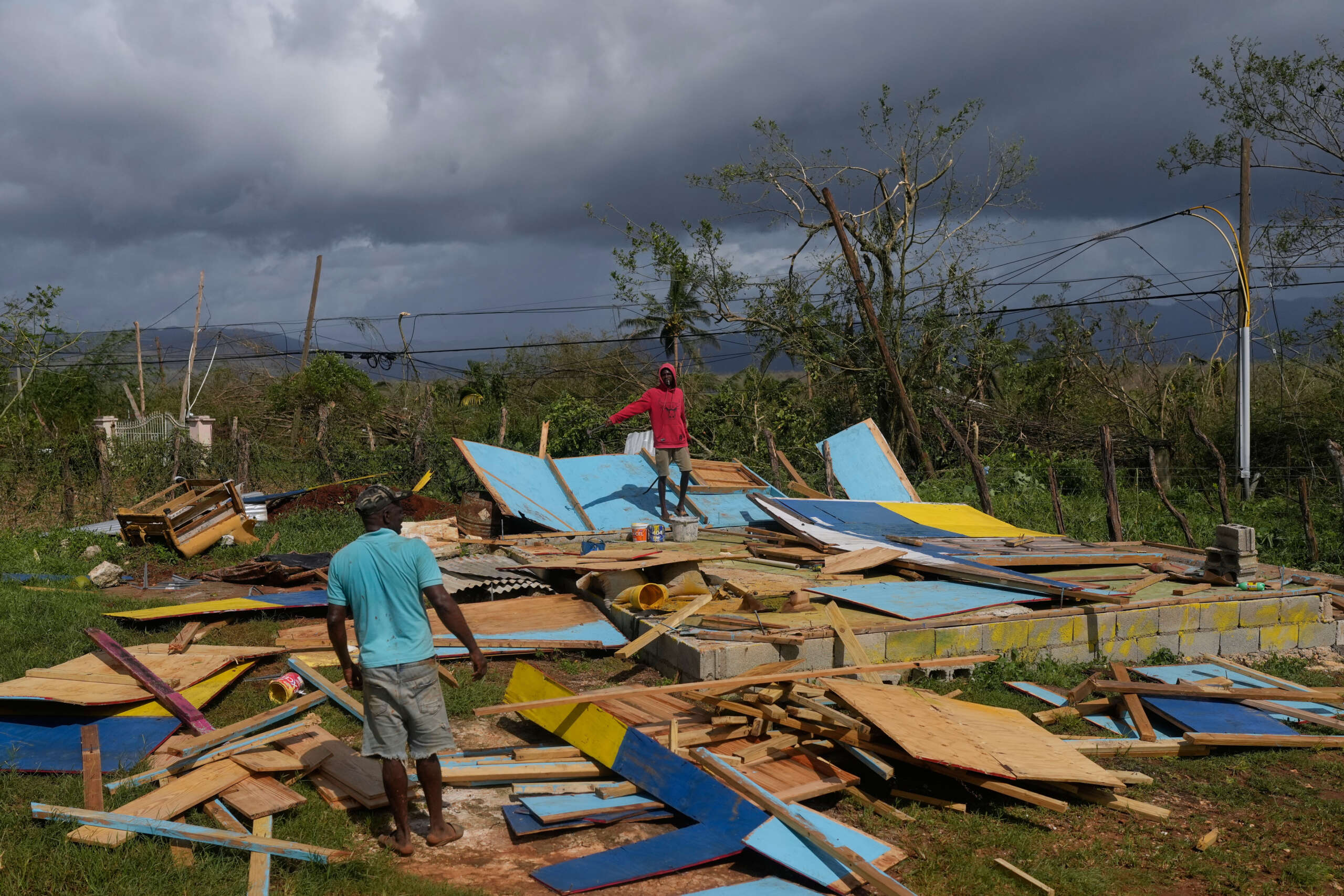
Importantly, neither forecast suggests a quiet or risk-free season. AccuWeather’s warning is particularly relevant: El Niño may lower storm counts, but “it is not a free pass”.
There are two reasons – warm sea surface temperatures still provide the fuel that can lead to rapid intensification, especially in the western Caribbean and Gulf, and fewer storms can still include intense ones, particularly if they form in lower-shear pockets.
Phil Klotzbach, senior research scientist in the Department of Atmospheric Science at Colorado State University, acknowledged that there are “high levels of uncertainty … associated with our early April outlook.”
Related Videos