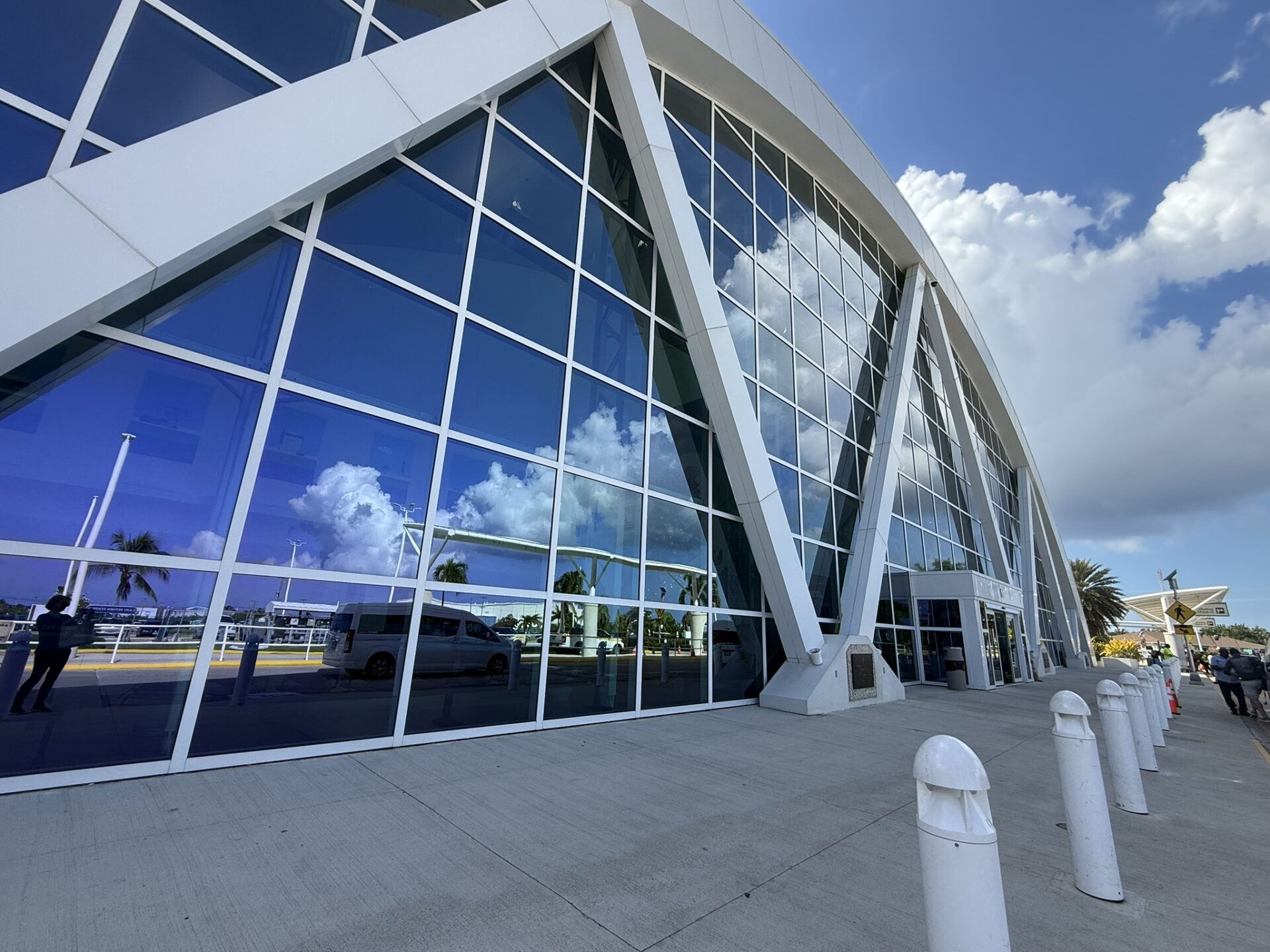
It was a bright, sunny day in Grand Cayman when the Prince of Wales – now King Charles III – arrived in March 2019 to officially re-open Owen Roberts International Airport and mark the end of its extensive renovation project.
After three years of construction work and huge changes – gone, for example, was the iconic and much-loved open-air waving gallery and observation deck on the airport’s second floor, closed to meet international security regulations – the Cayman Islands now had an airport fit for the future.

Premier Alden McLaughlin welcomed politicians, civil servants and guests who had gathered inside the terminal.
“Thank you for your graciousness in accepting our invitation to not only visit our beautiful Cayman Islands, but also for agreeing to officially reopen our airport here in Grand Cayman,” he told Prince Charles and Camilla, Duchess of Cornwall. “The improvements we have made to our airport are to carry us through the next few decades as tourism numbers continue to soar.”
Capacity concerns
The “next few decades” turned out to considerably shorter than expected. Just two years later, the shiny new airport building was already operating at above capacity. It is now seven years on from the royal visit and with record numbers currently passing through the airport, it is clear that something must be done – and fast.
Speaking to the Compass for its infrastructure series, Planning Minister Jay Ebanks described it in blunt terms.
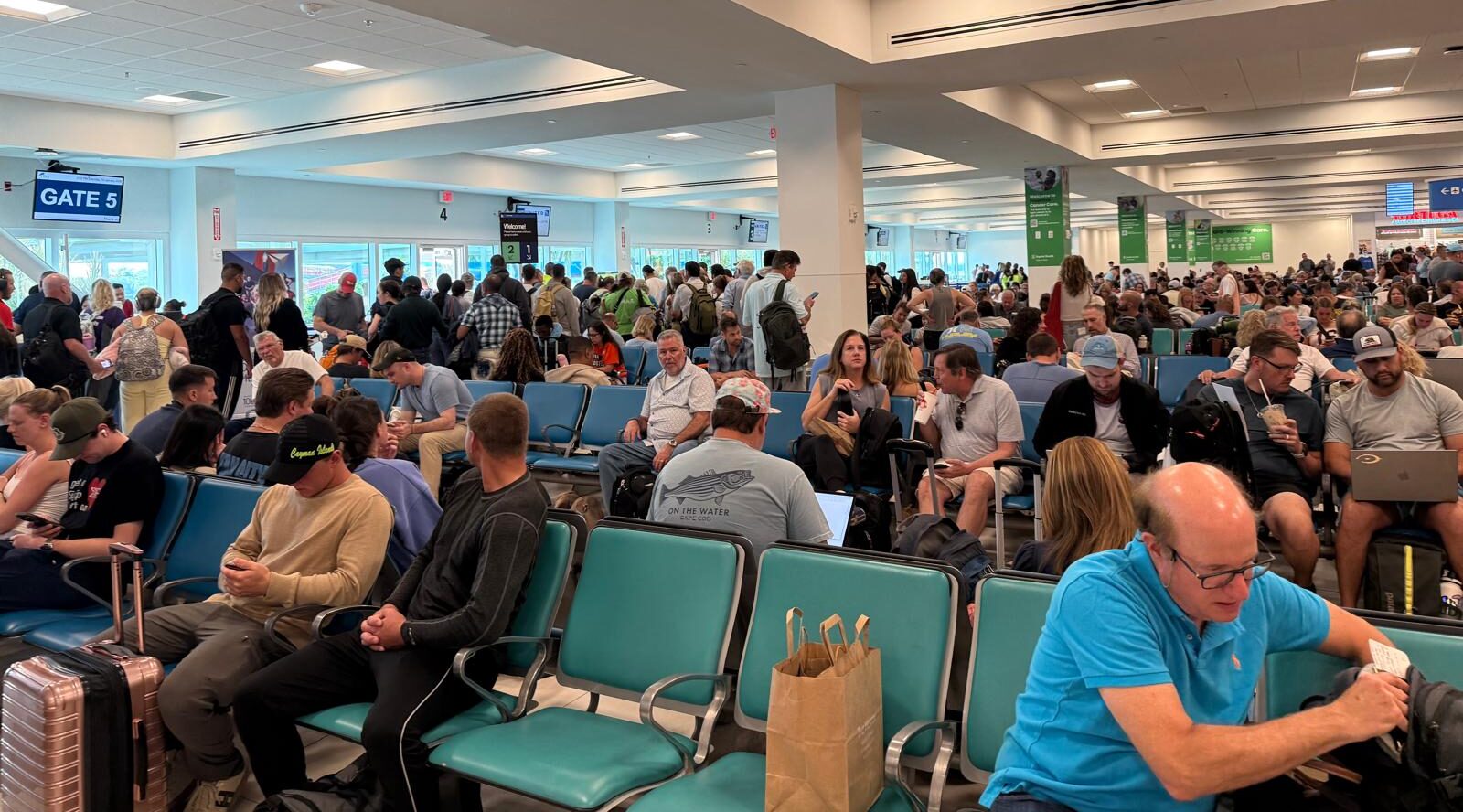
“The main airport is bursting at its seams right now,” he says. “Right now, we’re having, on Saturdays alone, 12 to 13 flights at that mid-peak section.”
He acknowledges that queues can be intolerable, with reports of women having to breast feed infants during the lengthy wait.
“Weekends are the ones that we really sweat the most on,” he admits.
With the soaring air arrival numbers, the airport expansion issue has taken on an air of urgency. The Cayman Islands, known around the world for its financial services industry and as a premium holiday destination, does not want business or leisure travellers to have their first and last impressions of the country to be sullied by a poor airport experience.

Gary Gibbs, executive vice president, development, Dart, said, “Cayman’s competitive advantage lies in being a premium, experience-led destination, and the airport should reflect that from the moment a visitor arrives.”
Hoteliers are particularly sensitive to the possibility of a vacation costing thousands of dollars being ruined by lengthy queues or a crowded departure lounge.
Bram Theeven, commercial director of Cayman’s newest hotel, ONE | GT, said, “As a destination that relies heavily on air travel, Cayman cannot afford for airport infrastructure to become a bottleneck.”
He pointed out that visitors compare their travel experience across destinations and negative reviews can have a big impact.
“If arrivals become congested, baggage processing slows, security queues increase, and overall passenger experience deteriorates, it ultimately impacts the reputation of our destination,” he said.
Hermes Cuello, general manager of Grand Cayman Marriott Resort, agreed. “As a luxury destination, the airport experience must align with the high standards of our tourism product and Caymanian hospitality,” he said. “A modern, expanded airport with world-class facilities is critical to meeting future demand and maintaining competitiveness.”
Need for expansion
With this backdrop, the case for airport expansion might seem cut and dried. If more people are going to come to the Cayman Islands, then there needs to be more room for the planes to land and for passengers to get through the airport without delay.
Deputy Premier and Tourism Minister Gary Rutty is clear about the need for a smooth airport experience. Speaking on the inaugural Cayman Airways flight from Grand Cayman to Austin, Texas last month, Rutty said, “The two ports – the airport and the seaport – are our lifelines in Cayman. When it comes to the airport, we see the demand that’s coming in, we see the numbers, and we have to make sure that our visitors are getting the best experience; get them through customs and immigration seamlessly, get them down to the beach or to see natural attractions, enjoy our people, enjoy our beautiful island, rather than be in the airport.”
Minister Ebanks is of the same view. “We do know that the airport was only built for a certain capacity,” he said. “We know tourism is doing very well. We have to inject more money into it, to get our people through the airport as quickly as possible … and to make sure that they’re not spending two hours in an airport.”
Things can be improved in the short term. Ebanks said that, following the upgrades of the airport security scanners on the departure side, equipment upgrades are coming for arrivals, too, including one that will allow passengers to fill out forms electronically ahead of time. There are also plans to expand the arrivals hall within the existing footprint to get people through faster, and work has already been carried out on improving capacity in other areas, such as increasing parking capacity.
But in the medium to long term, it is clear that dramatic change is needed. The questions now are, what should that change look like? And are we at risk of prioritising increases in traffic without stopping to think about the overall impact?
Soaring traffic
Cayman’s tourist air arrivals for the 2025/26 winter season set records and that trend continued into the spring. In addition, Cayman’s increasing population has meant more residents are travelling through the airport as well.
The year before construction work on the new terminal began, the Airports Master Plan published in 2014 identified the volumes that would trigger the need for another new terminal at Owen Roberts, and predicted that number would be reached in 2028.
In fact, that number was reached in 2019, when just under 1.4 million passengers passed through the airport. While visitor numbers collapsed during the COVID-19 pandemic, the islands are now surpassing the 2019 peak. Last year, the annual passenger numbers topped the 2019 record for the first time, with 1,420,354 people travelling through Owen Roberts airport during 2025.
Increased demand is being met with greater air connectively. Total inbound airlift capacity from the United States, the United Kingdom and Canada for April 2026 increased by 15.1% over the same period in 2025. New direct flight routes from North American cities have been a catalyst for that growth and new additions – such as Cayman Airway’s new direct service to Austin, Texas and BermudAir’s recently announced twice-weekly service between Bermuda, Grand Cayman, and Turks and Caicos, continue to add to Cayman’s ever growing route map.
Strategic vision
The temptation could be to just focus on getting greater numbers of people through the airport faster. But, suggests Richard Nanton of Nanton Aviation Consulting, which provides strategic advice for airlines and the wider aviation sector, this could be the time for a much larger strategic look at what could be achieved by Cayman’s largest airport beyond just being a passenger-processing facility.
“There is no doubt that the airport has reached maximum capacity because you’re seeing constraints at peak times,” he said, “so something needs to be done. But exactly what that is, depends on the vision for the Cayman Islands over the next 20 years.”
The direction of travel can be seen in the current Airports Master Plan, published by the previous government in 2023. This 572-page document laid out plans for the development of all three airports in the Cayman Islands with a total price tag of $491 million.
It also identified some priority ‘sub-projects’, at a total estimated cost of almost $76 million, which were approved by the then Cabinet.
In the medium-to-long term, by far the most expensive job in the 20-year master plan is the Owen Roberts terminal expansion. Summarising the challenges, the report said that Owen Roberts “is currently challenged by a lack of aircraft parking during peak hours, the need for all aircraft to back-track the runway for take-off, and significant pressure on air terminal building processes, such as passenger check-in, outbound security, aircraft boarding, and inbound customs and immigration.”
Long queues
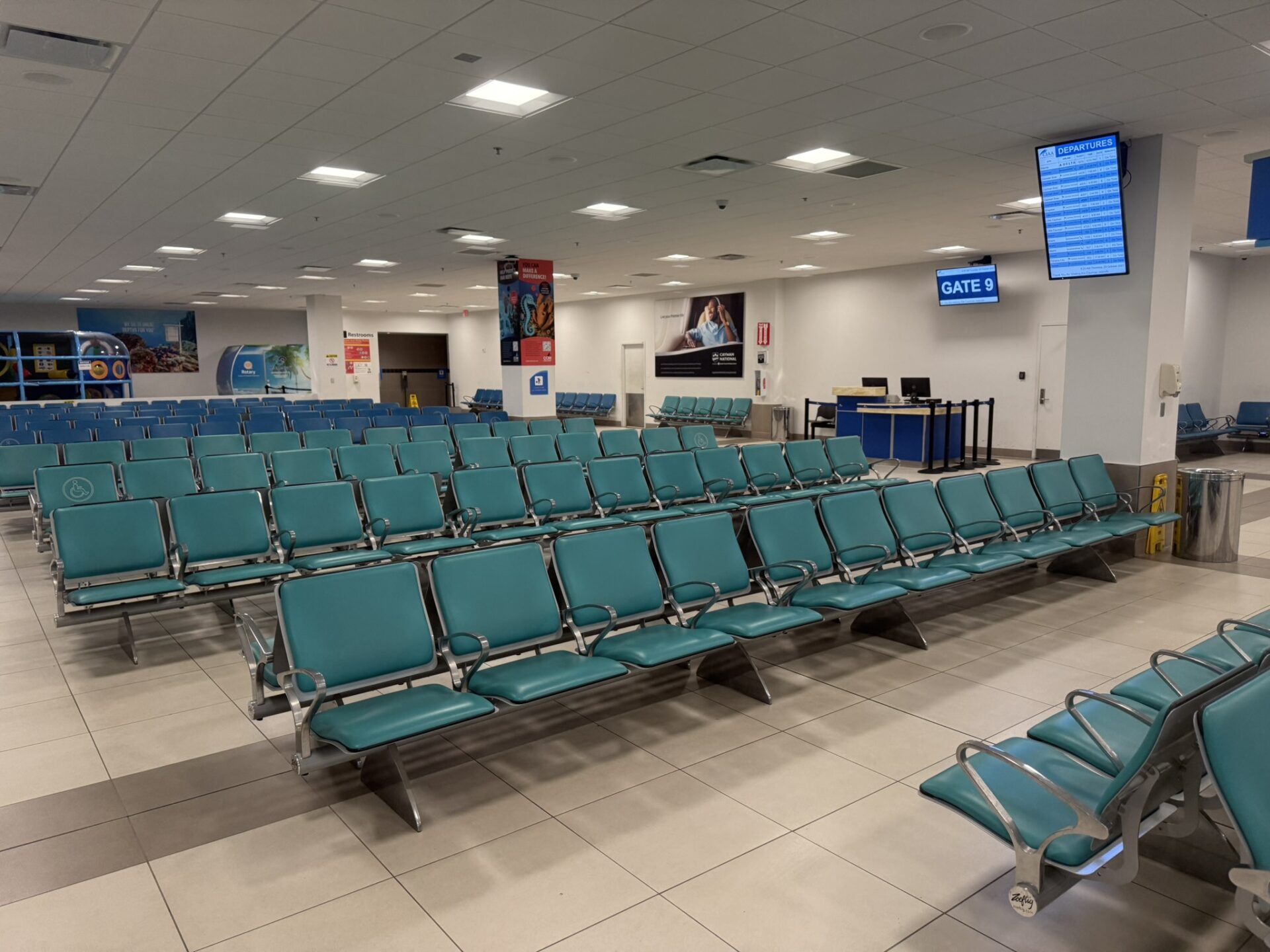
It added bluntly: “The most obvious deficiency of the existing terminal configuration is its inability to process passengers during peak periods … It is common to find departing passengers in long queues at check-in and security, and once through security, there is limited seating or concession space available to accommodate the demand in the departure hall.”
Airlines complained that during peak periods, there were not enough aircraft stands and gates, and said that their passengers needed baggage storage facilities as the majority of tourists check out of their hotels and resorts in the morning and wait for many hours before their flights.
In its submission to the Airports Master Plan published in 2023, the Department of Tourism was clear that any future terminal décor needed to be “less sterile”, adding, “Any aesthetic approach to a new terminal will need to be more unique and indigenous to Cayman [and] a softening of the finishes to make the terminal less ‘cold’.”
With guests checking out of hotels in the morning and often not flying until later in the day, the airport needs to be a welcome destination, it said, with shops, restaurants, entertainment, a business centre and possibly even a 150-bedroom airport hotel. “Passenger experience is key to returning travelers,” it added.
Runway extension
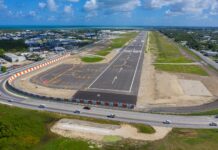
As far as expanding airplane capacity goes, the Airport Master Plan requires the expansion of the main apron and taxiways to accommodate aircraft movements during peak hours and to extend the 7,008-feet-long runway 1,900 feet into the North Sound, at an estimated cost of $28 million. With the project having been identified as one of the four priority projects, progress is being made with government recently issuing Request for Proposal tenders on its procurement platform to assess the environmental impact.
While the proposal has already been met with criticism from environmentalists, the outline business case notes that it is necessary if Cayman is to compete for tourists with neighbouring Caribbean destinations. The longer runway would enable larger-body aircrafts to land, bringing in passengers on long-haul flights from far-flung countries, the document notes.
But Nanton, who has 40 years’ experience in the aviation industry and was raised in the Caribbean, questions whether the goal is purely to bring more and more people into the Cayman Islands. While a bigger runway could arguably increase airlift and therefore passenger numbers, questions remain about the impact might this have on the environment, the tourism industry and the wider economy, and the very character of the Cayman Islands that visitors want to see.
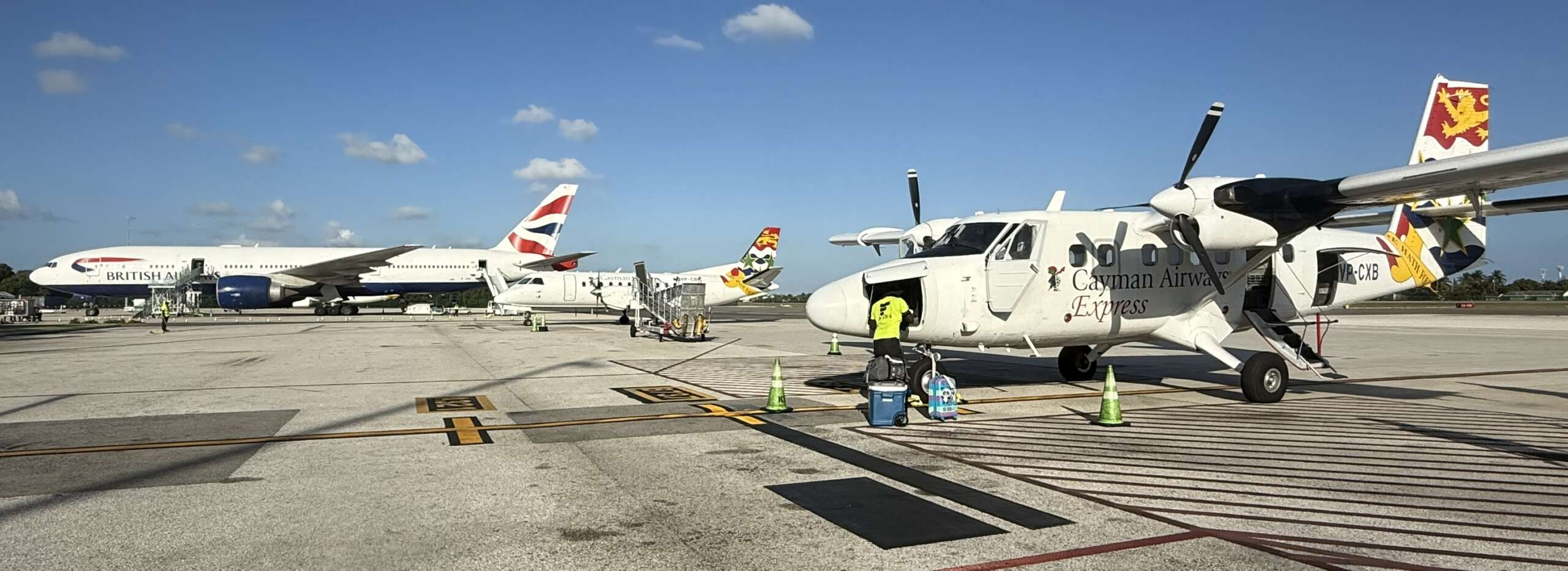
The most successful airport projects are those which think beyond the airport itself, said Nanton. “If you look at something like Changi airport, Singapore didn’t build it just because it wanted a big airport. It built it because it understands where it’s going to be in the future and it understands what the economic growth that piece of transport infrastructure will bring. The big thing about airport investment is that it can’t be just seen as a transport project, but it must be seen as an economic development project which will cut across political parties.”
Nanton said that, rather than looking at number of passengers as a sign of success, the Cayman Islands should look more at the economic investment in the country and spend per passenger instead.
“If you look at the spend per head of the individuals you’re bringing in, that would be a far better metric rather than just a pure throughput of numbers,” he said. “Traditionally, airports are based on movement of people, whereas Cayman is very different. The focus has to be around the spend it’s trying to attract.”
Developing the airport to reduce queues would help increase revenues, he said, but there also needs to be more opportunities for people to spend money in the time they have saved on waiting to go through security.
Airport experience
“It wouldn’t take a lot to replicate the experience, by way of shops and restaurants, that you find on the rest of the island in the airport itself,” he said.
With Cayman pitching itself as the ‘culinary capital of the Caribbean’, for years (until Baru restaurant opened last month), the only food choices at the airport were Wendy’s, Subway and the coffee/drinks concession The Brew Hut, and shopping limited to duty free and souvenirs.
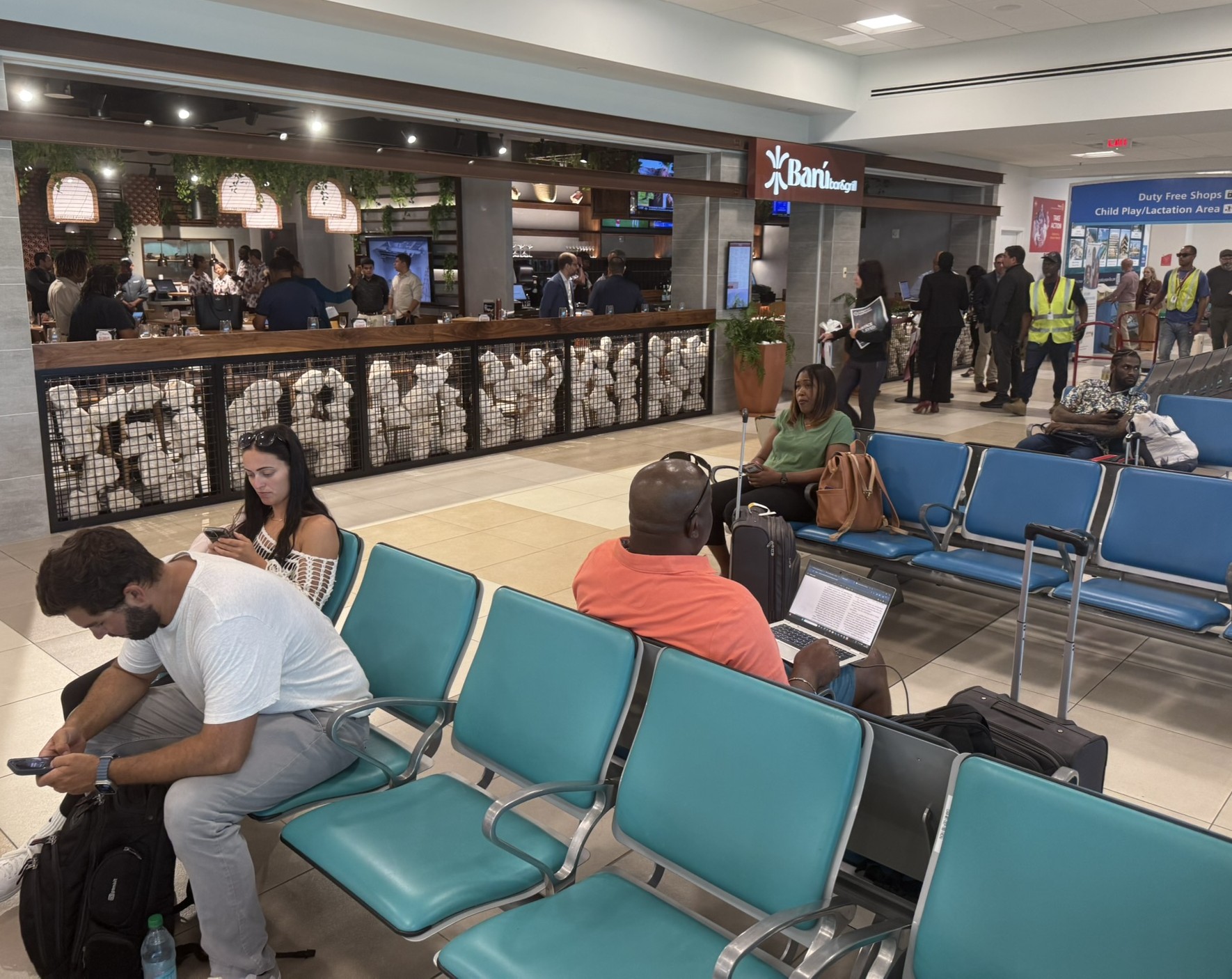
ONE | GT’s Theeven agrees: “The goal should be to provide an experience that reflects Cayman’s position as a premium tourism destination. High-quality lounges, food and beverage offerings, retail and passenger amenities should be part of the experience, but they should complement efficient passenger processing rather than compensate for inefficiencies.”
Nanton said, “If you look at the really successful airports, they become centres of economic interest in just themselves, and that’s why I say this has to be seen as an economic project rather than just a standalone transport project.”
Regional competition
Nanton added that Cayman will never be able to compete with a regional hub like Panama, Miami or Atlanta because it doesn’t have the space, the local population or the traffic flow, in terms of geographical position. It also doesn’t have a major airline serving the region, such as Copa Airlines in Panama, which operates more than 100 planes. Cayman Airways by comparison has just four, plus the inter-Cayman express service. ”
Instead, he says, the need is to build an airport that tracks the fundamentals of the Cayman economy, which is high-net worth individuals and high-end tourism. “Basically, what has to happen is Cayman needs to focus on what Cayman is really good at.”
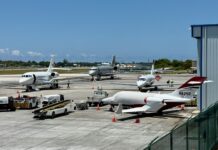
That includes prioritising upgrades to the General Aviation Terminal, which brings in the high-spending, high-net worth individuals, and making the main airport terminal something that stands out from the rest of the region.
“It doesn’t have to have the opulence of Dubai,” said Nanton, “but it does mean it has to be above a standard airport within the Caribbean, and that requires new thinking. It requires an innovation of change and it’s about making it an experience, not just a transport project”.
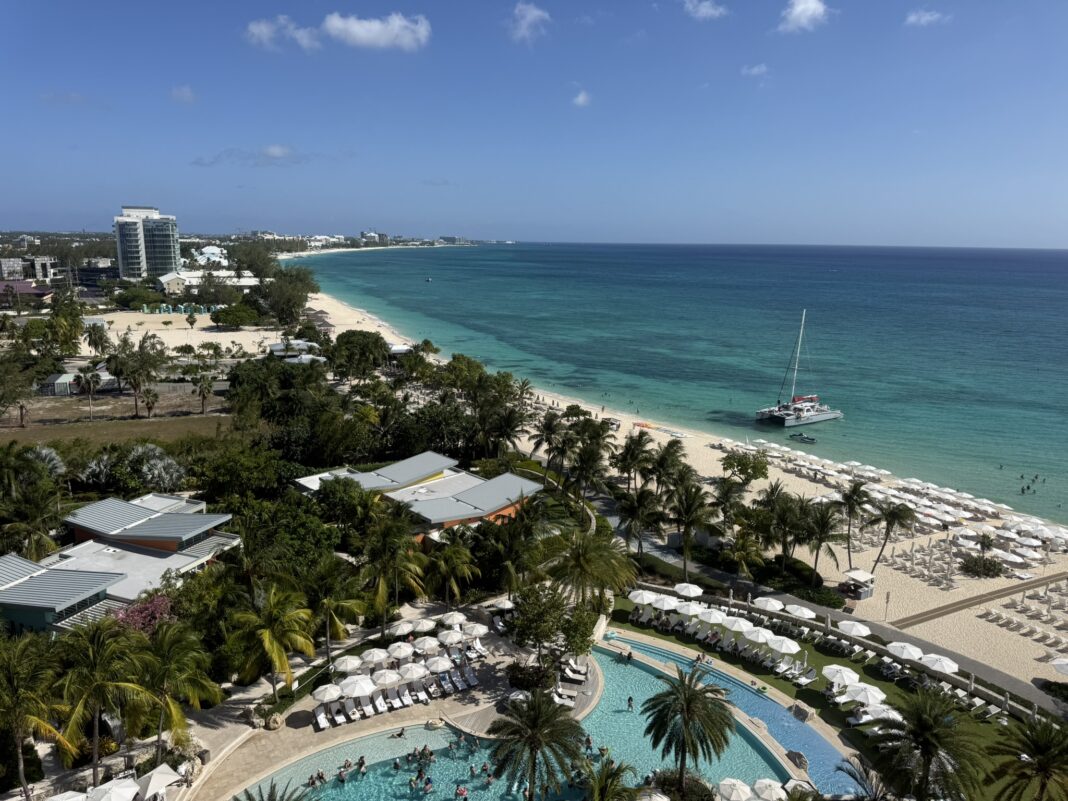
While one of the arguments for extending the runway is to attract more long-haul passengers from Europe, the passenger numbers might bear closer examination. The British Airways flight from the UK only runs five times a week and stops at Nassau, Bahamas, to share traffic with that destination. Nanton says that there is the chance that other European destinations, such as Germany and Switzerland, could combine to provide another service, but otherwise he questions whether demand would be there.
Said Dart’s Gibbs, “Runway expansion should ultimately be evaluated through a clear lens of demand and long-term value. While improved runway capability may support additional long-haul connectivity, infrastructure does not create demand, it must be aligned with the broader visitor proposition. The priority should be ensuring that every dollar invested delivers tangible improvements to Cayman’s competitiveness as a destination.”
More evidence could be needed. Theeven from ONE | GT said, “The runway extension should be evaluated based on long-term strategic value. If it allows Cayman to attract additional direct service from key markets that are currently difficult to serve efficiently, it should be seriously considered.”
Others are more optimistic though. The Marriott’s Cuello said, “Extending the runway will allow for greater diversification of source markets, strengthening connections with Latin America and Europe, including the UK and Germany, similar to successful models in destinations like Barbados.”
Quality or quantity
Fundamentally though, said Nanton, Cayman has to consider what it is aiming for. Is it purely the increase in tourism numbers? In which case, he says, that’s a different economic case entirely.
“If you just say, ‘We want more people to come,’ then you lose your unique selling point and just go for mass tourism,” he said. “You now start to wash away at the main pillars of the economy of the Cayman Islands, that of being more of an exclusive tourism destination.”
Extending the runway, in his opinion, would not necessarily increase the number of wide-bodied aircraft that would land, but would give greater flexibility to airline operators, both in future aircraft design and in allowing the larger private jets to operate in higher temperatures.
With the current capacity constraints already affecting passenger experience, and with traffic numbers set to increase further, there is an argument to be made that dealing with the airport experience – both the main terminal and the private jet facility – rather than focusing on the runway expansion and targeting yet more traffic, might be a better priority.
“The opportunity is to create a “frictionless, high-quality” airport:,” said Gibbs, “one that moves people seamlessly while also offering a Cayman-specific experience that reinforces the island’s brand. Delivering thoughtful, right-sized amenities that support both experience and commercial performance is critical. Done well, the airport becomes more than infrastructure—it becomes an extension of the destination itself, with both experiential and revenue benefits.”
Getting it right could be crucial, not only for visitors, but for future investment across the islands.
“I believe investors and businesses need confidence that the country’s infrastructure will keep pace with its ambitions,” said Theeven from ONE | GT. “Airport expansion is part of that broader confidence.”
“The question isn’t whether we need the capacity eventually; it’s whether we build it before it becomes a constraint,” he added. “We’ve all seen what happens when infrastructure falls behind growth. Whether it’s roads, utilities or airports, it’s much harder to catch up later … waiting until capacity constraints become severe is usually too late.”
Related Videos