Cayman’s part-time soldiers went full on in a gruelling series of exercises designed to prepare them for disaster relief work.
Troopers from the Cayman Islands Regiment practised their skills over nearly two weeks, including the rescue and emergency treatment of casualties with simulated serious injuries.
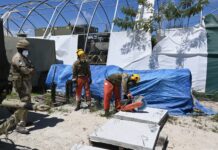
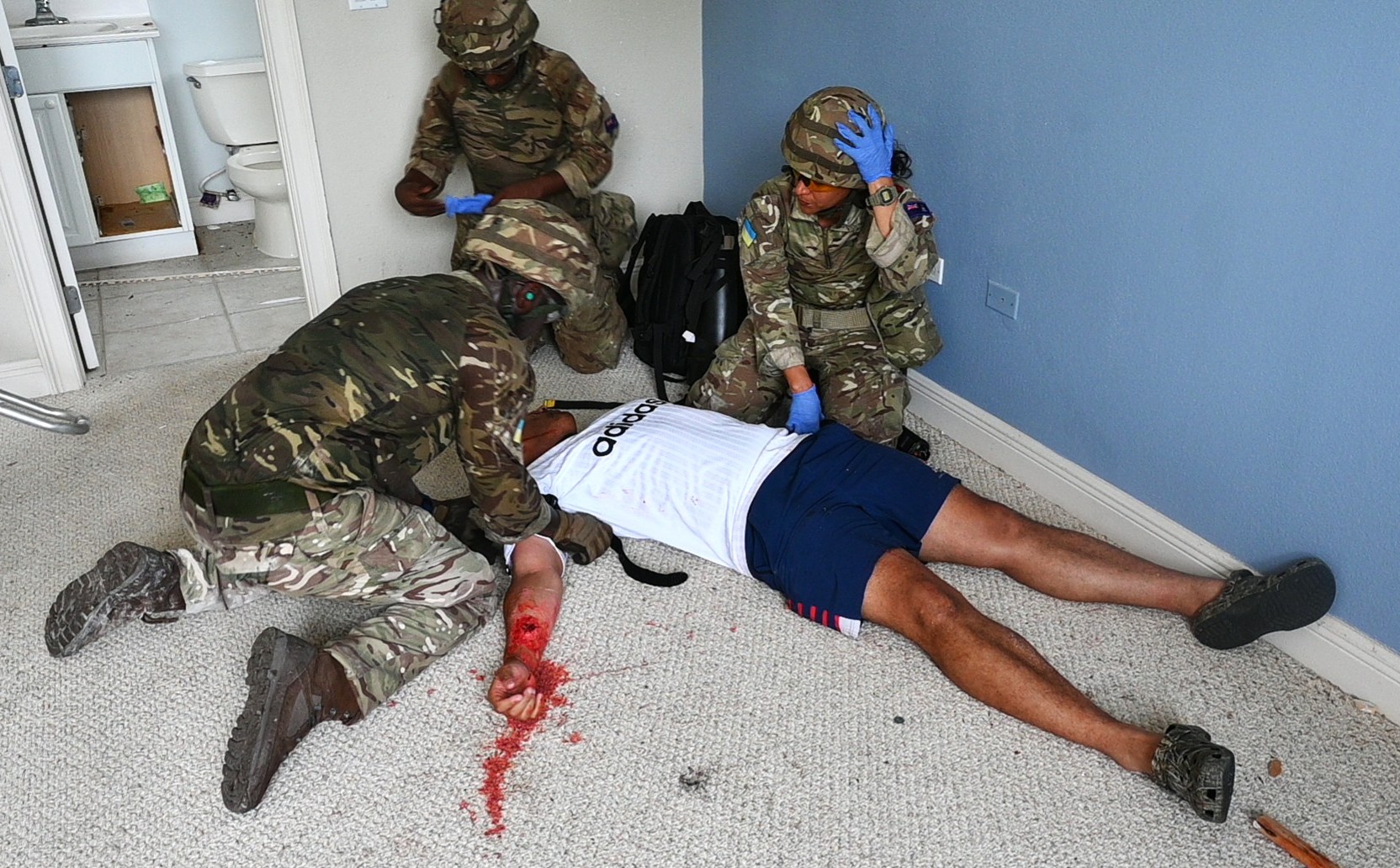
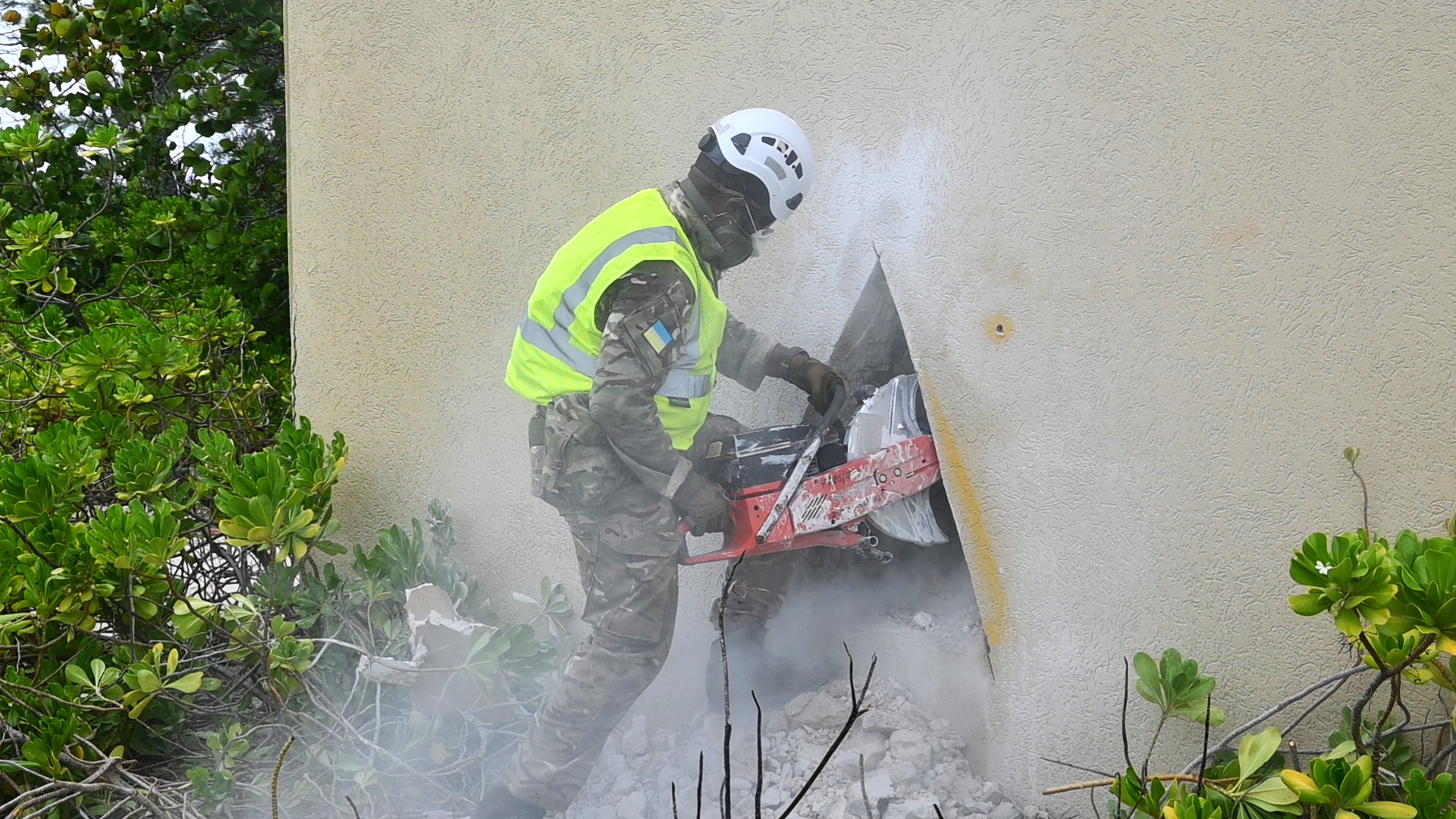
In one exercise, soldiers broke through the wall of a disused house in East End’s Barefoot Beach area to rescue and treat casualties, one a mannequin with crushed legs and severe bleeding and the other, a soldier playing a casualty, badly injured by flying glass.
The troopers treated them at the scene and used the regiment’s own go-anywhere Unimog ambulance to get the injured to hospital.
Lance Corporal Malaqui Awe, who works in financial services at law firm Maples, led the team of engineers and medics involved in the rescue.
Awe, who underwent training at a hi-tech US Marine Corps’ medical centre at Camp Lejeune in the US last year, said afterwards, “We’re relieved we were able to evacuate both casualties. It was a lot of work. I’m tired, my team is tired, but it’s a good feeling that we were able to complete the task.”
She said the scenario called for the team to “break and breach” a wall to get inside a badly damaged house and that as leader she had to ensure the safety of the rescuers as well as the injured.
Awe added that she was “very confident” that, in the event of a real disaster, the regiment was well-placed to make a significant contribution.
She explained that troopers were trained in search and rescue, humanitarian aid and disaster relief and could also field trained medics.
Awe said, “We train very hard and the way we set our teams is all of our troopers have different skill sets, so we try to build our teams around those skill sets.”
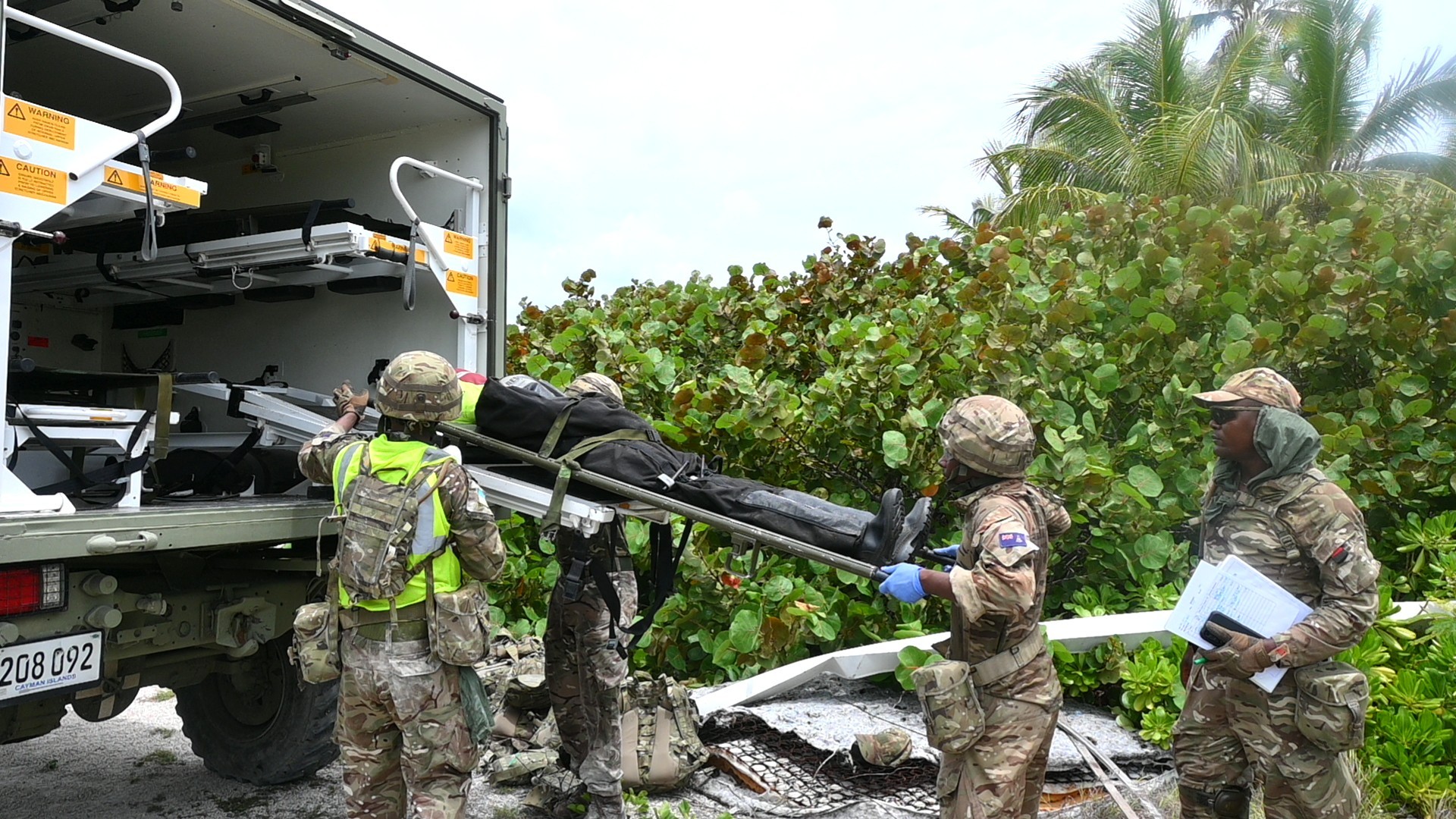
The exercise was carried out under the eagle eye of Dr. David Kwinter of Doctors Hospital, a volunteer member of the Commanding Officer’s Advisory Group, civilians who lend their expertise in specialist fields to the regiment.
Kwinter, a family and emergency physician, said, “They were outstanding. They properly assessed that there was a patient with a massive haemorrhage and applied tourniquets immediately.”
He added that the other patient, a regiment officer posing as a casualty, was not as badly injured, but was still treated for severe bleeding and breathing problems.
Kwinter said the rescue team got the casualties “to a high level of care without delay and without anyone else getting injured and they did it in a difficult environment, literally after cutting a hole through a concrete wall and getting the stretchers in and out”.
He added, “It’s a lot for them to manage smoothly and they did a great job”.
Trooper Shavar Rose, a warehouse worker in civilian life, led the engineering team that found a way into the building, which was said to be badly damaged and hazardous on two sides.
Rose, 30, said the hardest part was working out the best and safest way to get inside the building without causing further injury to the people inside.
“I think the regiment is something that the Cayman Islands needs, especially in a disaster,” he said.
Corporal Rob Eyers, who runs a tech firm and will travel to the UK later this year to train as an officer at the British Army’s Sandhurst military college, was part of the command team at the regiment’s camp at Barefoot Beach.
He said the regiment’s headquarters at the Agricultural Grounds in Lower Valley was simulating the National Emergency Operations Centre, which would be activated for a real disaster.
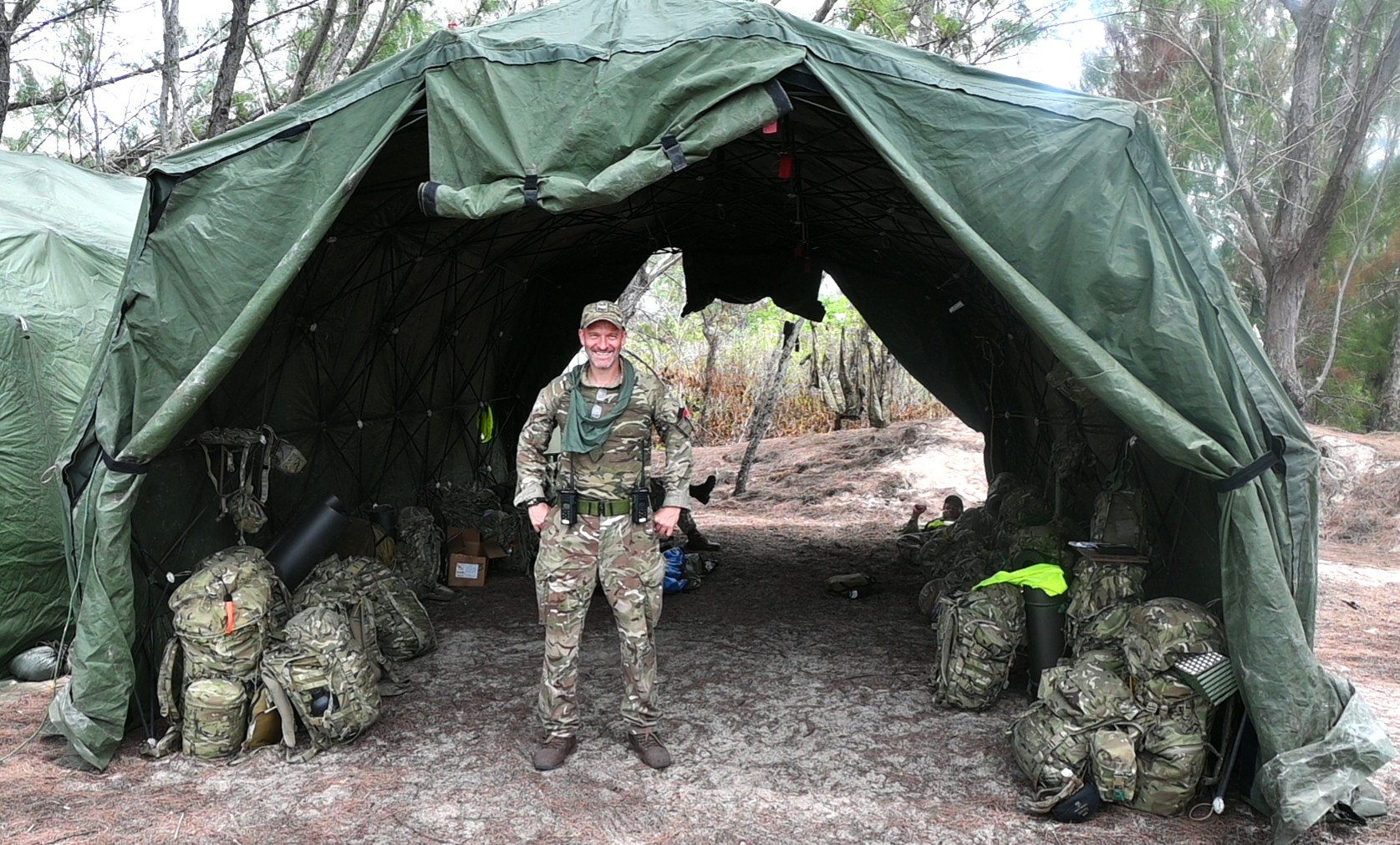
Eyers said that other troops had taken part in an exercise where urgent medical supplies had been dropped by helicopter in the wrong place and been swept away by a torrent before getting stuck on an embankment.
The soldiers had to cross rushing water, recover the cargo from the other side and transport it to a hospital.
Trooper Demiko Dracket-Carrey, who normally works at regimental headquarters in administration and finance, said, “We had to go across the gap and get the cases. “We successfully retrieved them and no one was lost in the current.”
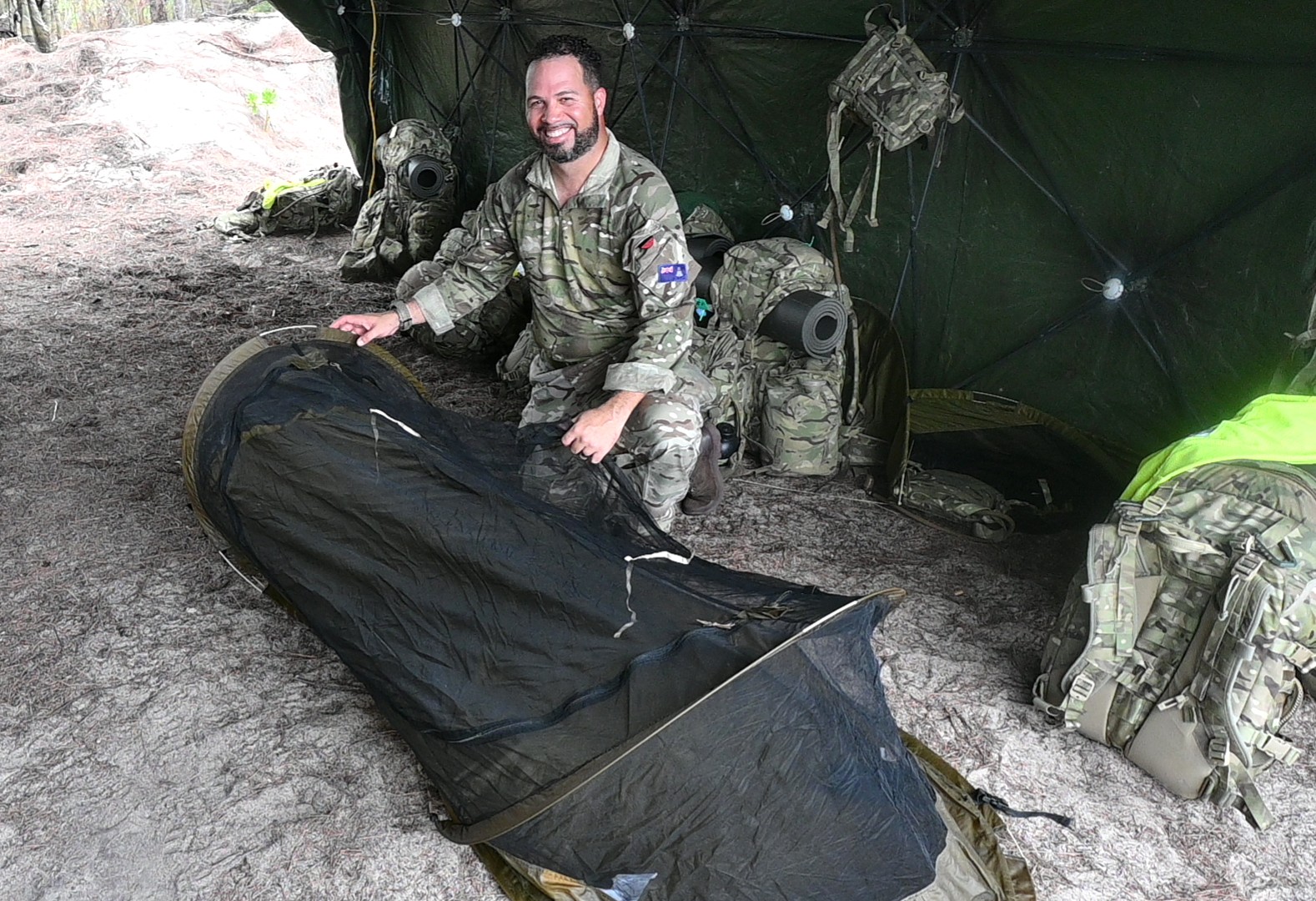
He added that military training built confidence and improved problem-solving abilities.
“It’s free training and we get paid to do it,” Dracket-Carrey said. “There aren’t a lot of places that do that.
“You also get to form friendships with a good group of people. All in all, it’s a great experience and I’d encourage anyone considering joining.”
The main camp was also home to the regiment’s Falcon mobile command unit, equipped for tactical communications, including a Starlink internet connection, as well as for coordination and surveillance.
Communications specialist Lance Corporal Gavin Baxendale said, “It’s the nerve centre of regiment operations in the field.”
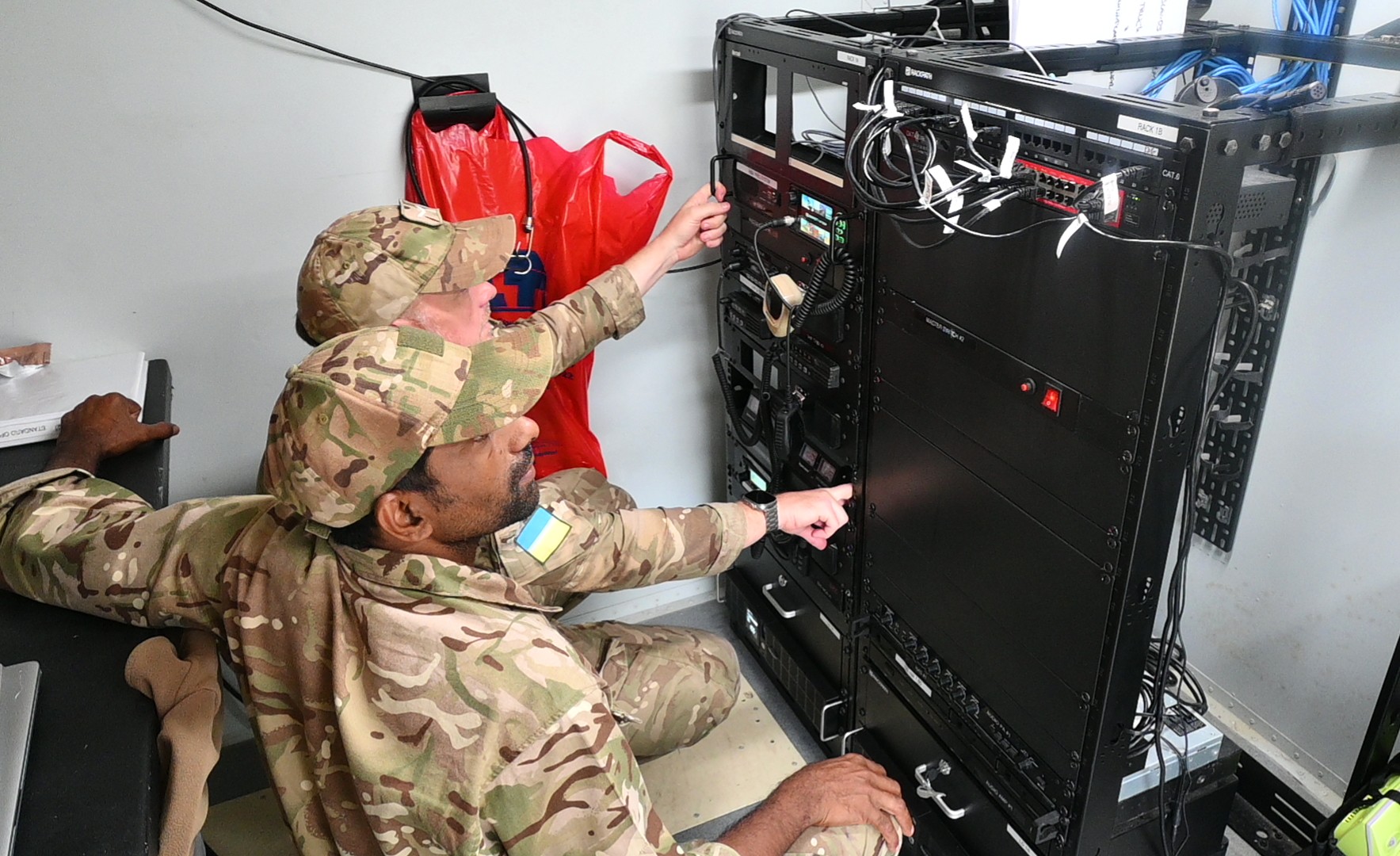
He added, “It’s also shared among other agencies, including police and hazard management.
“The regiment works closely with partner agencies and supports them when needed.”
Related Videos