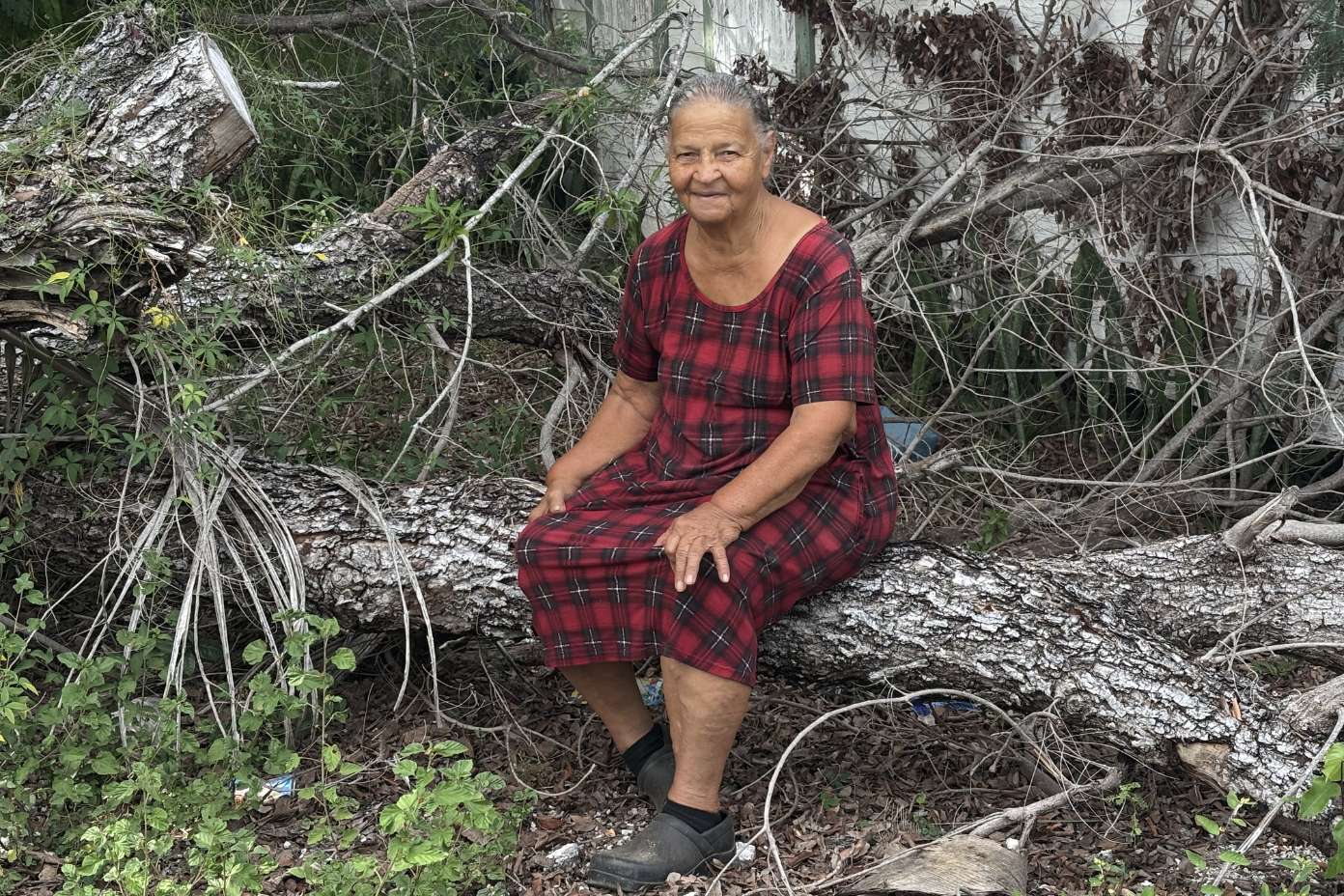
For nearly 60 years, Joy Ebanks has built a livelihood doing work few Caymanian women of her generation would dare to pursue – raising pigs, goats, chickens, rabbits, turkeys and cattle on her West Bay farm.
She bought her first pigs at 19 because, as she puts it, she “wasn’t doing anything”. A handful of animals grew into a herd of about 60 before fellow farmer Kent ‘Biggie’ Rankine bought them all. Years later, she sold her entire goat herd just before Hurricane Ivan. Each time, she began again.
“It’s like a sickness,” she says with a laugh. “It go and it come.”
Today, at nearly 80, she has become one of Cayman’s most respected livestock farmers, regularly consulted by politicians and policymakers on agricultural issues and earning repeated top honours at the Cayman Islands Agricultural Society’s Agriculture Show.
Women farmers a small minority
Farmers like Ebanks have become increasingly rare. According to the 2024 Compendium of Statistics, women remain a small minority in Cayman’s formal agriculture and fishing sector. Just 41 registered women work in the industry, compared with 256 men, accounting for only 13.8% of the workforce.
Ebanks says she never set out to become a pioneer. Yet, by building a career in a field few women entered, she helped show what was possible.
“I was always kind of like a tomboy,” she says. “I used to be different from the rest of the women.”
Today, that example is finding new expression in a younger generation of women whose contributions extend beyond the farm itself. They are introducing new technologies, applying research, influencing policy and re-imagining what farming can look like.
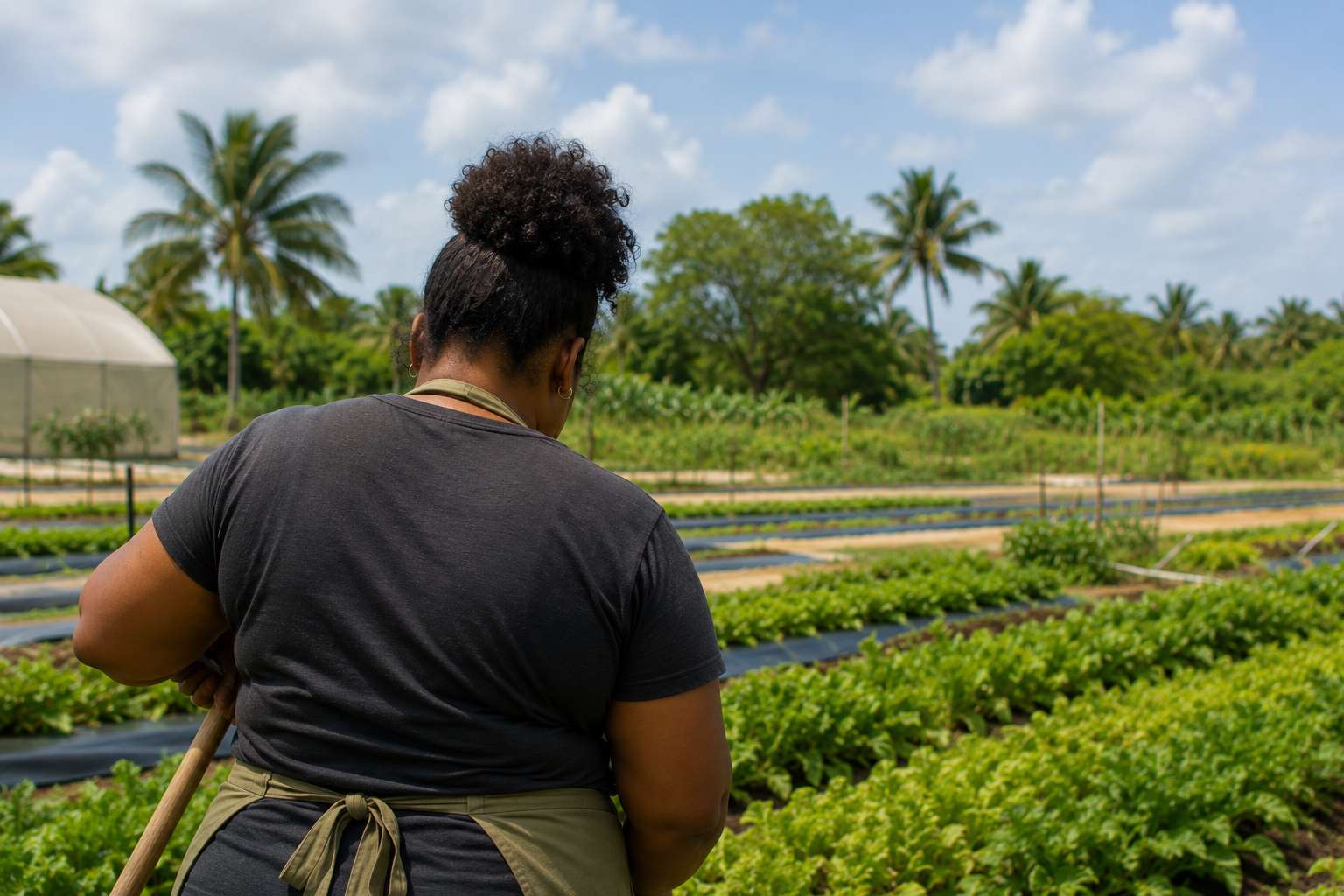
For 26-year-old Monique Barrett, farming begins when her first job ends. After a full day in the civil service, she heads to her Bodden Town farm, balancing motherhood and family life with the demanding work of building a business and introducing a new hydro-farming technology to Cayman.
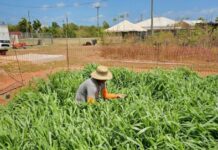
Before sunrise on Sundays, she is already checking seedlings, inspecting crops and feeding animals. Beside traditional vegetable beds, her new technology is taking shape, while chicken coops she and her husband built together stand nearby. Every addition is aimed at making the farm more productive, efficient and sustainable.
“I’ve always loved farming,” Barrett says. “There’s nothing more rewarding than planting a seed and watching it produce food.”
Barrett speaks as comfortably about hydroponics and food security as she does about tomatoes and pumpkins. For her, farming is about more than growing food. It is about making the Cayman Islands more resilient by producing more of what it consumes locally.
Family affair
That vision has become a family effort. Much of the farm’s infrastructure was built by her husband, a welder who threw himself into the project despite having no agricultural background.
“He told me, ‘I’m not a farmer, but I’ll help you build,'” she recalls.
His support has helped build the farm, but it has also highlighted two of the biggest barriers Barrett believes many women face in agriculture: the physical demands of the work and the challenge of balancing childcare.
“If I didn’t have my husband,” she says, “I don’t know if I would be able to do this.”
When she heads to the farm, her young daughter stays with her grandmother.
“That’s my village,” Barrett says. “If I had to watch her while trying to plant or work, I couldn’t focus because I’d constantly be worried about her getting hurt or wandering into the water or mud.”
Like many women, Barrett relies on a support network that makes farming possible. That labour, much of it unpaid and largely invisible, has long shaped women’s contribution to agriculture.
Historical perspective
While official statistics suggest women play only a small role in Cayman’s farming sector, history tells a different story.
The UN Food and Agriculture Organization has increasingly recognised that disconnect by broadening its focus from farming to entire agri-food systems, recognising women’s roles in everything from unpaid family labour to food processing and cooking.
That broader perspective is particularly relevant to Cayman’s history, where generations of men spent months or years at sea while women raised families, cultivated provision grounds, cared for livestock and kept food on the table.
That history remained visible well into the late 20th century. North Side citizen historian Kenny Ebanks recalls his grandmother’s generation maintaining the Cayman tradition of ‘provision grounds’ – small family plots that supplied households with staples.
He remembers Clarice Whittaker of Old Man Bay continuing to cultivate her family’s provision ground in Hutland well into her 80s, and says similar traditions persisted across Bodden Town, East End, North Side and Cayman Brac long after many assumed they had disappeared.
Historians say those long absences helped shape the Islands’ distinctive matrifocal culture, with women assuming responsibility not only for households but, unusually, for land ownership.
The 2006-07 National Assessment of Living Conditions identified a rare pattern in Cayman: family land often passed from mothers to daughters and grandmothers to granddaughters, with women retaining ownership across generations. That contrasts sharply with much of Latin America, where the UN Food and Agriculture Organization says women own just 10% to 30% of agricultural land and often receive smaller, less productive plots than men.
Joy Ebanks is part of that history. She inherited both land and a farming tradition, growing up in one of Cayman’s seafaring families, where her father, Captain Cadian, captained turtle boats.
She recalls that women without land often found other ways to farm.
“My sister used to farm as well,” she says. “If women didn’t have land of their own back then, they used to get permission from people to use the land to farm on.”
Today’s women have followed different paths into agriculture. While Monique Barrett purchased land with her husband, Jennifer Bodden, 62, says her success has also been built on partnership.
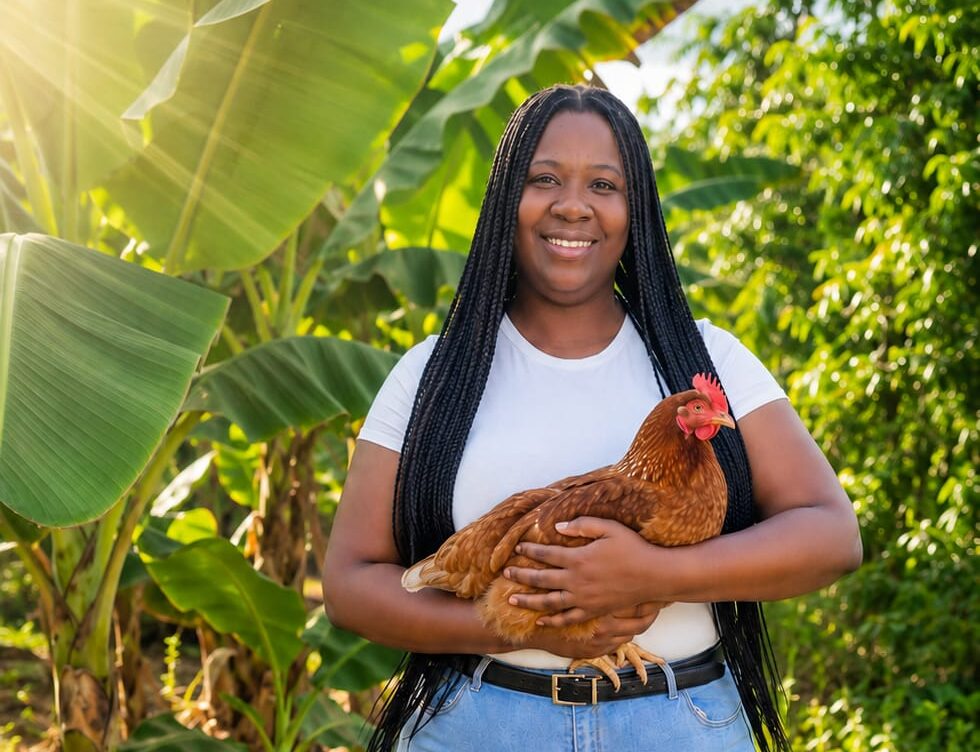
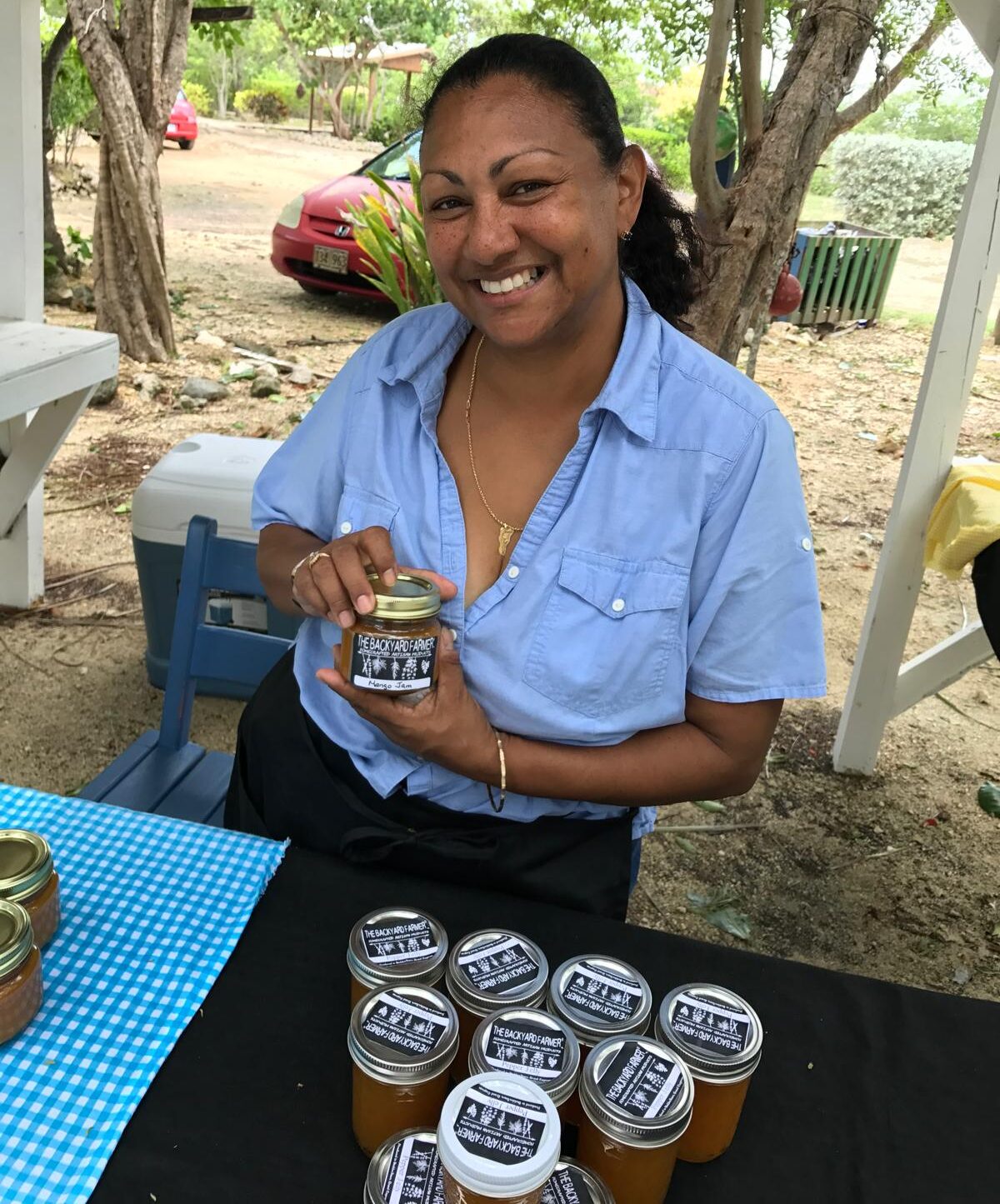
Together, she and her husband, George Bodden, have transformed their 4.5-acre Bodden Town property into The Backyard Farmer, one of Cayman’s most diverse farms, supplying eggs, poultry, goats, fruit and vegetables to local customers and restaurants.
Around the farm, George is known as ‘Farmer George’ and Jennifer as ‘Garden Girl.’ He oversees the livestock, while she jokingly describes herself as head of “research and development”.
It’s a fitting title. She imports heirloom seeds, trials new crop varieties and meticulously tracks production, evaluating each season before planning the next.
“My MBA didn’t teach me how to farm,” she says. “It taught me how to run a farm as a business.”
Challenges from climate change, pests and cheap imports
For Bodden, resilience is less about enduring hardship than anticipating it. As the climate changes, she believes farmers can no longer afford to rely on traditional methods alone.
“I’m constantly testing new fruit and vegetable varieties that people assume can’t grow in Cayman,” she says, describing adaptation as an essential part of farming in a changing climate.
Over the past two decades, she has watched the agricultural landscape change. Crops once considered unsuitable for Cayman are becoming viable, while familiar growing seasons are shifting, pests are changing and farmers are being forced to constantly adapt.
Those pressures are being felt across the industry. While women farmers often face the same climate-related challenges as their male counterparts, many are also balancing those demands with caregiving responsibilities and limited resources.
Environment Minister Katherine Ebanks-Wilks has said climate change places an additional burden on women because they continue to shoulder much of the responsibility for caring for their families and ensuring there is food on the table.
“As we navigate the challenges posed by climate change, we must recognise the unique impact it has on women in the agricultural sector globally and locally,” she says.
“Disrupted growing seasons and soil degradation impact everyone in agriculture, but the consequences for women are often more severe due to their limited access to resources when compared to men in the industry.”
For farmers like Barrett, those pressures are compounded by the economics of farming.
“I want Cayman to support local farmers,” she says. “We go through so much to grow food and then sometimes struggle to sell it.”
She knows shoppers compare prices, but wishes more people understood what goes into a $3 head of lettuce. Seeds, fertiliser and equipment must be imported, while water, electricity and labour all add to the cost. Then, there are floods, pests, disease and hurricanes.
“You can invest thousands of dollars into a crop and then lose everything,” she says.
Ebanks has faced similar pressures. She says inexpensive imported eggs have made it increasingly difficult for local producers like her to compete.
Those experiences reflect broader challenges facing women in agriculture, according to Department of Agriculture Director Wilbur Welcome.
“Many women farmers face challenges such as limited access to land, financing, best pest-management practices and technical support, as well as balancing farm and family responsibilities, which place additional pressures on their daily lives,” he says.
Those challenges have drawn increasing international attention. The United Nations has designated 2026 the International Year of the Woman Farmer, recognising women’s contributions not only to farming but across the wider agri-food system.
Food security
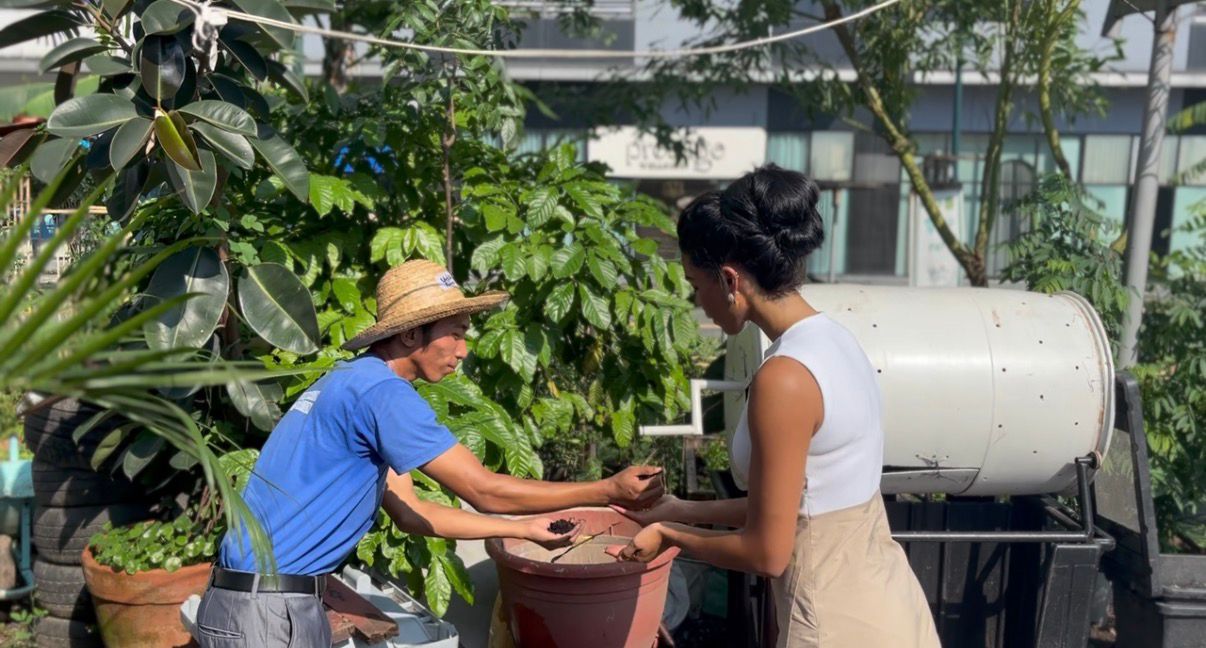
For 23-year-old Miss Universe Cayman Islands 2025, Tahiti Seymour, that conversation often begins away from the farm. Though she is not a farmer herself, she has emerged as one of Cayman’s leading advocates for food security.
Seymour devoted her undergraduate dissertation to food security in small island states. She also served as Caribbean Youth Leader for the United Nations-backed #Act4Food #Act4Change campaign and made food security the platform she championed during the Miss Universe Cayman Islands competition.
She believes one of agriculture’s biggest challenges is visibility.
“It’s possible that farming is perceived as a traditionally masculine role,” she says. “Growing up, I didn’t learn about agriculture on a deeper level in the classroom, much less see many women recognised as forces in the field.”
For Seymour, encouraging more women into agriculture is about far more than increasing numbers. It is about ensuring women are recognised as leaders, innovators and decision-makers across the food system.
“It’s important for women and all people to appreciate and contribute to the success of farming,” she says. “It gives representation for young girls aspiring to be part of the sustainability dialogue.”
Agricultural officials say that representation is also a matter of food security.
Department of Agriculture agronomist Claudette McKenzie-Bowen says female farmers play a vital role in feeding families, adding value to local produce and strengthening communities.
“Women farmers play a vital role in the Cayman Islands agriculture system as they are the nurturers of the family and matriarchs in their communities,” she says.
McKenzie-Bowen believes women also often bring a strong focus on sustainability, crop diversification and soil health, qualities that will become increasingly important as Cayman adapts to climate change.
Reclaiming space
There are already signs women are beginning to reclaim space in Cayman’s agricultural sector.
In 2025, three women were among the first seven Caymanians awarded land through the government’s 100-acre High Rock Agro Park Land Use Licence Programme, which Agriculture Minister Jay Ebanks described as “a new era of farming” driven by innovation, sustainability and resilience.
For Barrett, the next step to get more women into farming is mentorship.
“There are female farmers with years of experience who are always encouraging me and telling me, ‘You can do this,'” she says.
Bodden believes the biggest barrier is perception. Through social media, she encourages people to start with a few pots of tomatoes, herbs or lettuce rather than waiting until they own acres of land.
“The easier we make it for people to get started, the more women we’ll encourage into farming,” she says.
Joy Ebanks agrees that attitudes, not ability, are often the greatest obstacle.
“No, no, no,” she says when asked whether being a woman ever held her back.
Instead, she laughs, too many women believe farming is dirty work.
“A lot of women are afraid of animals,” she says. “They don’t want to go out into the sun.”
Perhaps that is changing.
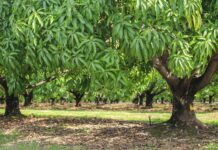
The women reshaping Cayman agriculture today do not all look alike. One raises livestock. Another experiments with hydro-farming. One manages hundreds of fruit trees. Another champions food security from the international stage.
Not every woman will own a commercial farm. But the modern woman farmer also includes backyard growers, food processors, entrepreneurs, scientists and community leaders, all helping strengthen the local food system.
As the United Nations marks 2026 as the International Year of the Woman Farmer, Welcome says Cayman has an opportunity to build on that momentum.
“Strengthening opportunities for women farmers will enhance the overall resilience, productivity, and future of the Cayman Islands farming community,” he says.
Related Videos