Hundreds of schoolchildren across Grand Cayman and Cayman Brac have been given their own little robots to help boost their critical thinking and coding skills.
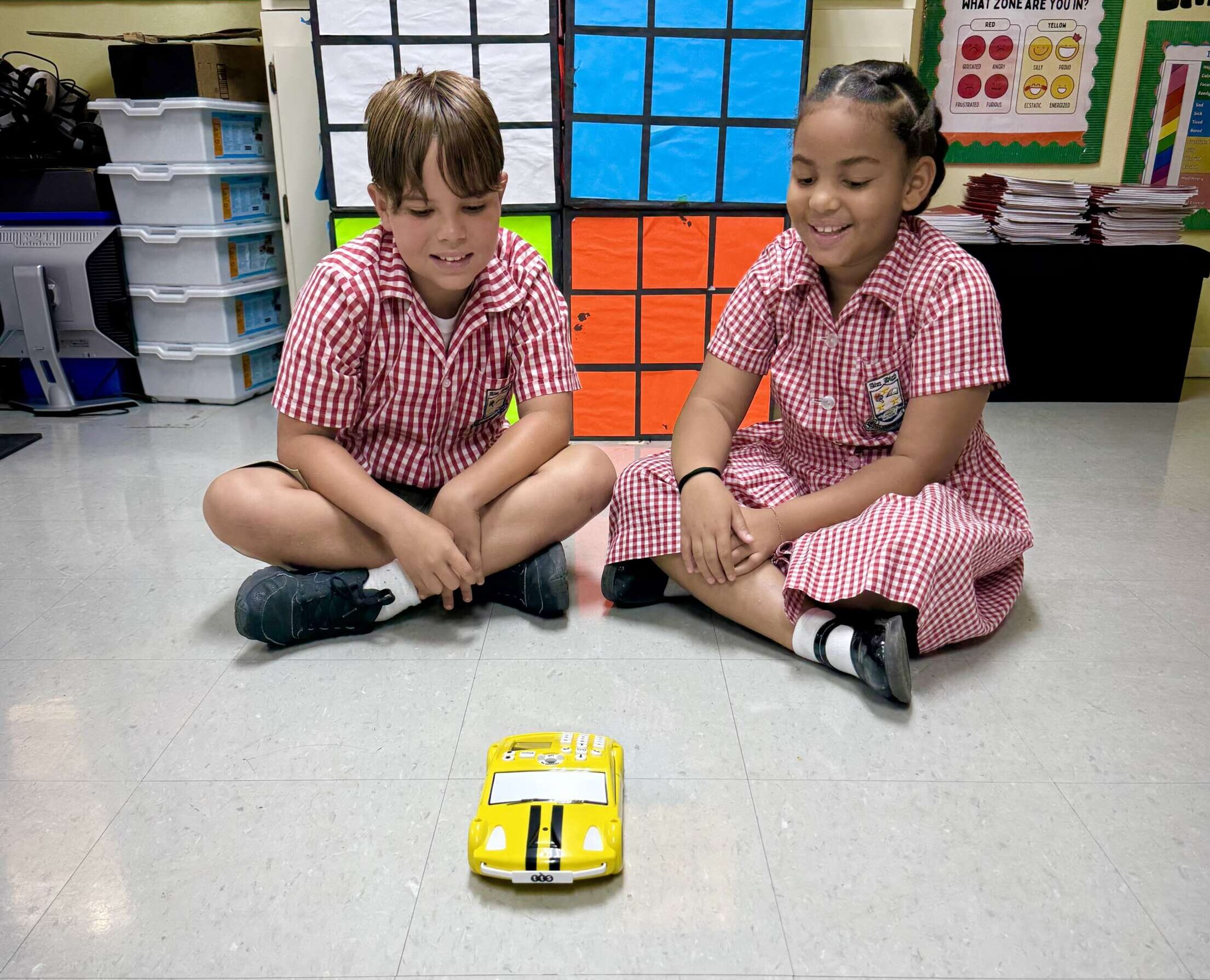
The Department of Education Services has distributed 220 programmable robots, known as Pro Bots, to Year 5 and Year 6 students across government primary schools as part of an expanded STEM (Science, Technology, Engineering and Mathematics) initiative focused on upper Key Stage 2 students.
While they might look like just another thing for parents to trip over, Pro Bots are programmable floor robots designed specifically for primary school learners. They feature a programmable interface that allows children to input sequences of instructions, including directional commands and setting distances and angles to navigate routes and complete challenges.
“The DES continues to identify innovative strategies to promote problem solving and critical thinking. These tools are just one additional resource in an ever-expanding toolkit that will engage our students in the teaching and learning process,” said Mark Ray, director of the Department of Education Services.
Developing skills
Pro Bots are used across a variety of classroom activities, including maths and geography, collaborative group projects, and identifying and correcting errors in programming sequences. This helps students to develop skills such as coding and programming, critical thinking, teamwork, creativity and resilience.
Through hands-on experiences in STEM, students are introduced to a wide range of career pathways, including data science, software development, engineering and statistics.
“When students use programmable robots like Bee Bots and Pro Bots, you can see the thinking happen in real time,” said STEM specialist Stephen Ta’Bois. “This programme is not just about robots; it’s about giving students the confidence to tackle a problem, try something, and not be afraid when it doesn’t work the first time.
“Through hands-on programming challenges, students are given opportunities to think critically, question their assumptions, and work collaboratively through solutions methodically.”
Related Videos