The era of “uncontrolled development” is over, Cayman’s planning board chief said Friday as government promised a fresh approach to balancing the demands of the natural and built environments.
Central Planning Authority chairman Ian Pairaudeau rejected claims it does not consider the environment in its decisions, but committed, alongside National Conservation Council chairman Ian Kirkham, to a more collaborative approach.
“The days of uncontrolled development are over. We can’t handle another 50 years like the last 50, and I think anyone that thinks that we can, must be on a different planet,” Pairaudeau said, insisting that “100%” of CPA members shared that view.
“The country has had significant development, but we have to strike that balance between future development and the environment. Otherwise, in 50 years’ time, if we continue like we are now, it won’t be the same country that we live in.”
Closer cooperation between departments
He was speaking as government announced a new policy framework to ensure closer co-operation between planning and environmental officials and to help plan Cayman’s future.
Kirkham also put his support behind a more collaborative approach and said a clearer process is needed in the interests of both sides.
“Developers need to know what they can and can’t do, and where they can and can’t do it. We have to give them those guidelines,” he said.
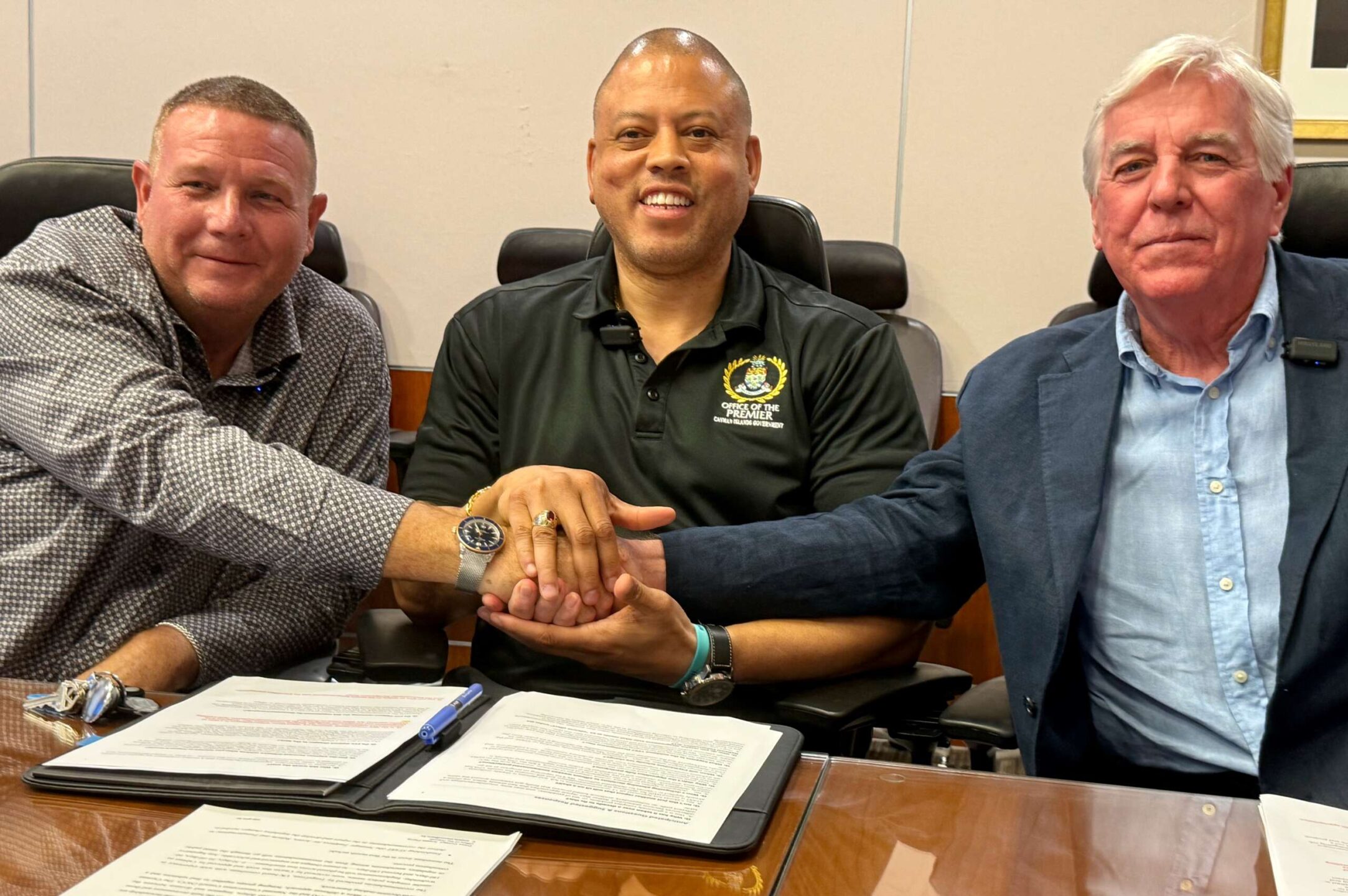
The ‘Cayman Forward’ process, which involved professional mediators bringing the two groups together, follows a years-long impasse that culminated in two costly lawsuits that pitted government against government in court.
The standoff between the planning board and the conservation council reflects much wider community division over how Cayman grows. The population has doubled in the last two decades, and development has put increasing pressure on coastlines, mangroves, coral reefs, inland forests and Cayman’s natural ecosystems and wildlife.
Meanwhile, demand for housing, office space, roads, schools, amenities and infrastructure to support a booming financial services- and tourism-led economy has surged.
With growth likely to continue, Premier André Ebanks said the point of the summit was to ensure that Cayman charted the right course.
“We need a thriving economy and we equally need a beautiful natural environment,” he said.
Ebanks said the initial goal of the process was simply to get the two groups in the same room and committed to a shared approach.
“Nobody left with any blood, nobody left with any hurt feelings, and we were just able to talk and see what could be done,” he said.
Many of the ideas coming out of the summit are designed to ensure a clearer decision-making process, better collaboration and better understanding of the distinct roles of the National Conservation Council, the Central Planning Authority and the government departments they work with.
Development Plan is ‘absolutely essential’
The fundamental missing piece for the country is the National Development Plan, which has not been updated since 1997.
Government aims to have a Planning Statement before Parliament this year and the plan in place before the end of the following year.
Ebanks said, “It is absolutely essential. So, we’re committed to not letting it go beyond that 30-year mark.”
Conservation Council chair Kirkham said a new Development Plan is “absolutely key to everything we do”.
He added, “We do need that vision, and it’s one that all of us have to buy into. Where do we want to be in 50 years? Do we want a healthy environment for our children?
“Without that vision, we won’t be able to protect the environment. We won’t be able to map out the infrastructure we require.”
He added that the Sister Islands have no development plan at all, something that presents an obstacle to Little Cayman’s bid to become a UNESCO World Heritage site.
Pairaudeau said the Central Planning Authority has been hosting public consultations and insisted a lot of work was going on behind the scenes towards getting the Development Plan in place.
He said it was “embarrassing” for Cayman that it has not moved on the issue for three decades.
Both Pairaudeau and Kirkham suggested a lot of the tension over planning decisions came from the lack of an overarching vision. The planning board issues variances on a consistent basis because the zoning framework established 30 years ago is no longer fit for purpose.
Pairaudeau said a new Development Plan would provide a clean slate and a clearer route to quicker decisions, with less scope for exceptions.
Preventing future conflict
One tweak to the current process coming out of the Cayman Forward forum will be the creation of a “joint tool” for assessing “adverse impact” on the environment – the clause in the National Conservation Law that triggers a referral for final decision to the council.
Under the current law, the council makes the final call on any planning application that could have an adverse impact on a protected species or habitat.
The interpretation of that rule was the flashpoint in both court cases, with the Court of Appeal ultimately affirming the National Conservation Council’s decision-making authority after multiple hearings.
Since then, the Central Planning Authority acknowledges, every application has been referred to the council.
Conservation council chairman Kirkham estimates that only 200 out of those 1,300 referrals were strictly necessary.
A new shared tool will allow planners and environmental officials to quickly filter out and determine what needs to go to the conservation council, preventing further legal dispute and ensuring a swifter process for developers.
Kirkham added, “Let’s spend time working on those important issues. When a sink is being moved out of a bathroom? You really don’t need DOE’s or NCC’s fingerprint on that application.”
Process cost $84,000
Speaking during parliamentary questions last month, Premier Ebanks said the Cayman Forward process cost $68,814.60 in facilitation fees and around $15,000 for venue and summit costs.
But, he said, this spending paled in comparison to the “millions” spent on legal cases between the Central Planning Authority and National Conservation Council over the years. He said previous approaches had not worked, and government was committed to brokering a new way forward through collaboration rather than litigation.
UK-based consultants ForgeFront were engaged to run a structured, three-month dialogue process examining the legislation, regulation, policy and procedures governing planning and environmental management in the Cayman Islands. The process included stakeholder consultation and a full-day summit, producing nine key findings and 13 recommendations now before Cabinet.
Recommendations include:
- Establish START (Strategic Taskforce for Action, Reform and Transformation) led by the Office of the Premier to develop the legislative changes needed and oversee implementation
- New legislation to authorise delegation of routine decisions to professional planning officers
- A joint internal tool to help planning officials determine when an environmental referral is actually triggered, cutting down blanket referrals to the conservation council
- Increase Cabinet’s capacity to handle planning appeals
- Accelerate the delivery of the Development Plan
To read the full Cayman Forward report, click here.
Related Videos