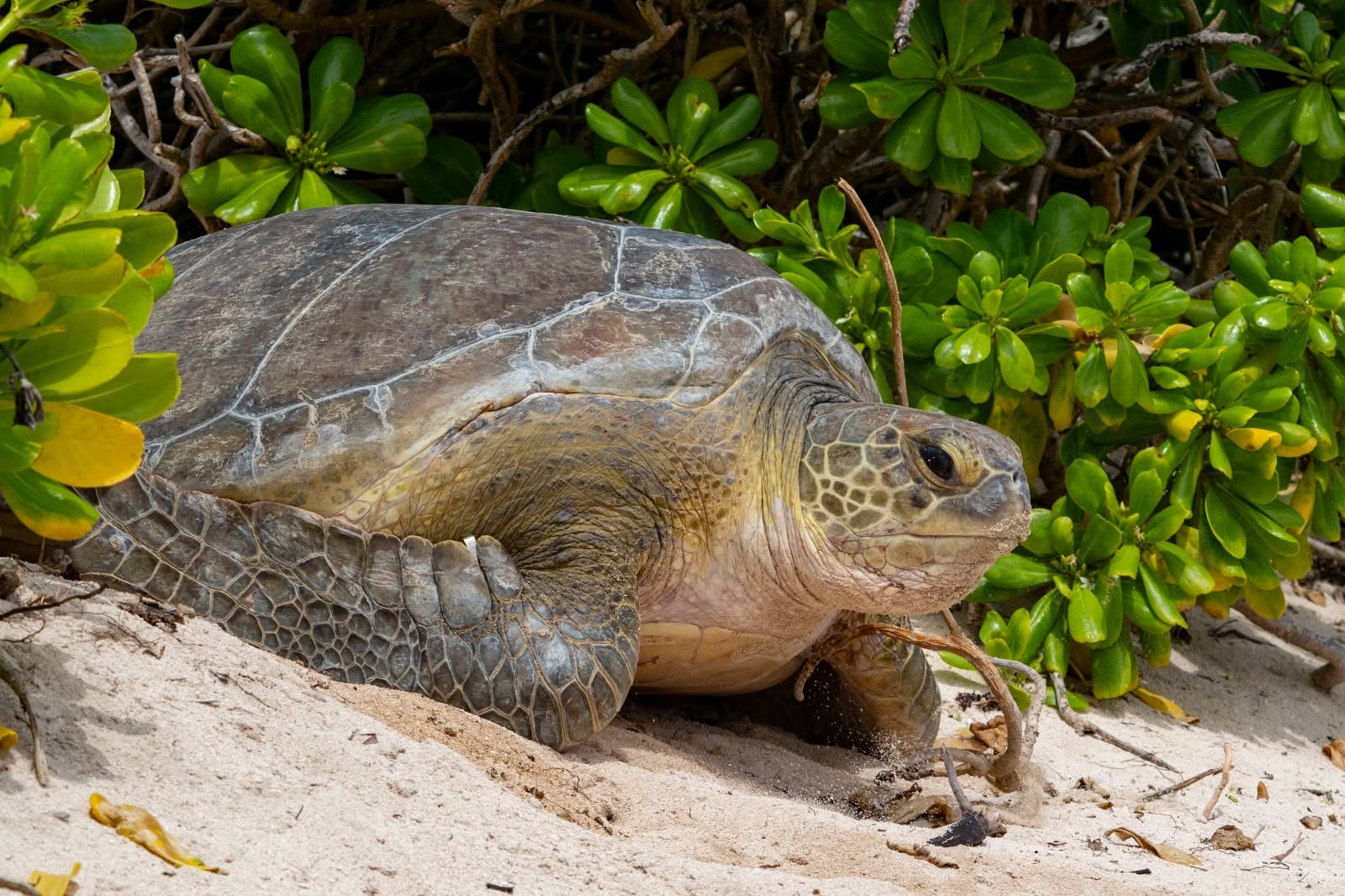
A 400-pound female green sea turtle was rescued from a swimming pool in Rum Point after apparently becoming disoriented while attempting to return to the sea following a nighttime nesting excursion.
The Department of Environment turtle team discovered the large turtle trapped in the pool during beach monitoring on 16 July.
DoE researchers Alex Prat and Joe Roche raced to the scene, where they were joined by a conservation officer and other members of the turtle team.
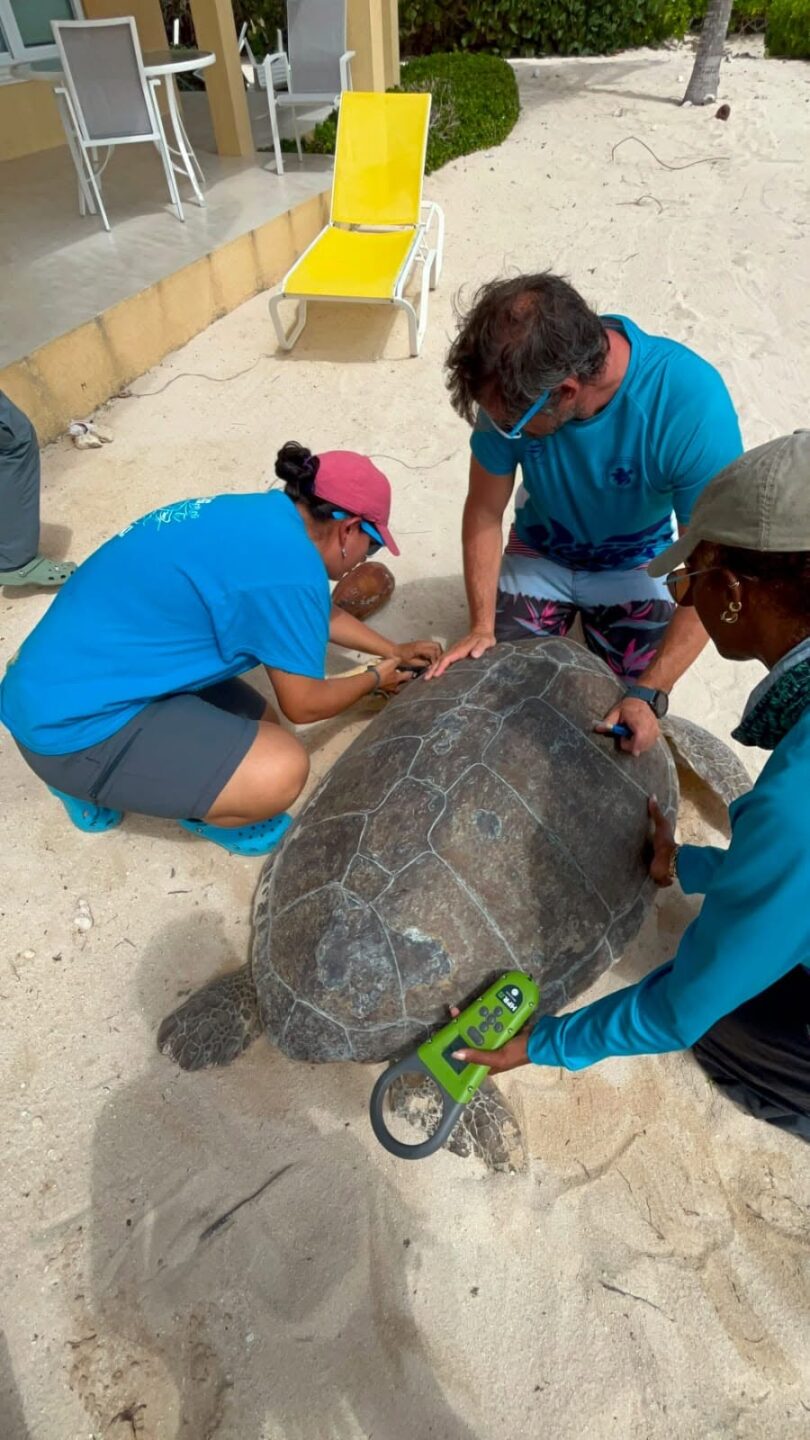
Getting an animal weighing around 400 pounds safely out of a swimming pool was no easy task, but the team eventually removed the turtle, checked and tagged her and released her back into the sea.
While dramatic, the incident is far from unprecedented.
Female turtles come ashore at night during nesting season and normally return directly to the ocean after laying their eggs. But artificial lighting, obstacles and the removal of natural coastal vegetation can confuse their sense of direction, sometimes sending them inland instead.
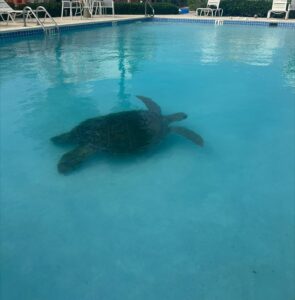
Ground-level swimming pools present a particular hazard because adult turtles can simply crawl over the edge and fall in, leaving them unable to climb back out.
Cayman has seen several similar incidents.
In 2020, Department of Environment officers rescued a 350-pound green turtle from a West Bay Road swimming pool after she apparently took a wrong turn following nesting. Chief conservation officer Mark Orr said at the time it was the second turtle he had rescued from that particular pool.
Similar rescues were reported in 2008 and 2010.
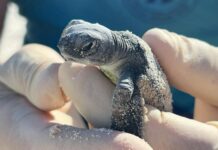
Swimming pools have also proved hazardous for hatchlings. In 2007, 23 confused green turtle hatchlings were recovered from bushes, a parking lot and a swimming pool around a Seven Mile Beach condominium after heading towards artificial lighting rather than the sea.
The consequences are not always so fortunate.
In 2017, around 60 green turtle hatchlings became disoriented and wandered towards a road near West Bay Cemetery Beach. Nineteen were found dead.
Last year, Water Authority employees rescued rare hawksbill hatchlings that had wandered onto Seaview Road in East End after being drawn away from the ocean by artificial light. Their nest contained 215 eggs, 202 of which had hatched, but at least two hatchlings died and the DoE believed others were also lost.
Artificial lighting remains one of the most significant threats to Cayman’s nesting turtles.
Hatchlings instinctively move towards the brightest horizon. On an undeveloped beach, that is normally the moon and stars reflected over the sea. Lights from roads, condominiums and other coastal development can overwhelm those natural cues and direct them inland instead.
A 2024 Department of Environment assessment found that 84% of its interventions involving nests and hatchlings during the 2023 season were required solely because of artificial-lighting threats.
Turtle-friendly lighting uses longer, amber wavelengths that turtles are less sensitive to, while fixtures can also be shielded and positioned so light does not illuminate the beach.
The Department of Environment is additionally urging beachfront property owners to retain native coastal vegetation, move furniture and small watercraft off active nesting beaches overnight and either elevate new pools or install effective barriers around existing ground-level pools.
Behind the rescues and continuing hazards, however, there is significant good news.
When systematic turtle monitoring began in Cayman in 1998, only 25 nests were recorded. By 2023, that figure had climbed to more than 1,000 nests across the islands, driven largely by recovering green and loggerhead populations.
In 2025, Cayman recorded 499 green turtle nests, 434 loggerhead nests and 10 hawksbill nests. Globally, the International Union for Conservation of Nature has also reclassified the green turtle from Endangered to Least Concern following decades of population recovery.
But the Department of Environment cautions that Cayman’s population remains only a fraction of its historic size and that increasing nesting activity on increasingly developed beaches brings new risks.
Related Videos