Cayman will mark World AIDS Day on
Wednesday, 1 December with a candlelight vigil and free HIV tests.
More than 33 million people live
with HIV globally, and more than 25 million people have died of AIDS since
1981.
This year’s World AIDS Day theme is
universal access and human rights. The campaign, which Cayman is joining, also
focuses on keeping the light on HIV and human rights.
The Cayman Islands Health Services
Authority will highlight the theme by offering free HIV testing from 29
November to 3 December from 9am to 2pm at all district healthcare centres in
Grand Cayman and at Faith Hospital in Cayman Brac. Little Cayman residents can
call the clinic at 948-0072 to make an appointment.
The HIV test is confidential and
can be done without giving your name. People are therefore encouraged to take
this opportunity to determine their HIV status.
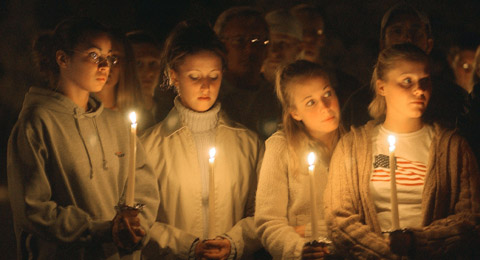
There will also be a candlelight
vigil on 1 December at the Elmslie Memorial Church, Fort Street, George Town at
6pm, with a walk from Heroes Square at 5.30pm to the church.
There will be free T-shirts for
everyone who joins the walk.
Also on 1 December, there will be
educational sessions and an awareness table set up at John Gray and Clifton
Hunter high schools and at UCCI.
For more information on HIV testing
and other activities, contact HIV/AIDS coordinator designate Laura Whitfield at
244-2631 or Health Promotion Officer Therese Prehay at 244-2632.
This year, UNAIDS is encouraging
countries to dim lights on key landmarks to remember the devastating effects of
AIDS and to turn them back on to illuminate fundamental human rights that are often
denied people living with HIV and AIDS.
HIV, or Human Immunodeficiency
Virus, is the virus that causes AIDS. It is possible for people with HIV not to
know they have it, so testing is important to ensure informed sexual health
decisions, health officials say.
AIDS stands for Acquired
Immunodeficiency Syndrome. A person who is HIV-positive may develop AIDS when
the body’s immune system is depleted. Symptoms include weight loss, diarrhoea,
and skin and chest infections.
If the disease is not treated, the
infected person would rapidly deteriorate and die.
Since the first reported case of
AIDS in Cayman in 1985, there have been 95 HIV infections, 50 people who have
developed AIDS and 35 who have died, as of September 2010.
The first case of AIDS in the world
was reported in 1981. Since then, about 60 million people have been infected
with HIV; 25 million have died due to HIV/AIDS and currently, about 33.4
million people are living with HIV.
HIV is transmitted by having sex
with someone who has HIV. Your sex partner can have HIV and not know it.
It is also spread by sharing
needles with someone who has HIV.
A mother who has HIV can pass it on
to her baby before the child is born, during birth, or while breastfeeding.
The virus can also be spread by a
blood transfusion from an infected person.
A person cannot become infected
with HIV from mosquitoes, through social contact, by shaking hands or by
hugging.
An individual is only at risk of
contracting HIV if he or she is in contact with an infected person’s semen,
vaginal fluids, or blood.
Prevention in Cayman
All blood donors, and every
individual unit of blood is tested. Both donating blood and receiving blood
through a transfusion is extremely safe in Cayman, health officials say.
All pregnant women are tested for
HIV. If a pregnant woman is HIV positive, medication is available to help
prevent transmission to the unborn baby.
Healthcare workers use disposable
syringes and needles, which are only used once.
Prevention education is conducted
regularly in the community, including schools.
Public Health has devised a
Workplace HIV Programme which focuses on prevention.
How to prevent HIV
Not having sex is the safest.
Have a sexual relationship with
only one, uninfected person, who is only having sex with you.
Use a condom for high risk sexual
behaviour.
Don’t share any kind of needles.
Supporting those infected with HIV
If someone you know becomes
infected with HIV, remember that your support and friendship are more important
than ever.
It is not necessary to avoid
everyday social contact, including hugging, with HIV infected persons. Hugging,
kissing, and touching are safe.
HIV infected persons do not need
pity; they need to be treated exactly the same way they have always been
treated.
Related Videos