

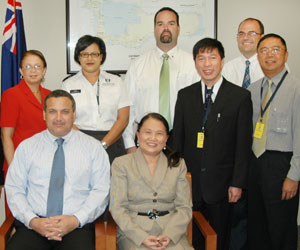

Top local government officials met with a delegation from the Philippines embassy in Washington, DC last week, attempting to get the Cayman Islands off a Filipino government-issued worker ban ‘blacklist’.
The 41 jurisdictions named in the ban included countries like Afghanistan, Libya, Iraq, and Zimbabwe. The list included countries and territories that, in the view of the Philippines government, did not have adequate labour and human rights protections in place for migrant Filipino workers.
“[According to the] Migrant Workers and Overseas Filipinos Act of 1995, which took effect on 8 March, 2010, the deployment of overseas Filipino workers will only be made to countries which protect [those workers],” said Albert Del Rosario, the Philippines foreign affairs secretary in November. “This list does not seek to pass any value judgment on any country. It serves as a crucial benchmark for all government agencies concerned to work for the betterment of the safety, welfare and working conditions of our nationals.”
The announcement of the 41-country labour export ban caught the Cayman Islands government and also the unofficial local consul for the Philippines completely off guard.
Eventually, the Philippines government agreed to defer the worker export ban until its representatives were able to meet with officials from the countries included on the ‘blacklist’.
The Washington DC embassy delegation that met with Cayman Islands officials last week included Philippines Labour Attache Luzviminda Padilla, Attache Sofronio Cortel and Welfare Officer Saul Devries. The group attended meetings with Cayman Islands Governor Duncan Taylor, Deputy Governor Franz Manderson, Attorney General Sam Bulgin and Portfolio of Internal and External Affairs Chief Officer Eric Bush. Chief Immigration Officer Linda Evans and Department of Employment Relations Director Jennifer Smith also attended the meetings.
The Philippines delegation was provided with copies of relevant laws and other government records that address Cayman’s labour protection and social initiatives, including evidence of Cayman being signatory to international labour standards agreements.
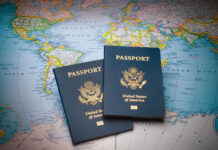
More than 2,500 Filipino nationals are in the Cayman Islands on work permits or government contracts; that number does not include dependants of contracted workers or non-Caymanian permanent residents. Filipinos are the second largest group of foreign work permit holders in the Cayman Islands after Jamaican nationals.
“The Cayman Islands government expressed confidence that, after reviewing the information provided, the Philippines government will remove the Cayman Islands from the blacklist,” a government statement issued Friday read.
The British Embassy will follow up with the Philippines on the issue and will further represent the Cayman Islands’ interests in the matter. Cayman is a British Overseas Territory and international relations for those territories are generally the responsibility of the UK Foreign and Commonwealth Office.
The Philippines Honourary [unofficial] consul here in the Cayman Islands said in November that it was his view Cayman does not belong on such a worker export ‘blacklist’.
“All I can think of is that the person who made the negative recommendation did not perform a proper research on the Cayman Islands, which led to this burning issue,” Arturo Ursua said.
Mr. Ursua said the Philippines resolution which led to the labour export ban against the 41 countries stated that existing labour and social laws must protect the rights of all workers, including migrant workers.
“While the Cayman Islands Labour Law may not be specific about migrant workers, the law is protecting the workers, as well as the employers,” he said.

Related Videos









Theres a limit as to what people can do to other people such as treat them like slaves. When you pay someone a few dollars an hour to work because they are willing to, thats tantamount to slavery. I am referiing to the ability of employers to pay people what they will work for. No minimum wage law here in Cayman. Caymanians wont work for the wage so lets pray on the people from the Philipines seems to be the strategy.
I know( not rumored) of one major employer who has 98% of his workforce holding work permits. Seem strange to anybody?
Just imagine being blacklisted nowadays. Our Cayman on a blacklist because their workers are not protected by decent laws. What a recognition but we won this recognition.
Our government needs to get its act together and enforce minimum wage laws. Its in the civilized countries of the world so why not here.
Bubba,
Wages is dictated by law of supply and demand and it will only fall to slavery if there is force, intimidation and coercion. Minimum wage is necessary if the supply of workers is too high as compared to job demand. I don’t think Cayman is in this situation as far as I know the unemployment rate is less than 10%. Simple arithmetic, if minimum wage is imposed 90% representing employed population will be affected by the eventual increase of living cost, of course the majority is the priority.
Philippine government is not after the amount wages but rather protection from employers. Their main concern is for employees especially household workers who are victim of cruel employers the likes of raping, mauling, assaulting, bludgeoning and battering. Non criminal act is only secondary concern the likes of delay or non-payment of salary, non-payment of overtime, lack of working benefits.