Children with diabetes should not let a tiny part of their pancreas define them or run their lives, advised diabetes educator Kellie Rodriguez who visited Clifton Hunter High School in Grand Cayman last week.
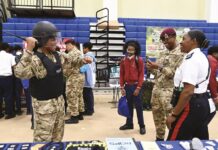
Ms Rodriguez, director of education services at the United States-based Diabetes Research Institute, led a class of students who have Type 1 diabetes, along with some parents and other pupils, to talk about living with diabetes.
Many children have challenges controlling their diabetes, in part because they try to rebel against having the condition or get angry about being different to their peers and end up not eating right or regularly checking their blood sugar levels or injecting their insulin.
“Feeling different is one of the biggest reasons why people don’t check their [blood sugar] numbers,” Ms Rodriguez said.
She urged the children with Type 1 diabetes not to let the 2 or 3 per cent of their pancreas that produces the insulin they lack “define who you are or tell you what you can and cannot do”. The pancreas secretes insulin that is needed for the absorption and digestion of food.
And instead of considering themselves as being sick because they have diabetes, Ms Rodriguez said: “You’re not sick because you’ve got diabetes. In fact, I would argue that most people with diabetes have an opportunity to be healthier than people without diabetes. You have an ability here to be healthier because anything we’re going to recommend to you in regard to food choices is exactly what we should be recommending to any child without diabetes.” She told the children: “You’re not special because you have diabetes, you are special because of who you are … We’re going to try to fit diabetes into the special you, rather than you into your diabetes.”
She gave them advice on what to eat before exercising and to check their blood sugar and ketone levels before exercising, as well as to check blood sugar levels before they go to bed.
Ms Rodriguez also called for medical professionals, teachers and parents to congratulate, instead of berate, children if their blood sugar levels are very high. “We should celebrate the fact that they’ve checked their numbers and the fact that we have the ability to do something about it,” she said.
“Don’t get upset with the numbers, they are what they are.
Our goal is to get the numbers under control… The number is just letting us know if the food regime and exercise is working or not. If the number is out of range, we should focus on what is causing that number to rise or fall,” Ms Rodriguez said.
She added: “We have got to remove the guilt and upset and sadness around diabetes and take a more positive approach.”
For people who inject insulin, she warned against injecting into the same site on the body over and over again because this can, over time, become tough and make it harder for the insulin to penetrate. She also advised that when checking blood levels to prick the side of the finger rather than the fingertip because the tip is more sensitive and to avoid checking on other parts of the hand or body because those readings are not as accurate as those taken from the finger.
The prevalence of diabetes among Cayman’s school children is not accurately known because some are undiagnosed.
However, school nurses and teachers are versed on how to spot the warning signs of diabetes among pupils.
Clifton Hunter has four students with Type 1 diabetes.
Ms Rodriguez visited with canteen staff and teachers, as well while at the school on Thursday afternoon.
Related Videos